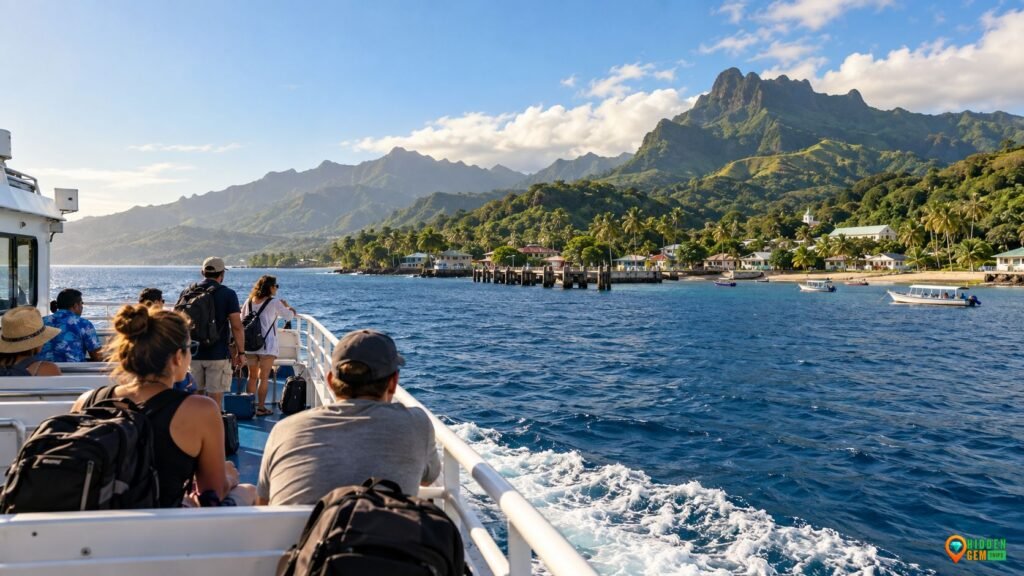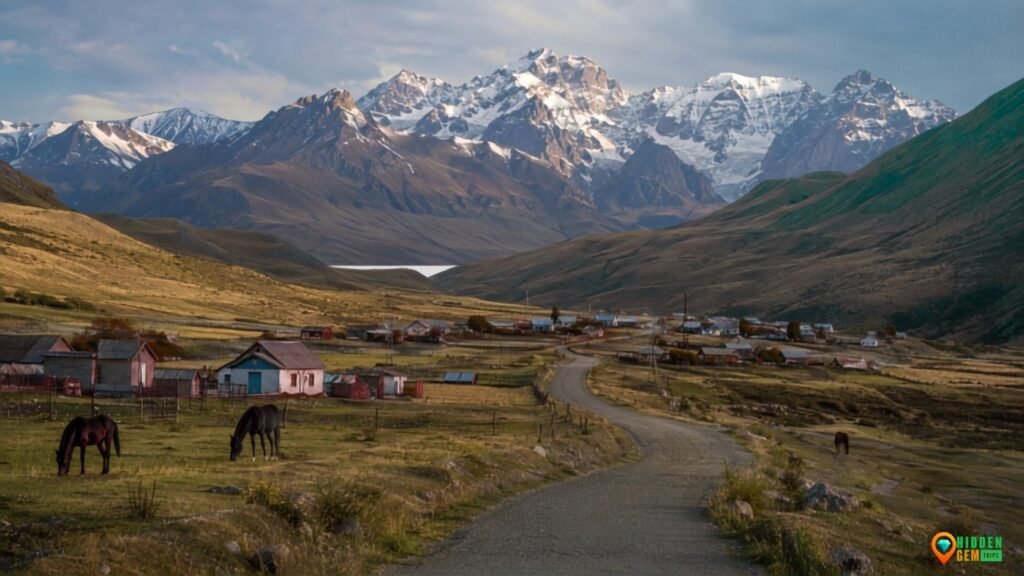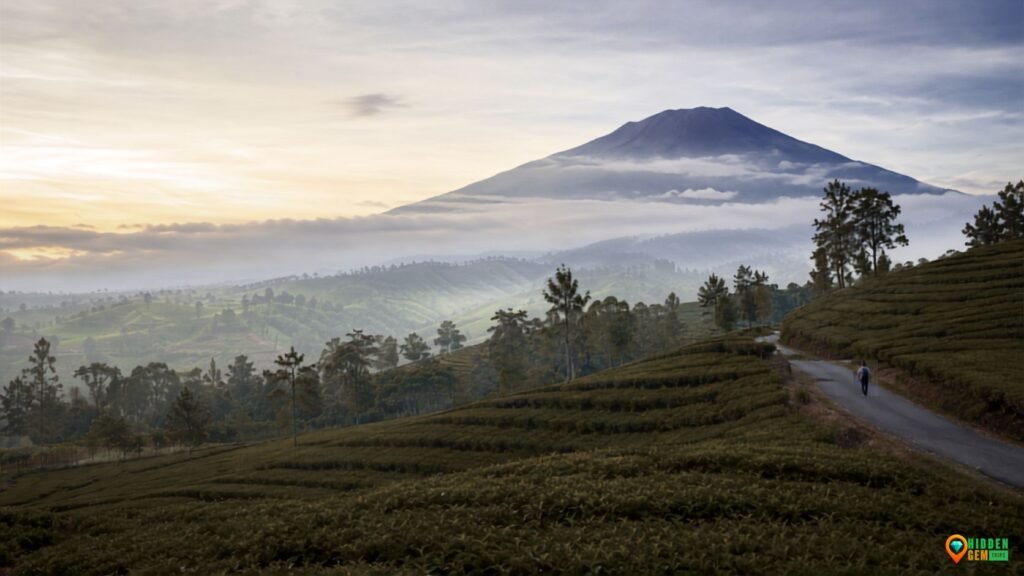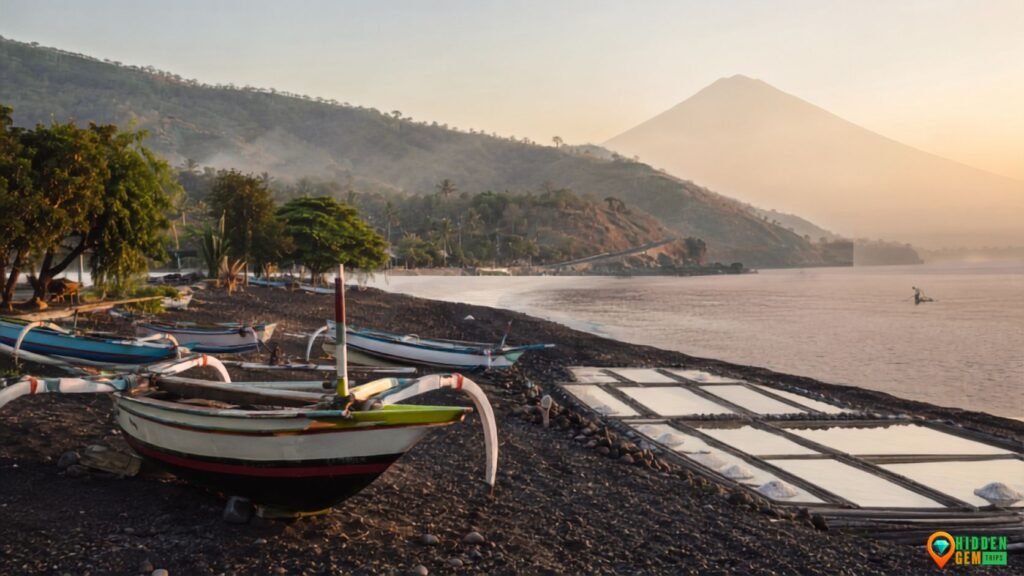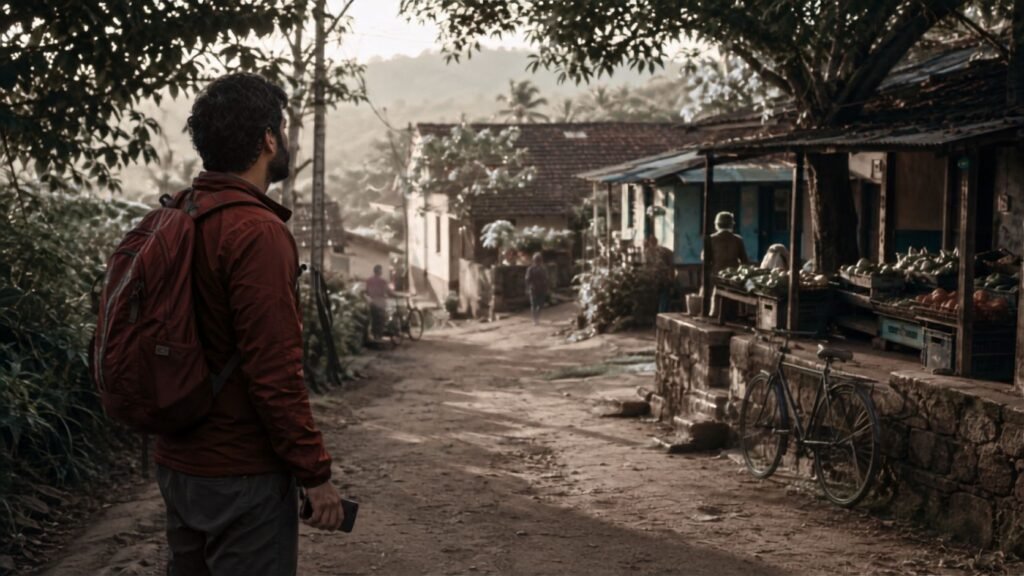

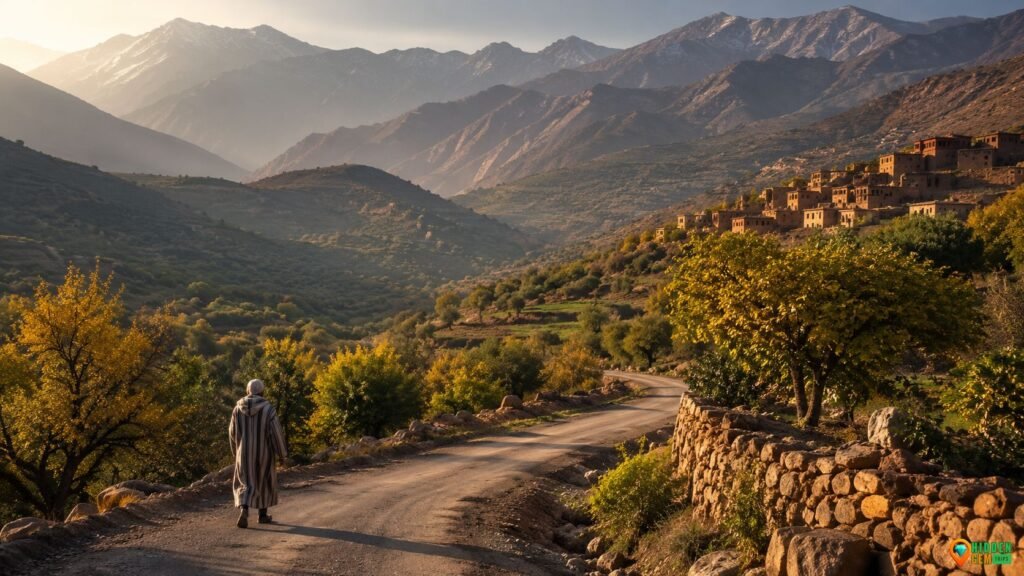
Morocco quiet valleys are the antidote to the version of the country that many travelers accidentally build from one loud weekend in Marrakech: spice stalls, rooftop dinners, tiled courtyard, sunset crowds, and a feed full of doors. Marrakech is magnetic, no debate. But if you stop there, Morocco becomes a room instead of a landscape. The valleys beyond the city open the story. They pull you into walnut groves, red-earth villages, terraced fields, irrigation channels, kasbah roads, snow-bright ridgelines, and oasis shade where time moves like it has better things to do than impress your itinerary.
That slower Morocco matters even more now because the country is not exactly hiding from the world. The Moroccan tourism ministry key figures reported 17.4 million visitors in 2024, while Reuters 2025 arrivals report said Morocco welcomed 19.8 million tourists in 2025. That is great for jobs, infrastructure, and global visibility, but it also means the obvious places can feel more compressed. The smart move is not to “escape Morocco.” The smart move is to distribute your attention more carefully.
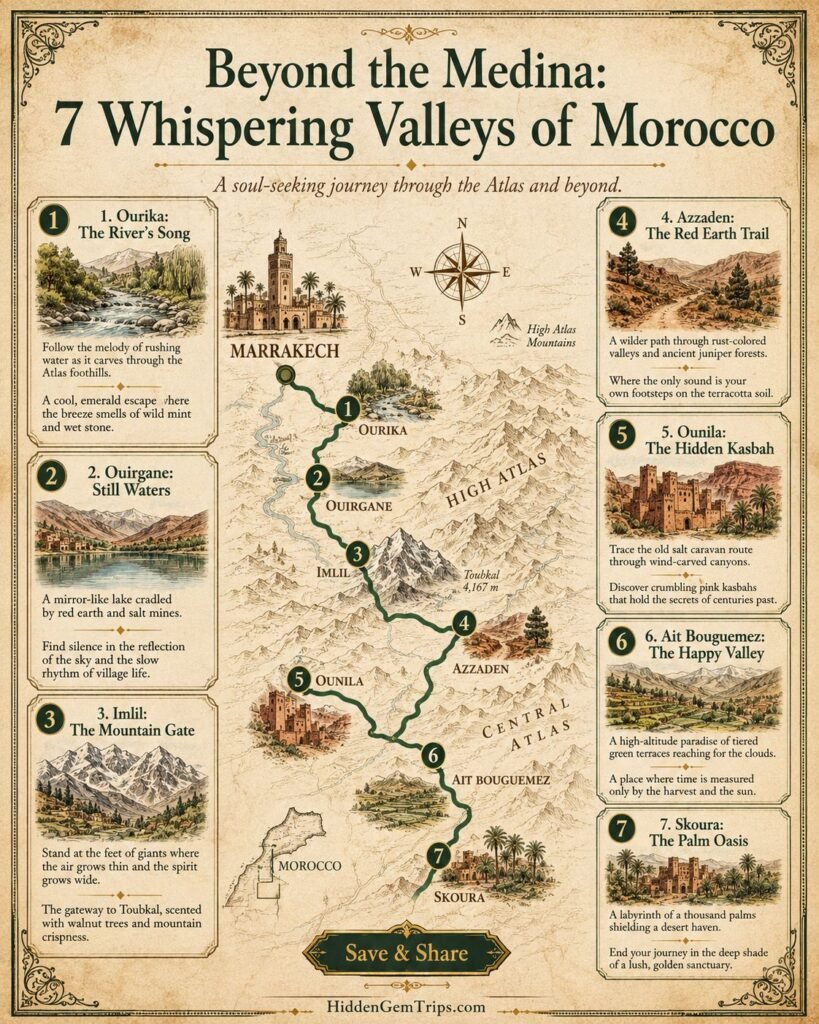
This guide is built for travelers who want beauty without the conveyor belt. It is not a race from one valley selfie to the next. Think of it as a field guide for seven stops beyond Marrakech: Ourika, Ouirgane, Imlil, Azzaden, Ounila, Ait Bouguemez, and Skoura. Some are close enough for a day trip. Some deserve two nights. Some are better approached with a local guide, and a few should be treated with extra sensitivity because the High Atlas is still carrying the long tail of the 2023 earthquake. Good travel here is not about being first. It is about being useful, observant, and just quiet enough to hear where you are.
If you already use HiddenGemTrips as a route-building habit, start with the broader hidden gem travel guide mindset: hidden does not mean untouched, empty, or available for extraction. It means easily misunderstood by travelers who move too fast. These valleys are not props behind Marrakech. They are living places with farm rhythms, Amazigh languages, family guesthouses, mule paths, religious customs, water pressures, road repairs, and seasonal limits. The reward comes when you stop asking, “What can I see?” and start asking, “How do I move here without making the place smaller?”
Why Morocco Quiet Valleys Matter Now
Marrakech has always acted like a travel gravity well. Flights land there, riads market from there, desert tours depart from there, and many first-time travelers treat the city as Morocco’s default setting. But the High Atlas and pre-Saharan valleys around it are not side quests. They are where geography explains culture: snowmelt feeding orchards, passes shaping trade, terraced agriculture keeping slopes productive, and fortified architecture marking old caravan lines. Once you see that, the country becomes less decorative and more coherent.
The timing also matters because rural tourism is under pressure from two directions. On one side, Morocco’s national tourism growth is pushing more visitors into secondary destinations. On the other, climate stress, earthquake recovery, and youth migration make local economies more fragile than a glossy itinerary suggests. The World Bank Morocco overview frames Morocco’s development priorities around growth, jobs, human capital, and reducing territorial disparities. In plain traveler language: where you sleep, whom you hire, and how long you stay can matter more in a valley than in a city already saturated with spending.
This is where slow travel stops being a vibe and becomes a practical ethic. The HiddenGemTrips slow travel manifesto is basically the operating system for this route: fewer moves, more context, and less performance. A valley day is not empty just because it has only one main walk, one village lunch, and one long golden hour. That is the point. If your brain panics when nothing dramatic happens every twenty minutes, congratulations, you have met your real itinerary problem.
The most original way to travel beyond Marrakech is not to hunt for the most secret village. That becomes cringe fast, like whispering “authentic” while holding a drone. The better angle is to build a route around contrasts: a close valley, a recovery valley, a trekking gateway, a quieter side valley, a heritage road, a high agricultural basin, and an oasis edge. Together, these seven stops show Morocco as layered rather than linear. They also help spread your budget across drivers, guides, cooks, family-run stays, and small cooperatives instead of feeding only the busiest route machine.
Safety and sensitivity should sit inside the planning, not outside it. The UK FCDO Morocco travel advice currently tells travelers to exercise increased caution due to terrorism, while mountain travel adds ordinary risks like weather shifts, rockfall, rough roads, and limited emergency access. None of that means “do not go.” It means go with the humility of someone entering big terrain and living communities, not a theme park with mint tea.
Quick Planning Table for 7 Quiet Valleys Beyond Marrakech
| Stop | Best For | Ideal Time | Marrakech Access | Travel Style |
| Ourika Valley | Easy river scenery, day walks, mountain introduction | 1 day or 1 night | About 1.5-2.5 hours depending on traffic and stops | Early-start day trip with a quiet lunch base |
| Ouirgane Valley | Recovery-aware travel, red hills, lake views, gentle walks | 1-2 nights | About 1.5-2 hours | Guesthouse stay, local guide, slow road time |
| Imlil and Aroumd | Toubkal gateway, high mountain culture, mule paths | 1-2 nights | About 1.5-2.5 hours | Guided walks without summit pressure |
| Azzaden Valley | Quieter trekking, terraced villages, side-valley atmosphere | 2 nights | Via Imlil/Matat area; road and trail dependent | Guided overnight route |
| Ounila Valley | Kasbah road, Telouet, Ait Ben Haddou, heritage landscapes | 1-2 nights | Full-day road route over Tizi n’Tichka | Slow drive with heritage stops |
| Ait Bouguemez | Deep rural basin, wide walking, high valley life | 2-3 nights | Long transfer; often 5-7+ hours depending route | Slow stay with local guesthouse |
| Skoura Oasis | Palm groves, kasbahs, desert-edge quiet, Ouarzazate pairing | 1-2 nights | Long drive from Marrakech or Ounila continuation | Oasis base, architecture, soft landing after mountains |
How to Use This Morocco Quiet Valleys Route
Do not treat the seven stops as mandatory trophies. A strong Morocco quiet valleys route can use all seven if you have ten to fourteen days, but a better one-week trip may choose four. The route becomes excellent when the sequence makes emotional sense: close valley first, mountain stay second, deeper heritage or oasis road third, and a gentle finish before returning to Marrakech. That rhythm keeps you from doing the classic tourist mistake: five hours in a vehicle, ten minutes outside, repeat until your soul logs out.
For a seven-day version, pair Ourika or Ouirgane with Imlil, Ounila, and Skoura. For a more adventurous ten-day version, add Azzaden and Ait Bouguemez. For a soft-luxury version, choose Ouirgane, Ounila, and Skoura, then invest in better guesthouses and private transfers. This is where affordable opulence becomes useful: spend where it changes the quality of the trip, not where it merely upgrades the logo on the towel.
Transport is the big decision. Public buses and shared taxis exist for parts of this region, but they rarely create a clean, time-efficient valley route for first-time visitors. A private driver is expensive but practical if you want multiple stops, photo pauses, and less stress on mountain roads. Self-driving can work for confident travelers, but passes, villages, weather, and road repairs can make the experience more tiring than romantic. If your content plan involves filming and note-taking, treat transport as production infrastructure, not just movement.
Digital nomads should be careful with expectations. Marrakech, Ouarzazate, and some larger guesthouses can support work sessions, but many valleys are better used as offline creative resets than laptop bases. If you need to work while traveling, build buffer days using the logic in the digital nomad guide: separate deep travel days from admin days. Trying to upload video from a mountain guesthouse while the valley is glowing outside is how you lose both the Wi-Fi battle and the point of being there.
1. Ourika Valley: The Close Escape That Still Needs Patience
What Makes Ourika Worth the Early Start
Ourika is the valley everyone tells you is easy, which is exactly why you should not underestimate it. It sits close enough to Marrakech to attract day-trippers, weekend groups, and travelers who want mountain air without committing to a full Atlas route. The river, roadside cafés, Berber markets, and Setti Fatma waterfall walks make it accessible. But accessibility is not the same as emptiness. If you arrive late, treat every stop like a photo booth, and expect solitude at midday, Ourika will clap back politely with traffic and crowd energy.
The trick is to use Ourika as a threshold, not a headline. Leave Marrakech early, before the city fully wakes up. Let the first hour be about transition: flat plains becoming foothills, roadside pottery giving way to orchards, dry light softening around the river. Stop less often, but stop better. Choose one walking area, one meal base, and one long sit near water. The valley becomes quieter when you stop trying to consume the entire thing by lunch.
How to Visit Ourika Without Turning It Into a Checklist
Setti Fatma is the best-known pocket, and that fame creates mixed conditions. Local guides may offer to help on waterfall trails; some are useful, some are simply persistent. Agree on the price before starting, wear shoes with grip, and do not turn a wet rock scramble into a fashion shoot. The waterfalls can be beautiful, but the deeper reward is watching how the valley uses water: terraces, channels, tea gardens, and riverside kitchens all revolve around it.
Ourika also works as a soft introduction to rural etiquette. Dress modestly, ask before photographing people, carry small cash, and do not mistake hospitality for unlimited access. If you are collecting story notes for a blog, focus on sensory detail instead of pretending to discover the valley. Notice the sound of the river under restaurant platforms, the smell of grilled bread, the way light moves across walnut leaves, and the difference between a quick transaction and an actual conversation.
Because Ourika is close, many travelers treat it as disposable. That is the mistake. A close valley can still teach you how to move through Morocco with less noise. Done well, Ourika becomes your calibration day: you learn road rhythm, mountain weather, price negotiation, guide etiquette, and your own tolerance for crowds before going deeper. Done badly, it becomes a rushed lunch outside Marrakech with better rocks. Your call, bos.
2. Ouirgane Valley: Red Earth, Lake Light, and Recovery Travel
Why Ouirgane Rewards Slower Travelers
Ouirgane is the valley to choose when you want the High Atlas without the summit narrative. It has red slopes, olive groves, lake reflections, small villages, and a gentler walking rhythm than the higher trailheads around Imlil. It feels less like a challenge and more like a conversation. That makes it ideal for travelers who want quiet, but not isolation; scenery, but not a checklist; rural texture, but not a performance of roughness.
The valley was affected by the 2023 earthquake, and that context changes how you should travel. Recovery is not a slogan for a caption. It is uneven, slow, and local. The High Atlas Foundation earthquake recovery work and the Caritas Morocco earthquake update both underline how mountain communities faced damaged homes, road challenges, and long recovery timelines. This does not mean visitors should avoid Ouirgane. It means visitors should avoid being extractive, dramatic, or weirdly disaster-curious.
Responsible Travel Notes After the 2023 Earthquake
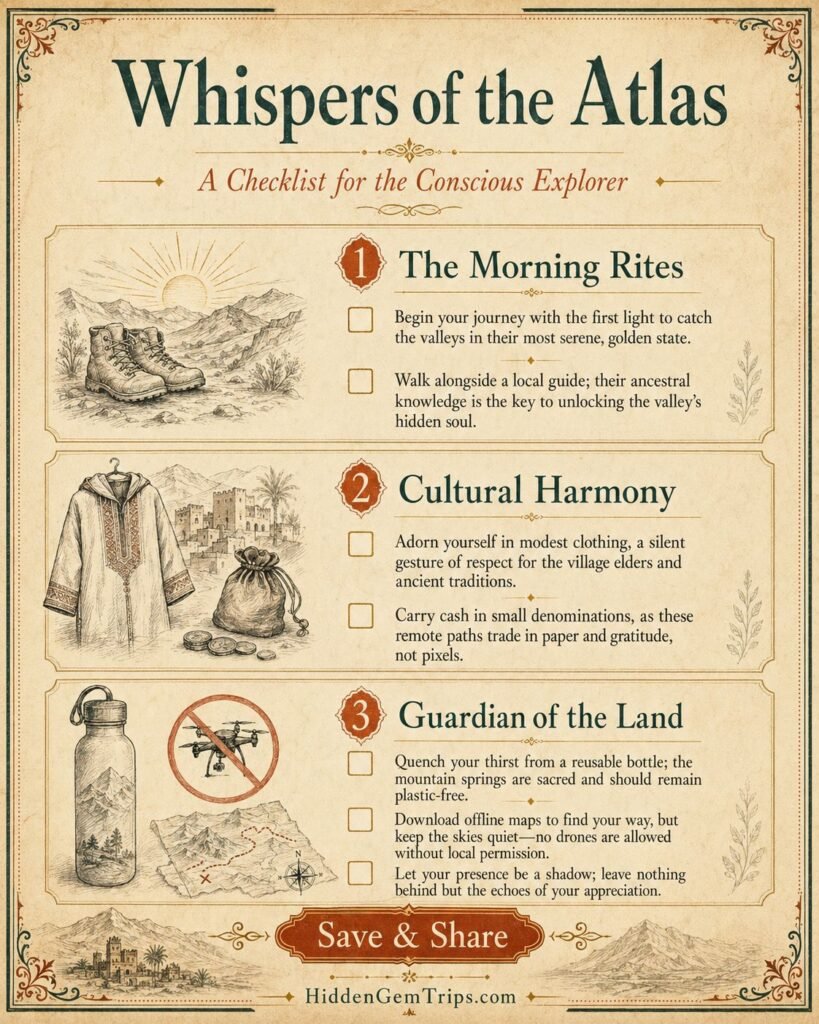
Stay at a locally rooted guesthouse, hire a guide for a half-day walk, and ask what is appropriate before entering damaged or rebuilt areas. Spend money where it stays close to the valley. Eat in the guesthouse. Buy from small shops. Tip fairly. Do not bring a drone unless you have permissions and an actual reason beyond “cinematic bro energy.” In a recovery landscape, privacy is not optional.
Landscape-wise, Ouirgane is quietly cinematic. The lake area gives wide reflections, the hills turn warm near sunset, and the trails can be gentle enough for travelers who are not hardcore hikers. A two-night stay works beautifully: arrive from Marrakech, walk lightly the next morning, leave the afternoon open, then continue to Imlil or return to the city. That extra night changes the emotional texture. You stop being a visitor passing through and become someone the guesthouse staff can actually place in time.
Use Ouirgane as the recovery-aware stop in your Morocco quiet valleys route. It keeps the itinerary honest. Not every place beyond Marrakech is just waiting to be admired. Some places are rebuilding while still welcoming travelers. That is a privilege, not a backdrop.
3. Imlil and the Aroumd Bowl: Gateway Energy Without the Summit Ego
Best Way to Experience Imlil If You Are Not Climbing Toubkal
Imlil is famous because it sits near the classic approach to Mount Toubkal, North Africa’s highest peak. That fame can make travelers treat the village as a basecamp stamp rather than a destination. Big mistake. You do not need to summit anything to appreciate Imlil. The village and the Aroumd bowl above it offer layered views of orchards, mule tracks, high ridges, guesthouses, and mountain life that changes radically with season.
The NPS Toubkal National Park profile notes that Toubkal National Park was established in 1942 and includes Jbel Toubkal, the highest peak in North Africa. That context matters because Imlil is not just a pretty mountain village; it is part of a protected landscape and a major trekking economy. The presence of guides, mules, equipment shops, and route logistics is not accidental. It is the local travel system.
Guide Culture, Trails, and Seasonal Reality
For non-summit travelers, the best experience is a guided half-day or full-day loop through Aroumd, orchards, irrigation paths, and viewpoints. The guide does not only prevent wrong turns. A good guide translates landscape: which crops grow where, how mule transport works, why some houses sit where they do, how snow changes the route, and what the earthquake altered in nearby communities. That is the kind of detail Google Maps will not hand you. Shocking, I know.
Do not arrive in Imlil with city shoes and a fantasy. Trails can be dusty, icy, muddy, or loose depending on season. Weather turns quickly. Winter can bring snow and cold nights. Summer can be harsh in exposed stretches. If you are coming after a long flight, read the long-haul flight survival approach and give your body a real night before hiking. Mountains do not care that your itinerary has “content day” written on it.
Imlil is also where traveler ego needs supervision. You will meet people pushing for Toubkal, people recovering from it, and people pretending altitude is a personality trait. You are allowed to skip the summit. A quiet valley route is not a failure because it avoids the highest point. Sometimes the most intelligent mountain day is a moderate walk, a hot tagine, and an evening watching the ridges fade into blue.
4. Azzaden Valley: The Quieter Side of the Toubkal Massif
Why Azzaden Feels Different From Imlil
Azzaden is the stop that separates travelers who want a pretty mountain sample from travelers who want a deeper High Atlas rhythm. Often approached through routes connected to Imlil, Matat, or Tizi Oussem depending on plan and conditions, Azzaden feels less immediate than Imlil and more spacious in mood. The villages sit among terraced fields and slopes that invite slow walking rather than quick viewing. It is not empty, but it is less dominated by the summit economy.
The valley’s charm is partly logistical. It asks for more effort. That filters out some of the casual day-trip crowd and gives the place a different tempo. You may walk between villages, follow mule paths, pass walnut and apple trees, and sleep in a simple guesthouse where the evening is defined by food, cold air, and tired legs. Nothing viral happens. Excellent. That means your nervous system might finally update.
When to Stay Overnight Instead of Day-Tripping
Azzaden is best with a local guide and at least one overnight. A day trip can work for fit travelers, but it often compresses the route into a task. Overnighting lets you experience the valley as a sequence: afternoon arrival, dinner, stars if the sky cooperates, morning light, then a walk out. If you care about night skies, this is the kind of place where the logic behind star-gazing passports starts to make sense: darkness is not just an attraction; it is an environmental condition worth protecting.
Because Azzaden is less plug-and-play, preparation matters. Pack layers, water, snacks, cash, and patience. Confirm the route and current trail conditions locally, especially after storms or in winter. Do not assume a valley is open or easy because a blog from three years ago said so. Mountain information ages faster than travel influencers admit.
Azzaden belongs in this guide because it gives the High Atlas back its depth. It is not trying to sell itself as a spectacle. It asks you to walk, listen, and accept that a place can be memorable without constantly performing for the camera. That may sound simple, but in modern travel, simple is basically a rebellion.
5. Ounila Valley: Kasbah Roads Between Telouet and Ait Ben Haddou
Why Ounila Is a Story Road, Not a Photo Stop
Ounila is the most cinematic road in this route, but the word cinematic can be dangerous. It makes people drive through a living valley like they are hunting background plates for a movie. The route between Telouet and Ait Ben Haddou carries kasbahs, old caravan logic, ochre villages, canyon-like stretches, and layered architecture that deserves more than a windshield glance. This is a story road. Move accordingly.
The valley works best as a slow transfer between Marrakech and the Ouarzazate/Skoura side, not as a rushed add-on. Cross the Tizi n’Tichka pass early, pause at Telouet if conditions and timing allow, then follow the Ounila route with enough daylight to stop respectfully. The landscape changes from high pass drama to earth architecture and river-valley settlements. The colors can look unreal, but the route is not a filter. People live here. Children walk here. Fields depend on water here.
Heritage Context Around Ait Ben Haddou
Ait Ben Haddou is the famous anchor, and it is famous for good reason. The UNESCO Ait Ben Haddou listing describes the ksar as a striking example of southern Moroccan architecture in the foothills on the southern slopes of the High Atlas. That heritage status can create crowd pressure, especially around midday. Arrive earlier or later, use a local guide if you want context, and avoid reducing the place to “Game of Thrones vibes.” Please. The ksar survived centuries; it does not need to be flattened into a fandom caption.
Ounila also pairs well with HiddenGemTrips’ broader ethical travel guide principle: fragile places need context before exposure. Heritage architecture in earthen materials is beautiful partly because it is vulnerable. Weather, abandonment, reconstruction choices, tourism pressure, and photo behavior all shape what visitors encounter. Stay on appropriate paths, pay entry fees where requested, and choose guides who explain preservation rather than only pointing to photo angles.
If your itinerary has only one road day beyond Marrakech, make it Ounila. It gives you mountains, architecture, history, and desert-edge light in one arc. But do not make the road too ambitious. The point is not to collect Telouet, Ounila, Ait Ben Haddou, Ouarzazate, and Skoura in a blur. The point is to understand why a valley road can reveal more about Morocco than a city checklist ever could.
6. Ait Bouguemez: Morocco’s Happy Valley for Deep Time
Why Ait Bouguemez Belongs on a Slow Route
Ait Bouguemez is often nicknamed the Happy Valley, which sounds suspiciously like marketing until you arrive and understand the scale. It is a wide high valley with villages, fields, ridges, and a sense of room that feels very different from the tighter valleys closer to Marrakech. The experience is less about one landmark and more about duration. You come here to slow down, walk, watch agriculture, and let the valley’s width recalibrate you.
This is not the easiest stop from Marrakech, and that is part of why it matters. Transfers can be long, roads can be demanding, and weather can reshape plans. If you only have four days in Morocco, do not force it. If you have ten or more, Ait Bouguemez can become the emotional center of the trip. Two nights is the minimum; three is better if you want to walk without constantly packing your bag like a travel raccoon.
Practical Notes for Distance, Weather, and Local Stays
The valley is excellent for moderate walking, village-to-village exploration, and learning how high-altitude agriculture shapes daily life. Hire local guides. Stay in family-run guesthouses. Ask about seasonal conditions rather than assuming every trail is available. In spring, fields and blossoms can be beautiful. In summer, the valley can be warm but often more breathable than Marrakech. Autumn brings harvest textures. Winter may introduce snow, cold nights, and road complications. The valley is not a product with fixed settings.
Ait Bouguemez also forces better packing discipline. You do not need expedition cosplay, but you do need layers, a small daypack, sun protection, a refillable water setup, and shoes that can handle uneven paths. The packing light guide is useful here because luggage becomes a moral issue when someone else, a small vehicle, or a mule has to deal with your overpacked chaos. Bring enough. Do not bring your whole apartment.
Why include a distant valley in a guide beyond Marrakech? Because distance changes the traveler. Close valleys can be sampled. Ait Bouguemez asks for commitment. It rewards travelers who understand that a hidden gem is not always hidden by secrecy. Sometimes it is hidden by inconvenience, and inconvenience is the last great filter in travel.
7. Skoura Oasis: Palm Shade, Kasbah Architecture, and Desert Edge Silence
How Skoura Completes a Valleys Route
Skoura is technically an oasis rather than a mountain valley in the tight High Atlas sense, but it belongs here because it completes the geographic story beyond Marrakech. After river valleys, high basins, and kasbah roads, Skoura gives you palm shade, earthen architecture, irrigation channels, and desert-edge quiet. It is the exhale after the mountains. The light gets lower, the roads feel wider, and the pace becomes less vertical.
The oasis is famous for its palm grove and kasbah heritage, including the often-photographed Kasbah Amridil area. But Skoura is best when treated as a stay, not a stop. Sleep in or near the palm grove, walk early, and let the afternoon heat do what it does: slow everyone down. If you rush through between Ouarzazate and the Dades or Sahara routes, you will technically see Skoura and spiritually miss it. Classic travel fail, very common, completely avoidable.
How to Pair Skoura With Ouarzazate Without Rushing
Skoura also opens a useful conversation about oasis systems. A 2025 study on Moroccan oasis agriculture in the National Library of Medicine archive, rural-urban transformation and oasis agriculture, highlights how ancient oasis systems face socioeconomic and ecological change. Travelers do not need to become hydrologists overnight, but they should understand that palm groves are living infrastructure. Water, labor, migration, and tourism all shape what looks like pure romance from a guesthouse terrace.
Pair Skoura with Ounila and Ait Ben Haddou for a strong three-day extension: Marrakech to Ounila/Ait Ben Haddou, overnight near Ait Ben Haddou or Ouarzazate, then Skoura for one or two nights. If you have more time, continue toward Dades or Todra, but do not pretend every gorge and kasbah road can be meaningfully experienced in one sprint. The 7-day itinerary rules apply hard here: depth is created by subtraction.
Skoura is the place to end quietly. Buy dates, take a guided walk, learn how irrigation channels work, photograph architecture without trespassing, and let the valley route settle. By the time you return to Marrakech, the city will feel different. Not worse. Just louder. And maybe that is the best proof the valleys did their job.
Sample 7-Day Morocco Quiet Valleys Itinerary
Here is the clean one-week version for travelers who want depth without turning the trip into a geography exam. Day one: arrive in Marrakech, sleep, and do very little. This matters. Do not land after a long flight and immediately become a person with opinions about mountain roads. Day two: Ourika Valley early start, short walk, riverside lunch, return or overnight depending on energy. Day three: transfer to Ouirgane and stay overnight. Day four: guided walk in Ouirgane, then continue to Imlil or stay a second night if you prefer softness over motion.
Day five: Imlil and Aroumd area, with a guided loop rather than a summit push. Day six: cross toward Ounila, Telouet, and Ait Ben Haddou, keeping the day focused on road heritage rather than excessive stops. Day seven: Skoura oasis, morning walk, then either return to Marrakech or continue to Ouarzazate depending on flights. This version uses five of the seven stops and leaves Azzaden and Ait Bouguemez for travelers with extra days.
For a ten-day version, add Azzaden after Imlil and give it one overnight. Then add Ait Bouguemez as a two-night deep-valley stay before moving toward Ounila and Skoura. This route requires more logistics and a better driver or guide network, but the payoff is huge. The emotional arc becomes stronger: city, close valley, recovery valley, mountain gateway, side valley, high basin, heritage road, oasis. That is not random movement. That is narrative design.
Creators should storyboard this route like a documentary, not a highlight reel. Use Ourika for transition, Ouirgane for responsible recovery context, Imlil for mountain systems, Azzaden for silence, Ounila for heritage, Ait Bouguemez for deep rural time, and Skoura for oasis fragility. If you need inspiration for how landscape and culture can be braided without turning people into props, the Tana Toraja slow travel article is a useful internal model.
Budget, Transport, Safety, and Etiquette
Budget varies widely because this route can be done as a modest guesthouse journey or a private-driver boutique escape. The main costs are transport, guiding, accommodation, and meals. A private driver is usually the largest line item, especially if you build a multi-day loop rather than simple returns to Marrakech. But the cheapest route is not always the best route. If saving money forces you into rushed day trips, poor guide choices, or unsafe driving, you did not optimize the trip. You just moved the cost into discomfort.
Guesthouses are the soul of the route. In Ourika and Imlil, choices range from basic to polished. Ouirgane and Skoura can offer charming mid-range stays with gardens, terraces, or palm-grove atmosphere. Ait Bouguemez and Azzaden are generally simpler and more community-rooted. Expect warmth, not corporate consistency. Hot water, heating, Wi-Fi, and card payment should be confirmed in advance. Carry cash in smaller denominations because rural payment systems are not designed around your card rewards strategy.
Guides are worth paying for in Imlil, Azzaden, Ait Bouguemez, and parts of Ouirgane. A good guide improves safety, interpretation, and community connection. Ask your guesthouse for recommendations, agree on price and route before leaving, and tip based on time, difficulty, and quality. Do not haggle so aggressively that the relationship starts with resentment. Saving a few dollars by underpaying someone who keeps you safe in mountain terrain is not a flex. It is embarrassing.
Road safety deserves respect. Mountain roads can be narrow, winding, repaired, washed out, or blocked by weather. Seat belts matter. So does daylight. Avoid overloading drive days, especially over Tizi n’Tichka or toward deeper valleys. In winter and after storms, confirm conditions locally. For travelers who love big landscapes, the New Zealand coastal roads lesson applies here too: scenic roads are not just scenery; they are decisions with fatigue, weather, and timing attached.
Cultural etiquette is straightforward but important. Dress modestly in villages, especially away from tourist-heavy areas. Ask before photographing people, private homes, or religious spaces. Learn basic greetings. Accept tea when appropriate, but do not assume every invitation is free entertainment. Avoid public displays that would feel intrusive. During Ramadan, be extra mindful around eating, drinking, and scheduling. This is not about being stiff. It is about not acting like the main character in someone else’s home.
Solo female travelers can visit these valleys, but logistics matter. Choose reputable stays, arrange transfers through trusted providers, avoid isolated walks without local advice, and tell someone your plan. Group hikes or guide-supported walks can reduce friction. Morocco is heavily traveled, but rural mountain contexts require the same common sense you would use anywhere: watch daylight, transport, clothing, and social cues. Confidence is good. Main-character invincibility is not.
Budget and Logistics Matrix
| Item | Low-Friction Choice | What to Avoid |
| Transport | Private driver for multi-valley loops; local taxis for simple transfers | Overloaded day trips with 8+ hours of driving |
| Guides | Local mountain guide for Imlil, Azzaden, Ait Bouguemez | Unclear prices or guide pressure without agreement |
| Accommodation | Family-run guesthouse with meals included | Booking only by view, ignoring location and heating |
| Food | Guesthouse dinner, market snacks, simple roadside meals | Expecting city-style menus in remote villages |
| Money | Cash in small notes; confirm card acceptance | Arriving with only large bills or assuming ATMs nearby |
| Connectivity | Offline maps, downloaded confirmations, buffer time | Planning work calls from remote valleys |
What to Pack for Morocco Quiet Valleys
Packing for Morocco quiet valleys is about range. You may leave a warm Marrakech afternoon, climb into cool mountain air, walk dusty trails, sit in a guesthouse with limited heating, and then reach an oasis where the afternoon sun feels completely different. Layers beat bulk. A light fleece, wind shell, breathable shirts, modest trousers, scarf or buff, sun hat, sunglasses, and comfortable walking shoes will cover most non-technical routes.
Bring a reusable water bottle and purification backup if your guide or guesthouse recommends it. Pack a small power bank, offline maps, basic first aid, blister care, hand sanitizer, tissues, and any personal medication. If you are filming, keep gear minimal and dust-protected. Morocco is photogenic enough that you do not need to carry a portable studio through a village lane. Your shoulders will thank you. So will everyone waiting for you to stop reorganizing cables.
For rough-road and mountain transfers, the remote travel gear checklist is more relevant than luxury packing advice. Think practical: small duffel instead of hard suitcase, packing cubes, headlamp, lightweight towel, and a warm layer for cold guesthouse evenings. If a mule, rooftop rack, or compact vehicle is involved, smaller luggage is not just easier. It is kinder.
Photographers should pack restraint. A short zoom and one fast lens can do more than five lenses you barely use. A polarizer helps with harsh light and reflections. Extra batteries matter in cold weather. But the most important tool is permission. Do not photograph people like scenery. Ask, smile, accept no, and move on. The best images from these valleys often come from patience: empty paths at first light, tea steam in a courtyard, terrace lines after rain, and palm shade in Skoura.
Best Time to Visit Morocco Quiet Valleys
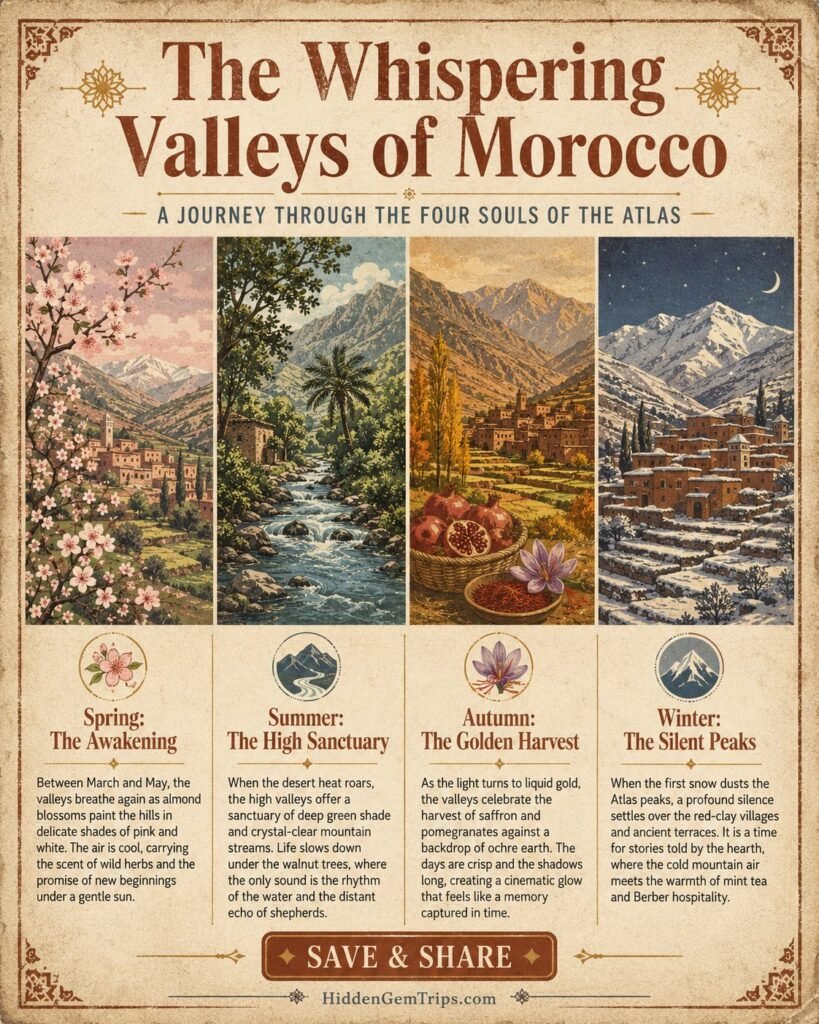
Spring and autumn are generally the sweet spots. March to May can bring blossoms, clearer air, and greener valley scenes, though higher routes may still carry snow or mud depending on the year. September to November often gives warm days, cooler nights, harvest textures, and less punishing light than summer. These seasons also help travelers avoid the most extreme heat in lower areas while keeping mountain travel more comfortable.
Summer is possible, especially in higher valleys like Ait Bouguemez, but lower routes and road days can be hot. Plan early walks, shaded lunches, and lighter afternoons. Winter can be beautiful, with snow on high peaks and crisp air, but it requires more flexibility. Some routes may be cold, icy, or temporarily difficult. Heating in guesthouses varies. A romantic mountain winter becomes less romantic when you packed like you were going to a beach club.
Ramadan changes daily rhythms. Many tourism services still operate, especially in established areas, but meals, energy, and opening hours can shift. Travel respectfully: avoid eating conspicuously in public during fasting hours in conservative areas, ask your hosts about timing, and be patient. Eid periods can also affect transport and accommodation. Morocco is not closed during Ramadan; it is simply moving to a different rhythm.
Content creators often obsess over the “best” visual season, but the better question is what story you want. Spring tells a water-and-renewal story. Autumn tells a harvest-and-light story. Winter tells a mountain-resilience story. Summer tells a heat-management story. None is automatically wrong. The weak version is pretending every season offers the same itinerary. It does not.
Original Angle: The Valley Ladder Framework
Most Morocco itineraries are built like a shopping list: Marrakech, desert, Fes, Chefchaouen, done. The Valley Ladder Framework gives you a different structure. Each valley should move the traveler one rung deeper in understanding. Ourika teaches proximity and water. Ouirgane teaches recovery and responsibility. Imlil teaches mountain systems. Azzaden teaches silence and effort. Ounila teaches heritage movement. Ait Bouguemez teaches agricultural time. Skoura teaches oasis fragility.
This framework makes the article more than “seven pretty places.” It gives the reader a way to choose. If they only have three days, they can pick three rungs. If they have ten days, they can climb the full ladder. If they are traveling with older parents, they may choose Ourika, Ouirgane, Ounila, and Skoura. If they are hikers, they may prioritize Imlil, Azzaden, and Ait Bouguemez. If they are architecture lovers, Ounila and Skoura become essential. The route becomes personal without becoming random.
The framework also prevents over-tourism thinking. Instead of asking which valley is the most hidden, the traveler asks what kind of relationship each valley invites. That question is more mature and more useful. It also aligns with the best HiddenGemTrips pieces about remote landscapes, from the Ruaha safari guide to the Simien Mountains hike and the Ennedi Massif guide. The pattern is the same: the place is not only beautiful; it changes how you should behave.
Use the Valley Ladder as a planning tool and an editorial spine. Each section of a trip report, reel series, or photo essay can focus on one rung. That gives the content more depth than another “Morocco is magical” caption. Morocco is not magical because it exists for travelers. It is powerful because its landscapes hold systems, histories, and human work that deserve attention beyond admiration.
Final Thoughts: Go Beyond Marrakech, But Do It Gently
Morocco quiet valleys are not an escape from the real Morocco. They are part of the real Morocco that many travelers never give enough time. Marrakech may open the door, but the valleys teach you how the country breathes outside the medina. Rivers, passes, orchards, kasbahs, guesthouses, terraces, and palm groves all tell a story that cannot be understood from a rooftop dinner alone.
The best route beyond Marrakech is not the one with the most stops. It is the one with the cleanest rhythm. Start close, go slower, pay locally, ask before photographing, hire guides where they add safety and context, and leave room for weather, road conditions, and human conversation. Travel does not become deeper because you move farther. It becomes deeper because you stop treating distance as achievement.
If you only remember one thing, remember this: quiet places are not quiet because nothing is happening. They are quiet because you finally stopped making so much noise. Morocco’s valleys have plenty to say. Walk lightly enough to hear them.
FAQ: Morocco Quiet Valleys Beyond Marrakech
1. What are the best Morocco quiet valleys near Marrakech for a first trip?
Ourika, Ouirgane, and Imlil are the easiest first choices because they are relatively close to Marrakech and have established guesthouses, guides, and transport options. Ourika works for a day trip, Ouirgane is better for a quiet overnight, and Imlil is best for travelers who want mountain atmosphere without necessarily climbing Toubkal.
2. Can I visit Morocco quiet valleys without renting a car?
Yes, but the route becomes easier with a private driver or guided transfer, especially if you want to combine multiple valleys. Public transport and shared taxis can work for simple point-to-point travel, but they are less convenient for a seven-stop route with photo pauses, village stays, and flexible timing.
3. Is it safe to visit the High Atlas after the 2023 earthquake?
Many areas welcome visitors, but conditions vary by village, road, and season. Check current local advice through guesthouses, guides, and official travel guidance before finalizing plans. Travel respectfully in affected areas, avoid disaster tourism behavior, and support local stays and guides where appropriate.
4. How many days do I need for Morocco quiet valleys beyond Marrakech?
Three days can cover a light version with Ourika, Ouirgane, and Imlil. Seven days can add Ounila and Skoura. Ten to fourteen days allows a deeper route with Azzaden and Ait Bouguemez. The best trip is not the fastest trip; it is the one that gives each valley enough breathing room.
5. Which valley is best for slow travel in Morocco?
Ait Bouguemez is one of the strongest slow-travel choices because it requires more time and rewards longer stays. Ouirgane and Skoura are also excellent for slower travelers who want quiet guesthouses, walks, and landscape atmosphere without intense trekking.
6. Do I need a guide in these valleys?
You do not need a guide for every stop, but a local guide is strongly recommended for Imlil, Azzaden, Ait Bouguemez, and any unfamiliar hiking route. Guides add safety, cultural context, route knowledge, and local economic benefit.
7. What should I wear in Morocco’s quiet valleys?
Wear comfortable, modest clothing that works for walking and village settings. Lightweight long trousers, breathable tops, a scarf or buff, sun protection, and layers for cool evenings are practical. Avoid treating rural villages like resort spaces; modesty reads as respect.
8. Are these valleys good for families?
Ourika, Ouirgane, Ounila, and Skoura can work well for families if drive times are realistic and walks are chosen carefully. Imlil can also work with older children who are comfortable on uneven paths. Azzaden and Ait Bouguemez require more planning and may be better for families used to mountain travel.
Disclaimer
This article is for general travel planning and editorial information only. Road conditions, guide availability, accommodation quality, weather, safety guidance, and post-earthquake recovery conditions can change. Always verify current conditions with local hosts, licensed guides, transport providers, and official travel advisories before booking or traveling. HiddenGemTrips does not replace professional safety, medical, legal, or government advice.