
Tana Toraja Slow Travel Is a Way of Reading the Highlands
Tana Toraja slow travel is not about racing through cliff burials, buffalo markets, coffee stops, and photogenic tongkonan roofs. It is a way of moving slowly enough to understand how those elements connect. This guide organizes the journey around seven “culture roads”: the Rantepao orientation road, the Batutumonga highland road, the tongkonan settlement road, the coffee road, the market and buffalo economy road, the ancestral memory road, and the quiet village return road. Some are literal routes. Others are planning lenses that change what you notice.
That distinction matters because Toraja is easy to flatten into spectacle. A rushed itinerary can reduce the region to funerals, graves, and dramatic architecture. A slower itinerary reveals a living highland landscape: houses and granaries linked to lineage, agricultural land linked to family obligation, coffee linked to income, and ceremonial spaces linked to communities that continue to use them. The point is not to “discover” a place that already knows itself. The point is to arrive with enough time, humility, and practical preparation to understand more than the headline images.
This is a research-based guide, not a personal trip report. The recommendations below synthesize official and reputable sources, then turn that material into a planning framework. Where access, schedules, local etiquette, or safety conditions can change, treat the guidance as a starting point and verify the current situation close to departure. About Hidden Gem Trips explains how we research, label, and review guides.
Quick Planning Snapshot
| Planning question | Research-led recommendation | Why it matters |
| Best base for a first visit | Rantepao is usually the most practical base for guides, accommodation, food, and northern routes. | It reduces daily repositioning and gives you time to orient before cultural visits. |
| Suggested pace | Five days in the Toraja area is workable; six or seven is better if you want real buffer. | Long transfers, rain, road conditions, and cultural access reward flexibility. |
| Access from Makassar | Overland buses/private transfers remain common; scheduled flights to Toraja Airport (TRT) may also be available. Verify current operations. | Official tourism pages currently describe both road and air options, so fixed “only way” claims age badly. |
| Cultural visits | Use local guidance for ceremonies, burial sites, and less obvious village visits. | Interpretation, consent, and appropriate behavior matter more than simply reaching a pin on a map. |
| Core themes | Highland roads, tongkonan settlements, coffee, markets, burial landscapes, viewpoints, and everyday village life. | This balances the famous cultural imagery with living economy and landscape. |
| Main planning mistake | Treating ceremonies as guaranteed attractions or overloading the itinerary. | Toraja works better when public access and local appropriateness shape the day. |
Why Slow Travel Works Better in Toraja
UNESCO’s Tentative List describes the Tana Toraja Traditional Settlement as a series of traditional settlements and associated burial or ceremonial grounds. The nomination describes a cultural landscape that can include tongkonan houses, granaries, burials, ceremonial grounds with menhirs, rice fields, bamboo forests, and grazing areas. It also places the wider landscape across hilly terrain and plateaus ranging roughly from 300 to 2,800 meters above sea level. That is a useful corrective to the idea that Toraja is one attraction or one village.
Slow travel lets that landscape become part of the interpretation. The road to a settlement, the spacing of houses and granaries, the rice fields around a village, and the transition from town to ridge all help explain why the region makes less sense as a checklist. Ke’te Ke’su, for example, is described by Visit Toraja as a settlement that combines tongkonan houses, granaries, a ceremonial ground, burial areas, and surrounding rice fields. Bori’ Parinding links a megalithic ceremonial ground to burial space. Batutumonga adds a highland perspective over terraced fields and valleys.
A slower schedule also reduces the temptation to chase ceremonies. Rambu Solo’ and other ceremonies are not daily tourist performances. Whether visitors are welcome, where they may stand, what contribution is appropriate, and what may be photographed are questions best answered locally. Building a trip around villages, coffee, markets, architecture, and landscape makes the journey worthwhile even when no ceremony is accessible.
Where Tana Toraja Is — and How to Reach the Highlands
Toraja lies in the highlands of South Sulawesi. In practical travel terms, visitors often move between Tana Toraja Regency and North Toraja, with Makale and Rantepao serving different roles. Rantepao is the better-known visitor base for many northern cultural sites and highland routes; Makale remains important as the administrative center of Tana Toraja Regency and for access to southern areas.
The most important update for planning is that access information should not be written as a permanent rule. One current Indonesia Travel destination page still describes the classic overland journey from Makassar to Rantepao at around eight hours. A newer Indonesia Travel feature, however, also describes direct air access to Toraja Airport (TRT) in Mengkendek, followed by a road transfer to Rantepao or Makale. In practice, flight availability can change, so check current airline schedules before building an itinerary around the airport.
Overland travel remains a robust planning option. Current official tourism material describes intercity buses from Makassar to Rantepao or Makale taking roughly eight to ten hours, depending on the service and road conditions. Private transfers cost more but can make sense for families, older travelers, photographers carrying equipment, or anyone who values schedule control. Whichever option you choose, leave recovery time rather than treating the arrival evening as an extra sightseeing block.
A Respectful Mindset: Access Is Not Entitlement
Toraja attracts attention because some practices are visually powerful and unfamiliar to outsiders. Curiosity is not the problem. The problem begins when curiosity becomes extraction — when a visitor treats grief, ancestral memory, or a working market as raw material for content. A slower approach asks a more useful set of questions: Is this visit appropriate today? Who is hosting or guiding me? What may I photograph? Where should I stand? What should I contribute? What should remain private?
UN Tourism’s sustainable-tourism framework emphasizes environmental, economic, and socio-cultural impacts, including the needs of host communities. Applied to Toraja, that means supporting local guides and businesses, respecting visitor rules at cultural sites, reducing intrusive photography, and avoiding the assumption that a ceremony exists for outsiders. It also means telling better stories afterward: architecture, agriculture, coffee, markets, kinship, and contemporary life belong in the narrative alongside funerary traditions.
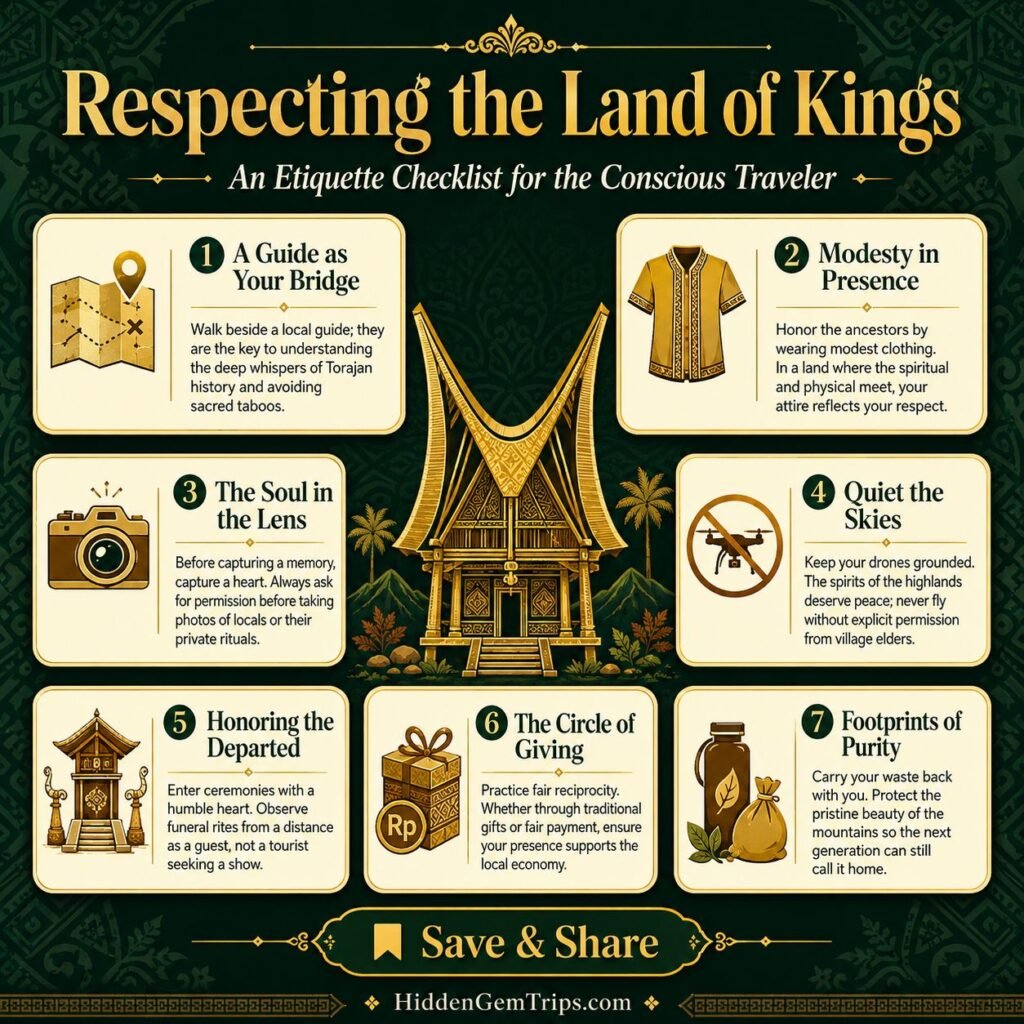
Use a local guide when cultural interpretation matters. Ask before photographing people, ritual moments, private homes, or tau-tau. Dress modestly. Do not touch bones, effigies, carvings, ceremonial objects, or other heritage material. Avoid drones around villages and ceremonies unless you have clear permission from the relevant authorities and community. Most importantly, do not turn uncertainty into a promise: if a guide or host says a site or ceremony is not appropriate for visitors that day, change the plan.
The 7 Hidden Culture Roads Through Tana Toraja
The seven roads below are a planning framework, not an official route network. Their value is that they distribute your attention across landscape, living culture, economy, and heritage instead of concentrating the trip on a few famous sites.
Road 1: The Rantepao Orientation Road
Use Rantepao as more than a hotel base. After arrival, recover, walk the town, find a local guide or knowledgeable host, and ask what is actually appropriate and practical during your stay. Which roads are in good condition? Which sites are crowded? Are there public cultural events? Is there a market day that fits your schedule? This first road protects the rest of the trip from becoming a rushed scavenger hunt.
Road 2: The Batutumonga Highland Road
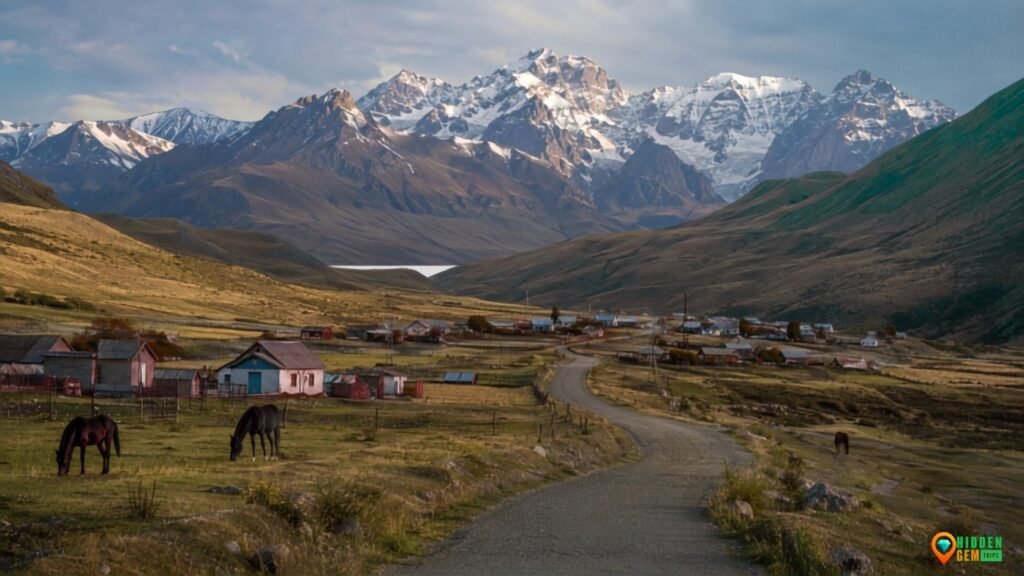
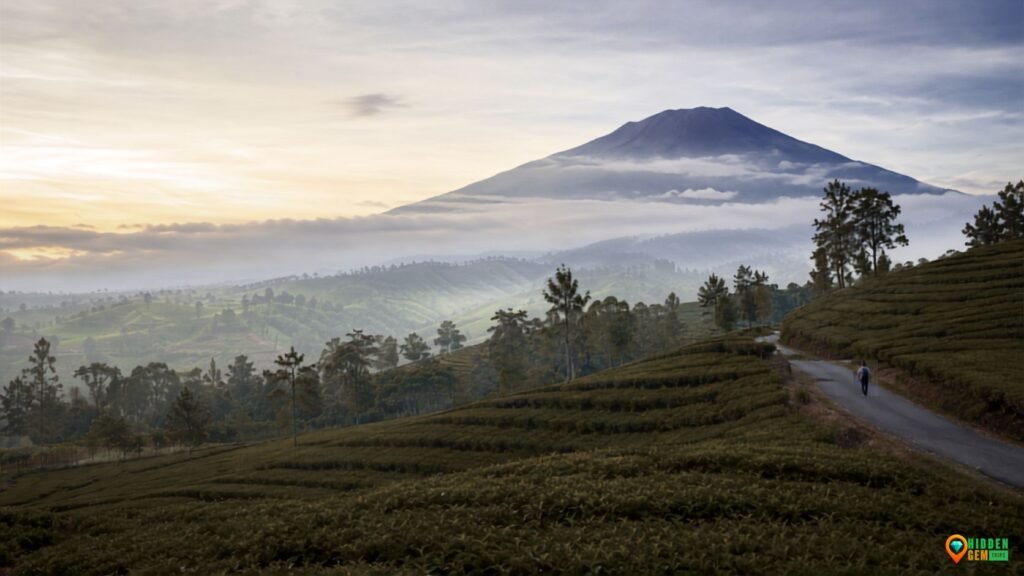
The road toward Batutumonga changes the scale of the trip. Visit Toraja places Batutumonga on a ridge above Rantepao, reached by winding roads through terraced fields and highland scenery. Treat the area as a zone rather than one viewpoint. Pause at ridges, walk where conditions and local guidance allow, and use the landscape to understand why agriculture, settlement, weather, and road access shape daily life.
Road 3: The Tongkonan Settlement Road
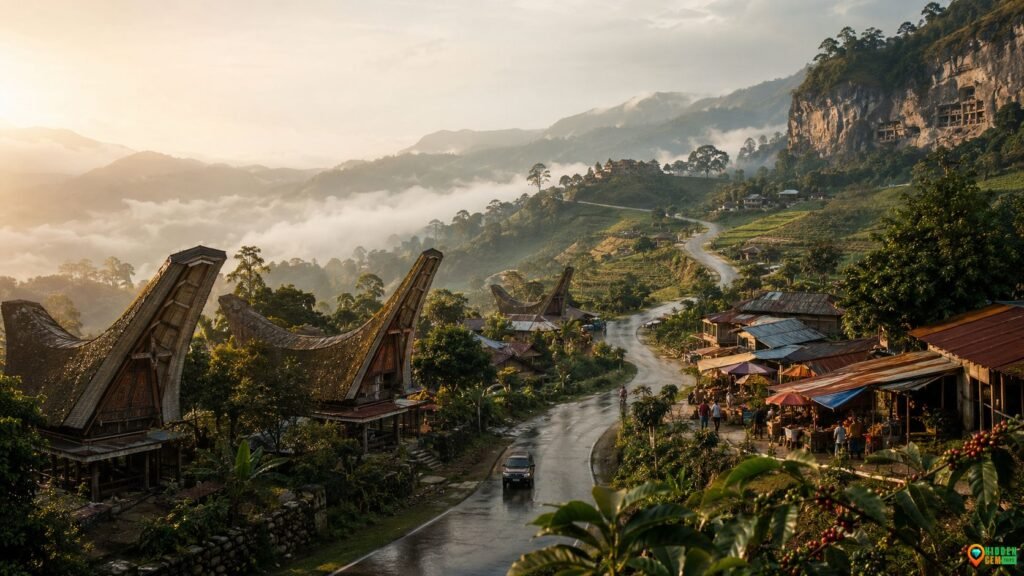
A tongkonan is not merely an attractive roofline. Read the settlement as a system: ancestral houses, granaries, open space, ceremonial areas, agricultural land, and burial landscapes can relate to one another. UNESCO’s nomination and Visit Toraja’s descriptions of places such as Ke’te Ke’su and Pallawa’ are useful starting points. A guide can help explain what is public, what belongs to a particular family, and which architectural details carry social meaning.
Road 4: The Coffee Road
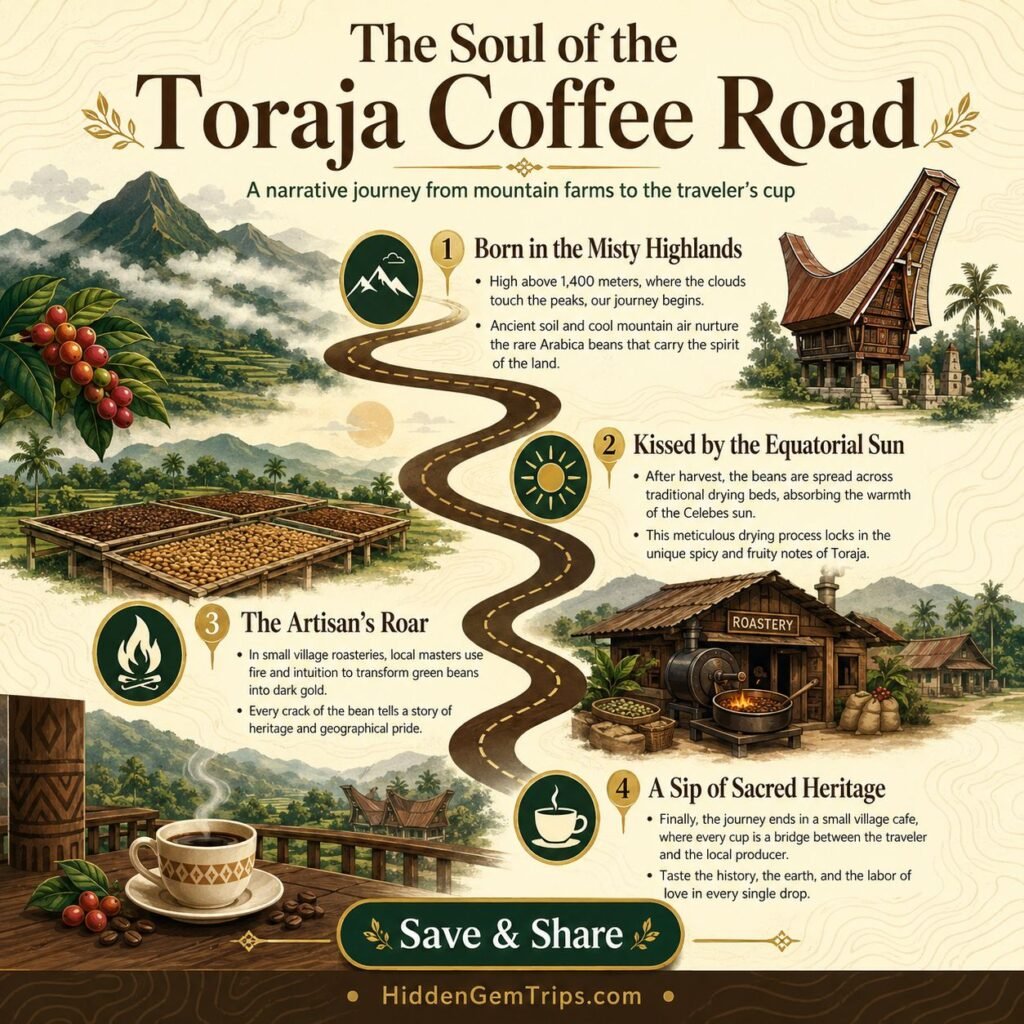
Toraja coffee offers a slower, lower-pressure way to connect landscape with livelihood. Visit Toraja describes highland coffee grown around 1,500 meters above sea level and emphasizes its connection to local environmental conditions. Build a day around a good cup in Rantepao, a local roastery or producer visit when appropriately arranged, and a conversation about processing, altitude, and local value. The point is not to perform expertise; it is to understand how a globally recognized product is tied to place.
Road 5: The Market and Buffalo Economy Road
Markets show Toraja as a living economy rather than a heritage display. Livestock, food, household goods, and everyday transactions are part of the social landscape. Buffalo carry economic and ceremonial significance, but a market is still first and foremost a working place for local people. Stay out of transactions, ask before photographing people, and let a guide explain context rather than treating the market as a photo set.
Road 6: The Ancestral Memory Road
This is the most sensitive road: cliff burials, caves, tau-tau, ceremonial grounds, and megalithic sites. Bori’ Parinding, Lemo, Londa, Lo’ko’ Mata, and other sites are visually striking, but the better frame is ancestral memory rather than exoticism. Follow local rules, do not touch heritage objects or human remains, and avoid sensational captions. If a site feels intimate or emotionally charged, the camera should become secondary to the visit.
Road 7: The Quiet Village Return Road
Leave one half-day without a famous attraction. Revisit a cafe, walk a quieter lane near your accommodation, stop at a roadside view, or return to a place where you now recognize the rhythm. This is not filler. It is a deliberate antidote to extraction: the trip ends with ordinary life, not another trophy stop. The memories that remain may be smaller, but they are often more human.
A Practical Highland Circuit: Rantepao, Batutumonga, Pallawa’, Bori’, and Ke’te Ke’su
If you want a named route without turning the trip into a checklist, build a northern circuit around Rantepao. Batutumonga can anchor the highland landscape day; Pallawa’ and Bori’ add settlement and ceremonial context; Ke’te Ke’su can help illustrate how tongkonan houses, granaries, ceremonial space, burial areas, and rice fields sit within one cultural landscape.
Visit Toraja’s own suggested itineraries combine many of these places across several days rather than compressing them into one frantic loop. Its five-day and eight-day examples also reinforce the value of a dedicated Batutumonga day and separate cultural-site days. The exact sequence should remain flexible because road conditions, weather, site access, and local events can change.
A useful rule is to choose two or three meaningful stops in a day and give your guide time to interpret them. The strongest Toraja itinerary is rarely the one with the most pins. It is the one that leaves enough space to understand what those pins are connected to.
Coffee Roads: Let Toraja Arabica Structure a Day
Coffee is one of the easiest ways to create a slower itinerary without manufacturing a cultural encounter. Visit Toraja presents Toraja coffee as a highland product associated with elevations around 1,500 meters and local environmental conditions. Indonesia’s intellectual-property learning material also uses Kopi Toraja as an example when explaining how geographical factors can be linked to distinctive regional products.
For travelers, the useful takeaway is not a tasting-note performance. It is a planning method. Start with a cafe in Rantepao. Ask where the beans were grown or roasted. If a farm, producer, or roastery welcomes visitors, arrange the visit through a local contact rather than arriving unannounced. Buy beans from a reputable local seller if you want a souvenir. That keeps the experience connected to everyday economic activity instead of making ceremonial access the center of the trip.
Coffee also creates a natural pause. A morning cup, a producer conversation, a drive through highland villages, and a slow lunch can fill a meaningful day without forcing a private ritual into the schedule. For a destination where some of the most photographed experiences are sensitive, that matters.
Living Culture: Funerals, Tongkonan, Tau-Tau, Markets, and Everyday Etiquette
Toraja’s international image is often dominated by funerary traditions. That is understandable, but incomplete. The cultural landscape also includes architecture, agriculture, kinship, carving, Christianity, Aluk Todolo heritage, migration, markets, coffee, and contemporary work. A respectful guide should keep those layers visible rather than reducing the region to death rituals.
If you are welcomed to a funeral ceremony, follow local guidance. Ask about clothing, where visitors may sit or stand, whether a contribution is customary, and which moments should not be photographed. Do not assume that animal sacrifice is there for entertainment or that emotional moments are available for close-up content. A camera is optional; permission is not.
Tongkonan compounds deserve similar care. They can be family and ceremonial spaces, not generic open-air museums. Tau-tau represent deceased people and family memory; burial sites may contain human remains. Treat those places accordingly. At markets, remember that transactions take priority over visitor photography. A slower traveler should become less visible when local life needs space.
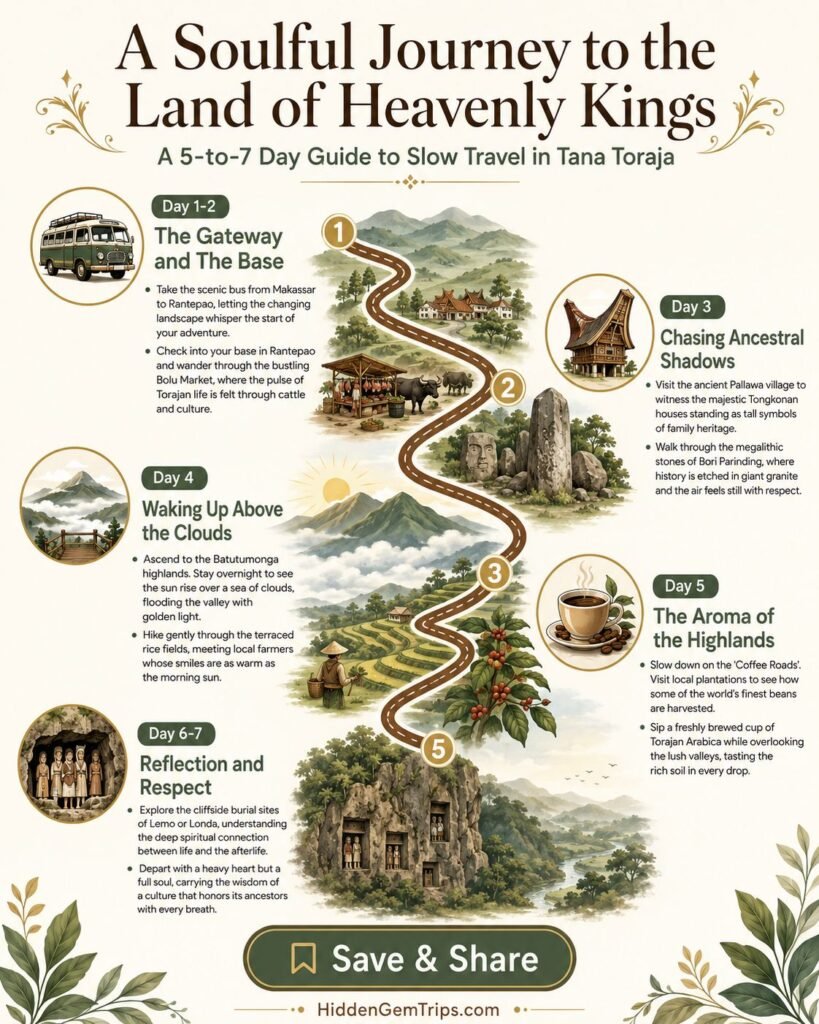
A 5-to-7 Day Tana Toraja Slow Travel Itinerary
The following structure is deliberately flexible. It assumes you are already in South Sulawesi and that transport, weather, and cultural access are checked locally. For a flexible route-building framework, see the Two-Base Itinerary Method.
| Day | Suggested focus | Slow-travel logic |
| Day 1 | Arrival / transfer and Rantepao orientation | Recover, confirm transport, ask about current road conditions and culturally appropriate visits. |
| Day 2 | Rantepao + one or two cultural sites | Learn the context before attempting a full highland circuit. |
| Day 3 | Batutumonga + settlement route | Combine landscape, walking, viewpoints, Pallawa’, Bori’, or another locally advised stop. |
| Day 4 | Coffee road | Use cafes, roasteries, producers, and highland scenery as the day’s structure. |
| Day 5 | Market or ancestral-memory road | Choose based on market timing, local guidance, and access. Do not force ceremony attendance. |
| Day 6 | Quiet village return road | Revisit, walk, rest, or add a low-pressure local route. |
| Day 7 | Departure / buffer | Allow for road, weather, and transport variability rather than scheduling a fragile connection. |
Costs, Transport, and Practical Planning
Avoid fake precision. Toraja costs vary by season, group size, transport type, guide arrangement, accommodation standard, entrance fees, and whether your itinerary includes private transfers. A useful budget should therefore be built by category: getting to Toraja, accommodation, local transport, guide fees, site fees or community contributions, food, coffee experiences, and a contingency buffer. For more planning frameworks, browse Hidden Gem Trips Travel Guides.
The biggest transport choice is usually how much control you want. Overland buses are the budget-oriented option. Private transfers cost more but can reduce friction. Flights to Toraja Airport can shorten the journey when schedules suit your dates, but they should not be treated as guaranteed until ticketed. Inside the highlands, a guide with car or motorbike-based transport can add more value through interpretation than through navigation alone.
Accommodation ranges from simple guesthouses to more comfortable hotels. Choose based on location, local knowledge, hot-water expectations, noise tolerance, Wi-Fi needs, and transport assistance rather than star rating alone. If you work remotely, confirm connectivity directly with the property. Highland travel is a poor place to discover that a “good Wi-Fi” review meant one strong signal beside reception.
Rain protection, comfortable walking shoes, light layers for cooler mornings and evenings, modest clothing, sun protection, a refillable bottle, and a small daypack are more useful than expedition cosplay. Roads can be wet or uneven, and cultural visits may involve walking. Pack for flexibility rather than photos.
A Note on Tourism Data and Current Conditions
BPS-Statistics Sulawesi Selatan publishes annual and monthly tourism indicators for the province, including hotel occupancy, visitor flows, and length of stay. The 2024 annual publication was released in September 2025, and the latest provincial monthly release available during this review includes December 2025 data. Those figures are useful for understanding the broader tourism context, but they should not be presented as Toraja-specific demand statistics unless the underlying dataset supports that level of detail.
For the traveler, the practical rule is simpler: provincial tourism growth does not make a local road, ceremony, flight, or guesthouse schedule predictable. Verify the thing you are actually relying on.
6 Responsible Travel Rules for Toraja
- Hire local context, not just transport. A local guide can help with etiquette, interpretation, access, and what is appropriate on a particular day.
- Slow the camera down. Ask before photographing people. Avoid intrusive images of mourners, human remains, private homes, or sensitive ritual moments.
- Respect sacred and private space. Stay on designated paths, follow instructions, and do not touch tau-tau, bones, carvings, ceremonial objects, or burial structures.
- Pay fairly. Guide fees, local transport, food, coffee, entrance fees, and locally produced goods are part of the destination economy. Do not turn “budget travel” into pressure on local providers.
- Leave margin for weather and roads. Mountain journeys are not improved by pressuring drivers to rush. Build buffer rather than treating every delay as failure.
- Tell a fuller story afterward. Do not reduce Toraja to “death culture.” Include architecture, coffee, agriculture, markets, landscape, contemporary life, and the limits of what you were entitled to see. A related Indonesia example is Tanjung Puting beyond wildlife cruises, which also looks beyond a destination’s headline attraction.
Who Tana Toraja Slow Travel Fits — and Who May Prefer Another Trip
Toraja fits travelers who enjoy cultural depth, mountain landscapes, long road journeys, local guides, architecture, coffee, and patient observation. It suits people who would rather understand three places well than collect ten place names. Photographers can find extraordinary material here, but the best work will usually come from restraint and context rather than privileged access to grief.
The destination may be a poor fit if you need short transfers, resort convenience, predictable weather, or guaranteed entertainment. Families can visit successfully with slower days and comfortable transport. Older travelers can prioritize accessible sites and private transfers. Solo travelers can use Rantepao as a practical base, but should still rely on local advice for remote roads and cultural visits.
For remote workers, Toraja is better treated as a travel destination first and a workplace second. Some hotels and cafes may offer usable connectivity, but a research-based guide should not market the region as a guaranteed digital-nomad hub without current, property-level evidence.
Conclusion: Let the 7 Culture Roads Change the Pace
The best Tana Toraja slow travel itinerary is not built by adding more stops. It is built by changing what counts as a worthwhile stop. Orient yourself in Rantepao. Let Batutumonga explain the highlands. Read tongkonan settlements as social landscapes. Use coffee to connect place and livelihood. Treat markets as working economies. Approach burial and ceremonial spaces as ancestral memory. Leave time for a village road that never becomes a viral reel.
Toraja’s famous images may be what first catch your attention, but they are not the whole story. A tongkonan is more than a silhouette. A buffalo is more than a market photo. Coffee is more than a souvenir. A ceremony is not content inventory. The slower the itinerary, the more room there is for those distinctions to matter.
Go with time, local guidance, fair money, modest clothing, and fewer assumptions. Verify the current route before departure. Accept that some access will be uncertain. In a place where living culture and ancestral memory share the same landscape, a little uncertainty is not a flaw in the itinerary. It is a reminder that you are visiting someone else’s home, not a stage built for your schedule.
FAQ
1. What are the 7 hidden culture roads in this Tana Toraja slow travel guide?
They are seven planning lenses: the Rantepao orientation road, Batutumonga highland road, tongkonan settlement road, coffee road, market and buffalo economy road, ancestral memory road, and quiet village return road. They are not an official route network.
2. Can I travel solo in Tana Toraja?
Yes, many independent travelers use Rantepao as a base, but cultural sites, ceremonies, and remote routes benefit from local guidance. Recheck current transport and road conditions rather than relying on an old fixed itinerary.
3. Can visitors attend a Toraja funeral ceremony?
Sometimes, when the family or community welcomes visitors and local guidance confirms that attendance is appropriate. Ceremonies are not guaranteed performances. Ask about clothing, contributions, where to stand, and photography before participating.
4. Is Toraja coffee worth including in the itinerary?
Yes. Coffee is one of the most practical ways to connect the highland landscape with local production and everyday economic life. Use cafes, local roasters, or producer visits that are genuinely open to visitors.
5. How many days should I plan for Tana Toraja slow travel?
Five days in the Toraja area can work, while six or seven gives more room for highland routes, coffee, markets, weather, cultural access, and rest. Add separate time for travel to or from Makassar if you are going overland.
6. Is flying to Toraja possible?
Current official tourism material describes Toraja Airport (TRT) in Mengkendek as an access option, while overland buses and private transfers from Makassar remain common. Flight schedules can change, so verify availability for your dates before planning around air access.
Disclaimer
This article is for travel planning and editorial information only. Local access rules, road conditions, transport schedules, flight availability, accommodation standards, fees, ceremony access, weather, and cultural expectations can change. Follow community consent, site rules, qualified local guidance, and relevant official information. For health, safety, visa, or emergency matters, use the appropriate official authority for your nationality and destination.