
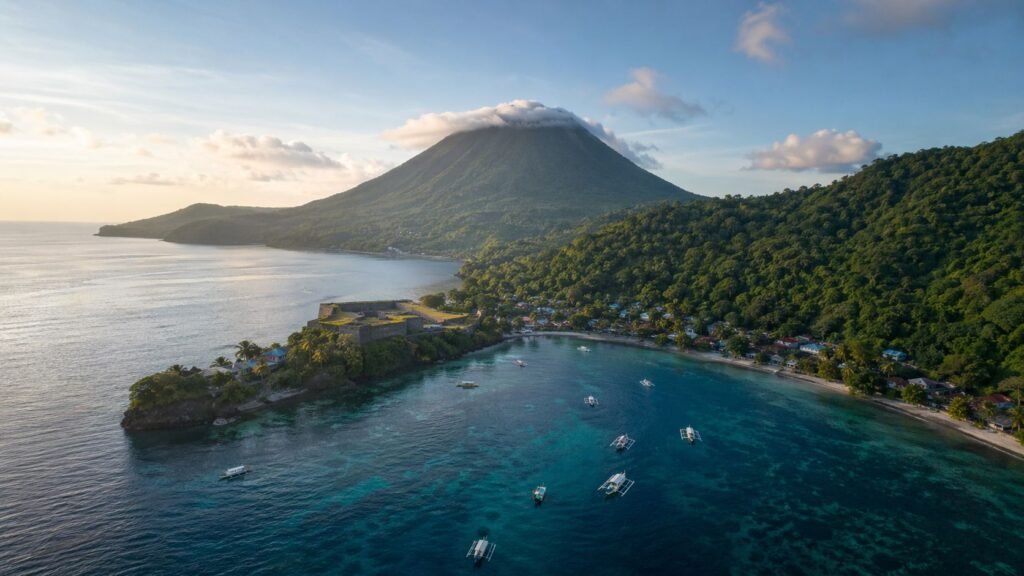
I remember the exact moment I realized the world still had secrets. I was standing on the battlements of Fort Belgica in the Maluku province, the smell of nutmeg drying in the tropical sun wrapping around me, staring out at a perfect, smoking volcanic cone rising directly from the sapphire sea. There were no beach clubs. There were no traffic jams. There was just the gentle hum of a remote Indonesian archipelago that literally changed the course of global history. Before you go on this trip, you might want to read The Ultimate Hidden Gem Travel Guide: How to Find Untouched Paradises in a Crowded World (2026 Edition) to learn more about our main idea.
If you have grown exhausted by the endless queues in Seminyak or the congested roads of Canggu, you are not alone. Much like the paradigm shift we highlighted in the Sumba Revolution, travelers in 2026 are desperately seeking authenticity. They want untouched coral reefs, deep cultural history, and the quiet that makes you forget your smartphone exists.
This is your definitive Banda Islands travel guide. As someone who has navigated the notoriously unpredictable Pelni ships and spent weeks diving these nutrient-rich waters, I am going to walk you through everything you need to know about reaching and exploring this elusive paradise.
This Banda Islands Travel Guide is important for you in 2026
On Hidden Gem Trips, we often talk about “untouched” places. For example, we went to the secret surf locations on Rote Island and the beautiful seas of Lan Ha Bay. However, the Banda Islands operate on an entirely different level of isolation and historical gravity.
Located in the Banda Sea, roughly 2,000 kilometers east of Jakarta, these ten small volcanic islands were once the most contested real estate on Planet Earth. Why? Until the mid-19th century, this speck of land was the only place in the world where nutmeg and mace grew.
Today, the islands are reclaiming their narrative. Instead of colonial empires fighting over spices, modern explorers are arriving to witness some of the most biodiverse marine ecosystems in the Coral Triangle. Reading through any generic Banda Islands travel guide won't tell you the truth: this trip requires patience. The Wi-Fi is spotty, luxury resorts are nonexistent, and the journey is long. But the reward is a destination that feels frozen in a beautiful, vibrant past.
The Manhattan Swap: A History Lesson You Can Touch
You cannot write a comprehensive Banda Islands travel guide without addressing the “Manhattan Swap.” During the 17th century, the British and the Dutch fought brutal wars over these islands. To secure a monopoly on the nutmeg trade, the Dutch made a historic treaty with the British in 1667 (The Treaty of Breda).
The Dutch gave the British a small, seemingly useless swampy island in North America in exchange for the British relinquishing their claim to Pulau Run (one of the tiny Banda Islands). That swampy American island was Manhattan.
When you walk the quiet, car-free streets of Pulau Run today, passing crumbling colonial ruins overgrown with banyan roots, it is mind-bending to realize this tiny strip of land was once traded for New York City. You can learn more about the extensive colonial history of the spice route via the UNESCO World Heritage Center.
Logistics: How to Actually Get There (The 2026 Update)
If getting to the Banda Islands were easy, it would already be ruined by overtourism. The difficulty of transit is the ultimate filter. As we mentioned in our guide on navigating the Mahakam River in Borneo, the journey is half the adventure.
Here is the most up-to-date Banda Islands travel guide logistics breakdown for 2026:
Step 1: Fly to Ambon (AMQ)
Your journey must begin in Ambon, the capital of Maluku. You can catch direct flights to Ambon’s Pattimura Airport from Jakarta (CGK) or Makassar (UPG) using Garuda Indonesia, Batik Air, or Lion Air.
Step 2: Ambon to Banda Neira
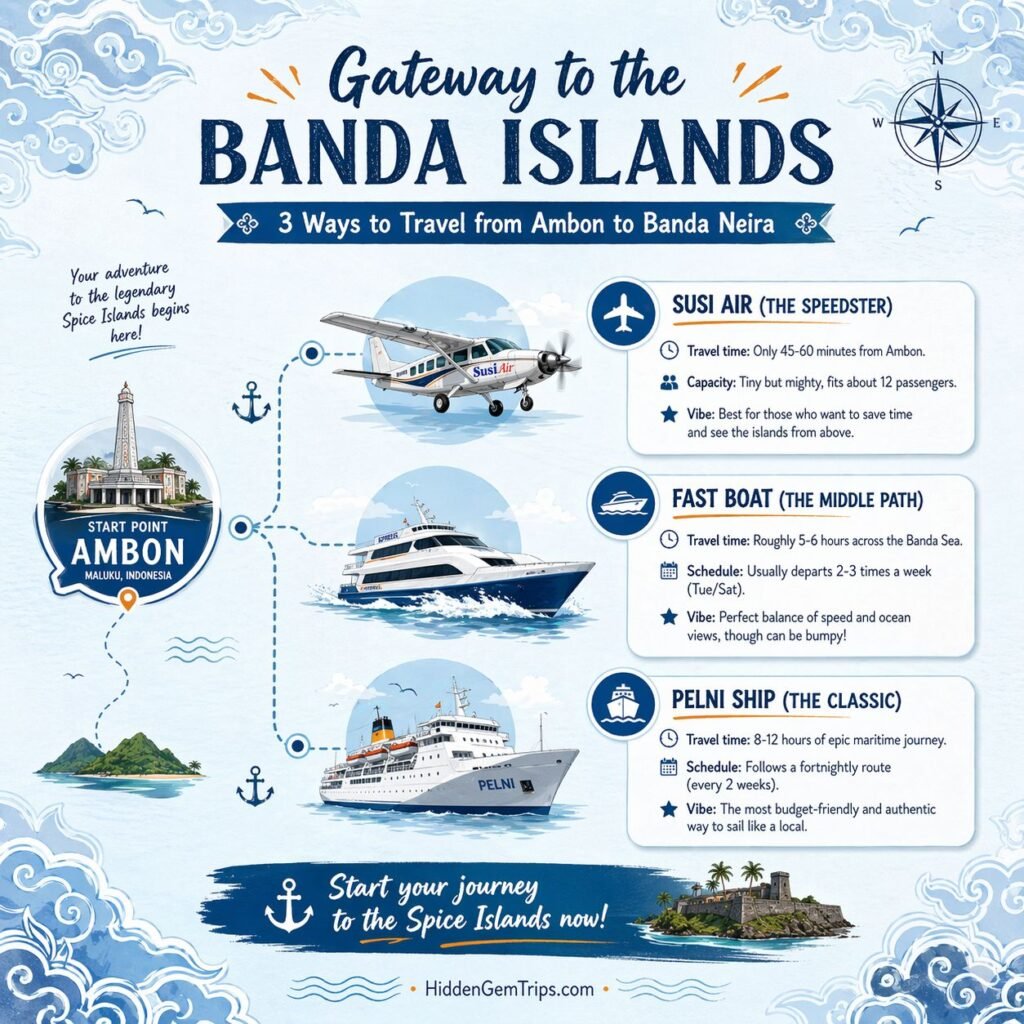
This is where your flexibility will be tested. You have three main options, none of which are perfectly reliable:
- The Fast Boat (Bahari Express): This operates twice a week (usually Tuesdays and Saturdays). The journey takes about 5 to 6 hours. It is air-conditioned but can be a violently bumpy ride if the Banda Sea is rough.
- The Pelni Ship: The slow, massive government ferries (usually KM Nggapulu or KM Pangrango) make the crossing in 12 to 14 hours. It is an incredibly local experience. You can rent a cabin or sleep on mattresses in the economy deck.
- Susi Air Flights: Operating 12-seater pioneer flights from Ambon to the tiny Banda Neira airstrip. The flight takes 45 minutes and offers breathtaking views, but flights are frequently canceled due to wind or weather conditions.
Deep Dive: Decoding the Archipelago
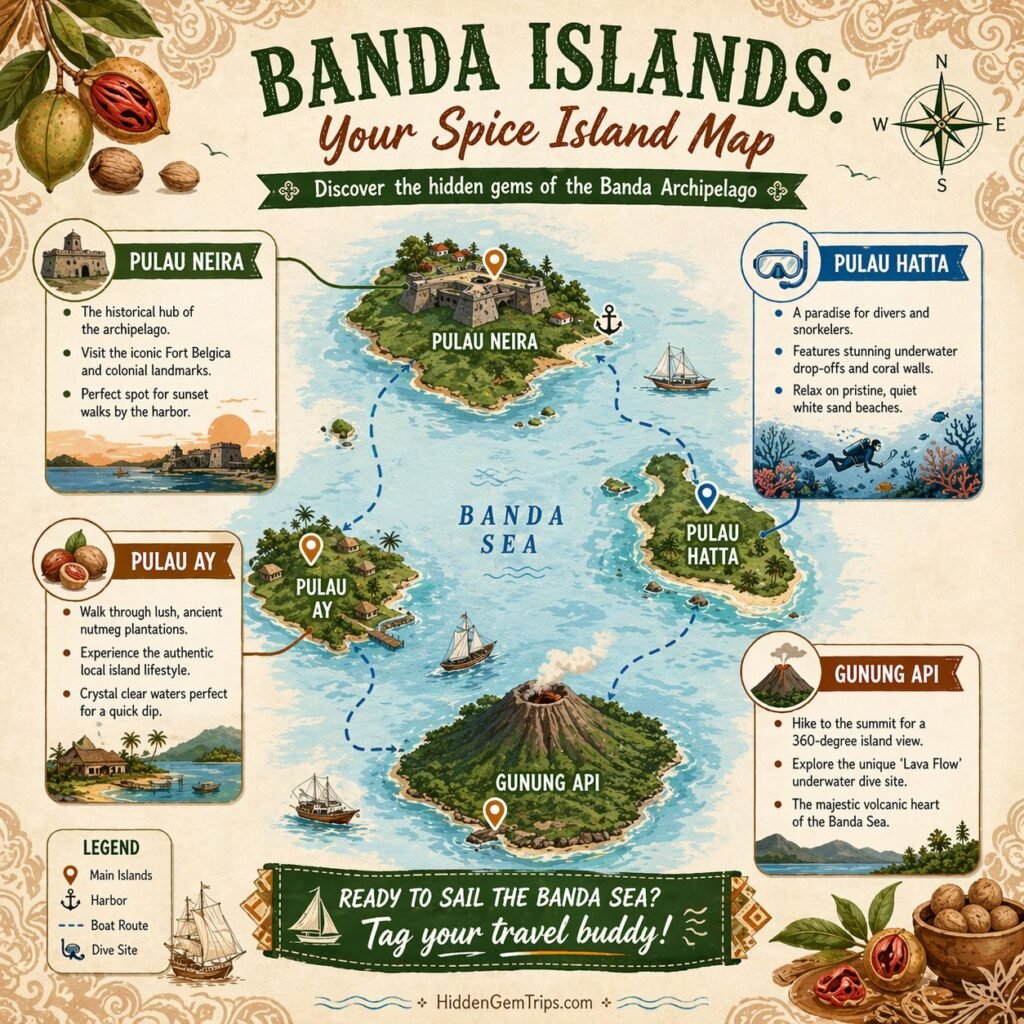
Every island here has its own distinct personality. A critical piece of advice in this Banda Islands travel guide is not to confine yourself just to the main hub.
Banda Neira: The Historic Hub
This is where the boats and planes arrive. It is the only island with motorized traffic (mostly scooters). Here, you must visit Fort Belgica, the old Governor's Mansion, and the maritime museum. The streets are lined with Dutch colonial architecture fading under the equatorial sun.
Pulau Hatta: The Diver's Dream
Named after Indonesia's first vice president, Mohammad Hatta (who was exiled here by the Dutch), this island is famous for its terrifyingly beautiful drop-offs. The coral reef extends for a few meters before plummeting hundreds of meters into the deep ocean. It is a premier location for spotting hammerhead sharks.
Pulau Ay: The Relaxed Escape
If you want to embody the philosophy we discussed in our 2026 Slow Travel Manifesto, head to Pulau Ay. There are no roads here. You walk on sandy paths between simple homestays. The snorkeling right off the beach is world-class, with resident sea turtles and massive schools of bumphead parrotfish.
Gunung Api: The Volcanic Core
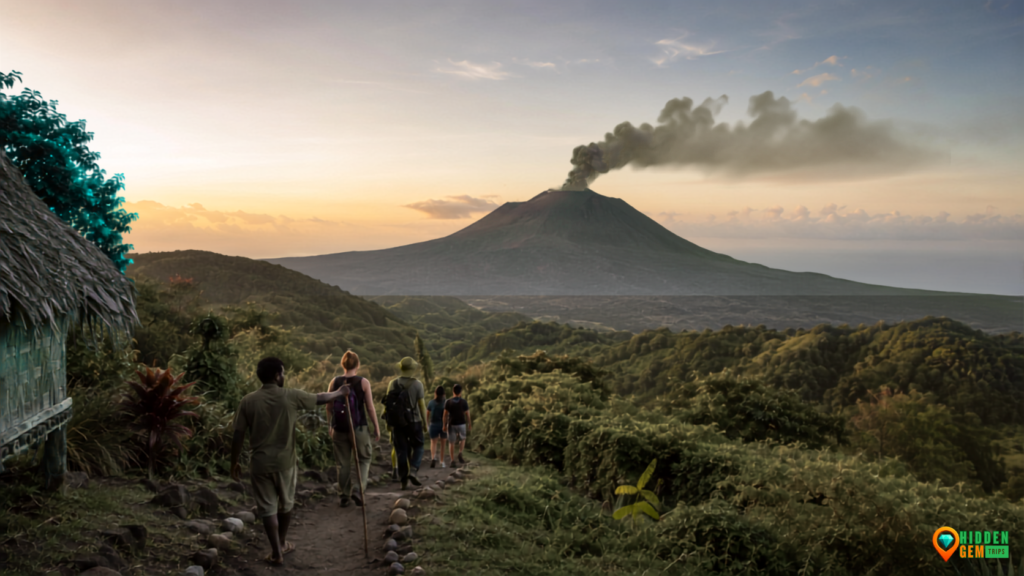
The smoking volcano that dominates the skyline. Hiking to the summit takes about two hours of steep, sweaty scrambling over loose scree. The panoramic view of the archipelago at sunrise is worth the burning calves.
Scuba Diving and Snorkeling: The True Draw
The underwater world here is staggering. According to marine biologists, the Banda Sea hosts over 300 species of reef-building corals. In any reputable Banda Islands travel guide, one specific dive site will continually be highlighted: The Lava Flow.
In 1988, Gunung Api erupted, sending rivers of lava straight into the ocean and destroying the reef. However, in an astonishing display of natural resilience, the coral grew back at a speed that shocked the scientific community. Today, the Lava Flow is covered in massive, pristine table corals and swarming with mandarin fish. Because of the deep oceanic trenches surrounding the islands, upwellings bring cold, nutrient-rich water to the surface, supporting massive pelagic life, including migrating whales and dolphins. You can research the specific marine conservation efforts of this region via the World Wildlife Fund (WWF).
If you are a diver who usually frequents Raja Ampat but hates the soaring prices, this is your solution. In fact, if you found our guide on overpaying for Raja Ampat and discovering the Kei Islands helpful, the Banda Islands offer a similar level of budget-friendly marine majesty.
The Ultimate Banda Islands Travel Guide Packing List
Because you are traveling to a remote outpost, what you bring is critical. Forget rolling suitcases; you will be getting on and off boats in knee-deep water.
- Dry Bags: Essential for boat crossings.
- Reef-Safe Sunscreen: The coral here is pristine. Do not be the person who poisons it.
- Cash: ATMs in Banda Neira often run out of money or lose their network connection. Bring millions of Rupiah in cash from Ambon.
- Seasickness Medication: The Banda Sea is notoriously moody.
- Offline Entertainment: Embrace the lack of connectivity.
For a comprehensive breakdown of technical gear for expeditions like this, review our 12 Best Travel Gear for Island Trips.
Budgeting: Applying Our Mid-Range Hacks
One of the best aspects of the Banda Islands is the cost. While getting there requires a moderate budget, living there is incredibly cheap.
| Expense Category | Estimated Daily Cost (USD) | Notes |
| Accommodation | $15 – $45 | Simple homestays (with meals) to boutique colonial guesthouses. |
| Food & Drink | $5 – $15 | Fresh grilled tuna, nutmeg jam, and local vegetables. |
| Scuba Diving | $35 – $45 per dive | Significantly cheaper than Bali or Komodo. |
| Inter-island Boats | $2 – $10 | Public wooden boats between Neira, Ay, and Hatta. |
This pricing structure aligns perfectly with our philosophy on Affordable Opulence. You are getting a world-class, millionaire-tier pristine environment for backpacker prices. By applying our specific budget hacks for Indonesia, you can comfortably stay here for weeks without breaking the bank.
The Local Cuisine: Tasting the Spice Route
You cannot leave without tasting the local culinary specialties. Nutmeg (Pala) is infused into everything.
- Selai Pala: A sweet, tangy jam made from the fruit of the nutmeg.
- Ikan Kuah Kuning: A bright yellow fish soup heavily spiced with turmeric, lemongrass, and local herbs, usually served with grilled fish.
- Kopi Rarobang: Ambon and Banda's signature coffee, brewed with ginger, cloves, cinnamon, and walnuts.
It is a sensory experience that grounds you entirely in the present moment, a rare feeling in our hyper-connected era.
Final Thoughts: Keep the Secret
Writing a Banda Islands travel guide always comes with a pang of guilt. As travel writers, our goal is to show you the world's most incredible hidden gems, but we also share the anxiety discussed in our piece on Socotra 2.0 —Is our wanderlust destroying the places we love?
The Banda Islands are currently protected by their remoteness. When you visit, do so with immense respect. Learn a few words of Bahasa Indonesia. Ask permission before taking photos of the locals. Do not touch the coral.
This Banda Islands travel guide is your blueprint for escaping the modern tourism machine. It is a place for the patient traveler, the history buff, and the ocean lover. Skip the crowds. Endure the long boat ride. Discover the magic of the true spice islands.
Frequently Asked Questions (FAQ)
1. Are the Banda Islands safe for solo female travelers?
Absolutely. The local community is incredibly tight-knit, respectful, and welcoming to guests. But when you're in distant locations, it's always a good idea to follow the basic safety tips we gave you in The 2026 Solo Female Travel Map.
2. When is the ideal time to go to the Banda Islands?
The best times to visit are from March to April and from September to November. During these months, the Banda Sea is generally calm, making it ideal for smooth boat crossings and providing maximum underwater visibility for scuba diving.
3. Are there ATMs in Banda Neira?
There are a couple of ATMs on the main island of Banda Neira, but they frequently run out of cash or experience network outages. It is highly recommended to bring a sufficient amount of Indonesian Rupiah in cash from Ambon before crossing.
4. Do I need a special visa to go to Maluku?
No, the Maluku province follows the same visa rules as the rest of Indonesia. Just make sure your passport is valid for at least 6 months after you arrive in Indonesia.
5. How is the internet connection on the islands?
Telkomsel is the only somewhat stable provider available, but do not expect high-speed connectivity. Wi-Fi at guesthouses is often unreliable. This is the best place to really unplug from technology.
Disclaimer
The information provided in this article is accurate at the time of writing (April 2026). Please be aware that Pelni ship and Susi Air flight schedules are notoriously subject to change without prior notice due to weather conditions or technical factors. Traveling to remote frontiers carries inherent logistical risks. Hidden Gem Trips is not responsible for any delays, losses, or inconveniences caused by sudden changes in local transportation.