
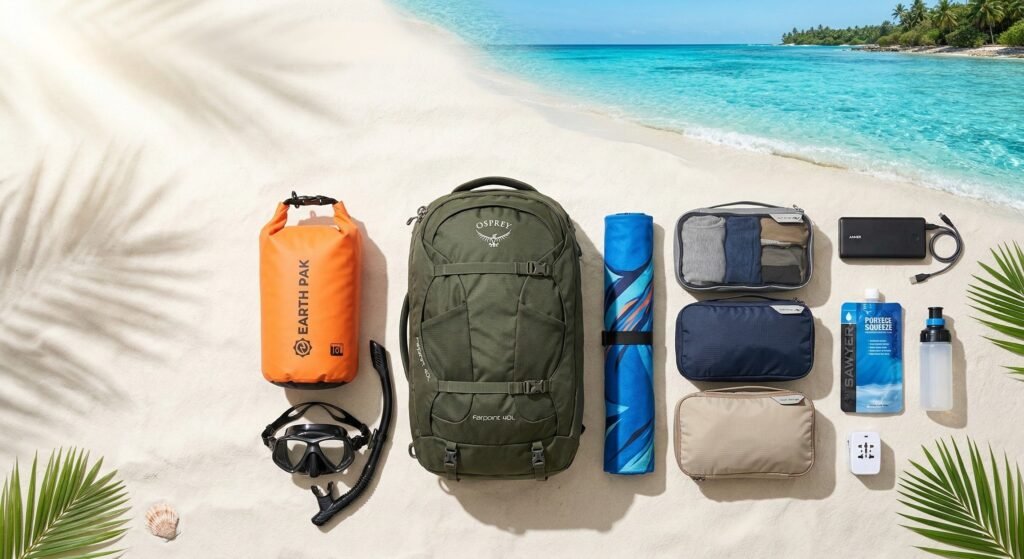
A strong island packing strategy is not about stuffing a suitcase with every clever gadget the internet has ever hyped. It is about building a practical system for heat, saltwater, boat transfers, unreliable power, sudden rain, limited shops, and the simple fact that island travel punishes overpacking faster than city travel does. In a city, a heavy suitcase is annoying. On an island, it can become a full-body regret session between a wet pier, a sandy path, and a scooter ride that was clearly not designed by someone who respects luggage.
This upgraded guide replaces the usual product-first packing list with a destination-first method. The goal is not to tell readers to buy random gear. The goal is to help them understand why certain items matter, when they are worth carrying, when they are dead weight, and how to adapt a packing system for remote islands, beach towns, snorkeling routes, low-crowd escapes, and tropical weekend trips. If your readers are planning trips to places similar to the Kei Islands’ remote beach guide, the Banda Islands travel guide, or a quieter route like Moyo Island low-crowd escape, this article gives them a cleaner way to prepare.
The timing matters too. International tourism did not quietly return; it came back loud. UN Tourism’s 2025 recovery data reported that international tourist arrivals grew again in 2025, with an estimated 1.52 billion overnight visitors worldwide. More travelers are moving beyond famous resort corridors and seeking harder-to-reach coastal destinations. That is great for discovery, but it also means smarter preparation matters more. When remote islands receive more visitors, travelers need gear that protects safety, reduces waste, and respects fragile coastal communities rather than treating them like disposable backdrops.
Why Island Packing Strategy Matters More Than a Normal Beach Checklist
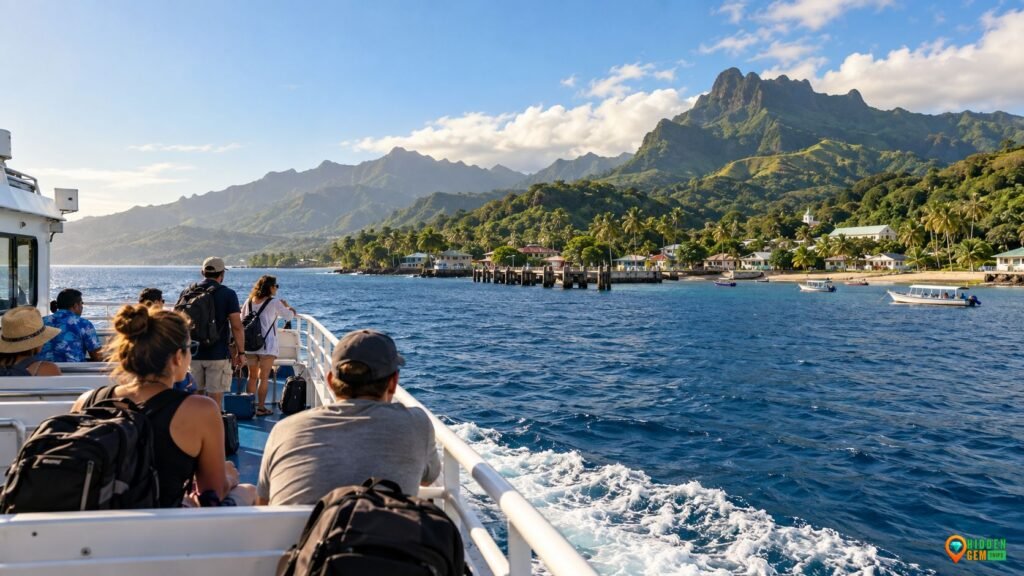
A normal beach checklist assumes convenience. It imagines nearby pharmacies, predictable electricity, taxi access, a hotel lobby, dry roads, and a convenience store that magically appears whenever you forget sunscreen. An island packing strategy assumes friction. Ferries run late. Piers can be wet. Bags may be thrown into small boats. The weather can shift from glassy blue to horizontal rain in twenty minutes. Small islands may have beautiful views and very limited infrastructure. That contrast is the whole charm and also the reason that packing needs more thought.
The biggest mistake travelers make is packing for the Instagram version of the destination, not the operational reality. They see turquoise water, limestone cliffs, palms, and a wooden boat at sunset. They pack linen outfits and a camera. Then they discover that the first real challenge is keeping documents dry, charging a phone, treating a blister, finding drinkable water, separating damp swimwear from clean clothes, and carrying everything across sand without looking like a collapsing wardrobe. Glamour meets logistics. Logistics wins.
This is especially true for hidden-gem travel. Mainstream tourist islands often have a backup for every mistake. More remote destinations may not. A reader using the hidden gem travel guide is likely searching for places with fewer crowds and deeper character. That kind of trip rewards flexible packing. It does not reward maximalist luggage, fragile accessories, or gear that only works in perfect conditions.
Island gear should answer six questions before it earns space in a bag: Will it stay useful when wet? Is it light enough to carry between transfers? Does it work without constant electricity? Is it tolerant of salt and heat? Does it help avoid unnecessary health or safety problems? Does it reduce unnecessary waste or impact on the place? If the answer is no to most of those questions, it is probably not essential. It may be nice, but nice is not the same as useful when your boat leaves at 6 a.m. and your bag weighs like emotional baggage with zippers.
The Island Packing Strategy Framework: Water, Weight, Weather, Power, Health, Respect
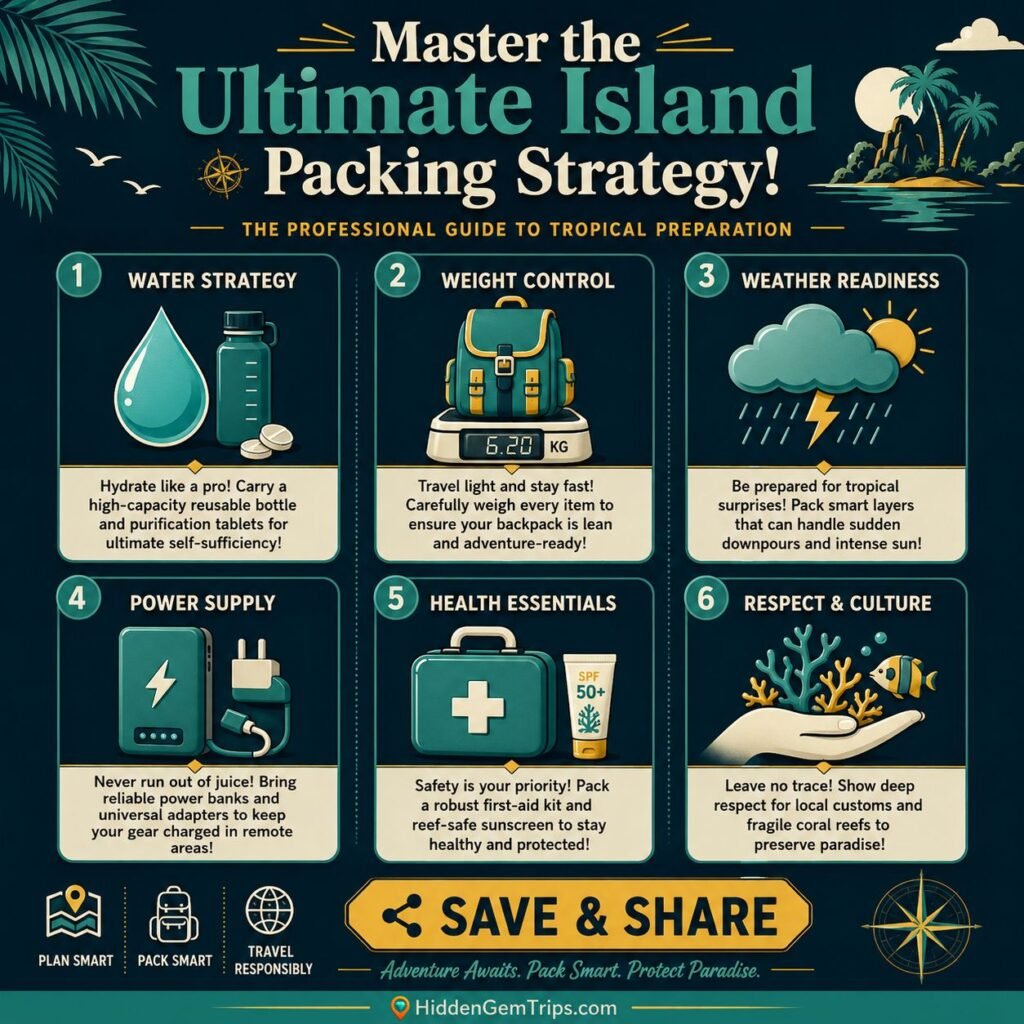
A helpful island packing system can be built around six forces: water, weight, weather, power, health, and respect. Water is obvious. On islands, everything important eventually ends up near water: passport, phone, camera, wallet, medicine, clothes, snacks, and your last remaining patience. Weight matters because island trips often involve boats, stairs, uneven paths, sandy access points, and transfers where rolling luggage becomes comedy. Weather matters because tropical heat, humidity, sun exposure, and sudden rain can turn the wrong fabric or bag into a problem.
Power matters because remote islands do not always offer reliable outlets, stable electricity, or easy charging access. Health matters because small cuts, stomach issues, motion sickness, dehydration, sunburn, insect bites, and reef scrapes can derail a trip faster than a cancelled ferry. Respect matters because island ecosystems and communities are often fragile. What you pack can reduce plastic waste, prevent reef damage, avoid unnecessary single-use purchases, and make you less dependent on scarce local resources.
This framework also helps readers choose between light packing and heavier preparation. A digital nomad staying for one month in a single villa might carry more electronics and backup items. A traveler hopping between the Mergui Archipelago islands, the Derawan Islands marine escape, or small Indonesian beach villages needs a leaner setup. The right answer changes with the route. The strategy stays the same: carry fewer things that do more jobs.
Quick Island Travel Gear Checklist for 2026
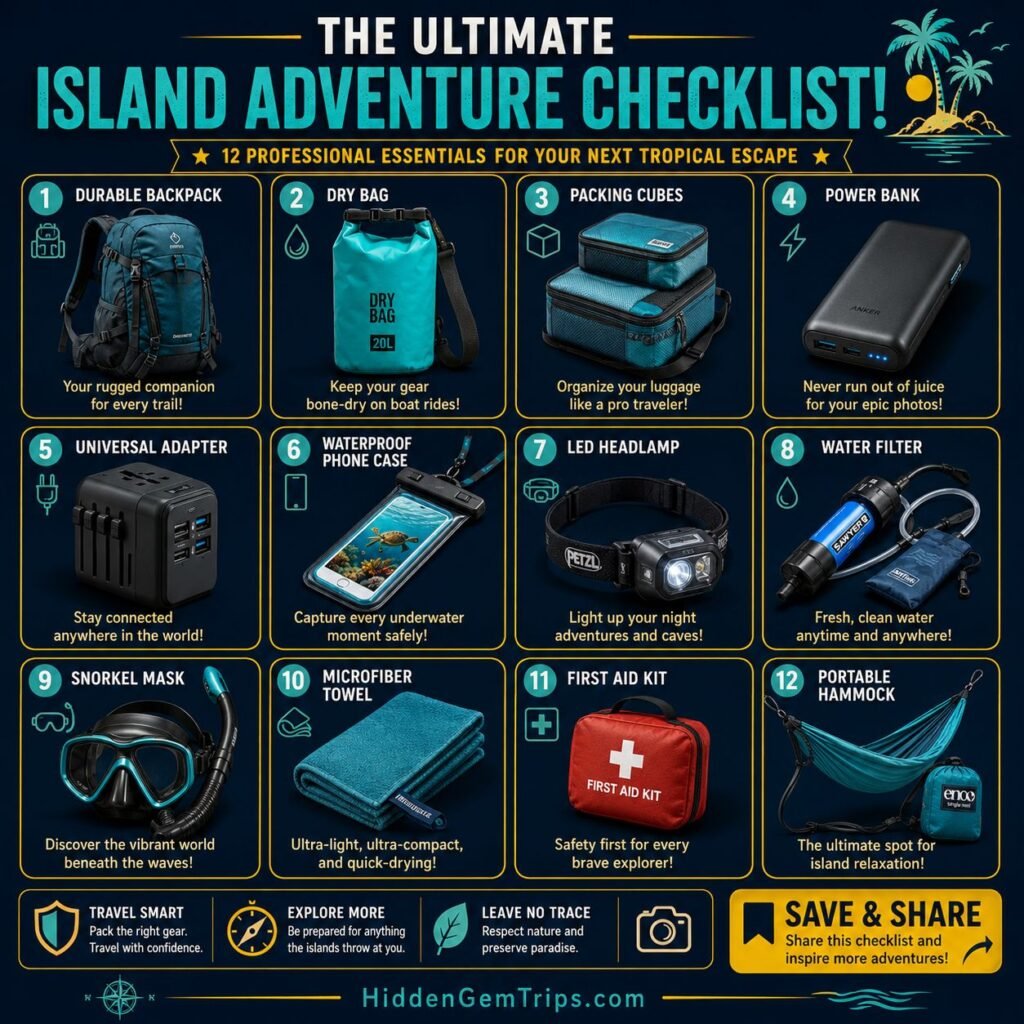
Here is the practical checklist before we go deeper. It is built for real island travel rather than showroom packing. You do not need every item for every trip, but these categories cover the most common failure points: wet gear, messy luggage, unsafe water, dead devices, poor lighting, minor injuries, and reef or beach activities.
| Packing Category | Recommended Gear | Primary Purpose |
| Carry system | Carry-on travel backpack | Easier movement across boats, sand, stairs, and short hikes |
| Water protection | Waterproof dry bag | Protects documents, electronics, and clothes during boat transfers |
| Organization | Packing cubes or compression pouches | Separates clean, damp, sandy, and dirty items |
| Water safety | Portable filter or treatment method | Backup when water quality is uncertain |
| Charging | Universal adapter + power bank | Keeps phone, camera, and documents accessible |
| Beach function | Quick-dry towel + waterproof phone case | Works across swimming, boat days, and rain |
| Night safety | Headlamp or compact torch | Useful for dark paths, power cuts, and early transfers |
| Health | Mini first aid kit | Covers cuts, blisters, motion sickness, and minor discomfort |
| Marine activity | Personal snorkeling mask | Better fit and hygiene for reef days |
| Rest | Compact hammock or light rest system | Optional comfort for beach, jungle, or slow-travel routes |
Readers who are new to off-the-beaten-path travel can pair this checklist with budget hidden-gem travel habits because good packing is also a budget strategy. Forgetting basics on an island often means paying inflated prices, buying low-quality replacements, or wasting time hunting for items that would have weighed almost nothing at home.
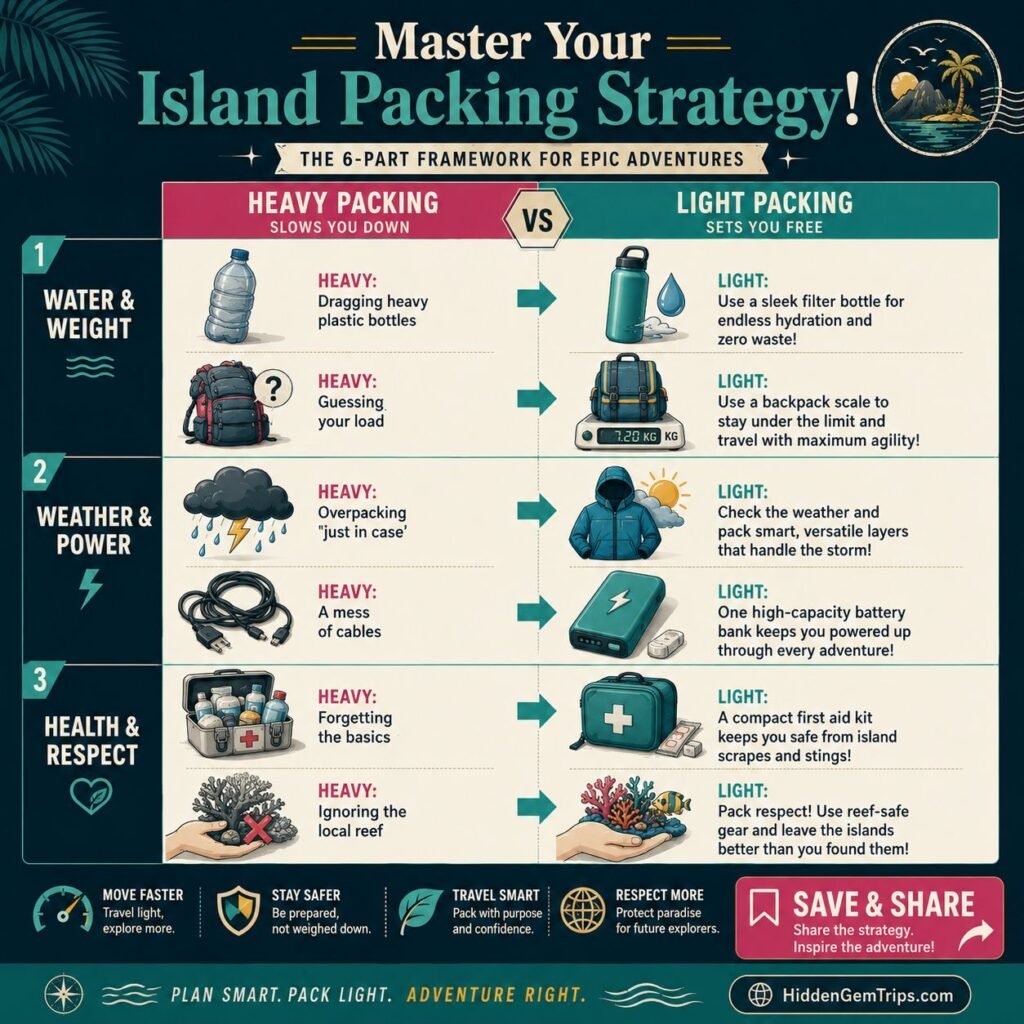
Light Packing vs Heavy Packing for Island Trips
The light-versus-heavy packing debate is not really about personality. It is about movement. If your trip involves multiple islands, public boats, small docks, uneven roads, and different accommodations, light packing usually wins. If your trip is mostly one resort, one room, one transfer, and a long stay, a heavier setup can make sense. The mistake is mixing both plans: packing like you are staying one month in a villa while actually moving every two days by boat. That is not travel planning; that is self-sabotage with packing cubes.
| Trip Style | Best Packing Approach | Gear Priority | What to Avoid |
| Island hopping | Light and modular | Backpack, dry bag, power bank, quick-dry clothing | Hard-shell suitcase, extra shoes, bulky towel |
| Single resort stay | Moderate to heavier | Comfort clothing, extra swimwear, personal toiletries | Overbuying adventure gear you will not use |
| Remote beach exploration | Minimal but protective | Dry bag, first aid kit, water treatment, sun layers | Fragile electronics without protection |
| Snorkeling/diving route | Water-focused setup | Mask, reef-safe coverage, dry bag, waterproof phone case | Touching coral, loose plastic, poor buoyancy habits |
| Digital nomad island stay | Power and workflow backup | Adapter, power bank, cable organizer, backup storage | Assuming Wi-Fi and electricity will always behave |
This is where destination context helps. A relaxed weekend near West Java weekend escapes may not require the same level of gear as a multi-stop trip through coral islands. A remote surf route like Rote Island surf spots has different priorities from a cultural slow-travel route or a river-to-coast itinerary such as the Mahakam deep Borneo route. The smarter move is to pack for the hardest transfer day, not the easiest beach photo.
12 Best Travel Gear Essentials for Island Trips
1. Carry-On Travel Backpack
A carry-on travel backpack is the foundation of a strong island packing strategy. The best bag is not always the largest bag. It is the one you can lift into a boat, carry across sand, squeeze into a small vehicle, and keep organized without unpacking your entire life in front of strangers. For island travel, a backpack often beats wheeled luggage because wheels hate sand, docks, gravel, stairs, and basically every surface that makes islands interesting.
Look for a capacity around 35 to 45 liters for most island hopping trips. That range is large enough for clothing, toiletries, electronics, and a few protective items, but small enough to discourage panic-packing. A clamshell opening helps because it makes the bag behave more like a suitcase when you need quick access. Lockable zippers, a padded hip belt, breathable back panels, and internal compression straps are all practical features, not just marketing confetti.
For hidden-gem travel, the best backpack is also visually low-profile. A flashy luxury bag can attract attention in transport hubs and small ports. A clean, durable, weather-resistant backpack makes more sense. It should look boring enough to not be a target and capable enough to survive a ferry day. That is the sweet spot.
2. Waterproof Dry Bag
A waterproof dry bag is one of the few island items that deserves almost universal recommendation. Even if you never kayak or snorkel, you will probably face boat spray, wet piers, sudden tropical rain, or damp storage areas. A dry bag protects the things that can truly ruin a trip if soaked: passport, cash, phone, camera batteries, medicine, clean clothes, and travel documents.
For most travelers, a 10-liter to 20-liter dry bag is enough as a day bag insert or boat-transfer protector. A 5-liter bag can work for phone, wallet, and passport, but it may be too small for a towel or change of clothes. A larger 30-liter dry bag is useful for kayaking or serious water-based routes, but it can become awkward for casual travel. The practical move is to choose the smallest size that protects your actual essentials.
Use the dry bag as a system, not just a product. Put documents and electronics in inner pouches, squeeze out excess air, roll the top properly, and clip it shut. Do not assume every dry bag is meant for full submersion. Many are water-resistant for splashes and rain, not designed to be dragged underwater like treasure. Read the rating before trusting it with your phone. Future you will appreciate not starring in a tragedy called “My Passport Went Swimming.”
3. Packing Cubes or Compression Organizers
Packing cubes are not glamorous, but they quietly save trips. Island travel creates categories fast: clean clothes, damp swimwear, sandy items, chargers, medical supplies, underwear, and clothes that are technically clean but spiritually questionable after a humid boat day. Packing cubes keep those categories from becoming one chaotic textile soup.
Compression cubes are useful when clothing volume is the main problem, but they are not magic. They reduce bulk, not weight. Over-compressing can also make your bag dense and uncomfortable to carry. For island travel, use two or three medium cubes instead of a dozen tiny ones. One cube for clean clothing, one for swim and activewear, and one for laundry usually works better than hyper-complicated organization.
Consider bringing one waterproof or washable pouch for wet items. It does not replace proper drying, but it helps during transfers when your swimsuit or towel is still damp. The key is airflow whenever possible. Tropical humidity can turn poorly packed wet clothing into a smell with ambition.
4. Portable Water Filter or Treatment System
A portable water filter or treatment method is not necessary for every resort trip, but it is highly useful for remote islands, hiking routes, boat days, village stays, and destinations where safe water access is uncertain. The CDC travel water safety guidance warns that contaminated water can look clean while still carrying bacteria, viruses, and parasites. In other words, “it looks fine” is not a water safety strategy. It is a gamble wearing flip-flops.
Use this category intelligently. For urban hotels or established resorts, factory-sealed bottled water or properly treated water may be the easiest option. For remote routes, a filter, purification tablets, UV purifier, or boiling plan can provide a backup. The CDC Yellow Book water disinfection advice notes that international travelers using untreated or questionably treated water sources should use effective treatment methods. That matters even more on islands after storms, floods, or infrastructure interruptions.
Water treatment is also a responsible travel issue. Buying endless single-use plastic bottles on small islands creates waste that local systems may struggle to manage. A reusable bottle plus a reliable treatment plan can reduce plastic dependency. Still, do not romanticize it: if the safest option in a specific place is sealed bottled water, choose safety first and dispose of packaging responsibly.
5. Universal Travel Adapter
A universal travel adapter is boring until you do not have one. Then it becomes the most important object in the room. Islands that receive travelers from multiple countries often have mixed outlet types, older guesthouse wiring, limited sockets, or shared charging areas. A good adapter keeps your phone, camera, power bank, headlamp, and laptop usable.
Choose an adapter with multiple USB ports, USB-C support, surge protection, and a compact shape that does not fall out of loose wall outlets. Avoid overloading it with high-wattage appliances unless it is specifically designed for that. A plug adapter is not the same as a voltage converter. Hair dryers, straighteners, and other heat-heavy devices can create problems if the voltage is wrong. Island packing rule: if the item needs a small power plant to function, maybe your beach trip does not need it.
For digital creators, the adapter should be part of a charging kit: adapter, short cables, power bank, plug splitter if appropriate, and a small pouch. Keeping charging gear together prevents the classic late-night search where every cable disappears like it joined a secret society.
6. High-Capacity Power Bank
A high-capacity power bank is essential for remote island travel because phones now carry maps, tickets, payment tools, translation apps, emergency contacts, camera functions, and accommodation details. Losing battery is not just inconvenient; it can remove your navigation, communication, and documents at the same time. That is a lot of modern life stored inside a glowing rectangle.
For most travelers, a 10,000 mAh power bank is enough for day trips, while 20,000 mAh makes more sense for longer transfers, camping, multi-day boat routes, or creator workflows. Check airline rules before flying because battery capacity limits can apply. Select good brands, and never use batteries that are damaged or bulging. Salt, heat, and cheap electronics are not a friendship group you want to encourage.
Power planning should be layered. Charge devices when power is available, keep the power bank in a dry pouch, bring short reliable cables, and download offline maps before leaving strong signal areas. A power bank is a backup, not permission to ignore preparation.
7. Quick-Dry Travel Towel
A quick-dry towel solves a simple island problem: regular cotton towels stay wet, smell strange, and take too much space. A microfiber or lightweight travel towel dries faster, packs smaller, and works for beaches, waterfalls, boat seats, guesthouses, and unexpected rain. It is one of those items that seems optional until you use it daily.
Choose a size based on use. A small towel is good for sweat, face, or quick drying. A medium or large towel is better for beach days. Look for a loop for hanging, a compact pouch, and fabric that feels acceptable on skin. Some microfiber towels feel like drying yourself with a polite cleaning cloth, so choose carefully if texture matters to you.
The towel also supports responsible travel. If your accommodation is small or water-stressed, reusing your own quick-dry towel can reduce laundry pressure. That is not glamorous, but sustainable travel is often made of small, boring decisions that add up.
8. Headlamp or Compact Torch
A headlamp is one of the most underrated pieces of island gear. Many remote islands have limited street lighting, occasional power cuts, dark beach paths, uneven steps, or early-morning boat departures. A phone flashlight works until you need both hands, want to preserve battery, or drop your phone because you were trying to carry bags, open a gate, and look calm at the same time.
Choose a lightweight headlamp with adjustable brightness, a red-light mode if possible, and decent battery life. Rechargeable models are convenient, but battery-powered models can be easier to keep alive in places with unreliable electricity. For serious remote routes, bring spare batteries or a charging plan.
A headlamp is also useful for safety around water. It helps when boarding boats before sunrise, walking near rocks, finding gear in a dark room, or managing small first aid issues at night. It may not look cool, but neither does stepping into a drainage ditch because your aesthetic rejected practical lighting.
9. Personal Snorkeling Mask
A personal snorkeling mask is worth considering if your trip includes reef days, marine parks, or repeated snorkeling. Rental masks can be scratched, poorly fitted, or uncomfortable. A mask that fits your face well improves visibility, reduces leaking, and makes the experience calmer. For travelers who care about marine life, comfort matters because panicked movement in the water can lead to accidental kicks, touching coral, or standing where you should not.
Snorkeling gear should be paired with reef etiquette. The NOAA coral reef ecosystem overview explains that coral reefs support food, income, shoreline protection, and recreation for hundreds of millions of people. Green Fins’ responsible marine tourism standards provide environmental standards for diving and snorkeling operators. The traveler version is simple: do not touch coral, do not chase wildlife, do not stand on the reef, keep fins controlled, choose responsible operators, and avoid leaving trash behind.
Full-face snorkel masks are popular but controversial in some contexts because fit, breathing resistance, and safety vary by design. Newcomers should stick to tried and tested equipment, test it out in sheltered water, and follow local advice. When in doubt, a conventional mask and snorkel from a trusted manufacturer is often the safer, simpler bet.
10. Waterproof Phone Case
A waterproof phone case is not just for underwater photos. It protects your phone from rain, boat spray, wet hands, sand, and accidental splashes. Since phones now carry tickets, maps, translation tools, emergency numbers, banking apps, and memories, protecting them is basic risk management.
Choose a case or pouch that allows touchscreen use, has a secure seal, and includes a reliable lanyard. Test it with tissue paper before trusting it with a phone. Put tissue inside, seal it, submerge or splash-test according to the product instructions, then check for moisture. This tiny test can prevent a very expensive lesson.
Even with waterproof protection, do not become reckless. Saltwater is brutal. Rinse the exterior after exposure, dry it properly, and do not leave your phone baking in a sealed pouch under direct sun. Waterproof does not mean immortal.
11. Mini First Aid Kit
A mini first aid kit is essential because island injuries are often small but badly timed: coral scrapes, blisters, cuts, insect bites, sunburn, stomach discomfort, headaches, motion sickness, and minor allergic reactions. A tiny kit can prevent a small problem from stealing an entire day.
Build the kit around realistic scenarios. Include adhesive bandages, antiseptic wipes, blister treatment, pain reliever, motion sickness tablets, oral rehydration salts, personal medication, tweezers, small gauze, medical tape, and any allergy medication recommended by your doctor. If you are traveling to malaria, dengue, or other vector-risk regions, follow destination-specific medical advice before departure.
The U.S. Department of State international travel checklist encourages travelers to review destination information, advisories, and local requirements before travel. For island trips, that preparation should include access to healthcare. Know where the nearest clinic is, whether your travel insurance covers evacuation, and which medications you cannot easily replace locally. This is not fear-based travel. This is adulting with sunscreen.
12. Compact Travel Hammock or Rest System
A compact travel hammock is optional, but for the right island trip it can be wonderful. It creates a rest spot between palm trees, near a campsite, or at a beach area where seating is limited. It is especially useful for slow travel, multi-day routes, or travelers who prefer quiet afternoons over packed activity schedules.
The key word is compact. A hammock is not a replacement for the essentials or extra pounds. It should include straps that do not damage trees and should only be used where allowed. Never tie hammocks to fragile vegetation, private property, or structures that cannot safely hold weight. The goal is relaxation, not becoming a local infrastructure problem.
Hammocks also remind readers that packing is not only about survival. A good island packing strategy should leave room for comfort, rest, and presence. The point of reaching hidden beaches is not to spend the whole trip managing gear. It is to be prepared enough that you can stop thinking about gear.
How to Pack for Different Island Travel Styles
The best island packing strategy changes by travel style. A traveler going to Koh Kood secret beach guide may need a gentle beach-and-scooter setup, while someone visiting Sabang for marine biodiversity should think harder about reef etiquette, water protection, and marine activity gear. If a reader is visiting Pacitan’s secret beaches, they might want to prioritize footwear, dry storage, and weather protection, as coastal access can include caves, cliffs, and not-so-smooth roads.
For island hopping, pack around transfer days. Wear quick-dry clothes, keep valuables in a dry bag, place one clean outfit near the top of your bag, and store motion sickness medication somewhere reachable. Do not bury your rain shell under all your clothes. Rain does not wait politely while you perform suitcase archaeology.
For a remote beach stay, pack around scarcity. Bring enough personal medication, sun coverage, insect protection, backup charging, and water treatment options. Do not assume a small island shop will carry your preferred skincare, charger cable, or pharmacy item. It may carry snacks, fuel, and hope. Hope is beautiful, but it does not treat blisters.
For slow travel, pack around rhythm. The slow travel mindset pairs naturally with lighter, more intentional luggage. Bring fewer outfits, wash more often, choose versatile layers, and leave room for local purchases that actually support the community. Slow travel is not about moving with nothing; it is about moving without dragging a portable storage unit through paradise.
For solo travelers, especially women, preparation should include safety layers without turning the trip into paranoia. Pair practical gear with route research, accommodation checks, offline maps, emergency contacts, and arrival planning. HiddenGemTrips readers can use the solo female travel safety map as a broader planning reference, then adapt gear based on local conditions.
Responsible Island Packing: What Not to Bring
Responsible packing is not only about what goes in the bag. It is also about what stays out. Pass on single-use plastics when it’s possible to choose a refillable or reusable option. Avoid harsh chemicals that can harm marine environments. Avoid leaving behind broken gear, cheap inflatables, disposable beach toys, or low-quality items bought for one photo. Small islands do not have infinite waste capacity just because tourists have infinite novelty cravings.
Do not bring speakers to quiet beaches, drones without checking rules, or a “content creator entitlement aura” that makes local people feel like props. Bring a small trash pouch instead. Bring modest cover-ups where local culture expects them. Be patient with slower service, weather delays, and transport changes. The best gear for remote travel is still humility, which is annoyingly not available as a two-day-shipping product.
Water safety also belongs here. WHO reported that drowning remains a major public health issue, with around 300,000 people dying by drowning in 2021 and more than 30 people estimated to drown every hour. The point is not to scare travelers away from the ocean. The point is to remind them that island beauty deserves respect. Check currents, listen to local warnings, use life jackets when appropriate, avoid alcohol before swimming, and do not treat unfamiliar water like a hotel pool with better lighting. See WHO drowning prevention data for broader context.
Food and drink choices matter too. The CDC food and drink safety recommendations advise travelers to avoid tap water in places where it may be contaminated and to use bottled or disinfected water for brushing teeth when needed. On islands, that advice can be especially relevant after storms, during supply disruptions, or in places where water infrastructure varies by village or accommodation.
Island Packing Matrix by Destination Type
| Destination Type | Common Friction | Highest-Value Gear | Smart Packing Move |
| Coral reef island | Boat spray, sun, reef sensitivity | Dry bag, mask, rash guard, reef-conscious sun coverage | Choose responsible operators and avoid touching marine life |
| Remote village island | Limited shops, uncertain water access | Water treatment, first aid, power bank | Bring essentials without overloading local waste systems |
| Surf island | Rough roads, saltwater, board transport | Dry bag, first aid, quick-dry towel | Protect electronics and treat small cuts quickly |
| Rainy tropical island | Sudden storms, humidity, muddy paths | Rain shell, waterproof pouch, packing cubes | Separate damp and clean items every day |
| Resort island | Comfort needs, easier infrastructure | Adapter, towel, organized toiletries | Do not overpack adventure gear you will not use |
For higher-comfort readers, this matrix can be paired with mid-range hidden-gem budgeting because preparation does not always mean traveling cheaply. Sometimes it means spending in the right places: a safer boat operator, a better bag, travel insurance, a durable dry pouch, or a hotel with reliable water and electricity.
For Indonesian island routes, use destination-specific guides to prevent generic packing. Prepare for the island of Sumba by packing sun protection, being ready for road trips and being culturally sensitive. The Banda Islands travel guide might be about boat transfers and walks through heritage towns. Derawan Islands marine escape should make travelers think harder about reef behavior, dry storage, and underwater visibility.
The 24-Hour Pre-Island Packing Workflow
- Check the ferry, boat, or flight baggage limits before final packing. Island transfers can be stricter or messier than the main international flight.
- Move passport, cards, medication, power bank, phone, and one clean outfit into a waterproof or quick-access zone.
- Download offline maps, accommodation details, translation phrases, and emergency contacts before signal becomes unreliable.
- Charge every device fully, then charge the power bank. A half-charged power bank is just optimism with a cable.
- Separate wet-risk items from clean clothing. Put swimwear, sandals, towel, and rain layer where they can be reached without unpacking everything.
- Know the local rules. Marine park fees, drone rules, dress codes, reef rules, ferry times and weather warnings.
- Remove one non-essential item. This small ritual prevents your backpack from slowly becoming a museum of bad decisions.
If the trip begins with a long international or regional flight, pair this workflow with the long-haul flight survival guide. The handoff matters: flight comfort gear should not fight island mobility. Neck pillows, extra layers, and airport items need to compress or disappear once the boat-transfer phase begins.
Final Thoughts: Pack for the Island You Are Actually Visiting
The best island packing strategy is not a universal checklist copied from a generic beach blog. It is a decision-making system. Start with the destination, then the route, then the hardest transfer, then the most likely discomforts. After that, choose gear that solves real problems: wet documents, dead batteries, unsafe water, disorganized clothing, dark paths, minor injuries, reef etiquette, and too much luggage.
For many travelers, the winning setup is simple: a carry-on backpack, waterproof dry bag, packing cubes, reusable bottle with a water safety plan, universal adapter, power bank, quick-dry towel, headlamp, waterproof phone protection, compact first aid kit, and optional snorkeling or rest gear based on the route. That combination covers the core island realities without turning a tropical trip into a gear convention.
Most importantly, pack in a way that makes you easier on the place you are visiting. Hidden beaches and remote islands are not empty stages. They are living communities and ecosystems. The right gear helps you move lightly, stay safe, reduce waste, and enjoy the destination without demanding that it adapt to every mistake in your suitcase.
If readers want to go deeper into destination discovery after building their packing system, guide them toward hidden destinations and the broader hidden gem travel guide. Packing is the preparation. The real reward is arriving with enough confidence and humility to enjoy the island as it is, not as a perfectly controlled travel fantasy.
FAQ
1. What is the best island packing strategy for a first-time island trip?
Travel light but protect the essentials. Bring a carry-on size backpack, waterproof dry bag, packing cubes, power bank, quick-dry towel and small first aid kit. Add destination specific items like a water purification method, snorkeling mask, rain layer or sun-protective clothing, depending on where you’re going.
2. Suitcase or Backpack: Which Is Better for Island Travel?
When it comes to boats, stairs, sand and uneven terrain, wheeled luggage is usually less agile than backpacks. So backpacks are usually better for island hopping. Suitcases are fine for resort-based stays with direct transfers, but they’re less practical when your journey involves ferries, small docks, and multiple locations to stay.
3. Do I need a drybag for island trips?
Yes. A dry bag is highly recommended for most island trips. It keeps documents, electronics, medicine and clean clothes dry from boat spray, rain, and wet surfaces. A small dry bag can save major travel headaches!
4. How do I minimize plastic waste when packing for the islands?
Use a reusable water bottle or water treatment plan where appropriate, refillable toiletries, reusable shopping or laundry bags and durable beach gear instead of disposable. When local water quality is uncertain, prioritize health and safety.
5. What should you leave at home when you go to a remote island?
Leave the bulky towels, the extra pair of shoes, the delicate equipment without a case, the booming speakers on a tranquil beach, the disposable-plastic-heavy items, and the clothes that only work for one photo. Packing for a remote island should be about durable, lightweight, multi-use gear.
Disclaimer
This article is provided for general travel planning and educational purposes only. Weather, local regulations, transportation interruptions, health advisories or environmental restrictions can create different conditions on islands. Travelers should check official destination guidance, marine park rules, weather updates, health recommendations and travel advisories before traveling.