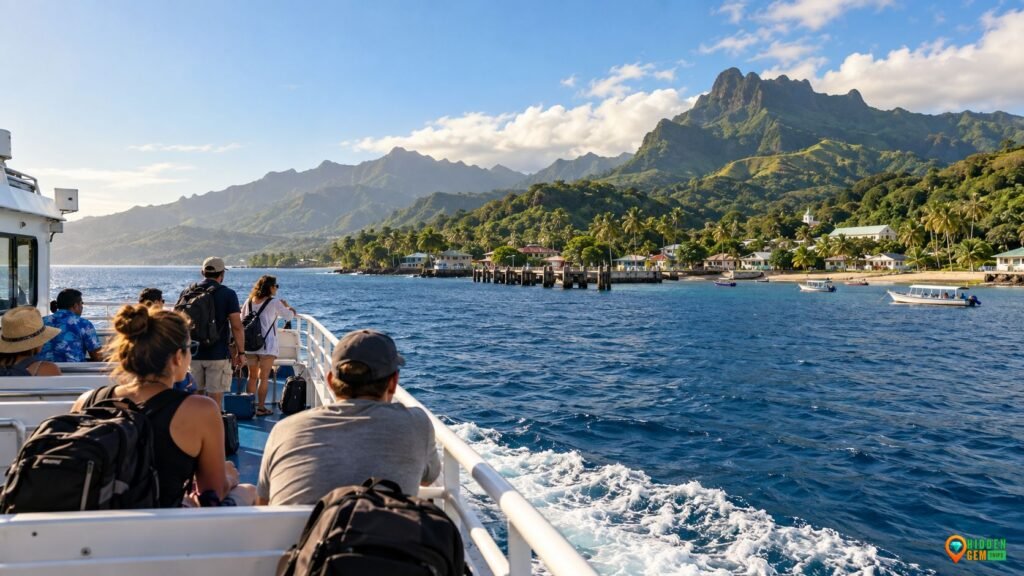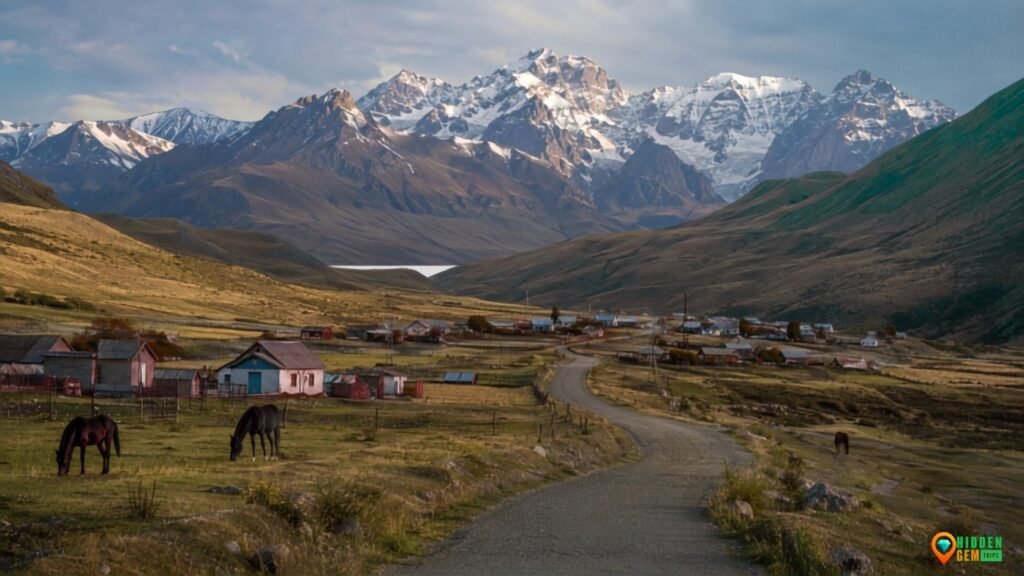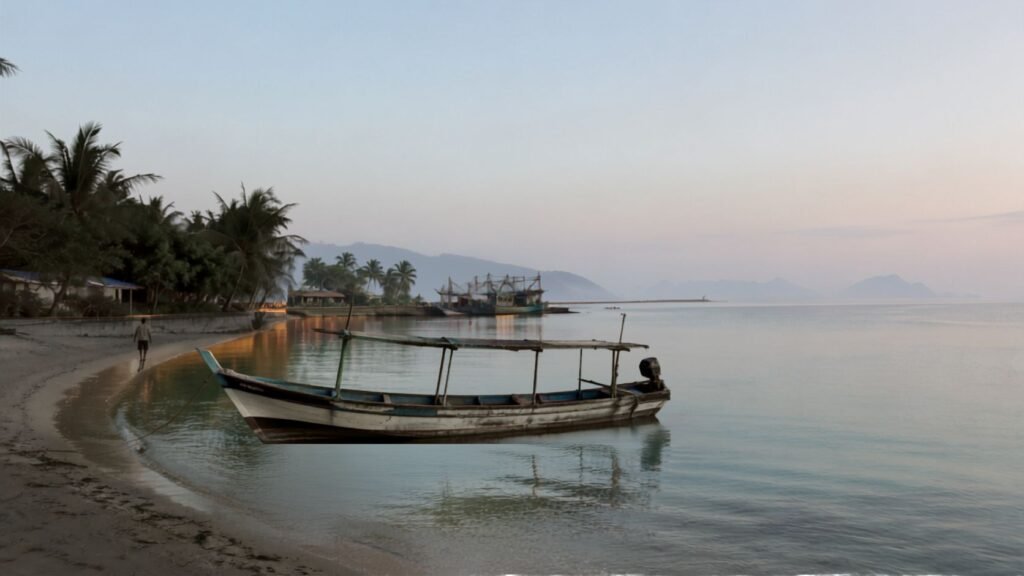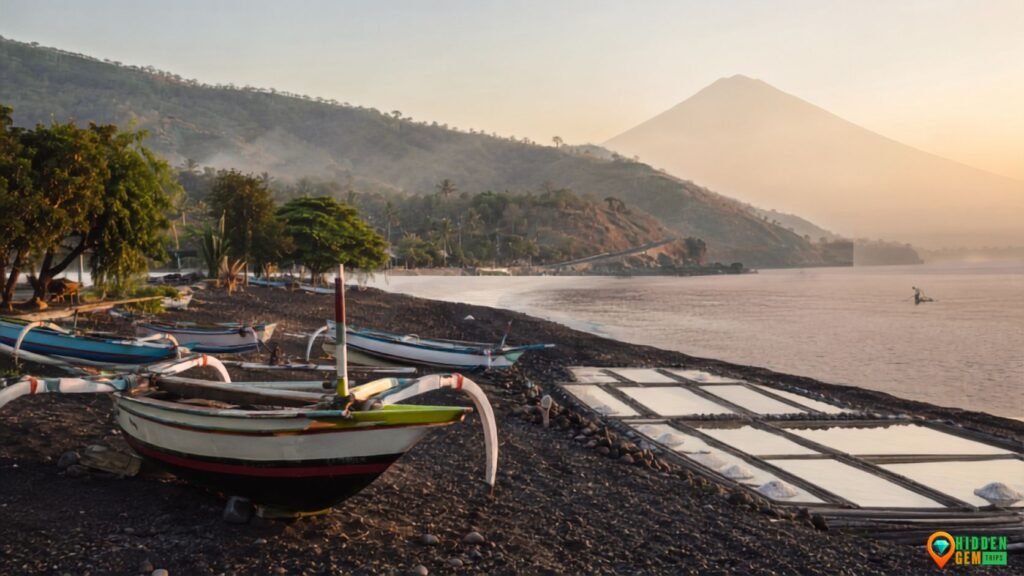

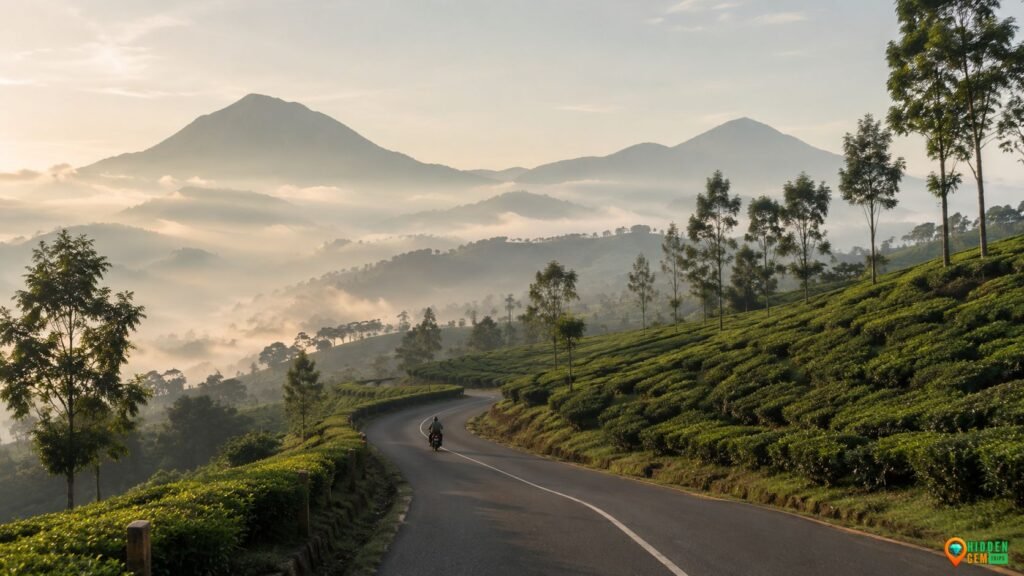
This Garut Highlands Guide is for travelers who want the mountain-air reset without turning a weekend into a race. Garut sits in West Java, close enough to Jakarta to feel possible, yet layered enough to reward travelers who slow down, choose a smarter base, and avoid treating every crater, tea road, and hot spring as another box to tick. The area is not new to Indonesian travelers, but for many international visitors it still lives in the shadow of Bandung, Bali, and the more obvious Java circuits. That shadow is exactly why Garut deserves careful attention.
The promise here is not “untouched paradise.” Garut is a lived-in region with farms, villages, local recreation areas, geothermal infrastructure, traffic pinch points, and protected landscapes. It is not empty, and it should not be sold as empty. The better promise is quieter: a highland region where a Jakarta escape can become more than a hotel-and-photo weekend if you read the rhythm correctly. Morning mist matters. Market timing matters. Road choice matters. Whether a lake or crater feels peaceful often depends less on the destination itself and more on when you arrive, where you sleep, and how much you try to squeeze into one day.
If you have already explored West Java weekend escapes that feel far from Jakarta, Garut is the deeper chapter. It is less about one famous viewpoint and more about a chain of highland moods: hot water before breakfast, geothermal steam in Kamojang, volcanic color around Papandayan, milky crater water at Talaga Bodas, tea roads near Cikajang, and a softer cultural landing around Leles and Cangkuang before heading home. The magic is not loud. It arrives in pieces.
This guide is built around seven quiet local stops, not a greatest-hits list. Some are familiar to domestic travelers; others are overlooked because they are too simple to trend. That is part of the point. Garut works best when you trade the viral “must go now” mindset for a more generous travel style: spend money locally, stay flexible, check weather and access conditions, and leave space for one good meal, one unplanned conversation, and one slow road that does not need to become content. Boring? Maybe. Effective? Very.
Why Garut Works Better as a Slow Highland Escape
Garut has the rare weekend advantage of being both accessible and slightly awkward. That sounds like an insult, but for hidden-gem travel it is a feature. The new and improved rail access from Jakarta has made Garut easier to reach, while the final movement into villages, hot spring areas, crater routes, and tea landscapes still requires patience. The West Java Provincial Government noted that the KA Papandayan route connecting Garut and Gambir was launched in January 2024, with officials highlighting its role in improving connectivity, tourism access, and mobility between Garut and Jakarta. That matters because the old version of a Jakarta-to-Garut trip was often defined by road fatigue before the actual trip began.
Better access does not automatically mean better travel. It can also mean weekend crowding, rushed itineraries, higher pressure on fragile landscapes, and a wave of visitors who arrive with Bandung expectations in a region that moves differently. Garut’s highlands are not designed for nonstop consumption. You may find narrow roads, steep access, changing weather, limited evening transport, and local attractions whose quietness depends heavily on weekday timing. The trick is to plan just enough, then leave the destination breathing room.
Indonesia’s domestic tourism market is also huge and increasingly data-driven. BPS Domestic Tourism Statistics uses Mobile Positioning Data and digital survey methods to profile domestic visitor movement, accommodation choices, length of trip, and spending patterns. Garut’s own Satu Data portal maintains tourism datasets, including visitor, accommodation, event, and tourism-potential records. For travelers, the takeaway is practical: places like Garut are not imaginary off-map secrets. They sit inside a real tourism economy, and the best visitors understand that their weekend choices affect roads, villages, small businesses, and conservation areas.
That is why this article treats Garut as a highland system instead of a single destination. Hot spring areas feed local family tourism. Tea roads connect working landscapes, not just Instagram backgrounds. Conservation zones are not playgrounds. Geothermal sites are part of energy and livelihood stories, not merely steam for photos. If you want the simple version of Garut, you can find one. But the richer version begins when you ask: what is this place already doing before I arrive, and how can my visit fit into that instead of flattening it?
This approach matches the broader HiddenGemTrips philosophy of discovering Indonesia beyond the obvious circuit. The best “hidden” trips are not about proving you found somewhere nobody knows. They are about noticing places that mass tourism narratives often simplify. Garut is one of those places: close to Jakarta, familiar to many Indonesians, still under-explained for global travelers, and full of small decisions that determine whether your trip feels restorative or weirdly exhausting.
Before You Go: How to Read This Garut Highlands Guide
This Garut Highlands Guide is not written as a hard itinerary because Garut punishes overconfidence. A sunny morning can become a wet afternoon. A road that looks short on a map may become slow because of market traffic, weekend vehicles, potholes, fog, or steep turns. A “quiet” hot spring may become lively during school holidays. A crater route may be subject to access rules, safety closures, volcanic advisories, or local operating changes. Good Garut planning is less about controlling everything and more about building a trip that can flex without collapsing.
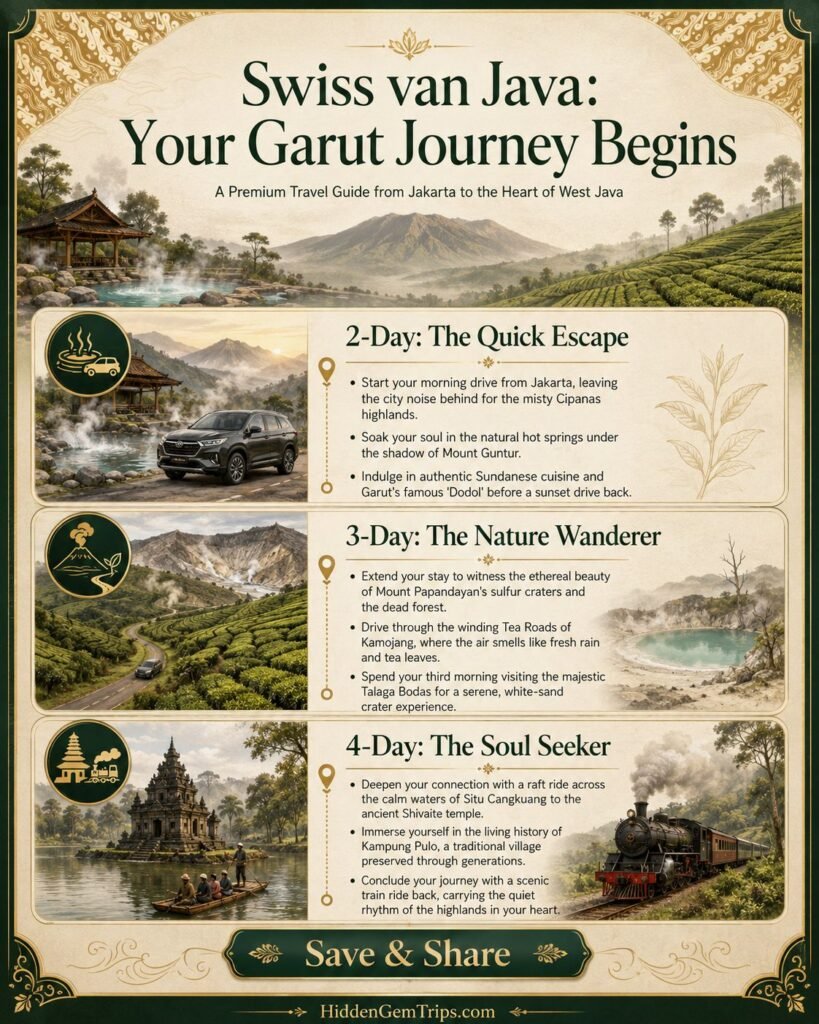
Use the seven stops as modules. For a two-day trip, choose three or four. For a three-day trip, choose five. For a four-day trip, you can experience all seven without treating local roads like a video game level. For most travelers from Jakarta, the sweetest version is three days: arrive by train or road, stay in or near Tarogong/Samarang for easier access, devote one early morning to a volcano or lake, keep one afternoon soft, and end with a cultural or food stop before the return.
If you are arriving from outside Indonesia, pair this guide with practical planning basics like surviving the long-haul flight before Java even begins and traveling Indonesia like a local on a tighter budget. Garut is affordable compared with many global mountain destinations, but “cheap” should never become the whole travel ethic. Pay fair prices, hire local drivers when routes are complex, and do not pressure small operators into unsafe shortcuts because your spreadsheet says you have a sunset slot to catch.
The sources behind the practical recommendations include regional tourism data, government transport announcements, conservation rules, and sustainability principles. UN Tourism frames sustainable tourism around environmental, economic, and socio-cultural balance. That balance is especially useful in Garut because many of the best experiences are not stand-alone attractions; they are communities, farms, geothermal landscapes, forest edges, and cultural sites that happen to welcome visitors. Translation: take the photo, yes, but do not make the photo the only reason you came.
Garut Highlands Quick Planning Table
| Trip Length | Best Focus | Recommended Base | Quietness Strategy |
| 2 days / 1 night | Hot springs + one highland route | Tarogong or Samarang | Arrive early, avoid adding both Papandayan and Talaga Bodas in one rushed day. |
| 3 days / 2 nights | Hot springs, Kamojang, Papandayan or Talaga Bodas, food/culture exit | Samarang, Tarogong, or Garut Kota | Use one early morning and one slow afternoon instead of stacking every famous stop. |
| 4 days / 3 nights | Full quiet loop across hot springs, geothermal forest, volcano base, lake, tea roads, Darajat, Leles | Split between Samarang/Tarogong and one southern/eastern highland night if logistics allow | Move bases only if it reduces backtracking; otherwise keep one calm base. |
Garut Highlands Guide: 7 Quiet Escapes from Jakarta
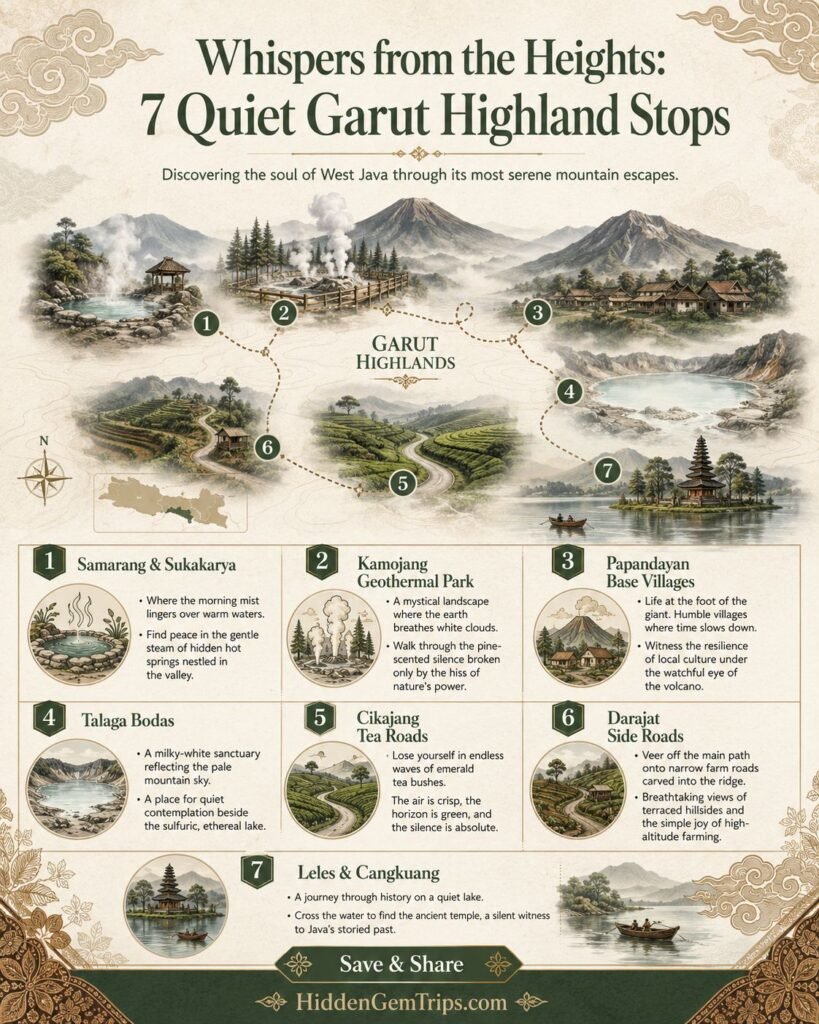
The seven stops below are arranged as a slow route rather than a ranking. You can start with the gentler hot spring zone, move into geothermal and volcanic landscapes, drift south or southeast through tea and farming roads, then return via Leles and Cangkuang. This order reduces the common mistake of treating Garut like a theme park where every destination must happen in the same loop. The goal is not to see more. The goal is to feel less chased by your own itinerary.
1. Samarang and Sukakarya: Hot Springs Without the Rush
Samarang is often treated as a convenience zone because of its proximity to Garut’s better-known hot spring accommodations and mountain roads. That is exactly why it makes a smart first stop. After hours from Jakarta, the body does not always need a crater. Sometimes it needs warm water, a simple dinner, a clean bed, and the permission to stop pretending that travel has to be productive from minute one.
The quieter way to use Samarang is to arrive before you start “doing Garut.” Check in, walk around the local area, ask your accommodation where families eat, and save the more ambitious highland drive for the next morning. Sukakarya and the surrounding hot spring pockets can be busy, but they also offer that old Java travel feeling: steam, tiled pools, casual food stalls, mountain air, and families taking the water seriously as rest rather than content. Go early or later on a weekday if you can. Weekends can shift the mood from restorative to splashy very fast.
This stop is also a useful reality check for travelers who romanticize hidden places. Garut’s hot spring economy is local, practical, and social. Not every pool is designed like a luxury wellness retreat. Some facilities are simple. Some are older. Some are built for families, not silence. That does not make them lesser. It means you need to match the place instead of demanding it perform your spa fantasy. Bring modest swimwear, manage expectations, and choose accommodation carefully if privacy and quiet matter to you.
The best experience here is not about finding “the one secret pool.” It is about the rhythm: leave Jakarta early, arrive without trying to conquer the region, soak, eat, sleep. That first slow evening protects the rest of the trip. Travelers often ruin Garut by arriving tired, then immediately chasing sunset roads or mountain viewpoints. Samarang gives you a softer landing, and soft landings are underrated travel technology.
For couples, solo travelers, and small groups, Samarang can also act as a base for nearby routes without forcing you into Garut Kota traffic every time you want to move. If you plan to visit Kamojang or Darajat, staying near the highland side can reduce the morning scramble. The trade-off is that dining and transport options may be more limited at night, so arrange dinner and local transfers early. This is where quiet travel gets very unglamorous: the magic often depends on logistics you handled before you were hungry.
2. Kamojang: Geothermal Forests, Eagle Stories, and Cooler Air
Kamojang is one of the most interesting highland areas near Garut because it refuses to fit into one tourist category. It is geothermal, forested, industrial, ecological, educational, and quietly dramatic. You may come expecting steam vents and cool air, but the deeper story is about how energy, farming, conservation, and local livelihood overlap in one landscape. Pertamina Geothermal Energy describes Kamojang as Indonesia’s oldest geothermal area, first explored by the Dutch in 1926, with commercial operations beginning in 1983. Its Kamojang geothermal plants are listed with a total capacity of 235 MW, and the company says the area can supply electricity to more than 260,000 households.
That energy story is not a random fact to sprinkle in for authority. It changes how you should visit. Kamojang is not only a “nature escape.” It is a working landscape where geothermal infrastructure, forest edges, roads, farmers, and conservation programs share space. PGE has also highlighted local programs connected to coffee drying, sustainable agriculture, clean water, organic fertilizer, and Javan hawk-eagle conservation with West Java BBKSDA and community partners. For a traveler, this means Kamojang is best approached with curiosity rather than consumption.
The quietest Kamojang experience usually comes from treating the area as a half-day highland pause, not a list of photo points. Drive slowly, stop where stopping is appropriate, avoid entering restricted zones, and ask locals which small warung or viewpoint is open and safe. The cooler air can feel like a relief after Jakarta, but weather can shift quickly. Mist can improve the mood and reduce visibility at the same time. That is Garut in one sentence: beautiful and mildly inconvenient, like every memorable trip that refuses to become a brochure.
Kamojang also works well for travelers who prefer learning to spectacle. A geothermal landscape gives you something to think about: how Java powers itself, how local farmers adapt, how conservation gets negotiated around infrastructure, and how tourism can either simplify or support those stories. If you travel with kids, this can be one of the more educational stops, especially if you frame it as a place where the earth is literally part of daily life. Just keep the safety basics clear: stay on permitted paths, do not touch steam or hot surfaces, and do not wander into industrial or conservation-restricted areas for a better angle.
This is where remote travel gear for bad roads becomes relevant even on a “simple” weekend. Bring layers, rain protection, offline maps, a charged phone, and shoes you do not mind getting dirty. Garut is not remote in the expedition sense, but many of its best highland moments happen along roads where city habits fail. Flip-flops, dying batteries, and “we’ll figure it out later” energy are not a plan. They are a prequel to minor suffering.
3. Papandayan Base Villages: Volcanic Mornings Without Summit Pressure
Papandayan is probably Garut’s most famous natural name, and for good reason. The volcanic landscape can be cinematic: sulfur tones, open slopes, crater moods, mountain air, and the kind of early morning light that makes even tired travelers forgive their alarm. But this guide is not built around conquering Papandayan. It is built around experiencing the Papandayan base area without turning a mountain into a performance metric.
Many visitors talk about Papandayan as a hike or a crater trip. That is valid, but the surrounding villages, access roads, food stops, homestays, and dawn routines are part of the experience too. A softer approach is to stay close enough to start early, visit the permitted tourism area when conditions are appropriate, and then return before fatigue and crowds flatten the day. Do not assume access, rules, prices, or safety conditions are static. Volcanic and weather conditions can change; check with local operators, official channels, or your accommodation before committing to a route.
Papandayan is also where responsible travel becomes practical, not preachy. Stay on marked paths. Do not step into fragile vegetation. Do not fly drones without clear permission. Do not treat sulfur vents or crater edges like props. If a guide tells you not to continue, believe them. Mountain guides are not vibe killers; they are people trying to keep you from turning your weekend into paperwork. Respect is cheaper than rescue.
For travelers from Jakarta, the best version of Papandayan is an early-start, early-finish experience. Leave before the day becomes hot and crowded, bring water, protect yourself from sun and wind, and plan lunch somewhere simple after descending. If you still have energy, use the afternoon for a low-pressure village drive or a hot spring return. Do not stack Talaga Bodas, Kamojang, Darajat, and Papandayan into a single day unless your hobby is becoming luggage with opinions.
Papandayan’s value is not just scenery; it is contrast. One hour you may be in a steaming volcanic landscape, and later you are eating something warm in a village where the mountain is not an attraction but a neighbor. That contrast is the real Garut. It is also why this region pairs beautifully with a slower way to plan a trip. The more you rush, the more Garut turns into a blur of parking lots and thumbnails. The more you slow down, the more the place starts speaking in details.
4. Talaga Bodas: The White Lake That Needs a Softer Footprint
Talaga Bodas, often translated as White Lake, is one of Garut’s most photogenic highland places. Its pale volcanic water, forested edges, and misty mood can feel dramatically different from the busier hot spring zones. But photogenic places are vulnerable to shallow travel. Once a destination becomes “the shot,” visitors often forget that roads, waste, noise, and off-path behavior are part of the same picture. Talaga Bodas deserves better than being treated like a background.
The access can be slower than newcomers expect, and that is part of why you should not rush it. Build Talaga Bodas as the main event of a morning or long half-day, not an afterthought between two other highland stops. Go early, bring light rain protection, wear shoes with grip, and check local conditions before going. If the weather is poor, do not force it. A white crater lake in low visibility can become a wet waiting room with mud. The lake will survive your rescheduling. Your shoes may not.
Because some areas around Garut include protected landscapes and conservation designations, travelers should understand the difference between a tourist site and a conservation area. Indonesia’s KSDAE describes a Cagar Alam, or Nature Reserve, as a protected area with distinctive flora, fauna, and ecosystems, primarily used for science and education, with very limited public access. That definition matters when traveling around volcanic and forested zones. Just because a place appears on social media does not mean every corner is open for casual exploration.
The softer way to experience Talaga Bodas is to let it be quiet. Do not bring speakers. Do not leave offerings of plastic. Do not pressure motorbike drivers to go faster than the road allows. Buy from local vendors where appropriate, but avoid treating them as scenery. Ask before photographing people. Keep your visit small and focused, and resist the urge to tag every micro-location if the area feels fragile or under-managed. Hidden-gem travel sometimes means not making a place easier to overrun.
Talaga Bodas is also a good reminder that Garut is not just a quick replacement for Bandung. It has its own volcanic grammar: pale water, sulfuric hints, steep rural access, and weather that edits your plans without asking. Travelers who enjoy Northern Laos river and mountain stops or Morocco quiet valleys beyond Marrakech may recognize the same lesson here: the most meaningful places are often not hard because they are far; they are hard because they require restraint.
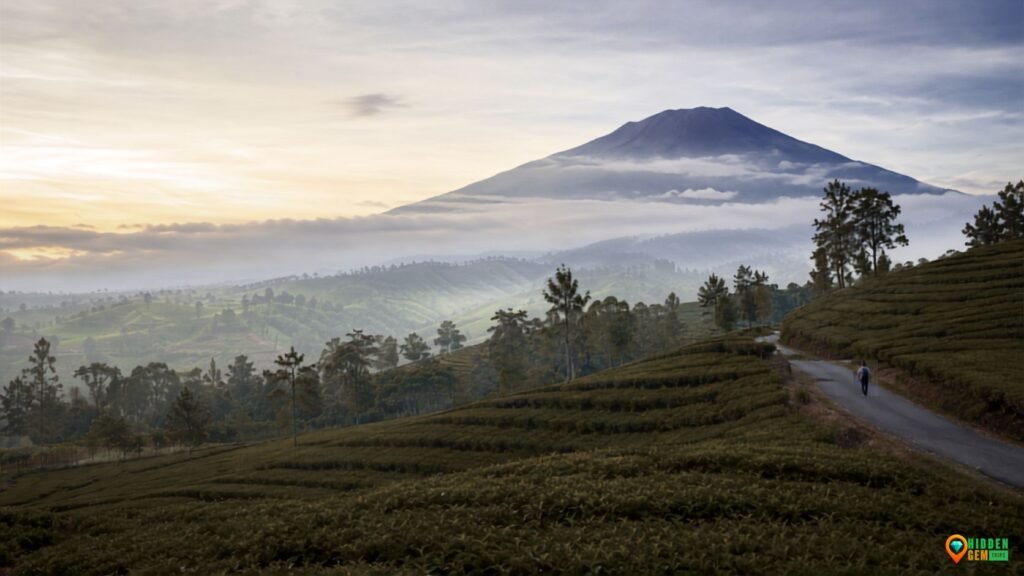
5. Cikajang Tea Roads: A Quiet Drive Through Working Highlands
Cikajang is where Garut becomes less about one attraction and more about a highland atmosphere. The tea roads, farming landscapes, cool air, and long green folds create a quieter kind of travel pleasure. There may be no single entrance gate that announces the moment. You simply move through working highlands and realize your shoulders have dropped. That is the stop.
The key word is working. Tea and agricultural landscapes are not decorative wallpapers installed for road-trip content. People work here. Trucks move here. Children go to school here. Farmers and vendors are not extras in your cinematic escape. The best way to enjoy Cikajang is to drive or ride slowly, stop only where it is safe and respectful, buy local snacks or drinks, and avoid entering fields without permission. If you want portraits, ask. If the answer is no, congratulations: you have discovered consent, a rare and underrated travel feature.
Cikajang can be woven into a wider route toward Papandayan, southern Garut, or another highland stay, but it also works as a destination for travelers who prefer roads to checkpoints. Bring a jacket. Bring patience. Bring curiosity about what grows where. The scenery is beautiful, but the deeper experience is observing how the highlands function: vegetable fields, tea, small settlements, mountain weather, and roadside food that tastes better because you were not rushing to a famous viewpoint.
This is a useful place to practice “less extractive” travel. Instead of asking, “What can I get from this landscape?” ask, “What does this landscape already support?” That question changes your behavior. You drive slower. You spend locally. You stop blocking roads for photos. You notice the difference between a public viewpoint and someone’s workplace. You become less annoying. Revolutionary stuff, honestly.
Cikajang also pairs well with the idea of building a seven-day travel itinerary that feels deep even if you only have three days. Depth is not about duration alone. It is about attention. A single morning on a tea road can feel more memorable than five attractions if you are actually present. For travelers who loved the mood of New Zealand coastal roads, Cikajang offers a Java version of road-based travel, but with more motorbikes, warmer warung stops, and fewer illusions that the landscape exists only for visitors.
6. Darajat Side Roads: Steam, Farms, and Family-Run Stops
Darajat is often associated with hot springs, geothermal steam, family recreation, and hill views. It can be busy, especially during holidays, but the side-road version of Darajat still has value for travelers who know when to go and when to leave. Treat Darajat as a landscape to move through gently rather than a single resort-style target. The quiet is often found before the main crowd wave arrives or beyond the most obvious swimming pool stops.
The route can reward early mornings: steam drifting above fields, cooler air, vegetable plots, and a sense that the mountain economy is waking up before the visitor economy takes over. You do not need to “do” much. Find a local breakfast, soak if the facility matches your comfort level, take a careful road view, and keep moving before the day becomes loud. The highlands do not owe you silence at noon on a public holiday. That is not a travel flaw; that is a calendar problem.
Darajat is also where families from nearby cities often come to relax. International visitors sometimes misunderstand this kind of place because it does not match the boutique eco-lodge aesthetic. But local family tourism is part of the real West Java travel culture. If you arrive expecting a secret minimalist retreat, you may be disappointed. If you arrive curious about how local travelers enjoy highland water, food, and views, Darajat becomes more interesting. Not every destination needs to whisper in linen tones.
Safety and road awareness matter here. Steep roads, changeable weather and weekend traffic can turn a short drive into a slow one. If you are not comfortable with Indonesian mountain roads, hire a driver who knows the area. Keep cash for small purchases and parking. Do not assume every place accepts cards or digital payments that foreign travelers can use. And if you are riding a motorbike, wear a proper helmet and do not copy local risk tolerance just because someone else makes it look normal.
Darajat works best as a flexible add-on to Samarang or Kamojang rather than a forced checklist item. It is not the quietest stop in this guide, but it can become quietly satisfying when visited at the right hour and with realistic expectations. That distinction matters. Hidden gems are not always empty places. Sometimes they are familiar places used more wisely.
7. Leles and Cangkuang: A Gentle Cultural Exit Before Returning to Jakarta
Leles and the Cangkuang area offer a different kind of ending. After hot springs, volcanoes, steam, and tea roads, it is tempting to sprint back to Jakarta. Resist that if you can. A gentler cultural stop before returning helps the trip land properly. Cangkuang is known for its lake setting and historic-cultural associations, and the wider Leles area can function as a calmer transition from highland mood to city return. Think of it as the decompression chamber.
The point is not to rush through a cultural site for “balance” because your itinerary needs one non-nature item. The point is to remember that Garut is not only landscape. It is also food, history, religious life, markets, local transport, family recreation, and ordinary weekends. Ending around Leles allows you to shift from the dramatic mountain frame into a more human one. That shift makes the whole trip feel less like a consumption loop.
If you are returning to Jakarta by train, keep your final day conservative. Build in buffer time. Eat early. Do not put a faraway crater stop before a fixed train departure unless you enjoy stress as a lifestyle brand. The West Java government announcement on KA Papandayan noted the Garut-Gambir route and the broader goal of improving connectivity, but local transfers still require planning. A train can make the long-distance leg smoother; it does not teleport you from a highland village to the platform.
Cangkuang also gives you a chance to spend money differently. Instead of only paying for entrance fees and transport, buy local snacks, use local boats or services where appropriate, and support small vendors respectfully. The purchase does not need to be dramatic. A simple meal can matter. A fair fare can matter. Travel impact is not always a grand ethical performance; sometimes it is paying without bargaining a family-run stall into sadness.
This final stop also helps travelers avoid the common “all nature, no context” version of Garut. The highlands are beautiful, yes, but they are attached to communities. Ending with culture, food, and a softer exit creates a fuller memory. It is the difference between saying “Garut has nice views” and saying “Garut has a rhythm I want to understand better.” That second sentence is the beginning of better travel.
How to Plan a 2-, 3-, or 4-Day Garut Highlands Itinerary
Garut planning should begin with energy, not attractions. Ask how much road time you can handle after leaving Jakarta. Ask whether your group prefers hot springs, hiking, food, scenery, or culture. Ask what happens if it rains. Then build the itinerary around one strong morning per day and one flexible afternoon. This structure prevents the classic Java weekend collapse: too many stops, too much traffic, too much fried food eaten in a hurry, and one person silently regretting the entire group chat.
For a two-day trip, keep it simple. Day one: Jakarta to Garut, check in around Tarogong or Samarang, soak or take a gentle local walk, and sleep early. Day two: choose either Kamojang, Papandayan base, Talaga Bodas, or Cikajang depending on weather and interest, then return. Do not attempt all four. The point of a two-day trip is recovery, not proving your navigation app wrong.
For a three-day trip, the route becomes much stronger. Day one can be arrival and hot springs. Day two can be your main highland day: Papandayan if you want volcanic drama, Talaga Bodas if you want a quieter lake mood, or Kamojang if you want geothermal learning and forest air. Day three can be Cikajang tea roads or Leles/Cangkuang before returning. This version gives Garut room to breathe and gives you enough texture for a real story rather than a pile of disconnected photos.
For a four-day trip, you can connect all seven stops with care. The best strategy is not necessarily to change hotels every night; sometimes one good base is easier. But if your driver and route make sense, a split stay can reduce backtracking. For example, spend two nights near Samarang or Tarogong, then one night closer to a highland route if you are heading deeper into Cikajang or the Papandayan side. Keep your final night or final morning easy if you are catching a train back to Jakarta.
Travelers who enjoy independent route design should read Garut alongside the HiddenGemTrips hidden gem travel guide. The same principles apply: avoid oversharing fragile places, choose local businesses over extractive chains when possible, verify access, and understand that “quiet” is often a time-of-day strategy. Garut is not a secret to locals. It is only a secret to outsiders who have not yet paid attention.
Suggested Route Matrix
| Day | Relaxed 2-Day Plan | Balanced 3-Day Plan | Deep 4-Day Plan |
| Day 1 | Jakarta to Garut; Samarang/Sukakarya hot springs; early night. | Jakarta to Garut; hot springs; local dinner; sleep near Samarang or Tarogong. | Jakarta to Garut by train or car; slow arrival; hot springs; route briefing. |
| Day 2 | One main highland stop: Kamojang OR Papandayan OR Talaga Bodas; return. | Papandayan base villages or Talaga Bodas in the morning; easy afternoon. | Kamojang geothermal area; Darajat side roads; local farm/warung stops. |
| Day 3 | Not recommended unless extending. | Cikajang tea roads or Leles/Cangkuang; return to Jakarta. | Papandayan base villages and Cikajang tea roads; avoid rushing the descent. |
| Day 4 | Not needed. | Not needed. | Talaga Bodas or Leles/Cangkuang depending on weather; buffer before Jakarta return. |
Where to Stay: Choosing the Right Base Without Overplanning
Garut accommodation should be chosen by route logic, not only aesthetics. If your priority is hot springs and easy access to food, Tarogong and Samarang are practical. If your priority is a very early Papandayan start, consider staying closer to the mountain side, but check comfort standards carefully. If your priority is train convenience, Garut Kota can make sense, though it may not feel as highland-quiet. There is no universally perfect base. There is only the base that reduces the friction of your specific route.
BPS Garut maintains accommodation-related tourism statistics, and the local Satu Data portal lists accommodation, hotel, event, tourism-potential, and visitor datasets. These sources are useful reminders that Garut is not an improvised backpacker outpost; it has a real tourism infrastructure, but that infrastructure varies in style and distribution. Some stays are built for family recreation, some for business or city access, some for hot spring soaking, and some for basic mountain convenience.
Before booking, read recent reviews with a practical eye. Look for comments on water pressure, cleanliness, noise, road access, parking, breakfast timing, and distance to your chosen stops. A beautiful room that adds ninety minutes of road time to every day is not a beautiful room; it is a logistics trap wearing nice curtains. If you plan sunrise or early crater access, ask whether breakfast can be early or packed. If you need quiet, ask about weekend group bookings. If you do not speak Indonesian, choose accommodation that communicates clearly before arrival.
For budget travelers, Garut can be kind, but do not chase the absolute cheapest option if it creates transport problems. Saving a little on lodging can cost more in drivers, confusion, and wasted time. Spend where it reduces stress: location, reliable transport, clean bathrooms, and helpful staff. That is not luxury thinking. That is survival with better branding.
If you are traveling with older parents, children, or travelers who dislike winding roads, base selection becomes even more important. Keep highland drives shorter, schedule hot springs after road-heavy mornings, and choose fewer stops. Garut is ideal for multi-generational travel when planned gently. It becomes punishing when planned like a backpacker race with grandparents as unwilling side quests.
Food, Coffee, and Small Purchases: How to Make the Trip More Local
Garut is not only mountains and steam. It is also food. The most famous edible souvenir is dodol Garut, but do not stop there. Look for local breakfast spots, Sundanese meals, roasted corn or simple mountain snacks, coffee around highland areas, and warung meals that match the rhythm of the road. Food is one of the easiest ways to make a Garut trip more grounded because it turns abstract “support local” language into actual spending with actual people.
The smart move is to eat near where the day already takes you. Do not drive an hour for a viral restaurant if it ruins the route. Ask your driver or accommodation where they would eat if nobody were trying to impress Instagram. That question is weirdly powerful. It often leads to places that are not polished but are good, affordable, and connected to local routines. Also, carry cash. Small vendors may not accept the payment method that works in Jakarta malls.
If you buy from local stalls, be normal. Do not interrogate people like you are filming a documentary unless they clearly want to talk. Do not photograph kitchens, children, or vendors without asking. Do not bargain aggressively over tiny amounts while holding an expensive phone. The ethics are not complicated. Spend fairly, say thank you, and remember that hospitality is not an unlimited resource.
Coffee can be a good entry point into Garut’s highland economy, especially around areas connected to agriculture and geothermal innovation. The Kamojang geothermal story includes coffee-drying innovation that reportedly shortens drying time significantly and improves farmer income, according to PGE. Whether or not you visit a coffee-focused stop, that story gives context: the highlands are not just pretty; they are productive.
Responsible Travel Notes for Garut’s Highland Communities
Garut does not need travelers who treat “quiet” as a private luxury product. It needs travelers who understand that quiet places are usually quiet because communities, roads, and ecosystems are absorbing the pressure slowly. If visitors arrive carelessly, quiet disappears. The same lesson applies across the world, whether you are moving through Tana Toraja slow travel route, island communities like Wakatobi local island stops, or highland routes in West Java.
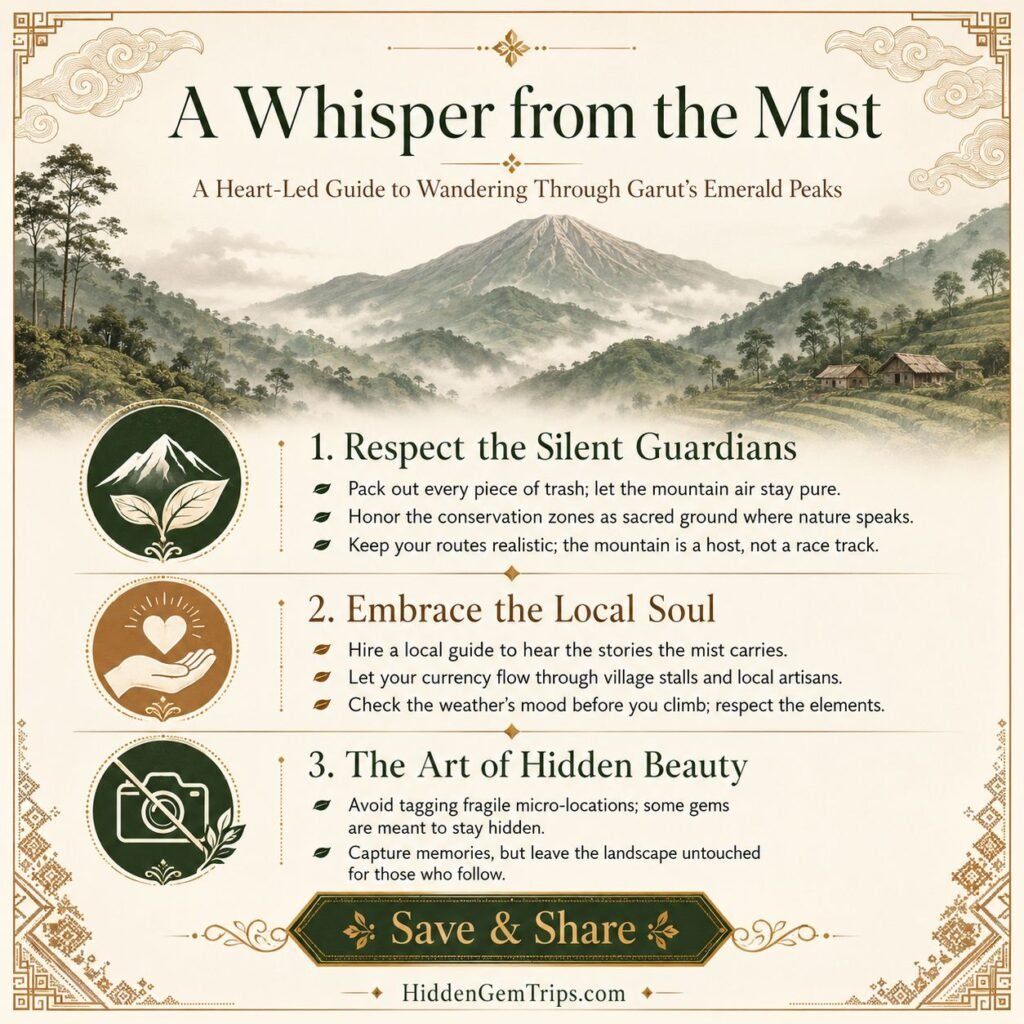
Start with waste. Carry out what you bring in. Do not assume a rural or mountain area has the same waste management capacity as a city. Single-use plastics, wet wipes, snack packaging, and disposable cups are small individually and ugly collectively. If you can carry them full, you can carry them empty. Revolutionary, again.
Second, respect access boundaries. If an area is closed, restricted, under conservation status, or locally discouraged, do not use “but I came from far away” as a moral argument. Protected-area rules exist for reasons that may not be visible to you: habitat protection, safety, erosion, restoration, sacred value, or operational risk. KSDAE’s explanation of Cagar Alam access is a useful reminder that not every green place is a public playground.
Third, hire local knowledge when the route becomes complex. A driver, guide, or homestay host can help you avoid bad timing, poor roads, and accidental disrespect. Local knowledge is not only about directions. It includes weather instincts, holiday patterns, food timing, which roads are rough after rain, and which stops are not worth forcing on a particular day. Paying for that knowledge is part of responsible travel.
Fourth, do not overshare sensitive micro-locations. This is especially important for small viewpoints, fragile paths, quiet village corners, and places without visible management. You can write about a region without geotagging every exact bend in the road. The internet has enough treasure maps made by people who never return to see the consequences.
Finally, adjust your expectations. Garut is not Bali, not Bandung, not a polished resort corridor, and not an empty wilderness. It is a real West Java region with beauty, traffic, hospitality, weather, infrastructure gaps, family tourism, farms, and protected landscapes. The more honestly you meet it, the better it becomes.
What to Pack for a Garut Highlands Trip
Garut packing should be light but practical. You do not need expedition gear for a normal highland weekend, but you do need more than city sandals and optimism. Mountain weather shifts, crater areas can be windy, and wet roads can make casual footwear annoying. If your trip includes Papandayan, Talaga Bodas, Kamojang, or tea roads, bring layers and rain readiness even if Jakarta is roasting.
A simple kit works: light rain jacket, warm layer, comfortable shoes with grip, reusable water bottle, small towel for hot springs, modest swimwear, dry bag or plastic-free waterproof pouch, sunscreen, hat, basic medicine, cash, power bank, offline maps, and a small trash pouch. If you are photographing or filming, keep your setup minimal. Garut rewards mobility. It does not reward dragging half a studio up a damp road.
For deeper preparation, pair this guide with packing light for remote expeditions. Even though Garut is relatively accessible, the mindset is useful: bring what supports safety and comfort, not what makes your bag feel important. Good packing is invisible because the day works. Bad packing becomes the main character.
Best Time to Visit Garut Highlands
The best time to visit Garut depends on what kind of quiet you want. Weekdays are usually calmer than weekends. Early mornings are better for volcanic and highland views. Outside major school holidays and long weekends, roads and hot spring areas tend to feel more forgiving. Dry-season months can improve road confidence and visibility, but mountain weather can still surprise you. Rainy season can be lush and atmospheric, but routes may be slower, trails muddier, and plans more fragile.
Check weather before highland drives. BMKG is Indonesia’s official meteorology, climatology, and geophysics agency, and travelers should use official weather and hazard information rather than relying only on social media posts. For volcanic or conservation-sensitive areas, ask local operators and accommodation staff about current access. A beautiful plan is not more important than a safe plan.
If you want quiet, avoid arriving at famous stops in the middle of the day on weekends. Start early, choose one main destination, and leave before peak noise. This does not mean you are better than other tourists. It means you understand timing. Quiet travel is often just crowd math with nicer shoes.
Final Thoughts: Garut Is Not a Checklist Destination
The mistake would be to read this Garut Highlands Guide as a challenge to complete all seven stops as fast as possible. That would technically be possible and spiritually silly. Garut is not asking you to collect it. It is asking you to arrive with enough attention to notice how many versions of West Java fit into one region: hot water, steam, tea, volcanic rock, family tourism, village food, conservation boundaries, train connectivity, and highland roads that slow you down whether you consent or not.
The best Garut trip from Jakarta is not the most efficient one. It is the one that gives your nervous system a reason to believe you actually left the city. That may mean one hot spring evening, one misty Kamojang morning, one careful Papandayan visit, one tea road with no agenda, and one final meal before the train home. It may mean skipping a famous stop because the weather turned. It may mean returning later. That is not failure. That is how places stay worth returning to.
Garut’s quietness is not guaranteed. It has to be planned, protected, and respected. Go early. Stay longer if you can. Spend locally. Keep your route humane. Do not geotag fragile corners. Treat conservation areas like conservation areas. Let local life remain local life. If you do that, Garut becomes more than a weekend escape from Jakarta. It becomes a reminder that hidden gems are not always far away; sometimes they are close enough that we have to be extra careful not to take them for granted.
FAQ
Is Garut worth visiting from Jakarta for only two days?
Yes, but keep the trip simple. For two days, focus on Samarang or Sukakarya hot springs plus one main highland stop such as Kamojang, Papandayan, Talaga Bodas, or Cikajang. A two-day Garut trip becomes tiring when travelers try to cover every major attraction. If your goal is rest, choose fewer places and protect your morning timing.
Can I travel from Jakarta to Garut by train?
Yes. The start of the KA Papandayan route from Garut to Gambir in January 2024 adds another rail option for those traveling between Jakarta and Garut. Schedules and prices are subject to change so always check official booking channels before planning fixed transfers or accommodation.
Which Garut highland stop is best for first-time visitors?
For a gentle first trip, start with Samarang/Sukakarya hot springs and Kamojang. They offer mountain air, rest, and a sense of Garut’s geothermal landscape without requiring a summit-focused trip. If you want stronger volcanic scenery, add Papandayan or Talaga Bodas on a separate morning.
Is Garut suitable for international travelers?
Yes, if you are a traveler who is comfortable with local transport, flexible planning, simple facilities and some language gaps. Garut is easier with a trusted local driver or host. International visitors should avoid expecting Bali-style tourism infrastructure in every area. The reward is a more grounded West Java experience.
What should I avoid in Garut’s highland areas?
Avoid overpacking the itinerary, visiting fragile places during unsafe weather, entering restricted conservation zones, leaving trash, blocking rural roads for photos, and pressuring drivers or guides into risky shortcuts. Also avoid assuming that “quiet” means empty. Many places are quiet because local communities use them carefully.
Disclaimer
This article is for general travel planning and editorial information only. Routes, access rules, transport schedules, prices, weather, volcanic conditions, accommodation quality, and local regulations can change. Always check current conditions with official sources, local authorities, accommodation providers, licensed guides, transport operators and weather or hazard agencies before travelling. HiddenGemTrips does not guarantee the safety, availability or suitability of any destination mentioned.