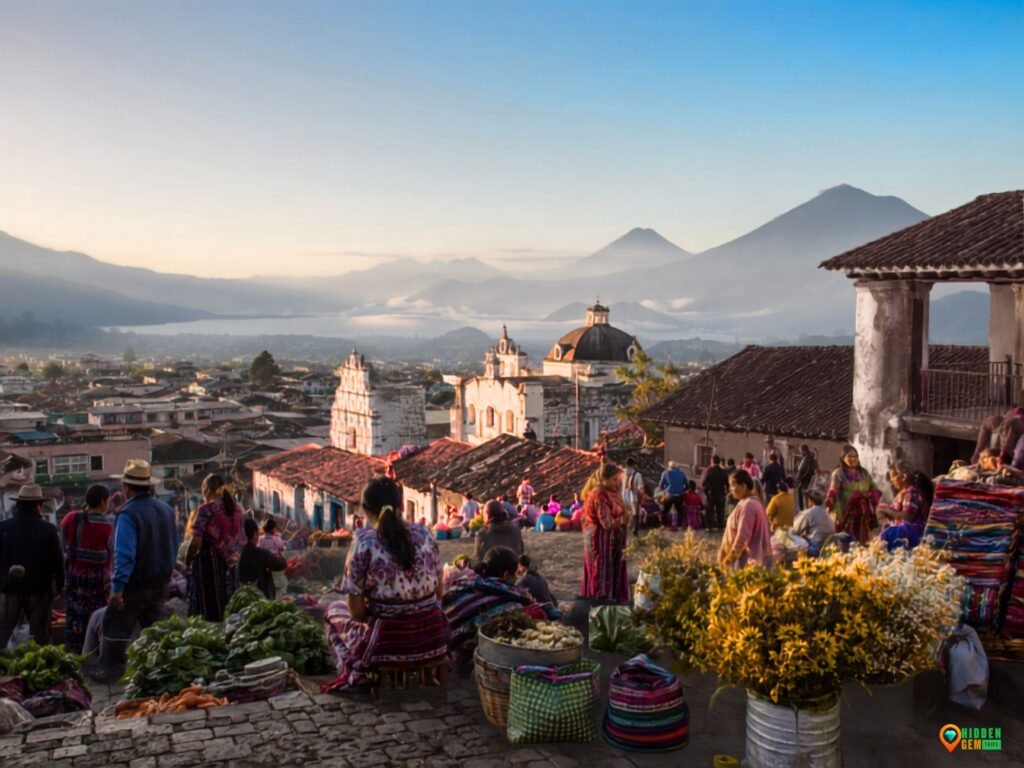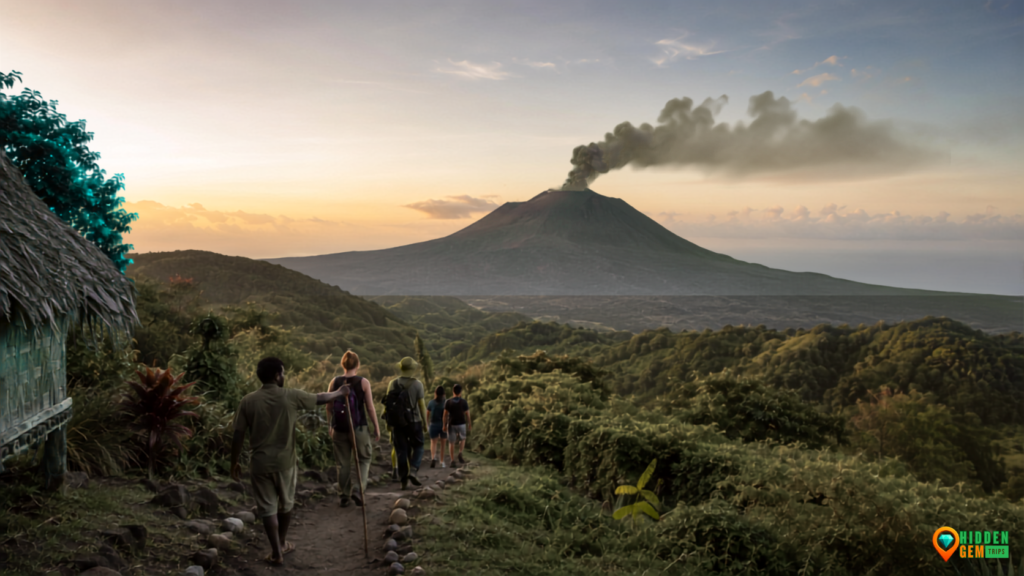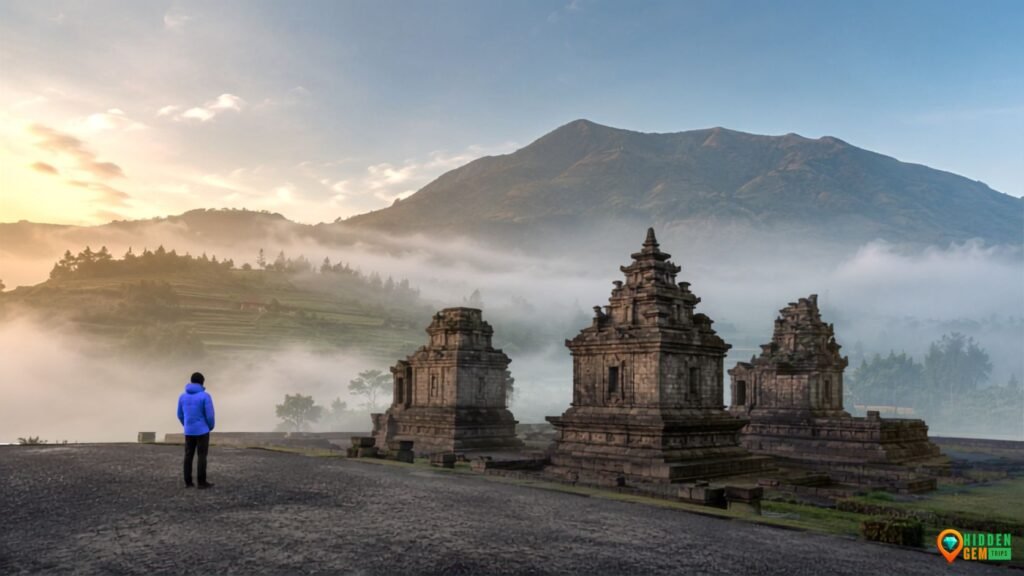

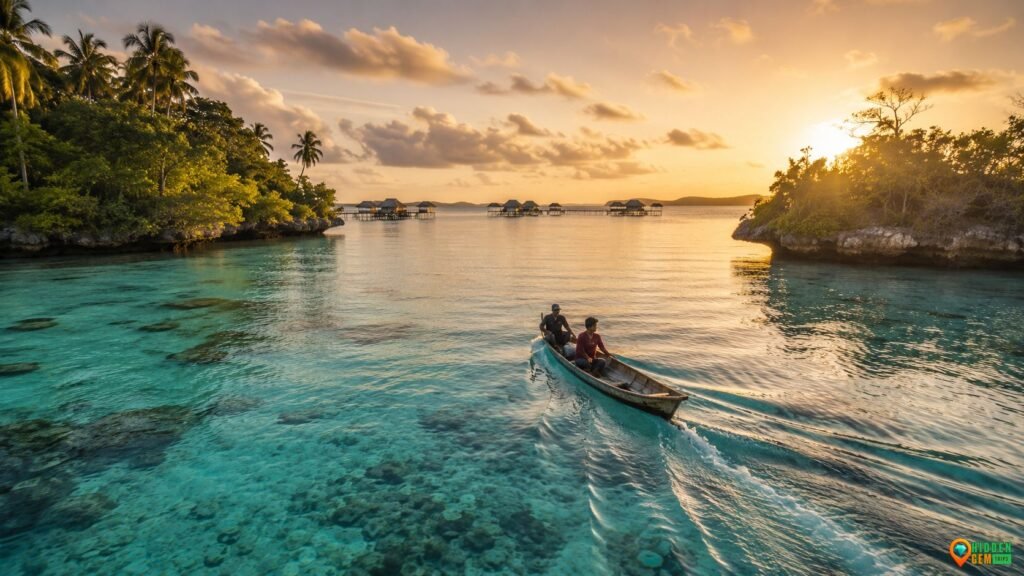
This Wakatobi travel guide is not built around the fantasy that a remote Indonesian island chain is only worth visiting if you spend every hour underwater. The reefs are the headline, sure. They deserve the attention. But the real trip starts when the boat engine fades, the market opens, the mosque call rolls over the harbor, and somebody points you toward a spring, a stilt village, a blacksmith workshop, or a beach where the day does not seem interested in your schedule.
The problem with many Wakatobi articles is that they flatten the destination into one word: diving. That is not wrong, but it is incomplete. A better Wakatobi travel guide should treat the islands as lived places, not an aquarium with homestays attached. People fish here, pray here, repair boats here, weave family histories into villages here, and negotiate conservation rules here. If you have read our notes on hidden places in Indonesia still feel genuinely local, you already know the Hidden Gem Trips lens: the good places are not always the empty ones; often they are the places where visitors learn to move with more humility.
This guide gives you seven local stops that can be combined into a one-week Wakatobi route. They include market mornings in Wangi-Wangi, Liya’s cultural memory, Kapota’s softer island pace, Kaledupa’s mangroves and arts, Hoga and Bajo Sampela’s delicate beauty, Tomia’s village-and-reef balance, and Binongko’s blacksmith identity. It is for travelers who want clear water, yes, but also context. Because Wakatobi is not a backdrop. It is a living archipelago, and you are the guest. Tiny detail, big difference.
Why This Wakatobi Travel Guide Looks Beyond the Dive Brochure
Wakatobi has every right to be famous among divers. The underwater walls can feel almost theatrical: curtains of reef, clouds of fish, blue dropping away into something too deep to understand from the surface. A 2025 paper in AACL Bioflux describes Wakatobi National Park as a 1.39-million-hectare area, about 97% sea, with at least 396 species of hard coral and 942 species of coral fish, plus habitat for whales, dolphins, and turtles. Those numbers are not brochure glitter; they explain why the islands matter beyond tourism.
But a reef destination can be damaged by the same attention that helps pay for its protection. Visitors arrive with cameras, expectations, and money. Local communities live with the daily reality of conservation zoning, weather, transport limits, and the economics of fish, fuel, food, and lodging. That is why this article leans into local island stops instead of presenting a checklist of dive sites. The reefs are included, but they are not treated like a private entertainment system.
A good Wakatobi itinerary should slow your consumption down. You can still snorkel, dive, and chase light over turquoise water. Just do it with a route that spreads money across communities, gives space to culture, and avoids treating Bajo villages as human zoos. The official Wakatobi Tourism activity list includes aquatic, coastal, cultural, land-based, and nature activities, which is a useful reminder that Wakatobi’s travel value is wider than the reef edge.
This is also why you should plan with patience. Ferry schedules, weather, and inter-island movement can change. Visitor information centers exist in Wangi-Wangi, Kaledupa, and Tomia, according to Wakatobi Tourism official practical information, and they are worth using once you arrive. Online planning helps; local confirmation saves the trip. Remote islands are not spreadsheet obedient. They have their own operating system, and sometimes that system is called the sea.
Quick Planning Snapshot for Wakatobi Islands
| Planning Point | Practical Detail |
| Best for | Divers, snorkelers, cultural travelers, slow travelers, photographers, and Indonesia repeat visitors who want fewer crowds than Bali or Komodo. |
| Main islands | Wangi-Wangi, Kaledupa, Tomia, and Binongko, with smaller islands such as Hoga, Kapota, and Lentea adding route texture. |
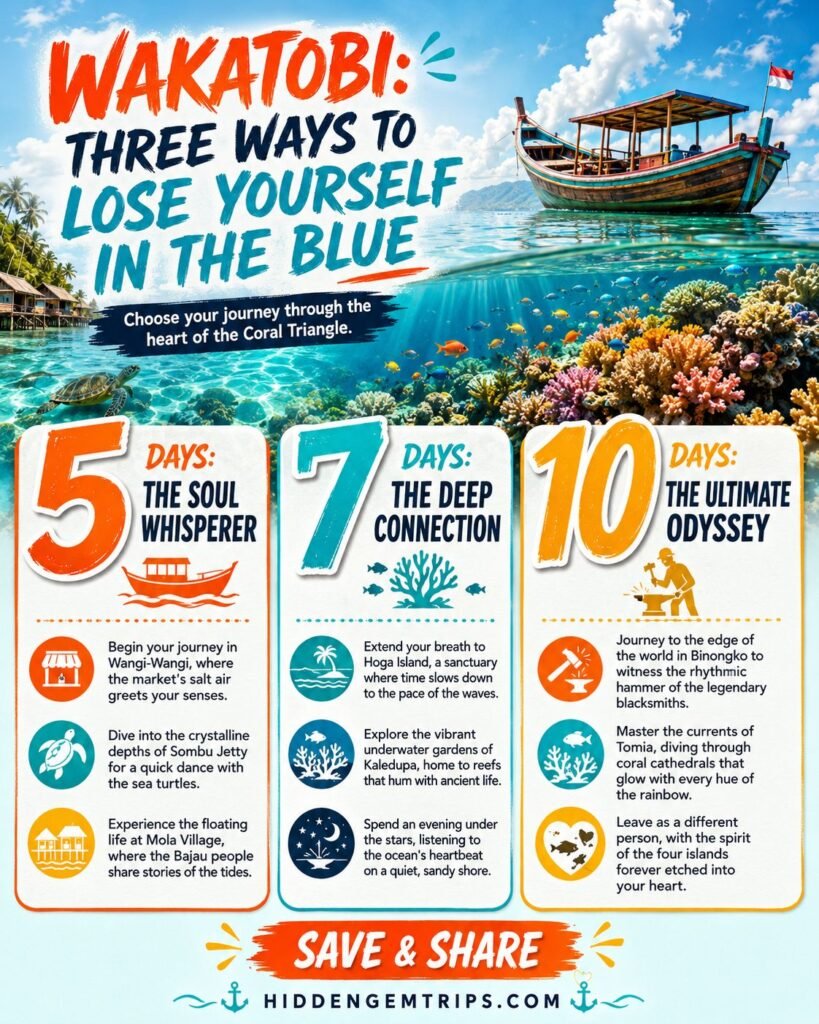
| Minimum trip length | 5 days if you focus on Wangi-Wangi and one nearby island; 7-10 days if you want a meaningful multi-island route. |
| Ideal pace | One major movement day, one village/culture day, one reef day, and one buffer day per island cluster. Use the 7-day itinerary rules for deep trips if you want to avoid turning this into an island obstacle course. |
| Travel style | Local homestays, small boats, early markets, reef guides, village permissions, and flexible timing. Luxury exists, but the soul of the trip is slower. |
| Key caution | Do not assume a spot is public just because it appears online. Ask before photographing people, entering villages, flying drones, or crossing reef flats. |
| Packing note | Bring reef-safe sun protection, dry bags, cash, sandals with grip, modest clothing for villages, and the remote-island packing strategy basics. |
How to Think About Seasons, Access, and Time
Wakatobi is not a spontaneous weekend add-on for most travelers. You usually reach it through Southeast Sulawesi, and your route may involve flights, ferries, or a combination depending on the season and current operations. Always confirm transport locally before locking non-refundable plans. The more islands you add, the more buffer you need. That is not pessimism; it is grown-up travel planning wearing sandals.
For weather, many travelers prefer the drier, calmer months, but the exact window can vary by year. Divers should ask operators about visibility, currents, and site suitability for their certification level. Non-divers should ask about boats, village activities, and tide-dependent stops. Wakatobi’s beauty is not always available on demand; some days are for the reef, some for markets, and some for doing very little without pretending you are wasting time.
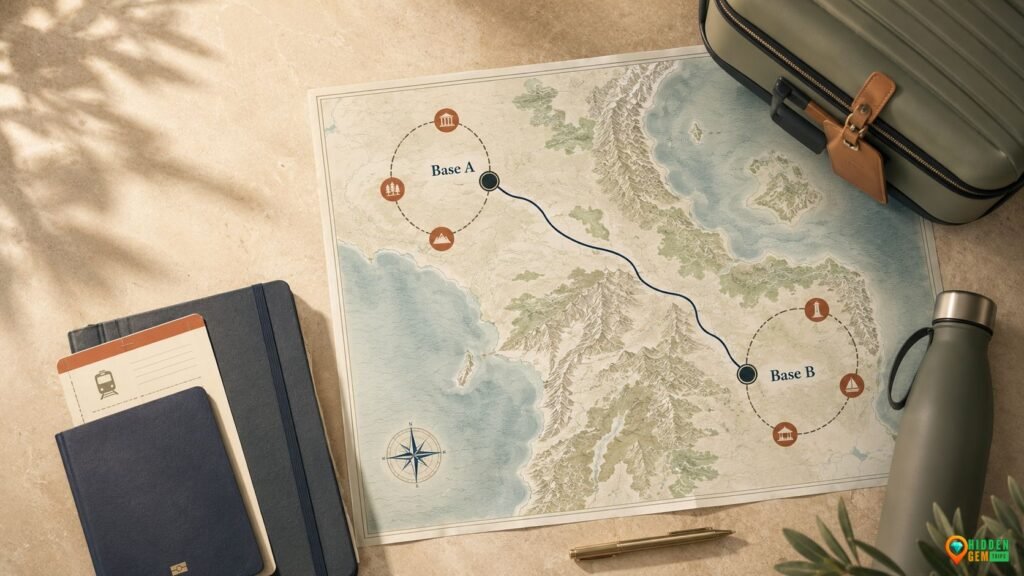
A seven-day route gives you a realistic taste without pretending you can understand every island. Wangi-Wangi works as the entry point and orientation base. Kaledupa and Hoga offer a strong blend of village life, reef access, and mangrove or cultural experiences. Tomia gives a more established dive-and-village rhythm. Binongko is harder for some travelers but deeply rewarding if you value heritage over convenience. If that sounds familiar, it is the same principle behind our Northern Laos river-and-mountain pacing: fewer moves, more meaning.
The 7 Local Island Stops in This Wakatobi Travel Guide
| Stop | Local Island Stop | Why It Matters | Suggested Time |
| 1 | Wangi-Wangi markets, Sombu shore, and Wanci harbor | Arrival rhythm, food, first reef access, local orientation | 1-2 days |
| 2 | Liya Togo and Kontamale springs | Cultural memory, freshwater, village walking, old Wakatobi texture | Half to full day |
| 3 | Kapota Island | Soft island pace, beaches, local boats, nature without drama | Half to full day |
| 4 | Kaledupa villages, mangroves, and Lariangi culture | Mangroves, cycling, dance heritage, village-based travel | 1-2 days |
| 5 | Hoga Island and Bajo Sampela | Reef beauty, research island atmosphere, Bajo stilt settlement | 1-2 days |
| 6 | Tomia, Kollo Soha, Kulati, and Hondue | Reefs, community tourism, heritage, night market energy | 2 days |
| 7 | Binongko blacksmith villages, cliffs, and quiet beaches | Tukang Besi heritage, rugged coast, minimal-tourism edge | 1-2 days |
Stop 1: Wangi-Wangi Markets, Sombu Shore, and the First Rhythm of Wakatobi
Wangi-Wangi is where most travelers begin, and that makes it easy to underestimate. People treat arrival islands like waiting rooms. Big mistake. Wangi-Wangi is your first chance to stop consuming Wakatobi as a distant dream and start reading it as a working island. Begin in Wanci or around the traditional markets early in the morning, before the heat rises and before you start thinking every photo needs a sunset. Markets tell you what a place eats, what it imports, what it catches, what it values, and how quickly your romantic island fantasy should calm down.
Look for fish, cassava, seaweed products, chilies, woven baskets, and small conversations happening faster than your language app can handle. You do not need to turn the market into content. Buy fruit. Drink something cold. Ask your host where to eat that night. This is the kind of practical interaction that makes the rest of the trip smoother because people stop being service providers in your mind and become people. Revolutionary concept, apparently.
From the market rhythm, head toward Sombu or the Waha coast for a first look at Wakatobi’s water without immediately chasing the most famous dive site. Sombu Jetty and nearby shore areas are often used as accessible reef-entry points, and the broader Wangi-Wangi coast appears in the official Wakatobi Tourism activity list alongside Sombu, Sombu Jetty, Waha Cemara, Waha Wall, and other named spots. The point is not to tick them all; it is to understand how close the marine world sits to daily life here.
If you are coming from a bigger Indonesian island, Wangi-Wangi also helps you reset your timing. Meals can be earlier, boats depend on weather, and the best parts of the day are often the quiet ones. Use this stop to confirm your onward route, ask about current boat schedules, arrange a guide if needed, and pick up supplies. Cash still matters. So does a power bank. For gear, do not overpack like you are invading a small moon. Use a remote travel gear checklist and keep your luggage boat-friendly.
Wangi-Wangi also deserves a night. Walk near the harbor, notice how families gather, and let the island introduce itself slowly. If your Wakatobi travel guide starts with a market instead of a drone shot, your trip is already improving. Not every destination has to perform immediately. Sometimes the first stop is where you learn how to look.
Stop 2: Liya Togo, Kontamale Springs, and Wakatobi’s Living Memory
Liya Togo is the stop that reminds you Wakatobi was never only a marine destination. Before the current tourism language of dive sites, conservation zones, and homestays, these islands had older systems of settlement, defense, water use, ceremony, and memory. Around Liya, travelers often hear about old fort areas, traditional settlement patterns, and local stories that make the island feel less like a beach map and more like a layered place.
The best way to experience Liya is not to rush in with the energy of someone hunting content. Go with a local guide or host who can explain what you are seeing. Dress modestly, ask before photographing homes or people, and treat sacred or historical areas as more than scenery. That advice sounds basic, but basic manners are weirdly rare in beautiful places. This is especially important in destinations where tourism is still unevenly distributed and visitors can accidentally turn someone’s normal neighborhood into an unpaid stage.
Pair Liya with Kontamale or Tekosapi springs if time and access allow. Freshwater places in small islands are not just pretty swimming stops; they carry social and ecological meaning. They shape settlement, daily routines, and local memory. In a destination marketed for saltwater, a freshwater spring can feel like a secret chapter. It is also a good reminder that island travel is not only about beaches. Water appears in many forms here: reef, rain, spring, well, cooking pot, prayer washing, boat wake.
This stop works best as a half-day or full-day from your Wangi-Wangi base. Do it early, avoid the harsh middle-day heat, and leave room for a slow lunch. If you are writing, filming, or photographing for a platform, Liya also gives you a stronger storytelling angle than the usual “paradise found” caption. Think heritage, water, village memory, and the discipline of moving gently. For comparison, the same culture-first travel rhythm appears in Lore Lindu’s Sulawesi culture-first rhythm, where landscape becomes more meaningful when you stop treating local history as background texture.
A practical note: do not make Liya your only cultural stop and then declare that you have “discovered authentic Wakatobi.” Authenticity is not a souvenir. It is a relationship you barely enter as a short-term visitor. Your job is simpler: listen well, pay fairly, and leave without making the place worse. That is a low bar, but somehow the internet keeps tripping over it.
Stop 3: Kapota Island and the Soft Side of the Marine Park
Kapota is the kind of stop that can save a Wakatobi itinerary from becoming too intense. It is near enough to Wangi-Wangi to feel manageable, but different enough to shift your mood. Smaller island stops like Kapota help travelers understand scale. On a map, Wakatobi looks compact; on the water, every island has its own tempo, speech patterns, shoreline habits, and small negotiations around boats, tides, and weather.
Kapota is not the place to arrive demanding spectacle. Treat it as a soft day: boat ride, beach time, village wandering with permission, and maybe a simple meal arranged through a local contact. If conditions are good, nearby marine areas can be beautiful for snorkeling, but always check with local guides about currents, reef entry, and whether a site is appropriate for your ability. Coral is not a sidewalk. Stand on it and you are not adventurous; you are just expensive damage in sandals.
This stop is also useful for travelers who are not divers. Wakatobi sometimes intimidates non-divers because the destination’s reputation is so underwater-heavy. Kapota proves that you can still have a meaningful trip through landscapes, boats, quiet beaches, food, conversation, and observation. In that sense, it belongs in the same travel family as the Kei Islands route logic for quieter beaches: water matters, but the mood around the water matters too.
Bring sun protection, water, a dry bag, and cash. Avoid plastic waste, especially on smaller islands where waste systems are limited. If you bring snacks, bring the packaging back. If a guide suggests a fee for a boat or local access, do not bargain like you are fighting a final boss in a budget game. Fair payment keeps small routes alive and encourages communities to see tourism as something better than an interruption.
Kapota’s value is restraint. It is a day that teaches you not to overfill the route. You could chase three named spots and remember none of them, or you could spend half a day moving slowly and actually notice the island. That choice, honestly, is the whole Wakatobi test.
Stop 4: Kaledupa, Mangroves, Lariangi, and the Bajo Edge
Kaledupa is where this Wakatobi travel guide starts to deepen. The island is often used as a gateway to Hoga and Bajo Sampela, but Kaledupa itself deserves more than transit status. It has villages, mangrove areas, cycling potential, cultural expressions such as Lariangi dance, and a strong sense of everyday island life. The official activity list from Wakatobi Tourism includes Kaledupa entries such as Bajo Mantigola Village, bicycle tours, mangrove forest, Lariangi Dance, Sombano Lake and Village, and multiple dive sites. That variety tells you something important: Kaledupa is a bridge between land culture and sea culture.
Start with the village rhythm. Ask your homestay or local contact about cycling routes, mangrove access, and whether any cultural performance or community-led activity is available during your stay. Do not assume performances exist for your schedule. In smaller destinations, dance and music are not always products waiting behind a curtain. Sometimes they are tied to events, community availability, or advance arrangements. Pay properly when local artists perform; cultural labor is labor.
Mangroves deserve attention too. They do not photograph as loudly as coral walls, but they protect coastlines, shelter juvenile marine life, and shape local livelihoods. A slow mangrove visit helps balance the reef-heavy narrative. It also gives you a calmer way to experience nature if currents or weather make snorkeling less ideal. In island systems, the glamorous ecosystem is rarely working alone. Reef, seagrass, mangrove, village, and market are all part of the same story.
Kaledupa is also a good place to think about the ethics of visiting Bajo communities. The Bajo, often described as sea-oriented communities across maritime Southeast Asia, have a deep relationship with the ocean. But travelers need to be careful with romantic labels. Do not reduce people to “sea nomad” aesthetics. If you visit Bajo Mantigola or use Kaledupa as the route to Sampela, go with a guide, ask what is appropriate, and avoid photographing children without permission. The camera is not a passport.
For readers who enjoyed the village-and-water balance in the Tanjung Puting village-and-river approach, Kaledupa may be the Wakatobi stop that makes the most sense emotionally. It asks you to look sideways: not only at the reef, not only at the village, but at the relationship between the two. That is where the deeper travel story lives.
Stop 5: Hoga Island and Bajo Sampela, Where Beauty Needs Better Manners
Hoga is beautiful in the way that makes people start speaking in clichés against their will. Clear water, soft beaches, reef access, simple lodging, and a long association with marine research and diving have made it one of Wakatobi’s best-known small islands. The official Wakatobi Tourism page says Hoga is roughly 15 minutes by boat from Kaledupa and has become popular among researchers from Operation Wallacea. That research atmosphere matters: it reminds visitors that the island is not merely decorative, but part of a studied, fragile marine landscape.
Many travelers pair Hoga with Bajo Sampela, a stilt settlement reached by boat from Kaledupa or Hoga. The Wakatobi Tourism note on Bajo Sampela states that the village is around 10 minutes by boat from Ambeua harbor and 20 minutes from Hoga, with small passenger costs listed on the official page and a homestay available for visitors who want to spend the night. Those practical details are useful, but the ethical details matter more.
Bajo Sampela is not a theme park. It is a living village. People cook, repair, rest, study, gossip, and manage household routines there. The most respectful visits are guided, permission-based, and unhurried. Do not point cameras into homes. Do not fly drones over houses. Do not treat children as props. Buy something locally if appropriate, pay your guide, and leave space for people to say no. A destination can be visually extraordinary and still deserve privacy. Actually, that is when privacy matters most.
Hoga itself is where reef etiquette becomes non-negotiable. Use reef-safe behavior: no touching coral, no chasing turtles, no standing on reef flats, no feeding fish, no taking shells, and no panic-kicking over shallow coral. If you are new to snorkeling, wear a flotation device and go with someone who can read currents. If you dive, be honest about your certification, recent experience, and comfort level. Wakatobi’s underwater beauty does not need your ego bubbles.
This stop also deserves at least one evening. The island becomes different after day visitors leave. Sound carries across the water; generators hum; stars appear with less urban interference; and the reef stops being an activity and becomes a presence. For another Indonesian island route where remoteness and marine history shape the story, compare the Banda Islands travel guide. Hoga is smaller in scope, but it shares that sense that water is not scenery. It is the main road.
Stop 6: Tomia, Kollo Soha, Kulati, and Wakatobi’s Reef-and-Village Balance
Tomia is often the island divers talk about with a certain glow in their eyes. The official Indonesia Travel page describes Tomia as having more than 40 named and mapped dive sites, with Roma’s Reef often singled out by experienced divers. That reputation is deserved, but Tomia is more interesting when you do not let dive-site fame swallow the island’s villages, food, viewpoints, and community tourism efforts.
Start with the practical rhythm: Tomia has more tourism infrastructure than some travelers expect, including homestays and dive operations, but it is still not a place to treat like a resort strip. Ask locally about road conditions, village access, and current boat options. Spend time in settlements such as Waha or Usuku, visit night-market areas if operating, and look beyond the dive board. The food, conversations, and dry-land walks give your reef days a place to land.
Kollo Soha is especially important for travelers who want community-based tourism rather than just a boat-and-bubbles itinerary. The Jadesta profile for Kollo Soha Tourism Village lists the village in Tomia, notes natural assets including Soha and Hondue beaches and attractive coral reefs, and records its ADWI history as a top-300 tourism village in 2022, 2023, and 2024. That does not mean you should arrive expecting polished mass tourism. It means there is local initiative here worth supporting carefully.
Hondue and surrounding coastal areas can be wonderful for beach time and snorkeling when conditions are right. Again, use a guide. Ask where to enter, where not to step, and when visibility or currents are suitable. If the community offers meals, canoeing, cultural activities, or local crafts, consider spending money there rather than only paying external operators. Small choices shape whether tourism income stays near the people carrying the destination.
Kulati and areas around it add a more rugged edge. Depending on access and local advice, travelers may encounter cliffs, coastal views and a quieter side of Tomia. Keep plans flexible. Some roads may be slow, and weather can change the best order of activities. This is where the budget habits that make island hopping less painful become useful: keep cash in small denominations, avoid overbooking every hour, and build in contingency money for extra transport or an additional night.
Tomia is also a good place to reflect on conservation complexity. The 2025 AACL Bioflux paper on Wakatobi National Park management notes that protected-area management can have both ecological and social effects because many coastal residents depend on marine resources. For travelers, the takeaway is simple: do not talk about conservation as if local communities are obstacles to paradise. Conservation succeeds best when people are treated as partners, not background characters in someone else’s blue-water dream.
If you are choosing one island for both reef and village balance, Tomia may be it. It can be active without feeling frantic, beautiful without needing constant performance, and culturally interesting without forcing a museum-like frame onto daily life. Give it two days if you can. One day will only make you mildly annoying to yourself later.
Stop 7: Binongko, Blacksmith Heritage, Cliffs, and the Island That Refuses to Perform
Binongko is the stop for travelers who understand that the most rewarding island is not always the easiest one. The name Tukang Besi, often associated with the wider archipelago, means blacksmith, and Binongko is strongly tied to that metalworking identity. The official Wakatobi Tourism activity list includes Tukang Besi blacksmith heritage, Binongko beaches, Sowa Mangrove Forest, Palahidu Beach, Turtle Point, Bante, and Topa Labago. That mix tells you what kind of island this is: cultural, coastal, rough-edged, and still relatively outside the smooth tourism machine.
A blacksmith visit, if arranged properly, can be one of the most memorable moments of a Wakatobi trip. Watch the skill, the heat, the rhythm, and the inherited knowledge. Ask questions through a guide if language is a barrier. Buy something if appropriate and transportable. Do not treat the workshop as free theater. Craft survives when admiration turns into payment, not just applause and a few phone clips.
Binongko’s coastline can feel more dramatic than the softer beach images people associate with Wakatobi. Cliffs, exposed edges, and quieter beaches create a different atmosphere. This is not the island for travelers who need a smoothie bowl every three hours. It is for people who like places with texture. Bring patience, sun protection, and realistic expectations. Services may be more limited, and that is part of the deal.
If you visit beaches or mangrove areas, ask about access and conditions. Some sites are better with local guidance, especially if tide, road, or boat conditions matter. Do not swim where locals advise against it. Do not assume every empty-looking beach is safe. Remote does not automatically mean harmless; it just means fewer people will rescue your bad decisions with Wi-Fi and iced coffee.
Binongko also gives this Wakatobi travel guide its final emotional turn. After Wangi-Wangi’s orientation, Kaledupa’s cultural ecology, Hoga’s reef beauty, and Tomia’s community tourism, Binongko reminds you that Wakatobi is not here to fit one traveler fantasy. It is a working island with its own pride. In that sense, it has more in common with the Derawan Islands marine-life comparison than with polished tropical marketing: yes, the sea matters, but the human story is what makes the route stick.
Spend a night if logistics allow. If they do not, do not force it. Binongko rewards travelers with time and local support. Go because you are curious about heritage, not because you need a final dramatic stop. The island can tell when you are rushing. Islands are petty like that.
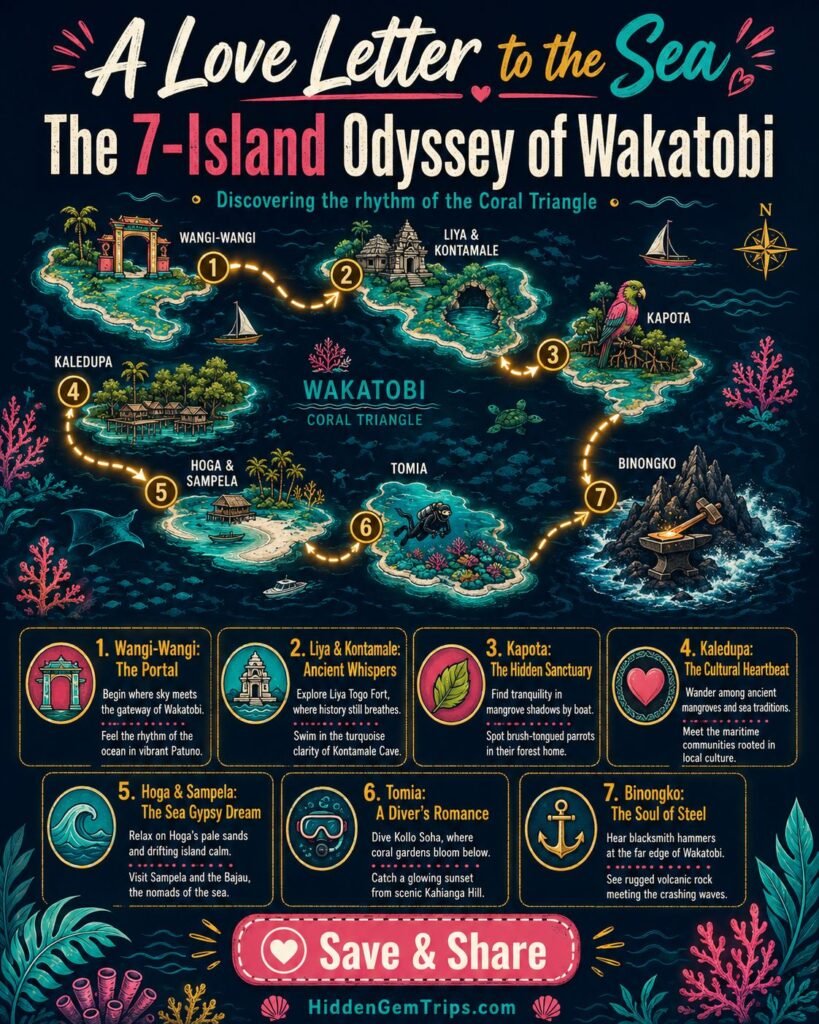
Suggested 7-Day Wakatobi Route That Feels Deep, Not Exhausting
| Day | Route Idea | Why It Works |
| Day 1 | Arrive Wangi-Wangi, settle in Wanci, visit the market or harbor, confirm transport, sunset near Sombu or Waha if conditions fit. | Do not rush to another island on arrival unless your transport is already confirmed and the weather is kind. |
| Day 2 | Explore Liya Togo and Kontamale/Tekosapi springs with a local guide, then return for a relaxed Wangi-Wangi evening. | Best for cultural grounding before the reef-heavy days begin. |
| Day 3 | Boat to Kapota or take a soft Wangi-Wangi coastal day; snorkel only with local advice and good conditions. | Use this as a low-pressure nature day, not a checklist day. |
| Day 4 | Move to Kaledupa; explore village areas, mangroves, cycling routes, or Lariangi-related cultural activities if available. | Confirm Hoga/Sampela boat arrangements for the next day. |
| Day 5 | Visit Hoga Island & Bajo Sampela with a guide; overnight on Hoga or return depending on your route. | Village permission and reef etiquette is paramount. |
| Day 6 | Move toward Tomia; explore Kollo Soha, Hondue, Kulati, night market, or dive/snorkel sites based on ability and conditions. | Support community tourism where possible. |
| Day 7 | Choose either a Tomia slow morning or continue to Binongko if schedules allow; otherwise save Binongko for a longer 10-day route. | Better to leave wanting more than to race through four islands like a caffeinated ferry schedule. |
This route is intentionally conservative. Travelers often try to conquer Wakatobi by moving too much, then blame the destination when transport, weather, or exhaustion pushes back. A deeper trip is built with fewer assumptions. You can replace Day 3 with more Wangi-Wangi time, expand Kaledupa and Hoga into two nights, or turn Tomia into a three-day base if diving is your priority.
For a 10-day route, add Binongko properly instead of squeezing it into a final day. For a five-day route, focus on Wangi-Wangi, Kaledupa, Hoga, and Sampela. For a diver-focused trip, base longer in Tomia while still protecting one day for village and community tourism. This is the same logic behind our 7-day itinerary rules for deep trips: the goal is not to see more nouns, but to remember more moments.
Also build your route around energy, not ego. Remote island travel creates friction: heat, waiting, boat transfers, patchy information, and simple accommodation. That friction is not failure. It is the price of going somewhere that has not been sanded down for mass consumption. If that excites you, Wakatobi is a gift. If it annoys you, maybe start with an easier Indonesian island first. No shade. Well, a little shade.
Food, Homestays, and the Human Details That Make Wakatobi Work
Food is one of the easiest ways to stop being a passive spectator in Wakatobi. The islands are not a global dining capital, and that is not a problem. Eat what makes sense here: grilled fish, cassava, rice, sambal, local vegetables, simple soups, fried bananas, coffee, and whatever your host says is fresh that day. If you need imported snacks, specialty coffee, and a breakfast menu written like a wellness retreat, bring emotional resilience. Wakatobi rewards travelers who can enjoy simple food without turning every meal into a review economy.
Markets are useful beyond meals. They show you price rhythms, supply limitations, and the relationship between sea and kitchen. In remote islands, ingredients travel. Fuel travels. Bottled drinks travel. Your expectations should travel a little less. When you eat at a small stall or order through a homestay, you are not only feeding yourself; you are putting money into a local chain that may include fishers, market sellers, drivers, boat owners, and family kitchens.
Homestays are often the best way to understand Wakatobi at human scale. The room may be simple, the bathroom may not match urban hotel habits, and the Wi-Fi may occasionally act like it has entered witness protection. But a good homestay can give you something a standard hotel cannot: updated boat information, introductions to guides, local breakfast timing, village etiquette, and honest warnings about weather or access. That information is worth more than a decorative lobby plant.
Ask hosts what is reasonable for the day instead of arriving with a rigid itinerary printed like a court order. A host may know that a boat is not running, a village activity is unavailable, a road is rough after rain, or a reef entry is better at a certain tide. This is where trust begins. You are not lowering your standards by listening. You are upgrading your trip.
If you have dietary restrictions, communicate early and clearly. Vegetarian or vegan travel can be possible, but options may be limited, especially outside main island centers. Bring backup snacks and protein sources without creating plastic waste. If you have allergies, translate them into Indonesian and show them in writing. Remote travel is not the place to discover that your allergy explanation depends entirely on vibes.
Accommodation should also be chosen with location in mind. A cheaper stay that forces expensive transfers can become less economical than a slightly pricier place near the activity you actually want. Divers should stay close to their operator or departure point. Culture-focused travelers may benefit from village homestays. Slow travelers should choose a base that allows walking, market access, and easy conversation. For a wider sense of how lodging shapes remote travel, the Tana Toraja slow-travel framework is useful because it treats accommodation as part of the cultural route, not just a place to collapse after sightseeing.
Costs, Boats, and the Art of Not Over-Scheduling
| Expense Area | Planning Note |
| Local meals | Usually one of the best-value parts of the trip, especially if you eat through markets, stalls, and homestays. Confirm prices when arranging meals in advance. |
| Boat transfers | Highly variable by route, fuel, distance, sharing options, weather, and whether the boat is private or public. Confirm one way, return, waiting time, and passenger capacity. |
| Guides | Worth paying for village etiquette, reef safety, interpretation, and introductions. The cheapest guide is not always the best guide. |
| Diving and snorkeling | Costs depend on equipment, operator, number of dives, certification needs, and distance to sites. Safety record over low prices. |
| Homestays | Often simple and good value, but standards vary. Ask about meals, electricity, water, fan or air-conditioning, and transport help. |
| Buffer money | Essential. Weather, missed boats, added nights, or private transfers can change your budget quickly. |
The biggest Wakatobi budget mistake is not one expensive item; it is pretending every transfer will connect perfectly. Boats cost money, waiting costs time, and remote islands punish itineraries built with zero slack. A traveler who budgets an extra day often spends less emotionally, even when the trip costs slightly more financially. Stress is a hidden fee. Nobody adds it to the invoice, but wow, it collects interest.
When arranging boats, ask direct questions: What time do we leave? Is that time fixed or flexible? What happens if the weather changes? Is the quoted price for the boat or per person? Does it include return? Will the boat wait? Is fuel included? How many passengers? Are life jackets available? These questions do not make you difficult. They make you less likely to become a cautionary tale told at dinner.
Do not plan a same-day chain of flight, ferry, village visit, snorkel, sunset, and night market unless you enjoy watching logistics fall apart in high definition. Build your route in blocks. Arrival block. Island movement block. Reef block. Culture block. Rest block. The more remote the place, the more valuable the block system becomes. This is also why the slow travel mindset before chasing another checklist matters here more than in easy city destinations.
Wakatobi’s costs can be fair when you travel with patience. Share boats where appropriate. Stay longer in fewer places. Eat locally. Pay for good guides. Avoid last-minute private transfers caused by over-ambitious planning. Use Wangi-Wangi as an admin base before jumping deeper. Once you understand the rhythm, the archipelago becomes easier, not because it changes, but because you stop fighting it. Character development, island edition.
Photography, Storytelling, and What Not to Turn Into Content
Wakatobi is dangerously photogenic. That sounds like a compliment, but it is also a warning. Clear water and stilt villages can make visitors behave like every human scene is public material. It is not. The better travel story is not the one with the most intimate images of strangers. It is the one that understands where the camera should stop.
For villages, ask permission before photographing people, homes, workshops, boats, ceremonies, or children. A smile is not always informed consent, especially when language and power differences exist. If someone says no, lower the camera immediately. If a guide tells you not to shoot in a certain area, listen. If a place feels private, assume it is private until told otherwise. This is not complicated. The internet just made people weird.
For reef photography, keep distance. Do not kneel on coral to stabilize a camera. Do not chase turtles for a better angle. Do not use flash irresponsibly around marine life. Do not pressure guides to take you to sensitive spots that are not appropriate for your ability or the day’s conditions. A blurry ethical photo is better than a sharp destructive one. Your followers will survive. The reef might not.
Storytelling also benefits from restraint. Instead of writing captions that say you discovered untouched paradise, explain who guided you, what you learned, why the reef is protected, and how travelers can behave better. Link to local operators or community tourism groups when appropriate. Mention that Wakatobi is a lived archipelago. This makes your content more useful and less colonial cosplay with a preset filter.
If you create videos, consider a route narrative rather than only beauty shots: market morning in Wangi-Wangi, a guide explaining Liya, a quiet Kapota boat ride, mangrove texture in Kaledupa, reef etiquette on Hoga, a respectful wide shot of Sampela, community tourism in Kollo Soha, and blacksmith craft in Binongko. That arc has more depth than another montage of feet walking into water. The water is pretty. We know. Give the audience a reason to care.
Responsible Travel Notes for Wakatobi
| Issue | Better Traveler Practice |
| Reef behavior | Never touch coral, stand on reef flats, chase marine animals, feed fish, collect shells, or drag fins over shallow coral. |
| Village visits | Go with a local guide, ask permission before photos, dress modestly, and avoid entering homes or sacred areas uninvited. |
| Bajo communities | Do not romanticize or objectify. Treat stilt villages as lived neighborhoods, not open-air museums. |
| Money flow | Use local homestays, guides, boat operators, food sellers, craft makers, and community tourism groups where possible. |
| Waste | Bring back packaging, refill where possible, avoid single-use plastics, and do not leave wet wipes or cigarette butts behind. |
| Drones | Ask first. Drones over villages, boats, wildlife, or religious spaces can be intrusive and unsafe. |
| Safety | Check currents, weather, boat condition, fuel, return timing, and guide experience. Remote water is not a playground for guesswork. |
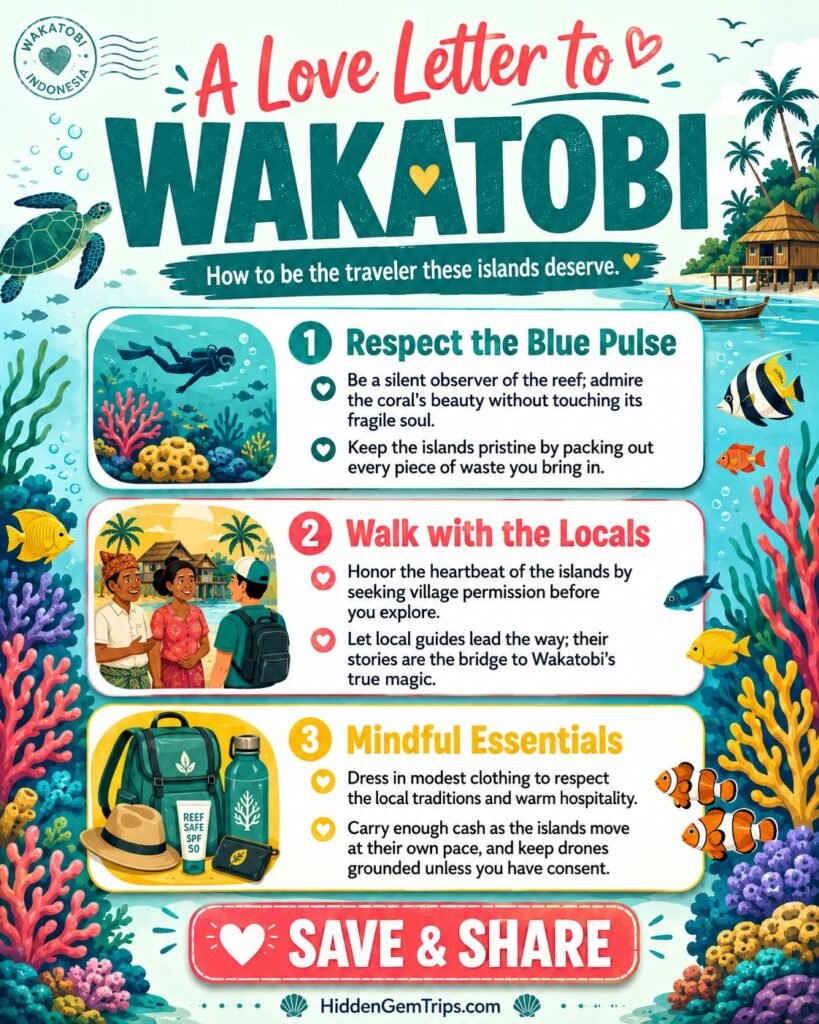
Responsible travel in Wakatobi is not about sounding noble online. It is about tiny decisions repeated all day: where you sleep, who you pay, how you photograph, how you swim, how much trash you create, and whether you listen when locals say conditions are not right. The reef is fragile, but so is trust.
The UNESCO World Heritage Tentative List page for Wakatobi National Park points to the area’s marine potential and outstanding submarine landscapes, while the UNESCO biosphere reserve context emphasizes a living relationship between people and the environment. That dual identity should guide your behavior. Wakatobi is both nature and home. Protecting one while disrespecting the other misses the point.
If you have traveled through other remote regions like the Mergui Archipelago planning notes or the Banda Islands travel guide, the pattern is familiar: the farther you go, the more your behavior matters. Small communities remember visitors. Be the kind worth remembering for boringly good reasons: fair payment, low ego, clean footprints, and zero main-character nonsense.
What to Pack for Wakatobi Without Overdoing It
| Item | Why It Matters |
| Dry bag | Useful for boat rides, beach days, camera gear, and sudden rain. |
| Reef-safe sun protection | Long-sleeve rash guard, hat, and sunscreen that does not encourage reef damage. |
| Small denomination cash | Good for boats, markets, guides, food stalls, tips and village purchases. |
| Humble clothing for village visits | Lightweight long pants or skirt, shoulder coverage and respectful clothing for cultural stops. |
| Waterproof sandals with grip | Boat landings, wet jetties, rocky beaches, and village walks. |
| Basic medicine | Motion sickness tablets, rehydration salts, antiseptic, personal prescriptions, and stomach basics. |
| Offline maps and saved contacts | Signal can be unreliable; save accommodation, guide, and boat contacts before moving islands. |
For a fuller packing logic, use the remote-island packing strategy and adapt it to Wakatobi’s boat-heavy rhythm. Keep luggage compact. Boats, homestays, and motorbikes do not care about your aesthetic weekender bag. They care whether it fits, stays dry, and does not make everyone silently judge you.
Conclusion: The Best Wakatobi Trip Is Slower Than Your Camera Roll Wants
The strongest Wakatobi travel guide is not the one with the longest list of beaches or dive sites. It is the one that helps you understand how the islands connect: Wangi-Wangi’s markets and arrival rhythm, Liya’s memory, Kapota’s softness, Kaledupa’s mangroves and culture, Hoga’s reef beauty, Bajo Sampela’s lived sea world, Tomia’s community tourism, and Binongko’s blacksmith pride.
Wakatobi is spectacular, but not in the lazy way the word is often used. It is spectacular because the reef is alive, the villages are active, the transport requires patience, and the best experiences ask you to behave better than the average tourist algorithm. The islands do not need you to discover them. They need you to arrive with context, spend money fairly, ask permission, and leave the coral alone.
If you want a trip that feels deeper than a beach montage, choose fewer stops and give each one more attention. Read the light. Listen at the market. Let boat days be boat days. Stay long enough for people to recognize your face. That is when Wakatobi stops being a destination and becomes a memory with salt on it. Cheesy? A little. True? Very.
FAQ: Wakatobi Travel Guide
1. Is Wakatobi only worth visiting if I dive?
No. Diving is a major reason people visit, but Wakatobi also offers village walks, markets, springs, mangroves, beaches, cultural performances, Bajo settlements, blacksmith heritage, and slow island travel. Non-divers should focus on Wangi-Wangi, Kaledupa, Hoga, Tomia, and community-led stops rather than trying to copy a diver’s itinerary.
2. How many days do I need for Wakatobi?
Five days is the practical minimum for a light trip, especially if you focus on Wangi-Wangi and one nearby island cluster. Seven days is better for this guide’s route. Ten days is ideal if you want to include Binongko without rushing.
3. What are the four main islands of Wakatobi?
The four main islands are Wangi-Wangi, Kaledupa, Tomia, and Binongko. The island names combine to make up the name Wakatobi, with smaller islands like Hoga, Kapota and Lentea adding depth to travel routes.
4. Is Wakatobi good for beginners who want to snorkle?
Some spots can be beginner-friendly in calm seas and with a local guide confirming safe entry but Wakatobi is not a place to be taken lightly. Currents, shallow corals, boat traffic and reef sensitivity are all factors. Beginners should use flotation support, stay away from shallow coral and follow a trained guide.
5. Can I go to Bajo Sampela myself?
It is better to visit with a local guide or host connection. Bajo Sampela is a living stilt village, not a display attraction. A guided visit helps with permission, cultural context, boat logistics, and respectful photography.
6. Is Wakatobi expensive?
Depends on your style of route. By staying in local homestays, shopping at the markets and using shared boats you can keep costs moderate but costs will increase if you dive, use private transfers or travel between islands. The smartest approach is to spend fewer nights moving and more nights supporting local stays and guides.
7. When is the best time to go to Wakatobi?
Most travelers prefer the drier, calmer months but it depends on the year and what you are doing. Divers should ask operators about visibility and currents. Non-divers should confirm boat schedules, village access, and tide-sensitive stops before building a fixed plan.
8. Is Wakatobi better than Raja Ampat?
They are different. Raja Ampat is globally famous for dramatic karst seascapes and biodiversity. Wakatobi offers exceptional reefs with a more compact island-cultural route through Wangi-Wangi, Kaledupa, Tomia, and Binongko. The better choice depends on time, budget, access, and whether you want iconic scenery or a quieter local-island rhythm.
Disclaimer
This Wakatobi travel guide is for general travel-planning and editorial information only. Transport schedules, boat prices, access rules, accommodation availability, dive-site conditions, community tourism programs, and weather can change without notice. Always verify current details with official tourism offices, licensed operators, local guides, homestays, or visitor information centers before traveling. There is always a risk factor in marine activities. Schedule your snorkeling and diving for: your skill level, health, certification, recent experience and current sea conditions. This article is not a substitute for professional dive instruction, local safety advice, medical guidance or official travel advisories.