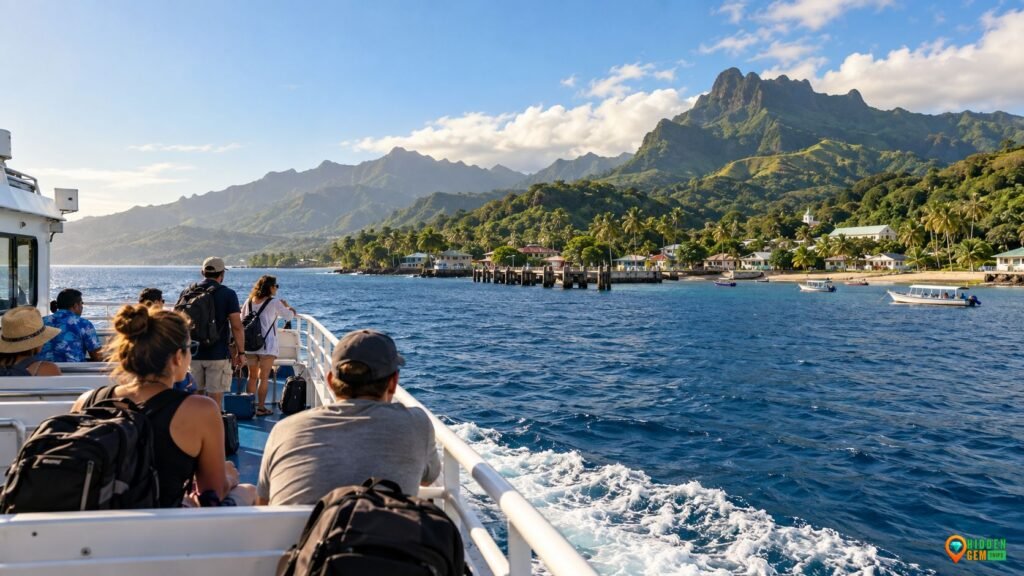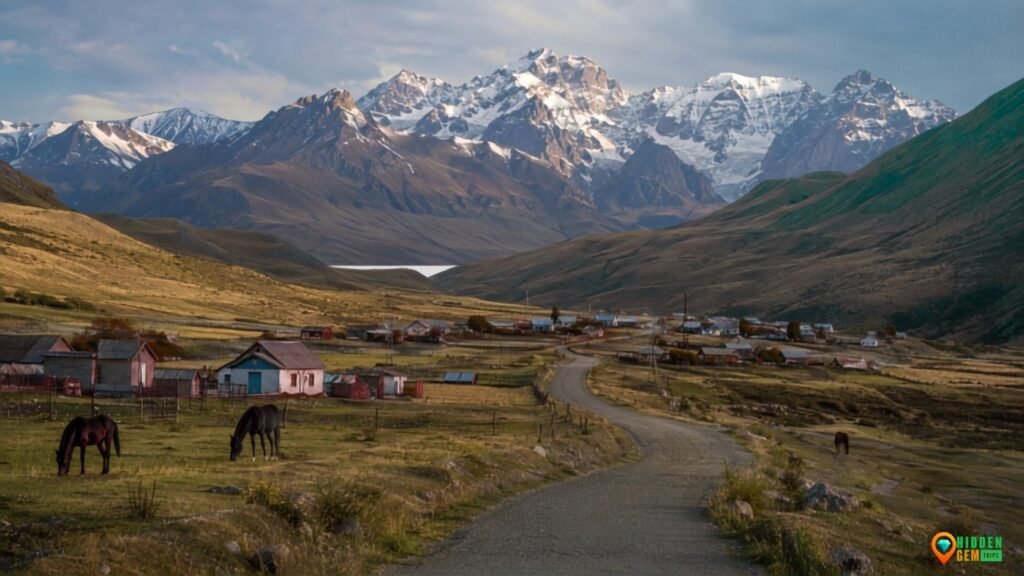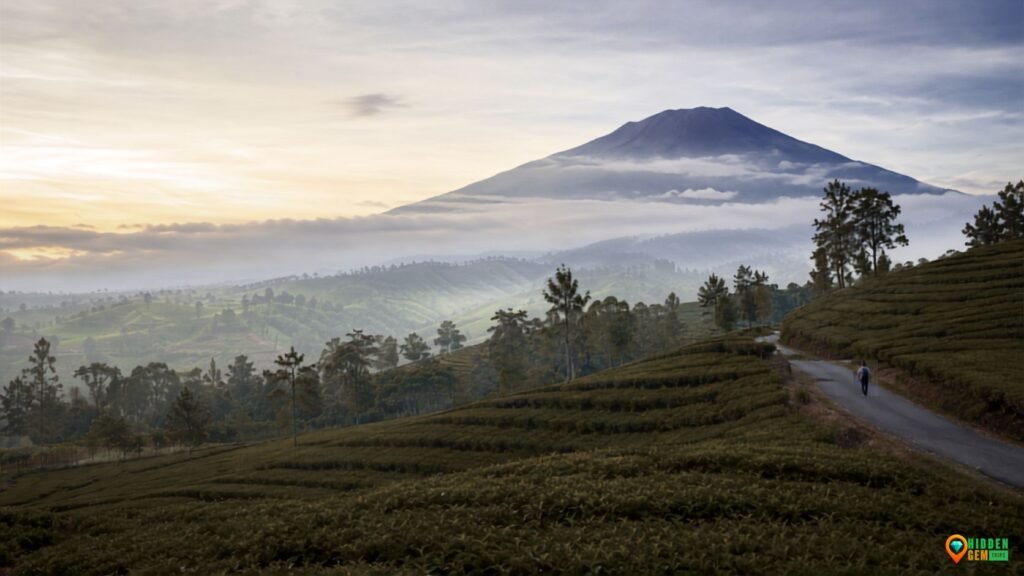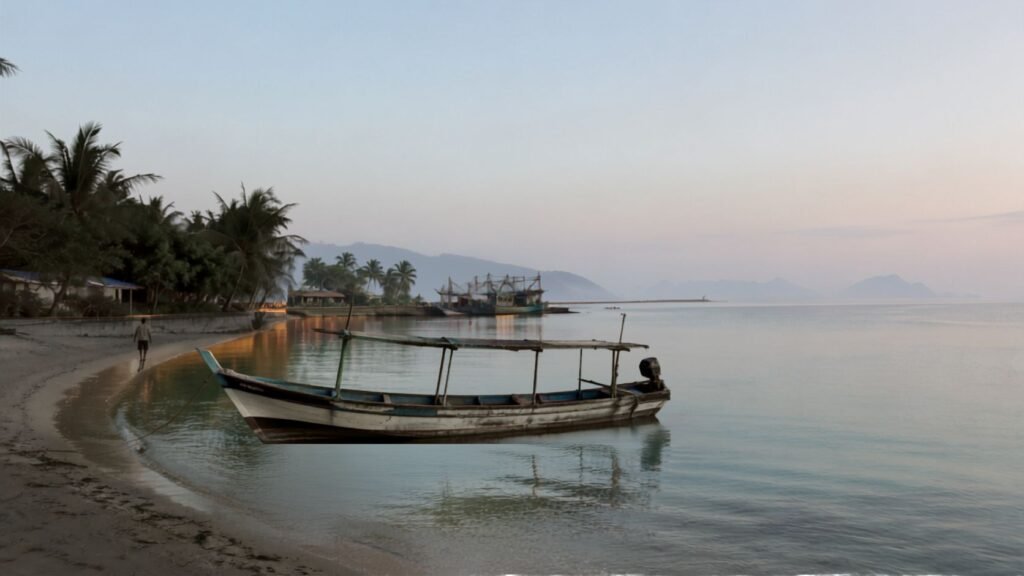

North Bali Villages are not the Bali most travelers accidentally discover while stuck between a beach club reservation and a scooter traffic jam. They are the slower, greener, saltier, more conversational side of the island: misty coffee slopes above Munduk, lake-edge shrines near Tamblingan, waterfall paths in Sambangan, Bali Aga craft villages in the Banjar highlands, and the dry north-coast villages where the sea is not a backdrop but a working neighbor. This is still Bali, obviously. Roosters still start meetings at 5 a.m. Temples still set the rhythm. Weather still ignores your itinerary when it feels spicy. But the texture is different. The pace asks you to pay attention instead of consume.
That matters because Bali is not exactly suffering from invisibility. In 2025, Bali recorded 6,948,754 direct foreign tourist arrivals, up 9.72% from 2024, according to BPS-Statistics Indonesia Bali Province. Most visitors still cluster around the southern and central tourist machine: the airport belt, Canggu, Seminyak, Ubud, Nusa Dua, Uluwatu, and the big-name day-trip circuit. North Bali sits on the same island, but it often feels like a different travel grammar. Distances are longer. Roads climb and fold. Attractions are threaded through villages, plantations, forest tracks, fishing beaches, and family compounds rather than packaged into one neat attraction zone.
This guide is for travelers who want Bali, but not the version where every morning becomes a queue, every viewpoint becomes a drone runway, and every “secret” waterfall has a neon sign pointing to it. The aim is not to pretend these places are untouched. That word is usually lazy and sometimes disrespectful. The aim is to visit villages that still have a visible daily life around tourism, where a traveler can spend money locally, move gently, and leave before turning a quiet place into another content battlefield. Tiny challenge, massive difference.
If you have already read how we define a hidden gem, you know the Hidden Gem Trips standard is not “nobody has ever posted this place on Instagram.” The better question is whether a place still has community shape, visitor dispersal, local ownership, clear access, and enough breathing room to welcome guests without being bent around them. North Bali is useful for that conversation because it offers a mix of ready-to-visit villages and fragile corners where your behavior matters. A lot.
Why North Bali Villages Deserve a Different Map
The common Bali map is a convenience map. It is built around airport distance, famous beach names, resort density, and the kind of attraction that can be squeezed between brunch and sunset cocktails. North Bali needs a slower map. Not because it is hard, but because its value is spread out: morning mist, plantation paths, coast roads, temple etiquette, waterfalls with local guides, salt pans, fishing boats, village markets, and older ritual landscapes that do not exist for your camera roll.
Buleleng, the regency that covers most of North Bali, has tried to organize that potential through a village tourism system. The local tourism office notes that Buleleng designated 75 tourism villages under Regent Decree No. 430/239/HK/2022, a sign that the north is not empty backcountry but a huge rural tourism field with different levels of readiness. Some villages are polished enough for easy visitors. Others need patience, local contacts, and realistic expectations. Both can be rewarding if you stop treating them like disposable dots on Google Maps.
The official Visit North Bali platform is useful because it shows how Buleleng itself wants visitors to understand the area: not just beaches and waterfalls, but tourist villages, creative economy listings, events, accommodation, restaurants, transport, and practical destination categories. That kind of local directory is not perfect, and you still need to verify opening times, guide arrangements, and road conditions. But it is a better starting point than random viral posts that tell you to “just go” without mentioning whose road, farm, spring, or temple you are walking through.
There is also a responsible-travel reason to head north carefully. Bali’s official foreign tourist levy is IDR 150,000 per person, designed to support the protection of culture, nature, and services. Paying it does not magically make a traveler sustainable. It is not a moral hall pass. It is simply one baseline. The real test starts after payment: whether you hire local guides when needed, respect temple dress codes, keep noise low in residential lanes, avoid risky waterfall behavior, and choose village-based businesses over extractive day-trip patterns whenever possible.
Compared with many South Bali itineraries, North Bali has fewer “one-and-done” attractions and more places that open up through time. Munduk is better when you wake up there, not when you arrive sweaty at noon. Sambangan is safer when you go with local guidance rather than improvising around rocks because a reel told you to jump. Les makes more sense when you understand salt, palm sugar, and fishing livelihoods, not just the waterfall pin. Pemuteran is more than snorkeling; it is a long-running example of community and marine tourism learning to share space.
This article is shaped around seven quiet corners, not seven trophies. It favors villages where travelers can slow down, spend locally, and understand why the north feels different. For a wider Indonesia route, pair this guide with Indonesia’s quieter routes. For the mindset, keep our slow travel manifesto close. North Bali rewards travelers who do less, look longer, and stop asking every village to perform. Radical, I know.
How to Use This North Bali Villages Guide
Start by choosing a base. North Bali looks compact on a map, then the road climbs, the bend count goes feral, and your “quick hop” becomes a full morning. Munduk and Gobleg work best for highland routes. Lovina or Singaraja work for Sambangan and the central north coast. Tejakula works for the east. Pemuteran or Sumberkima works for the west and Menjangan-side marine days. If you try to visit all seven corners from Canggu in day trips, that is not slow travel; that is a punishment playlist.
Second, separate village time from attraction time. A waterfall stop can be two hours. A village visit should not be. Leave space for a warung lunch, a roadside coffee, a short walk, a chat with a guide, or an early return before afternoon rain. If you are building a deeper route, use the same logic as this simple deep-trip framework: fewer pins, more margin, better memories.
Third, check readiness. Some places have official village tourism listings, marked trails, guide groups, homestays, or clear attractions. Others are culturally sensitive villages where visitors should come through local contacts or community tourism groups. Before you post a “hidden gem” location, ask whether the place can actually handle the attention. We unpack that question in check whether a place is actually ready for visitors, and it absolutely applies here.
Fourth, budget with respect. North Bali can be cheaper than the south, but “cheap” is not the goal. Pay fair guide fees. Tip drivers who wait on mountain roads. Buy coffee, fruit, salt, palm sugar, snacks, or simple crafts directly when appropriate. For a broader strategy, use our guide on how to budget without flattening the place. The best travel bargain is not squeezing a village; it is getting depth without waste.
| No. | Quiet corner | Why it belongs | Best base | Time needed | Watch-out |
| 1 | Munduk | Coffee slopes, waterfalls, cool air, plantation paths | Munduk / Gobleg | 1-2 nights | Do not rush it as a noon waterfall dash. |
| 2 | Gobleg & Tamblingan | Lake-edge calm, caldera views, forest mood | Munduk / Gobleg | Half to full day | Use local boats/guides where needed; avoid temple intrusion. |
| 3 | Sambangan | Waterfall village, rice-field approaches, local guide routes | Lovina / Singaraja | Half day | Water activities need safety awareness and local guidance. |
| 4 | Pedawa & Bali Aga highlands | Older village traditions, bamboo, palm sugar, cultural depth | Munduk / Banjar | Half day with contact | Come through local guides; not everything is for visitors. |
| 5 | Les | Salt, palm sugar, Yeh Mampeh, reef and local food | Tejakula / Les | Half to full day | Best as a slow village day, not just a waterfall photo stop. |
| 6 | Tejakula & Julah | East-coast villages, old settlement stories, sea-temple rhythm | Tejakula | 1 night | Dress and behave carefully around temples and ceremonies. |
| 7 | Pemuteran & Sumberkima | Marine conservation, dry hills, quiet bay, village stays | Pemuteran / Sumberkima | 1-3 nights | Snorkel with operators who respect reef rules. |
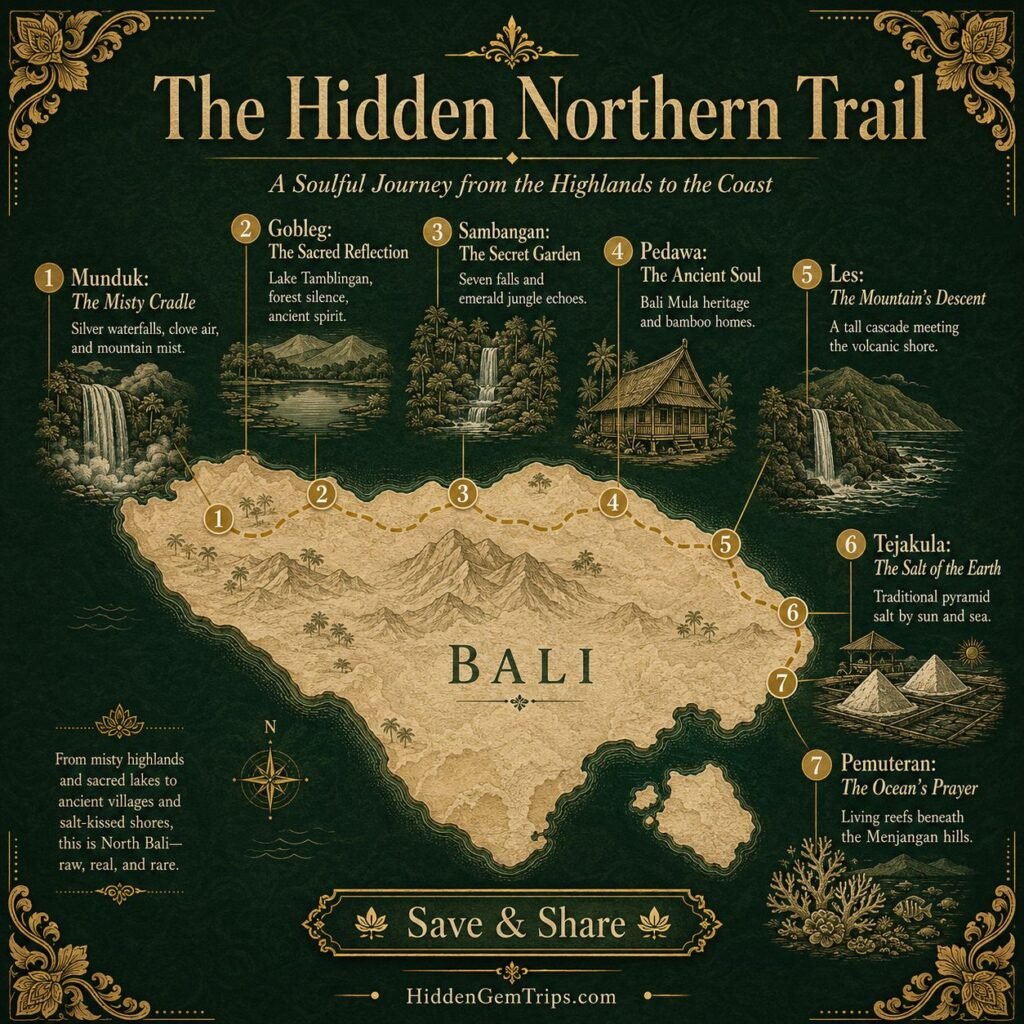
7 Quiet Corners in North Bali Villages
1. Munduk: The Highland Village Where Bali Cools Down
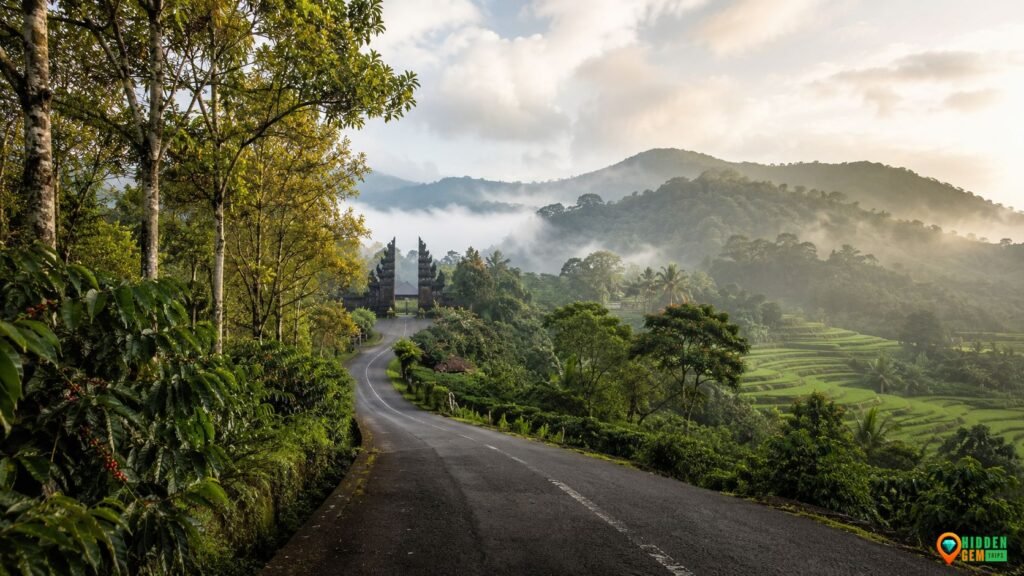
Munduk is the easiest North Bali village to recommend and the easiest one to misunderstand. People see waterfalls and assume the village is just a greener checklist. It is better than that. Munduk is a highland settlement wrapped in coffee, cloves, cocoa, forested ridges, and valley views that shift by the hour. The air is cooler, the mornings are slower, and the village still feels connected to farming rather than built only around tourism. The official North Bali listing describes Munduk Tourism Village as having both natural and cultural potential, with rough relief, volcanic soils, and springs supporting valuable agriculture. That sentence tells you how to visit: not as a waterfall hunter, but as a guest inside an agricultural landscape.
The classic walk connects waterfalls such as Munduk, Melanting, Labuhan Kebo, and nearby forest paths. But the better experience starts before the waterfalls. Wake early. Walk the road while the village is still making breakfast. Notice the clove drying sheets, temple courtyards, dogs negotiating territory, and the slow switch from mist to green. A guide is useful not because the trail is impossible, but because the village becomes readable. Without context, you see plants. With context, you see livelihood. Big upgrade, zero algorithm required.
Munduk also works as a soft landing after South Bali. If you have flown long-haul, sat in traffic, and arrived with your soul looking like an overheated laptop, spend the first night here before chasing the coast. Our long-haul flight survival guide says the first 24 hours can make or break a trip. Munduk is a good reset because it gives you cool air, gentle walking, and sleep that does not need a DJ to announce it.
What makes Munduk quiet is not that tourists never come. They do. It is quiet because visitors spread across walks, viewpoints, homestays, cafes, and plantations instead of piling into one narrow platform. Still, timing matters. Waterfall routes feel more intimate early in the morning or later in the afternoon. Midday can bring day-trippers from the south, especially in dry-season months. Stay overnight and the village opens a different layer. Day-trippers get the postcard. Overnight guests get the weather.
Practical plan: base yourself in Munduk for one or two nights. Spend one morning on the waterfall trail, one afternoon on a plantation or coffee walk, and one slow evening doing nothing dramatic. Eat locally. Bring a light rain layer, decent sandals or trail shoes, and a small dry bag if you carry camera gear. If you are continuing to remote roads elsewhere in Indonesia, the same logic from our guide to pack for bad roads and humid village days applies here: lighter is smarter, and white sneakers are brave in the way that bad ideas are brave.
Responsible note: do not treat farm paths as public stages. Ask before entering fields, do not fly drones over homes or temples, and keep voices down near family compounds. In North Bali, quiet travel is often less about where you go and more about how little disruption you create when you get there.
2. Gobleg and Tamblingan: Lake Silence Above the Crowd Line
Gobleg sits near the lake country that many travelers glimpse only through a window between Bedugul and Munduk. Slow down here and the mood changes fast. The area around Lake Tamblingan has a soft, almost ceremonial quiet: forested slopes, lake mist, small shrines, and paths that feel less like a tourist attraction than an old corridor between water, worship, and village life. The official destination page notes that Tamblingan Lake lies on the northern slope of Mount Lesung in the Munduk village area, formed in a large caldera and linked to the twin-lake landscape. That geological detail matters because the landscape is not just scenic. It is a bowl of water, forest, agriculture, and ritual space.
Many visitors treat Tamblingan as a viewpoint. They stop, take the photo, and bounce. That is fine if time is short, but the better choice is to spend a half day moving gently around the lake edge with a local boatman or guide where permitted. Traditional canoes, forest walks, and temple views can be beautiful, but the mood is fragile. This is not a place for loud music, swimwear posing near sacred areas, or “lost temple” captions that turn living heritage into a prop.
Gobleg is useful as a base or pause because it places you between Munduk, Tamblingan, and the descending roads toward Lovina or Banjar. It also gives you a practical lesson in North Bali’s microclimates. You can leave a sunny coast road and arrive in damp mountain air within an hour or two. Pack accordingly. Our packing-light system works well here: one light layer, one rain shell, quick-dry clothes, and no suitcase that looks like it is moving house.
The quiet corner here is not a single pin. It is the transition: clove slopes dropping toward lake mist, scooter engines fading near the forest, the sudden appearance of shrines, and the way sound carries differently over water. If you are used to South Bali’s constant visual noise, Gobleg and Tamblingan can feel almost suspiciously calm. Do not fix that by making your own noise. Travel hack of the decade.
Practical plan: combine Gobleg and Tamblingan with Munduk, not as a separate day from the south. Stay in Munduk or Gobleg, visit Tamblingan early, then leave unstructured time for a viewpoint, a local meal, or a slow drive through the highland roads. If weather turns, accept it. Mist is not a failed view. In this corner, mist is basically the main character.
Remember that temple and lake etiquette is paramount. Dress modestly, ask before photographing people, avoid entering sacred spaces unless invited and properly dressed, and use local services when accessing lake activities. A quiet lake can absorb a lot of beauty, but not endless careless behavior.
3. Sambangan: The Waterfall Village That Needs More Than a Swim Plan
Sambangan is often marketed as a waterfall playground, and yes, the water is the headline. Aling-Aling, Kroya, Kembar, Pucuk, and other falls have made the village a favorite for travelers who want jungle paths, natural pools, and a bit of adrenaline. But calling Sambangan just a waterfall stop flattens the place. The village website describes Aling-Aling as a hidden natural beauty in Sambangan and notes that the village is known as “Desa Air Terjun,” or waterfall village, because several waterfalls sit close to one another. That identity is both opportunity and responsibility.
The opportunity is obvious: Sambangan has some of the most accessible adventure energy in North Bali. From Singaraja or Lovina, it is much easier to reach than the famous South-to-North waterfall marathon. You can walk through rice fields, hear water before you see it, and reach cool pools framed by dark rock and green walls. The danger is also obvious: visitors watch clips of cliff jumps and natural slides, then forget that wet stone does not care about confidence. It is not impressed by your GoPro. Local guides are not decorative. They are part of the safety system.
A good Sambangan day starts early and chooses one route instead of trying to collect every waterfall. Go with a local guide or an established village operator, especially if you plan to swim, slide, or jump. Ask what is safe that day because water conditions change after rain. Wear shoes with grip. Bring a dry bag. Keep hands free on rough sections. Do not drink before water activities. This is basic, but basic is underrated because it keeps your trip from turning into paperwork.
The quieter layer of Sambangan is the approach. Do not rush the village road. Notice the rice terraces, small warungs, flower plots, and local traffic. If you have time, eat before leaving rather than treating the village as a changing room for a waterfall. Spending locally is one of the simplest ways visitors can make tourism less extractive. It is also how you taste the place beyond bottled water and emergency crackers.
Sambangan pairs well with a stay in Lovina, Singaraja, or a highland-to-coast transfer from Munduk. It also pairs conceptually with other Hidden Gem Trips routes where villages and landscapes are inseparable, like our guide to villages, rivers, and local life around Tanjung Puting. In both places, the headline attraction is only half the story. The village systems around it are what make the visit meaningful.
Responsible note: follow guide instructions, do not pressure anyone into unsafe jumps, never block narrow paths for photos, and do not leave trash in waterfall areas. If a guide says a section is closed or unsafe, believe them. The waterfall is not going to write you an apology letter.
4. Pedawa and the Bali Aga Highlands: Culture Before Content
Pedawa belongs to a different kind of North Bali travel. It is not a waterfall-first stop, not a beach base, and not a place you should enter with the energy of a checklist. Pedawa is part of the Bali Aga, or Bali Mula, cultural landscape in Buleleng’s Banjar highlands. Research on the Bali Aga villages of Buleleng identifies Sidatapa, Cempaga, Tigawasa, Pedawa, and Banyusri as a cluster with cultural potential that includes traditional dances, houses, temples, woven bamboo crafts, and ceremonies, while also stressing the need for careful management that supports cultural sustainability and the quality of visitor experience. That is the key: careful management, not random wandering.
Buleleng’s local research and innovation agency also describes Bali Aga villages as traditional communities that maintain distinctive traditions and cultural values, with the Panca Desa area of Sidatapa, Cempaga, Tigawasa, Pedawa, and Banyusri holding notable language, belief, and social characteristics. You can read the local context through this Buleleng Bali Aga overview, but reading is only step one. Visiting should happen through local contacts, village tourism groups, or guides who understand what can be shown, what requires permission, and what should simply remain private.
Pedawa is often associated with palm sugar, bamboo, and highland agriculture. The village experience can include learning about local products, walking through residential lanes, visiting traditional house forms when arranged properly, and understanding how older Bali traditions differ from the more familiar temple-and-dance imagery promoted across the island. The point is not to collect “ancient Bali” as a souvenir. The point is to see that Bali is not one culture flattened into a resort brochure. North Bali keeps many threads visible if you approach with humility.
This stop is where many travelers need to check themselves. A cultural village is not a museum unless the community has chosen to present it that way. Homes are homes. Ceremonies are not performances unless they are explicitly offered as visitor experiences. Crafts are labor, not props. Dress modestly, ask before taking photos, and buy directly if you appreciate the work. If you are unsure, do less. Honestly, doing less would fix half of tourism. Maybe more.
Pedawa and its neighboring Bali Aga villages connect well with Munduk, Banjar, and the inland roads above the north coast. They also pair beautifully with our culture roads in Toraja article because both places reward cultural patience over spectacle. In Toraja, the traveler has to understand ceremony, family, and landscape. In the Bali Aga highlands, the traveler has to understand that “old village” does not mean “open access.” Different island, same grown-up travel rule.
Practical plan: do not just show up and wander. Contact a local guide, community tourism group, or accommodation in the area before visiting. Ask what experiences are available and whether photography is allowed. Bring cash for guide fees and purchases. Keep your group small. If the visit feels quiet, that is good. A village does not need to be loud to be generous.
Responsible note: this is the stop where privacy matters most. Do not geotag private homes. Do not photograph children without clear permission. Do not enter compounds or sacred spaces casually. If your visit cannot benefit local people directly, reconsider whether it needs to happen at all.
5. Les: Salt, Palm Sugar, Yeh Mampeh, and the East-Coast Work Rhythm
Les is one of the most underrated North Bali villages because it does not fit one easy travel label. It is coastal, but not a lazy resort strip. It has a waterfall, but it is not only a waterfall village. It has marine activities, but it also carries salt-making, palm sugar, food, waste-processing, turtle conservation, and local product stories. The national tourism village platform lists attractions in Les such as traditional organic salt-making, marine attractions, Yeh Mampeh Waterfall, palm sugar and local honey experiences, Baris dance, hill trekking, waste sorting, stand-up paddle, turmeric herbal drink, turtle conservation, organic gardens, homestays, souvenirs, and more through Les Tourism Village on Jadesta. That range is exactly why Les deserves time.
The official North Bali page also notes that Les offers Yeh Mampeh Waterfall, Yangudi Hill trekking, melukat water from natural springs, preserved coral reef tourism, tuna fishing with local residents, organic and plastic waste processing, local food such as Jukut Blook, and Balinese arak production. In other words, Les is a village where the quiet corner is not one attraction. It is a small working system: sea, hills, water, food, waste, ritual, and livelihood. Travelers who only arrive for a waterfall photo miss the point harder than a tourist wearing flip-flops on wet rocks.
A good Les day starts with the coast or salt pans in the morning, continues with a local product or food stop, then moves inland to Yeh Mampeh if conditions are good. The waterfall has a different feel from the highland falls around Munduk and Sambangan. The surrounding area is drier, the coast feels closer, and the village rhythm is more east-coast than mountain retreat. That contrast makes Les especially useful if you want a North Bali route that is not just green valleys and mist.
Les is also a good reminder that sustainability is not always cinematic. Coral care, waste sorting, salt work, and small homestay networks do not always look dramatic on video, but they are exactly the practical systems that help a village benefit from tourism without being swallowed by it. If you are researching how islands manage local stops, compare this with our local island stops in Wakatobi, where marine beauty also depends on how local communities, visitors, and small operators share responsibility.
Practical plan: base in Tejakula, Les, or a nearby east-coast accommodation. Contact local operators for activities instead of assuming everything is walk-in. Bring reef-safe sun protection, cash, and modest clothing for village and temple areas. If you plan to buy salt, palm sugar, or local products, ask about the process. People usually appreciate thoughtful questions more than the “quick photo then gone” routine. Shocking development: humans enjoy being treated as humans.
Responsible note: do not touch coral, do not collect shells, do not enter salt workspaces without permission, and do not treat arak production as a party gimmick. If you join a fishing or marine activity, choose operators who explain safety and conservation rules clearly. Quiet travel on the coast means leaving the water, beach, and working spaces cleaner than you found them.
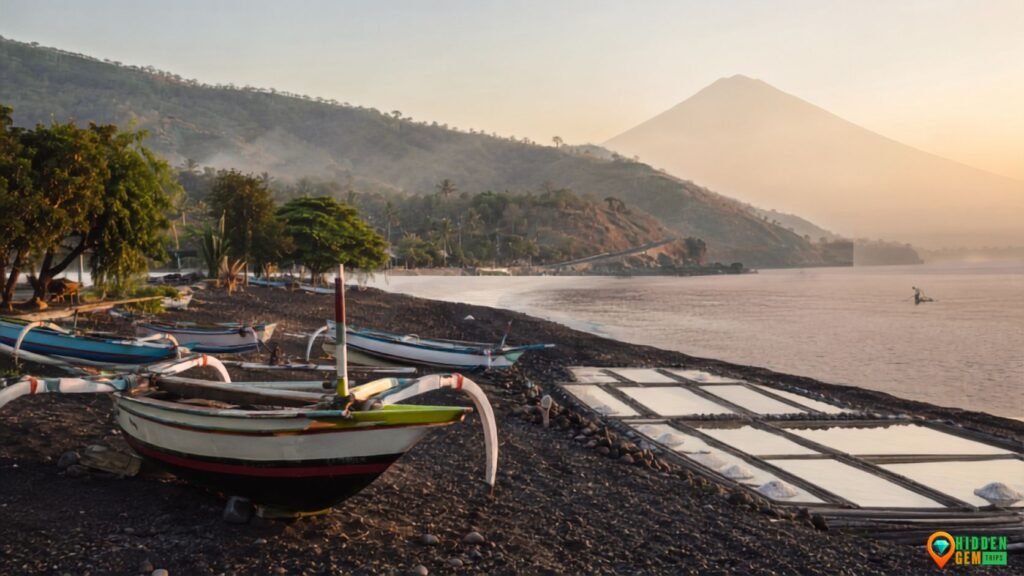
6. Tejakula and Julah: The Old-East Bali Coast Without the Noise
Tejakula is not a single neat attraction. It is a coastal district with village layers: old settlements, sea temples, forested hills, black-sand beaches, local ceremonies, and a slower east-coast rhythm. The official tourism listing for Tejakula Tourism Village highlights natural attractions such as Monkey Forest Tejakula above the settlement, Ratu Ayu Mas Bintang Temple at the top, trekking possibilities, and marine tourism. This is the kind of place where the best itinerary is not packed. You visit one or two things, eat simply, listen more, and let the day stay human-sized.
Nearby Julah adds historical depth. The official Julah Tourism Village page describes it as one of Buleleng’s old villages, rich in cultural education, and notes inscription-based history that places the settlement in the early 10th century during the reign of Queen Sri Ugrasena in Bali. That does not mean every visitor should go hunting for ancientness. It means you should understand the area as a living coast with deep memory, not as an empty road between bigger attractions.
The north-east coast feels different from the Lovina-Munduk-Pemuteran triangle. It is drier, less polished, and more spacious. It can also feel less “easy” for travelers who want constant cafes and obvious photo points. That is precisely the appeal. Walk carefully along the village edge. Visit a beach at sunrise. Arrange a local guide for cultural or trekking activities. Sit at a warung long enough to notice the traffic of daily life: school uniforms, offerings, scooters, fish, temple sounds, and the dry heat rising by late morning.
Tejakula and Julah work best for travelers who have already accepted that quiet travel is not a productivity challenge. You do not need to “complete” the coast. You need to stop long enough for the place to stop feeling like background. If you enjoy the idea of calm coastal routes, this stop can pair mentally with our Banda Islands slow route, another place where history, sea travel, and local rhythm matter more than speed. Different scale, same lesson: the coast is never just scenery.
Practical plan: spend one night around Tejakula if your route allows. Visit Les and Tejakula together, or use Tejakula as the quiet pause between Munduk/Sambangan and Amed/Kintamani routes. Start early for hill or forest walks. Keep afternoons flexible because heat can be heavy. If a ceremony is happening, observe only from appropriate public areas unless invited. Do not point cameras into ritual space like a documentary crew that forgot manners.
Responsible note: dress modestly, avoid swimwear away from the beach or accommodation, ask before photographing religious activity, and remember that temple areas may have restrictions. Quiet coastal villages are not “less strict” just because they are far from the famous temple circuit. Respect travels with you or it is not respect.
7. Pemuteran and Sumberkima: The Quiet Marine Corner With a Reputation to Protect
Pemuteran is not unknown anymore, and that is exactly why it belongs in this guide with a warning label. It is quiet compared with South Bali, but it is also recognized. In 2025, Indonesia’s Ministry of Tourism announced that Pemuteran Tourism Village won Best Tourism Village 2025 from UN Tourism, after being selected among 52 recognized villages from more than 300 candidates across 75 countries. The official North Bali report emphasizes Pemuteran’s underwater conservation, coral reef preservation, and collaboration among community, entrepreneurs, and stakeholders. So yes, visit. But do not visit like recognition is an invitation to overwhelm it.
Pemuteran sits on the dry north-west coast, backed by hills and facing calm water. It is a useful base for snorkeling, diving, reef education, Menjangan-side day trips, village stays, and slow sunsets without the south’s beach-club soundtrack. The official listing for Pemuteran Tourism Village places it in Gerokgak, Buleleng, and local tourism efforts continue to emphasize village identity as well as marine tourism. The area has long been associated with community-based reef restoration and a more measured style of coastal tourism. That reputation is precious. Treat it like borrowed glass.
Sumberkima, nearby, is the quieter companion. The official Sumberkima Tourism Village listing describes a north-coast village with ocean views, white-sand coastal scenery, Balinese culture, local hospitality, and access to Menjangan Island and West Bali National Park. Sumberkima works well for travelers who want the Pemuteran region but prefer a little extra hush, especially for longer stays, villa retreats, or hill-and-sea mornings.
The best version of this corner is not a reef buffet. Choose fewer activities and better operators. Ask about reef rules. Do not stand on coral. Do not chase turtles or marine life. Do not feed fish. Use reef-safe practices, and listen during briefings. If you snorkel or dive, make your environmental discipline boringly excellent. Boring excellence is wildly underrated. Reefs do not need your personality; they need your buoyancy control.
Pemuteran also shows how village tourism can connect environment and culture. In early 2025, the Clean Tourism Movement was implemented in Pemuteran, including planting trees at Bukit Batu Kursi to support environmental conservation around a local tourist site. These small local efforts are worth noticing because they show that sustainable tourism is not just an award ceremony. It is ongoing maintenance, planting, guiding, cleaning, teaching, and cooperation after the headline fades.
This stop pairs naturally with our Indonesia island guides, especially the Moyo Island guide and the route through Rote surf villages, because all three ask the same question: how can travelers enjoy coastlines without accelerating the damage that made them seek quieter places in the first place? The answer is never perfect. But it starts with better operators, fewer rushed stops, and more local spending.
Practical plan: stay two or three nights if you can. Use one day for reef or Menjangan-side activities, one day for a slow village/coast/hill rhythm, and one day for rest or a short west-coast drive. If you only have one night, skip the urge to do everything. Pemuteran is better as a pause than a trophy. Responsible note: protect the reef, keep beach noise down, support local operators, and do not turn a recognized village into the next overused hashtag.
Route Ideas for North Bali Villages
North Bali is not hard to route, but it punishes greed. Build around bases instead of pins. The road from South Bali to Munduk can take much longer than the map suggests because of traffic, climbs, rain, ceremonies, and the ancient Balinese tradition of your driver calmly saying “maybe two hours” when the road has other plans. Leave margin. North Bali feels best when the itinerary has empty space.
If you have only three days, do not attempt all seven corners. Choose a highland route or a coast route. If you have five days, connect highlands, waterfalls, and one coast. If you have a week, you can move from Munduk to Tejakula to Pemuteran without feeling like your holiday is managed by a spreadsheet with anxiety issues.
| Route | Suggested flow | Who it fits |
| 3 days highland reset | Munduk 2 nights + Gobleg/Tamblingan half day + optional Sambangan on transfer | Best for cool air, walking, waterfalls, and travelers escaping South Bali intensity. |
| 3 days coast slow-down | Tejakula/Les 2 nights + Pemuteran or Sumberkima 1 night | Best for sunrise, salt, reef, dry hills, and east-to-west north-coast rhythm. |
| 5 days balanced route | Munduk 2 nights + Sambangan/Lovina 1 night + Pemuteran 2 nights | Best first North Bali route with highlands, waterfall village, and marine conservation. |
| 7 days deep North Bali | Munduk/Gobleg 2 nights + Bali Aga/Pedawa day + Tejakula/Les 2 nights + Pemuteran/Sumberkima 3 nights | Best for slow travelers who want cultural depth, coast, reef, and real rest. |
Drivers are usually the easiest option for visitors who are not experienced on Indonesian roads. A scooter can work for confident riders in good weather, but mountain roads, dogs, trucks, rain, gravel, and sudden ceremonies make “I ride scooters at home” less relevant than people think. If you rent a scooter, wear a helmet, carry an international driving permit where required, and do not ride tired. North Bali is peaceful. Asphalt is still asphalt.
For travelers who want a broader Indonesia slow-travel arc, North Bali fits between Java highlands and eastern islands. Pair it with the Garut highlands guide for a Java-to-Bali mountain comparison, or with the Banda Islands slow route for a deeper island-history rhythm. The goal is not to see more Indonesia. The goal is to understand more of the places you choose.
Best Time to Visit North Bali Villages
North Bali can be visited year-round, but your route should change with the season. The dry season, roughly May to September, usually brings easier walking, better underwater visibility, and more predictable road conditions. It also brings more visitors, especially around school holidays and peak international travel months. Shoulder months such as April, May, September, and October can be excellent if you want a balance between green landscapes and lower crowd intensity. Rainy months can be beautiful in the highlands but make waterfall trails, river crossings, and rural roads more complicated.
Do not make the rookie mistake of treating every village the same across seasons. Munduk thrives in mist but can be wet. Sambangan’s water-based activities need safety checks after rain. Les and Tejakula can feel hot and dry, so early mornings matter. Pemuteran can be lovely in dry months for reef days, but marine conditions still depend on wind, visibility, and operator judgment. The right question is not “Is it open?” It is “Is this the right day to do this activity safely and respectfully?” Look at you, becoming a sensible traveler. Character development.
| Period | What to expect | Best-fit corners | Planning note |
| May-June | Green-to-dry transition, clearer roads, good walking windows | Munduk, Gobleg, Sambangan, Les | Great balance before heavier peak crowds. |
| July-August | Drier weather, busier Bali overall, better planning needed | Pemuteran, Sumberkima, Tejakula | Book ahead and start early. |
| September-October | Often calmer after peak, warm coast, still workable highlands | All seven corners | Good slow-travel window. |
| November-March | Rain risk, lush highlands, waterfalls can be powerful | Munduk with flexibility; cautious Sambangan | Check road and water conditions; avoid risky waterfall activity after heavy rain. |

Costs, Transport, and Practical Etiquette
North Bali can be very friendly to mid-range travelers. Homestays, local guesthouses, simple warungs, guide services, and village activities can keep costs reasonable without forcing you into the cheapest possible choices. A private driver costs more than a scooter but can save energy, improve safety, and support local income. Homestays may not have polished resort service, but they often offer better context. A local guide may cost more than “just walking,” but the experience becomes safer and less extractive. You are not buying a shortcut. You are buying interpretation, access, and accountability.
Carry cash. Many village-based services still prefer cash, especially for small purchases, local guides, parking, donations, simple meals, and products. ATMs are easier in larger towns than in highland or east-coast corners. Keep small notes ready so you are not trying to buy palm sugar with a large bill while everyone politely waits for change like this is a tiny financial summit.
Dress modestly in villages, especially away from beaches and pools. Shoulders and knees covered are safest for temples, ceremonies, and cultural visits. A sarong and sash may be required at temples. Do not walk through villages shirtless. Do not wear swimwear in residential lanes. Do not photograph offerings, ceremonies, or people at close range without permission. Bali is generous, but generosity is not a license.
For gear, keep it simple: light rain shell, refillable bottle, trail sandals or shoes with grip, dry bag, insect repellent, modest temple layer, reef-safe sun protection, and a small first-aid kit. If your route includes waterfalls, highland rain, and reef days, resist overpacking by using the same principles from our packing-light system. North Bali does not need fashion logistics. It needs functional gear and clean socks.
For food, eat locally whenever you can. Try simple warungs, village coffee, palm sugar products, fish dishes on the coast, and seasonal fruits. Ask accommodations where money stays local. If you have dietary restrictions, communicate clearly and kindly. The quieter the village, the less realistic it is to expect endless Western menu substitutions. You came for local texture. Let the texture exist.
For digital behavior, geotag carefully. Public tourism villages and official attractions are usually fine. Private lanes, sacred spots, small springs, and community areas may not need exact location blasting. The problem is not one post. The problem is when many posts turn a fragile corner into a traffic pattern before the village has systems to handle it. If you want to share, share context: local guide details, safety notes, etiquette, and why visitors should slow down. Do not just drop a pin like a chaos grenade.
A Responsible Visitor Checklist for North Bali Villages
| Stage | What responsible travel looks like |
| Before you go | Check whether the village has official tourism listings, guide contacts, or homestay networks. Confirm road/weather conditions if heading inland. |
| On arrival | Park where directed, greet people politely, dress modestly, and avoid blocking small roads or gates. |
| During activities | Use local guides for waterfalls, lake access, cultural villages, reef activities, or routes that cross working land. |
| With cameras | Ask before photographing people, ceremonies, houses, craft processes, or sacred objects. Avoid drones unless clearly permitted. |
| With money | Pay fair fees, buy local products directly, tip appropriately, and do not bargain aggressively over small amounts. |
| Before posting | Share etiquette and local context, not only exact pins and “hidden gem” hype. |
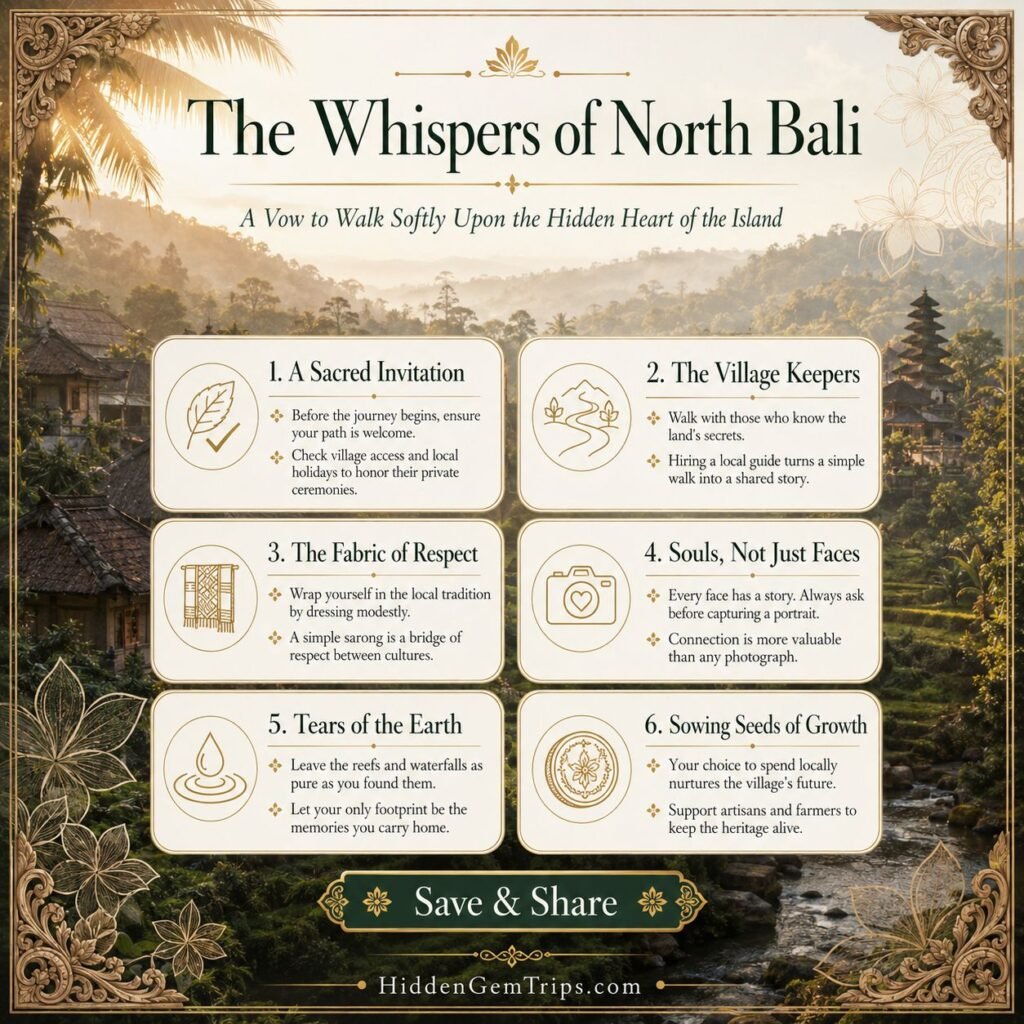
This checklist is not about making travel stiff. It makes travel better. Villages usually feel warmer when visitors arrive with respect, patience, and basic preparation. You get better conversations, safer routes, and fewer awkward moments where everyone can tell you did zero homework. The bar is not impossibly high. It is just higher than “I saw this on TikTok.”
If you want a bigger comparison of rural travel choices beyond Bali, read our route through local island stops in Wakatobi, our guide to culture roads in Toraja, and our Moyo Island guide. Each destination asks visitors to slow down in a different way. North Bali’s version is simple: stop treating the north as a day-trip overflow zone from the south.
Final Takeaway: The Best North Bali Villages Are Not Trying to Be South Bali
The best North Bali Villages are not valuable because they are “secret.” They are valuable because they still ask you to travel with a little humility. Munduk asks you to understand agriculture and mist. Gobleg and Tamblingan ask you to respect lake and temple quiet. Sambangan asks you to take local safety seriously. Pedawa and the Bali Aga highlands ask you to put culture before content. Les asks you to notice work systems behind a beautiful coast. Tejakula and Julah ask you to slow down around old settlement memory. Pemuteran and Sumberkima ask you to protect the marine reputation that made them worth visiting in the first place.
That is the real invitation. Not “escape the crowds” as if crowd avoidance is a personality. Not “find the untouched Bali” because that phrase needs to retire, preferably today. The better invitation is to visit quieter corners that already have people, work, rituals, risks, hopes, and limits. Travel there with enough time to be useful, enough curiosity to learn, and enough restraint to avoid turning quiet into content noise.
If you do that, North Bali does not feel like a backup plan. It feels like a correction. It reminds you that Bali is not one island experience but many local worlds stitched together by roads, water, temples, farms, and coastlines. The south may get the volume. The north still has the intervals. Go for those intervals. They are where the island breathes.
FAQ: North Bali Villages
1. What are the best North Bali Villages for a first visit?
For a first visit, start with Munduk, Sambangan, Les, and Pemuteran. Munduk gives you highland atmosphere, Sambangan gives you waterfall routes with local guide options, Les shows the east-coast village rhythm, and Pemuteran offers a quieter marine base with strong sustainability recognition. Add Gobleg/Tamblingan if you want lake scenery, and Tejakula or Pedawa if you have more time and cultural curiosity.
2. How many days do I need for North Bali?
Three days is enough for one focused route, usually Munduk plus Gobleg/Tamblingan or Tejakula plus Les. Five days lets you combine highlands, waterfalls, and the coast. Seven days is ideal if you want to include Bali Aga villages, east-coast stops, and Pemuteran without rushing. Trying to cover everything from South Bali as day trips is possible on paper and messy in real life.
3. Is North Bali safe for solo travelers?
North Bali can be safe for solo travelers who plan sensibly, use reputable transport, avoid risky waterfall behavior, and choose established accommodation. Solo travelers should be careful on mountain roads, avoid riding scooters at night or in heavy rain, and use local guides for trails, waterfalls, cultural visits, or marine activities. As always, share your route with someone and trust local advice over social media bravado.
4. Can I go to the villages in North Bali without a driver?
You can, but it depends on your confidence, route, and weather. Scooters offer flexibility but come with real risk on mountain roads, wet surfaces, and long coast drives. A private driver is easier for most visitors, especially for multi-village routes. Public transport is limited for fine-grained village hopping. If your budget allows, hire local drivers and guides; it supports the area and makes the trip smoother.
5. Are North Bali Villages really quiet?
Some are quiet, some are seasonal, and some are quiet only if you stay overnight or avoid peak hours. Munduk and Sambangan can receive day-trippers, Pemuteran is increasingly recognized, and Tejakula/Les can feel calmer because they sit farther from the usual South Bali circuit. Quiet is not guaranteed by geography. It comes from timing, route design, and visitor behavior.
Disclaimer
This travel guide is for editorial and informational purposes only. Road conditions, entrance fees, guide availability, accommodation standards, weather, marine visibility, waterfall safety, ceremonies, and local access rules can change without notice. Before you go, always check the latest conditions with official tourism channels, accommodation hosts, local guides and village authorities. Please respect local laws, temple etiquette, conservation rules and safety instructions. Hidden Gem Trips does not guarantee the safety, availability or suitability of any activity mentioned in this draft.