
I’ve stood on the edge of the Bada Valley in Sulawesi with a bag so heavy I couldn’t enjoy the view, and I’ve trekked the Simien Mountains with a pack so light I felt like I was flying. The difference wasn’t just physical; it was the quality of the experience. When you are on a Packing Light for Remote Expeditions mission, every gram you remove from your back is a gram of freedom you add to your journey.
In 2026, “minimalism” isn’t just a trendy buzzword—it’s a critical safety necessity for accessing the world’s most isolated gems. If you are still dragging a 20kg suitcase through a jungle or up a volcanic ridge, you aren’t an explorer; you are a pack animal. This guide will teach you the brutal honesty of what you actually need and what is just expensive, energy-draining dead weight.
1. The “One-Bag” Philosophy for High-Intensity Travel
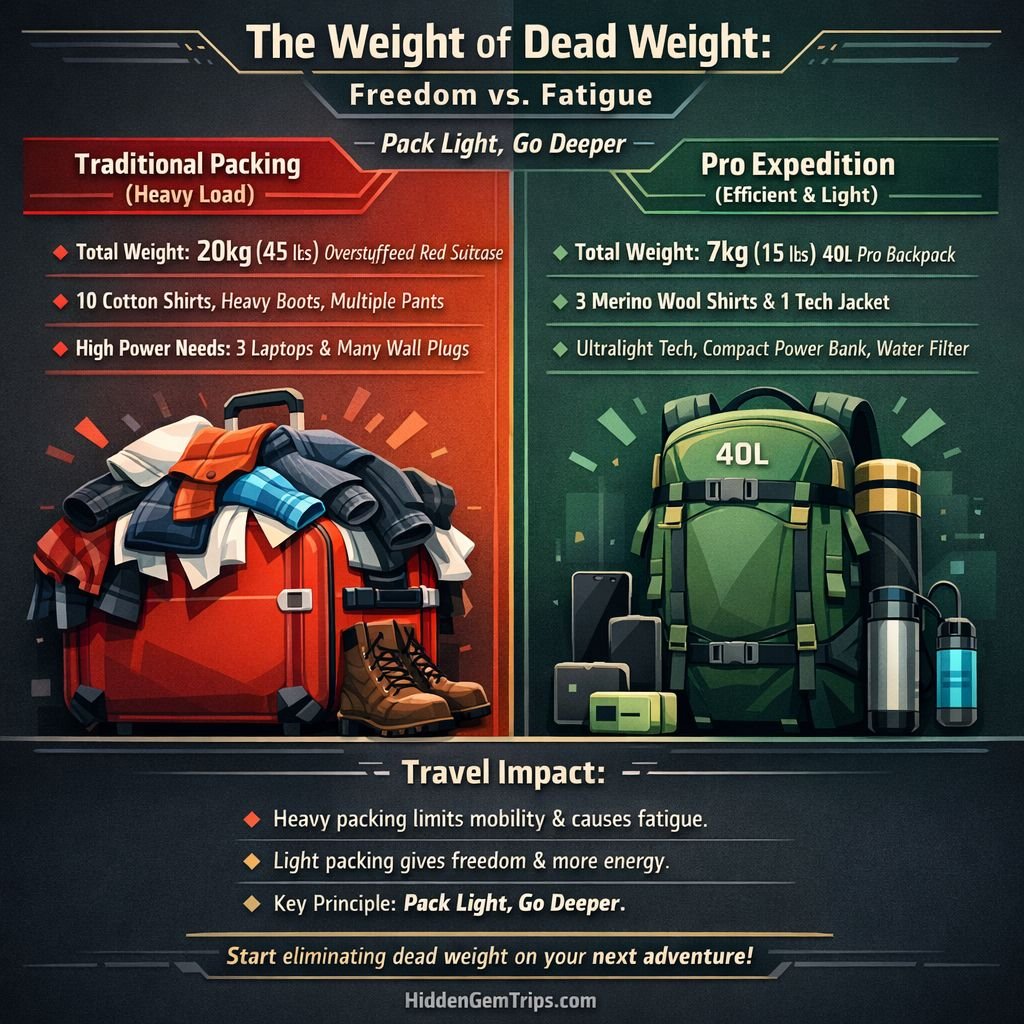
The foundation of Packing Light for Remote Expeditions is the single-bag rule. If you can’t comfortably carry everything you own for a full mile without stopping, you have failed the packing test. For truly remote travel, I recommend a high-quality 40L-45L carry-on-sized backpack.
Why 40L? Because it makes you choose between hard things. It gets rid of the “just in case” goods that you constantly find at the bottom of your luggage, where they are heavy and not needed. Modern backpacks have better suspension systems that move weight from your shoulders to your hips. This lets you move across rocky ground with the same speed we talked about in our Kei Islands Secret Guide, where it’s important to move rapidly between boat and beach.
Why Carry-On Only is a Critical Safety Feature
In remote regions like Central Sulawesi or the highlands of Ethiopia, checked luggage is a massive liability. Small propeller planes and bush taxis have strict weight limits, and lost luggage in a place like Palu or Gondar isn’t just an inconvenience—it can ruin an entire $5,000 expedition. By mastering the art of the “one-bag,” you ensure your gear—and your survival essentials—never leave your sight. This is a strategy we consistently use in our training to ensure that, even if a flight is diverted, your life-sustaining gear is on your back.
2. Layering Systems: The Technical “Rule of Three”
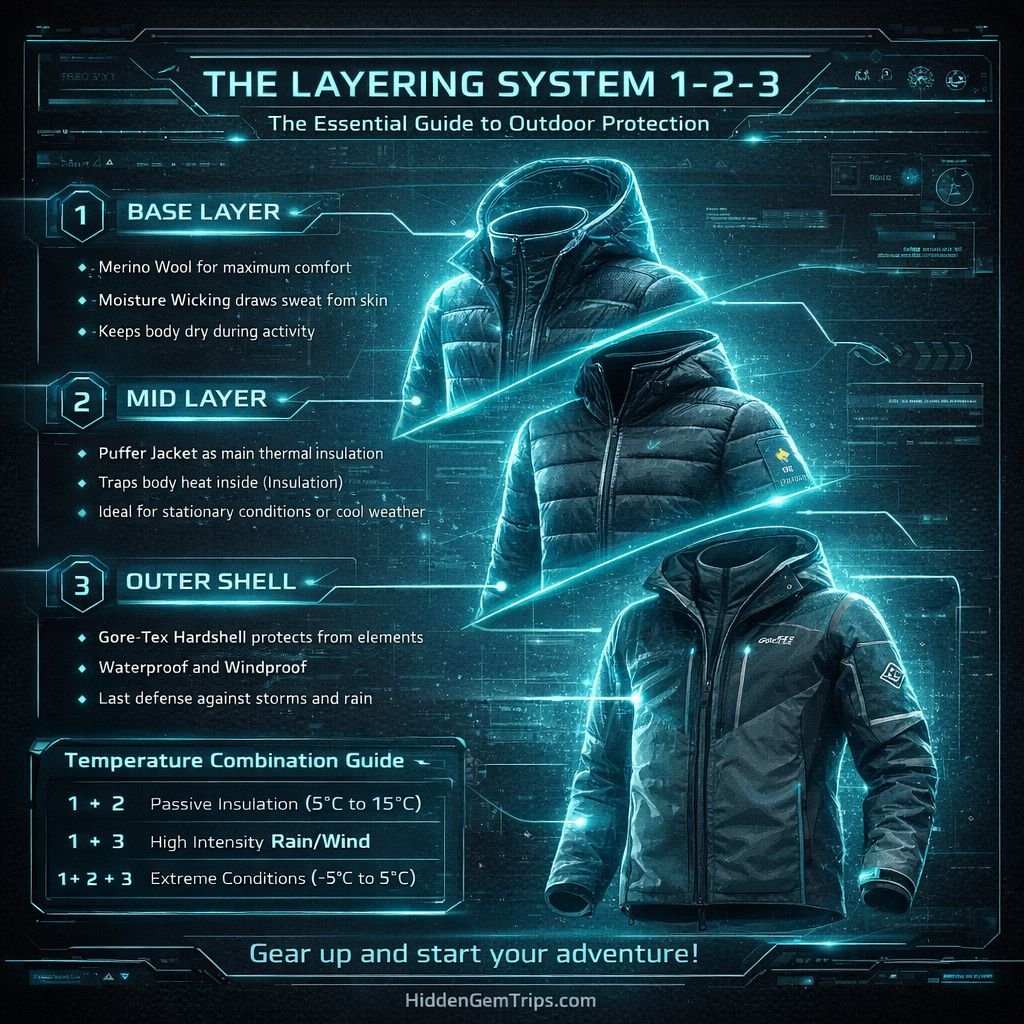
Stop packing five different jackets for different “looks.” For any remote expedition, whether it’s an African safari or a rainforest trek, you only need three technical layers. This is the “Technical Core” of our Packing Light for Remote Expeditions strategy.
- The Base Layer: Moisture-wicking Merino wool is non-negotiable. Unlike synthetic fabrics that smell like a gym locker after four hours, Merino wool stays fresh for 5 to 7 days of continuous wear. It regulates body temperature, keeping you cool in the heat and warm in the cold.
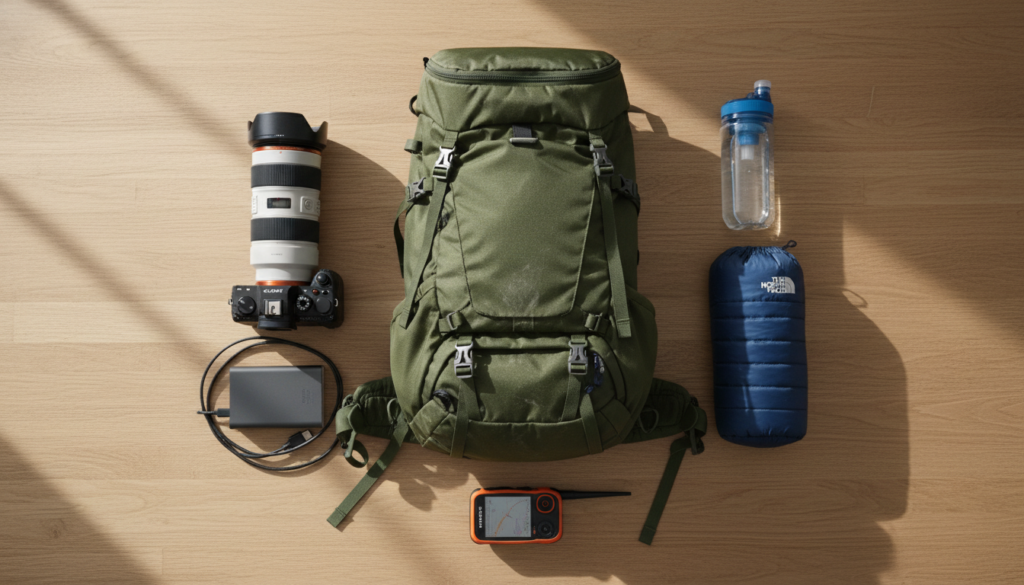
- The Mid Layer: A lightweight down or synthetic puffer. I swear by the North Face Thermoball Jacket because it compresses to the size of a water bottle and retains warmth even if it gets slightly damp.
- The Outer Shell: A high-quality GORE-TEX or similar hardshell rain jacket. This is your primary defense against wind and water. When combined, these three layers can handle temperatures from 25°C down to -5°C.
The Death of Cotton in the Wilderness
The first rule of Packing Light for Remote Expeditions is: “Cotton is King of the Kill.” Cotton absorbs moisture, stays wet, and loses all of its insulating value. In remote areas, it becomes heavy and cold, leading to hypothermia in high altitudes. If you see a “safari” shirt made of 100% cotton, leave it on the shelf. In our Mahakam Travel Guide, we highlight how Borneo’s humidity can turn cotton clothes into a moldy nightmare within 48 hours. Stick to wool and high-performance synthetics.
3. Tech and Power: The Survival Essentials of 2026
In a world without wall sockets, your tech gear must be as rugged as your boots. When you are deep in a remote mountain range, your phone isn’t just for Instagram; it’s your primary GPS, your emergency beacon, and your digital library for survival manuals.
Solar vs. High-Capacity Power Banks: The Honest Truth
For most 5- to 10-day expeditions, solar panels are often too slow, bulky, and dependent on perfect weather. Instead, buy a power bank with a 20,000 mAh high-capacity power bank. It has enough power for 4 to 5 full phone charges or 2 camera battery recharges. The CDC High-Altitude Travel Guidelines say that it’s particularly vital to be in touch and have access to GPS while you’re in remote locations.
For 2026, I also offer a wall charger made of GaN (Gallium Nitride). They are 40% smaller and 50% lighter than traditional chargers but can charge your laptop, phone, and camera simultaneously. This is the definition of Packing Light for Remote Expeditions—maximizing utility while minimizing volume.
4. The “Weight-to-Utility” Ratio of Photography Gear
As a professional content creator, I find this the hardest part of the packing process. You want the best shots to build your authority, but you cannot carry three camera bodies and five heavy prime lenses into the bush.
- The Single-Lens Solution: One high-quality body and one versatile zoom. My “workhorse” for capturing wildlife or ancient statues from a distance is the Sony FE 200-600mm G OSS Lens. While the lens itself is heavy, its massive focal range replaces the need for three smaller lenses, saving significant overall weight and preventing dust from entering your sensor during lens changes in the field.
- The Carbon Fiber Advantage: If you must bring a tripod, it must be carbon fiber. It’s more expensive, but it absorbs vibrations better and weighs roughly 30% less than aluminum. When you’re hiking through the secluded beaches of Pacitan, every ounce counts.
5. Hygiene and Health: Staying Lean and Clean
When water is a luxury and weight is a constraint, your hygiene kit needs to be ultralight and multi-purpose. Forget the 10-step skincare routine; on an expedition, survival and basic sanitation come first.
- Water Purification: Don’t carry 5kg of bottled water into the wild. Use a LifeStraw or Katadyn Filter to drink directly from mountain streams. This single 60-gram device replaces liters of water weight.
- Biodegradable All-in-One Soap: A single 100ml bottle of concentrated biodegradable soap (like Dr. Bronner’s) can be used for your body, your hair, and washing your Merino layers in a river.
- First Aid Mastery: Don’t buy a pre-packaged “Mega-Kit.” Build your own based on the destination. You need moleskin for blisters, rehydration salts, and broad-spectrum antibiotics. Space is limited, so strip everything out of its cardboard packaging and use Ziploc bags for organization.
Conclusion: The Freedom of the Light Pack
Ultimately, Packing Light for Remote Expeditions is about shifting your focus from “stuff” to “experience.” When you aren’t worried about your luggage being stolen from a bus roof or struggling with a 60lb pack on a steep incline, you are free to notice the small details: the way the light hits a 2,000-year-old megalith or the specific sound of a hornbill’s wings.
Packing light is a skill that is earned through miles on the trail. It requires the discipline to say “no” to the comforts of home so that you can say “yes” to the challenges of the wild. By following these pro secrets, you aren’t just packing a bag; you are preparing for a deeper, more authentic connection with the world’s most incredible hidden gems.
FAQ: Common Packing Light for Remote Expeditions Questions
1. How do I keep my bag under 7kg for strict carry-on limits?
The “Wear It” trick. On the plane, wear your heaviest things, including your hiking boots, puffer jacket, and cargo pants. The goods in your purse are just light.
2. Is Merino wool worth the high price tag?
Yes, every cent. It is the gold standard for Packing Light for Remote Expeditions. It regulates temperature and resists odors better than any synthetic fabric ever made.
3. What is the one item people always overpack?
Footwear. You only need one pair of rugged hiking boots (worn on the plane) and one pair of ultralight sandals or flip-flops for the camp. That’s it.
4. How do I handle laundry in remote areas?
The “Sink Wash” method. Wash your Merino base layers at night with biodegradable soap, because they are thin and technical, they will be dry and fresh by morning.
5. Should I bring a dedicated GPS device?
For extreme isolation, absolutely. While phones are great, devices like the Garmin InReach Mini enable satellite messaging and SOS calls when there is no cell signal.
Disclaimer
Safety Warning: Packing light must never compromise your core safety. Always ensure you have a basic first-aid kit, emergency shelter, and sufficient water filtration when embarking on Packing Light for Remote Expeditions. This guide is based on 2026 gear technology; always test your equipment thoroughly before leaving for a remote destination. Hidden Gem Trips is not responsible for gear failure or accidents during your travels.
Affiliate Disclosure: Hidden Gem Trips participates in affiliate marketing programs. We may earn a commission on gear purchased through our links at no extra cost to you. This helps us continue to test equipment in the world’s most extreme environments.