
The world is shrinking, and honestly, it is getting far too loud. If you have recently stood in a two-hour shuttle bus queue at Lake Louise or jostled for a three-second, heavily curated photo opportunity at Banff’s Moraine Lake, you already know the exact feeling of geographical claustrophobia I am talking about. The modern concept of the “wild” has been manicured, paved, fenced off, and sold in overcrowded gift shops. After years of traversing the globe and mapping the ultimate hidden gem travel guide, I have come to a stark, unyielding realization: true luxury in 2026 is no longer a five-star resort with an infinity pool; it is absolute, unadulterated silence.
That rare, heavy silence lives in Canada’s far north.
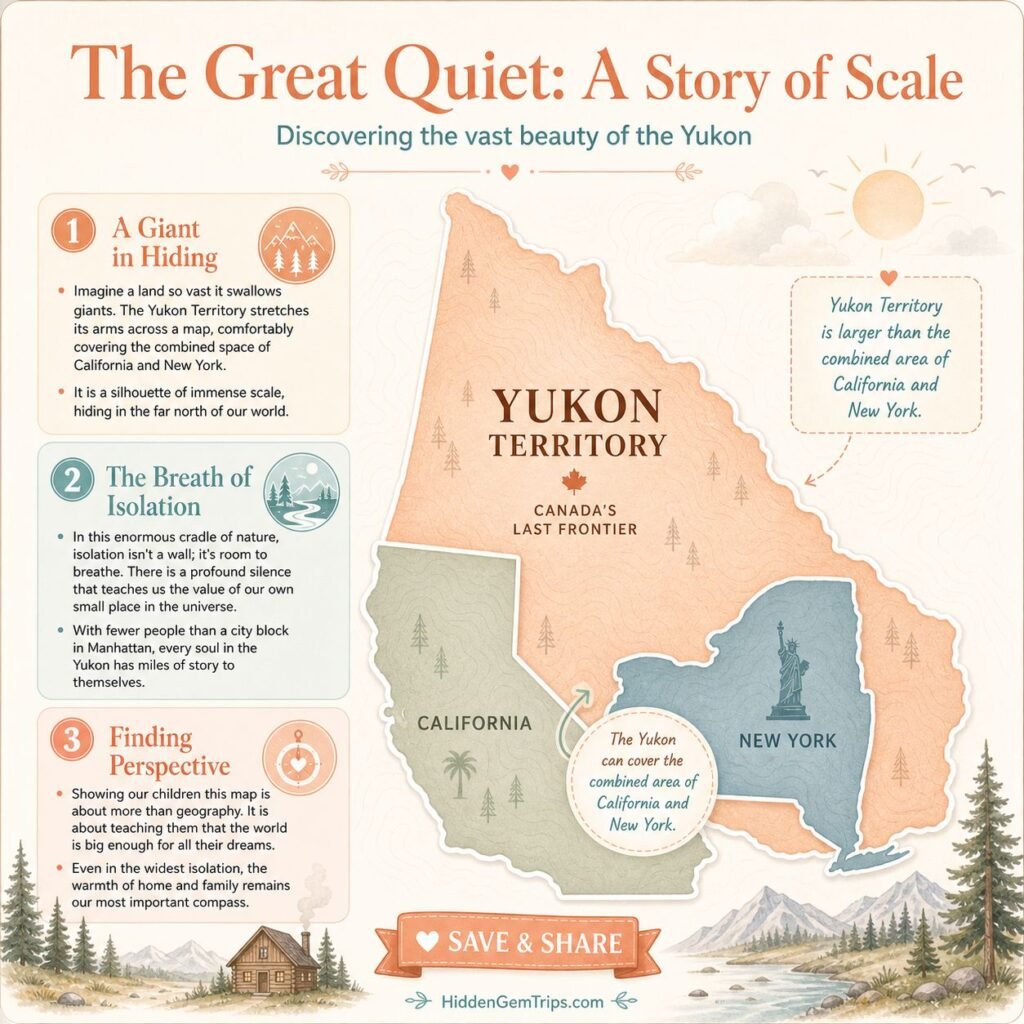
This isn’t just a slight detour north of British Columbia. The Yukon is a territory larger than the entire country of Spain, yet it harbors a population of roughly 44,000 people—fewer than a mid-sized football stadium. It is the very definition of the breathtaking isolation of Yukon. While the rest of the world scrambles to follow the 2026 slow travel manifesto, the Yukon does not merely invite you to slow down; it physically forces you to stop rushing. It doesn’t seek your attention with flashy advertising or well-chosen tourist traps; it demands your respect by its size and harsh, merciless weather.
The Psychological Shift: Why the Crowds in Banff Pushed Me North
My personal breaking point with the commercialization of nature happened three years ago. I was attempting what was advertised as a “remote” backcountry hike in the Canadian Rockies, only to find the trail practically paved with discarded coffee cups, echoing with the synthetic bass of Bluetooth speakers, and lined with people live-streaming their walk. The wilderness had become an outdoor amusement park.
I craved a place where the land was still undeniably in charge. I wanted an environment that required rigorous preparation, mental resilience, and a deep, almost terrifying appreciation for the unknown. When I first stepped off the tarmac in Whitehorse, the capital of the Yukon, the crisp, pine-and-dust-scented air hit my lungs differently. It felt like stepping through a portal back into an era before mass tourism existed.
The breathtaking isolation of the Yukon is not a marketing gimmick concocted by a tourism board; it is a measurable geographic reality. With a population density of roughly 0.1 persons per square kilometer, you can drive for six hours without seeing another soul, save for a solitary massive bull moose or a lynx darting across the gravel. This is the authentic, “last wilderness” energy we desperately seek when we explore places like the Kimberley in Australia or Albania’s Accursed Mountains. The Yukon offers a scale of vastness that triggers a profound psychological shift, humbling you in the best and most terrifying way possible.
The Raw Reality: Exploring Kluane National Park
To truly understand the DNA of this territory, you must be willing to leave the safety of the pavement far behind. The first major pillar of this wild frontier is Kluane National Park and Reserve.
Glaciers Without the Gondolas
Forget the Alps. If you want to see mountains that haven’t been tamed by ski lifts, funiculars, and overpriced alpine chalets, you go to Kluane. Home to Mount Logan—Canada’s highest peak, towering at an intimidating 5,959 meters—this UNESCO World Heritage site is an empire of ancient ice and jagged granite. It offers a level of raw, unpolished majesty that makes even the High Tatras feel like a gentle, manicured city park.
The Arctic Institute of North America at the University of Calgary reports that Kluane has the largest ice fields outside the polar regions. The ice here is thousands of years old, and it dictates its own weather systems. To truly absorb the breathtaking isolation of the Yukon in this region, I highly recommend setting aside your budget for a small fixed-wing flightseeing tour out of Haines Junction.
Looking down at the Kaskawulsh Glacier from 10,000 feet—a massive, winding, prehistoric river of blue ice converging with other glacial flows—you realize there are still places on Earth utterly indifferent to human existence. There are very few marked trails in the deep backcountry here. You navigate by reading topography maps, using a compass, and trusting your instincts, making it a sanctuary for true alpinists and highly experienced trekkers.
The King’s Throne and Bear Country Realities
If flightseeing isn’t in your budget, the King’s Throne trail offers a grueling, steep ascent that rewards you with panoramic views of Kathleen Lake. However, you must remember you are sharing this space. The Yukon boasts one of the highest concentrations of grizzly bears in North America. When you step onto a trail in Kluane, the breathtaking isolation of Yukon means you are in their living room, not the other way around. There are no rangers around the corner to save you if you make a mistake. Carrying bear spray, knowing how to read bear behavior, and traveling in groups are not just suggested; they are vital for survival.
The Dempster Highway: 740 Kilometers of Arctic Zen
If Kluane is the ice fortress of the Yukon, the Dempster Highway is its dusty, treacherous spine. Driving the Dempster is a modern-day rite of passage for overlanders and adventure travelers. It is 740 kilometers of sharp gravel, unpredictable weather, and pure destiny, running from its starting point near Dawson City all the way across the Arctic Circle to the shores of the Arctic Ocean in Tuktoyaktuk, Northwest Territories.
Tombstone Territorial Park: The Patagonia of the North
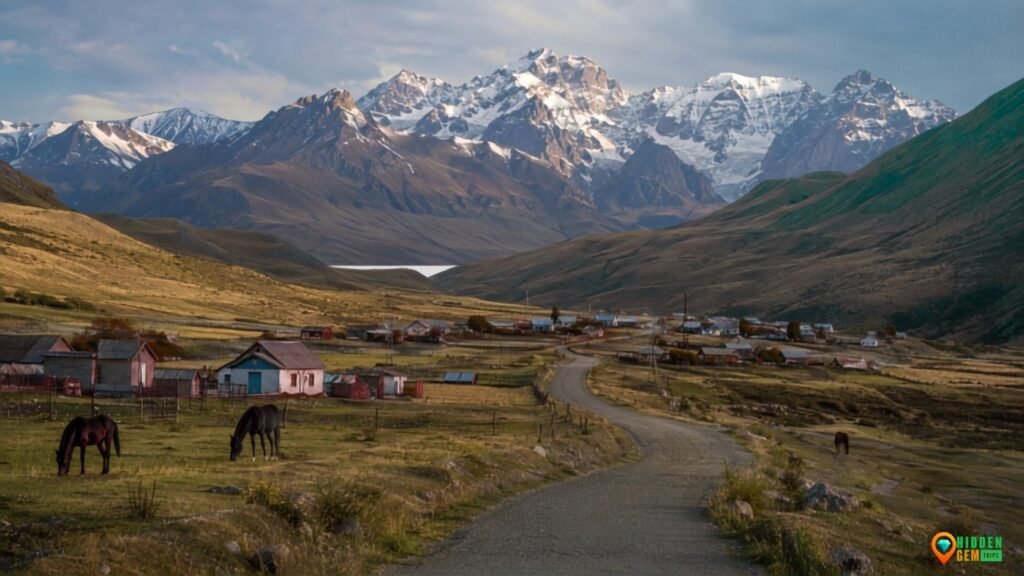
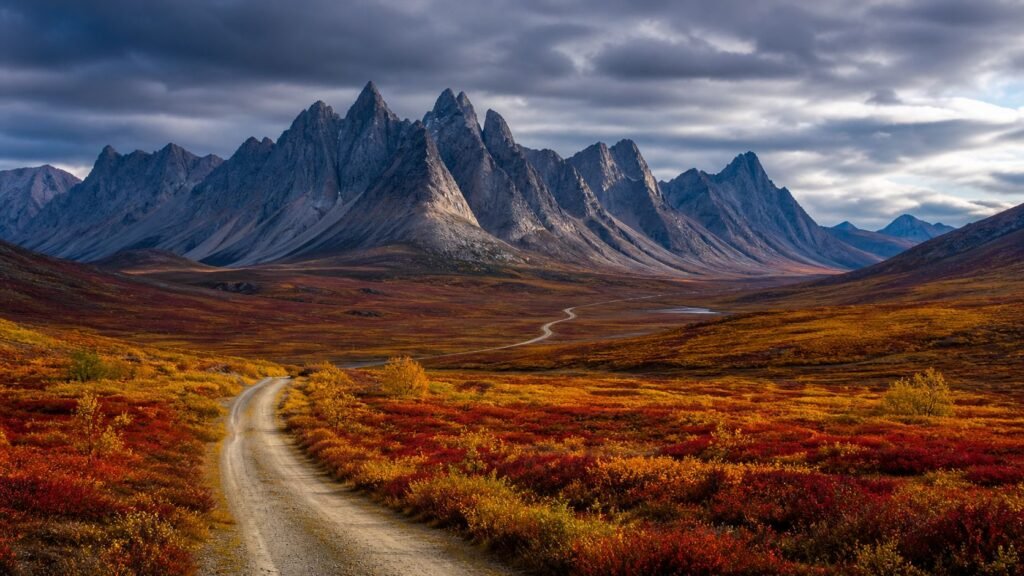
Just 71.5 kilometers up the Dempster Highway, the familiar boreal forest of spruce and pine abruptly gives way to a harsh, alien landscape. Jagged, dark syenite peaks slice violently into the sky. Welcome to Tombstone Territorial Park.
My first night backcountry camping at Grizzly Lake in Tombstone is a memory forever burned into my consciousness. The wind howled constantly across the soft, spongy tundra, bringing with it the smell of wild sage, wet earth, and snow that was about to fall. The legendary “midnight sun” of the Arctic summer cast a strange, never-ending dusk over the granite spires. I had a deep sensation of solitude that was almost mystical. This is the most beautiful solitude that Yukon has ever had.
You won’t find cellular service, Wi-Fi, or modern flush toilets here. What you will find is a fragile, vibrant permafrost landscape that demands careful footing and deep reverence. It is a place that forces introspection.
The Logistics of Surviving the Dempster
This is not a casual weekend road trip down the Pacific Coast Highway. The Dempster is an expedition. There are exactly two service stations along the entire 740-kilometer route: one at Eagle Plains (which feels like a remote outpost on Mars) and one in Fort McPherson.
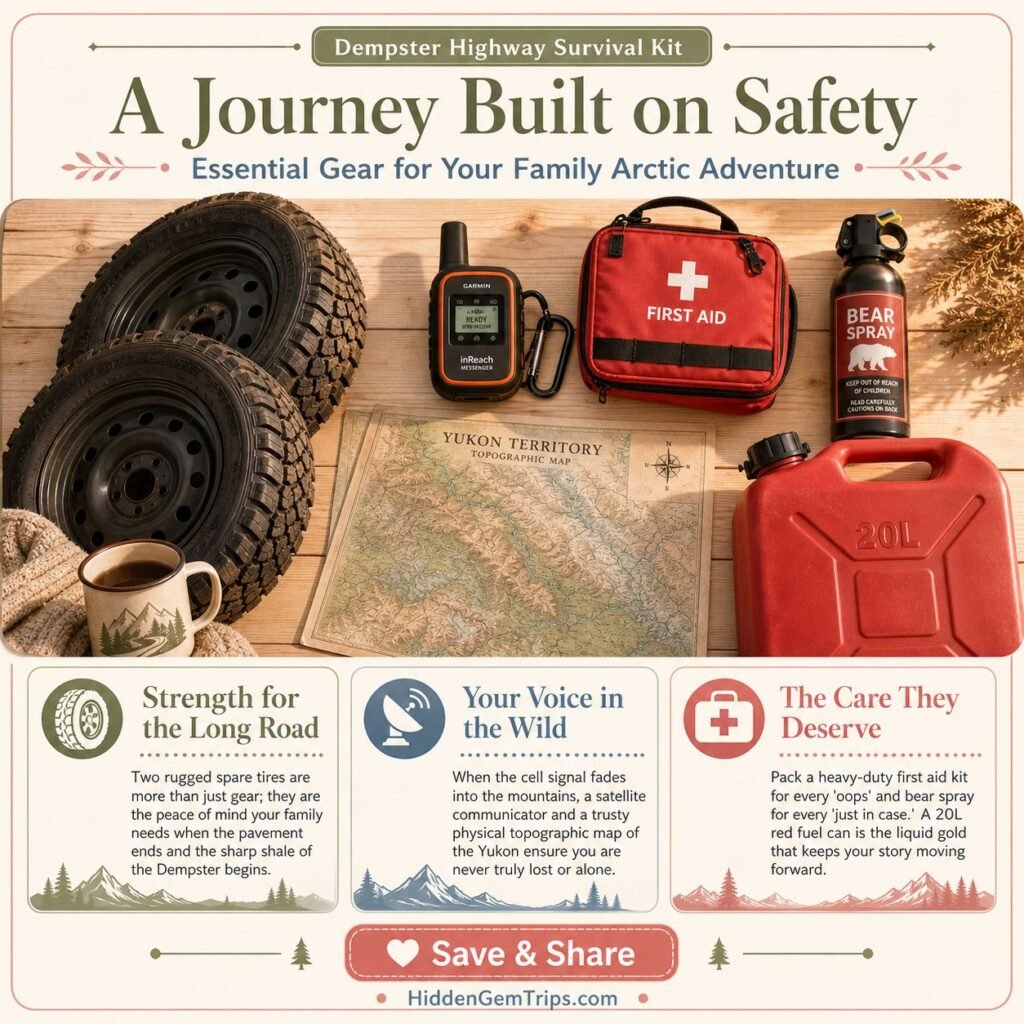
Before embarking, you must consult the Yukon Government Highway Conditions and ensure your vehicle is heavily equipped. You need at least two full-sized, 10-ply spare tires (the shale rock on the road acts like arrowheads), a satellite messenger (like a Garmin inReach), extra Jerry cans of fuel, and a comprehensive emergency survival kit. It is the ultimate real-world test of the packing-light-for-remote-expeditions methodology. If you break down out here, you wait. You wait for hours, sometimes a full day, for a passing trucker. The breathtaking isolation of Yukon teaches patience through necessity.
Dawson City: The Living Ghost of the Klondike Gold Rush
To understand the human element of the Yukon, you must trace the steps of the madmen and dreamers who flocked here in 1896 during the Klondike Gold Rush. Dawson City, located at the confluence of the Klondike and Yukon rivers, is not a theme park or a replica; it is a living, breathing, eccentric frontier town.
With its unpaved dirt streets, wooden boardwalks, and heritage buildings leaning precariously due to the shifting permafrost beneath them, Dawson feels like the 19th century never ended. But the people are what make Dawson fascinating. It is a vibrant, gritty community of artists, modern-day placer miners, First Nations elders, and misfits who actively chose the extreme, breathtaking isolation of Yukon over the predictable rat race of southern cities.
The Sourtoe Cocktail and Endless Nights
If you think you have experienced unique nightlife, try walking through the swinging doors of the Sourdough Saloon and ordering the infamous Sourtoe Cocktail. Yes, it involves a real, dehydrated human toe dropped into a shot of whiskey. The rule is simple: “You can drink it fast, you can drink it slow, but your lips must touch the toe.”
It is weird, it is macabre, and it is entirely authentic to the rebellious spirit of the North. In the winter, when the temperatures plummet to -40°C and the sun barely peeks over the horizon for a few hours a day, this sense of community and shared eccentric survivalism is what keeps the town alive.
The Indigenous Heartbeat of the Yukon
It is a massive oversight—and frankly, deeply disrespectful—to view the Yukon merely as an “empty wilderness.” The breathtaking isolation of Yukon is actually a rich, dynamic cultural landscape that has been stewarded by First Nations people for thousands of years. There are 14 distinct First Nations in the Yukon, representing approximately 25% of the territory’s entire population.
When you travel here, you are traveling on traditional territories. The Tr’ondëk Hwëch’in in the Dawson region, the Kwanlin Dün in Whitehorse, and the Champagne and Aishihik First Nations near Kluane have deep, intrinsic ties to the land, the caribou herds, and the salmon runs. It is also important to take the time to go to cultural centers like the Dänojà Zho Cultural Center. Having a good understanding of the legends, the history of residential schools, and the deep ecological knowledge of the indigenous people will help you on your journey. Listening to the history of the ground you tread on is a real way to explore.
Stargazing and the Aurora Borealis in the Winter
The Yukon is a magical place in the winter, but summer delivers the midnight sun and limitless hiking. As someone who often makes lists of the greatest dark sky reserves in 2026, I can say with confidence that the Aurora Borealis viewing in the Yukon is the best in the world.
Because of the breathtaking isolation of Yukon, light pollution is virtually non-existent once you drive a mere 20 minutes outside the city limits of Whitehorse. According to the NOAA Space Weather Prediction Center, the current solar cycle (Cycle 25) is reaching a powerful maximum phase leading into 2026, meaning coronal mass ejections will produce exceptionally active, dancing, and vivid auroral displays.
Standing on the thickly frozen surface of Lake Laberge at 2:00 AM in the dead of February is a sensory overload. Watching ribbons of neon green, sharp pink, and deep violet dance violently across a sky so thick with stars it looks like spilled milk is a deeply emotional experience. The cold is aggressively biting—often dipping below -30°C (-22°F)—but the celestial show makes you completely forget the dangerous numbness creeping into your toes.
How to Survive and Thrive in the North
As a seasoned expedition writer, I must emphasize that the breathtaking isolation of Yukon requires serious logistical respect.
1. The Modular Wardrobe
The weather in the Yukon does not care about your itinerary. I have experienced a balmy 25°C (77°F) afternoon, only to be hit by a blinding, temperature-dropping snow squall 12 hours later.
- Base Layers: Invest heavily in high-quality merino wool. Throw away your cotton t-shirts; cotton retains sweat and will freeze you to the core.
- Outerwear: A premium Gore-Tex shell is non-negotiable. To withstand the Arctic winds, it has to be completely windproof and waterproof.
- Footwear: Bring tough, broken-in, insulated, and waterproof hiking boots that provide good ankle support. The tundra is rough and harsh.
2. Budget Hacks for the North
The Yukon is expensive due to the massive logistical challenges of trucking goods up the Alaska Highway. But you can keep expenses down by using budget hacks to uncover hidden gems. Renting a campervan in Whitehorse lets you combine your accommodation and transportation costs. Buying groceries at the main supermarkets in Whitehorse before heading into the deep wilderness of Dawson or Tombstone will save you hundreds of dollars compared to buying food at remote outposts.
3. Mental Fortitude
The sheer quiet and breathtaking isolation of the Yukon can actually be unsettling for city dwellers used to constant sensory input. Embrace the disconnection. Bring physical books, download your maps offline, and allow your brain to detox from the dopamine loop of social media notifications.
Why 2026 is the Year to Embrace the North
The window to experience true, unfiltered wilderness is rapidly closing across the globe. As more travelers become disillusioned with the over-tourism, permit lotteries, and massive crowds plaguing classic destinations like Banff or Yellowstone, the boldest and most experienced adventurers will inevitably turn their compasses north.
The year 2026 is the perfect time to go. The infrastructure (such as reliable satellite internet in a few remote lodges) has improved just enough to make emergency logistics manageable. Yet, the breathtaking isolation of Yukon remains fiercely, beautifully intact. It challenges you physically, strips away your daily urban anxieties, and replaces them with a primal, grounding awareness of the present moment.
If you are tired of curated experiences, fake Instagram spots, and waiting in lines to look at a mountain, it is time to cancel your resort booking. Pack your heavy merino wool, buy a physical topographic map, and drive north until the pavement ends. The Yukon is waiting.
Frequently Asked Questions (FAQ)
1. Is it truly safe to travel solo into the breathtaking isolation of Yukon?
Yes, solo travel is safe, but it demands a significantly higher baseline of outdoor experience and preparation than most global destinations. The breathtaking isolation of Yukon means that if you blow a tire or sprain an ankle, emergency services can literally be days away. Solo travelers must carry a two-way satellite communicator (such as a Garmin inReach), leave a detailed itinerary with someone at home, and be thoroughly trained in wilderness first aid and bear safety protocols.
2. What time of year is the ideal time to go to the Yukon?
This depends completely on what you want to get out of your trip. Late August to early September is the best time to go backcountry hiking, see the Midnight Sun, and see the bright hues of the tundra in Tombstone in the fall. February and March are the best months to see the Aurora Borealis, go dog sledding, and experience extreme winter culture. The days are a little longer than they are in December, when it is dark all the time.
3. Do I absolutely need to rent a 4×4 vehicle?
If your itinerary keeps you strictly on the paved Alaska Highway between Whitehorse and major hubs, a standard rental vehicle is adequate during the summer months. However, if you plan to venture onto the Dempster Highway, the Campbell Highway, or access remote backcountry trailheads, a high-clearance 4WD or AWD vehicle equipped with 10-ply all-terrain tires (and two full-sized spares) is absolutely non-negotiable for your safety.
4. How can I manage the high costs of traveling in the North?
Due to the extreme distances required to transport goods, fuel, and food, prices in the Yukon are noticeably higher than in southern Canada. The best way to mitigate this is to rent an overland vehicle or campervan, which combines your transport and lodging. Additionally, stock up on all your dry goods, groceries, and supplies in Whitehorse before heading into remote regions where outpost prices double.
5. Are there big problems with altitude sickness in the Yukon?
No, not Unless you are partaking in a highly specialized, technical mountaineering expedition deep into the ice fields of Kluane National Park (such as attempting an ascent of Mount Logan), altitude sickness is rarely a concern for the average traveler. Most of the drivable valleys, communities like Dawson City, and accessible hiking trails remain at comfortable, manageable elevations well below the altitude-sickness threshold.
Disclaimer
This article is intended for informational, educational, and inspirational purposes only. Traveling into remote, subarctic, and arctic wilderness regions involves inherent, unpredictable, and potentially life-threatening risks, including, but not limited to, extreme weather fluctuations, a complete lack of cellular communication infrastructure, treacherous road conditions, and encounters with dangerous wildlife (such as grizzly bears). The author and publisher assume no liability for any injuries, damages, or losses incurred while traveling. Readers are completely responsible for their own safety. They must do their own study, figure out what they can and can’t do physically, and are strongly recommended to read official advice from Parks Canada and the Yukon Government before going on any wilderness trip.