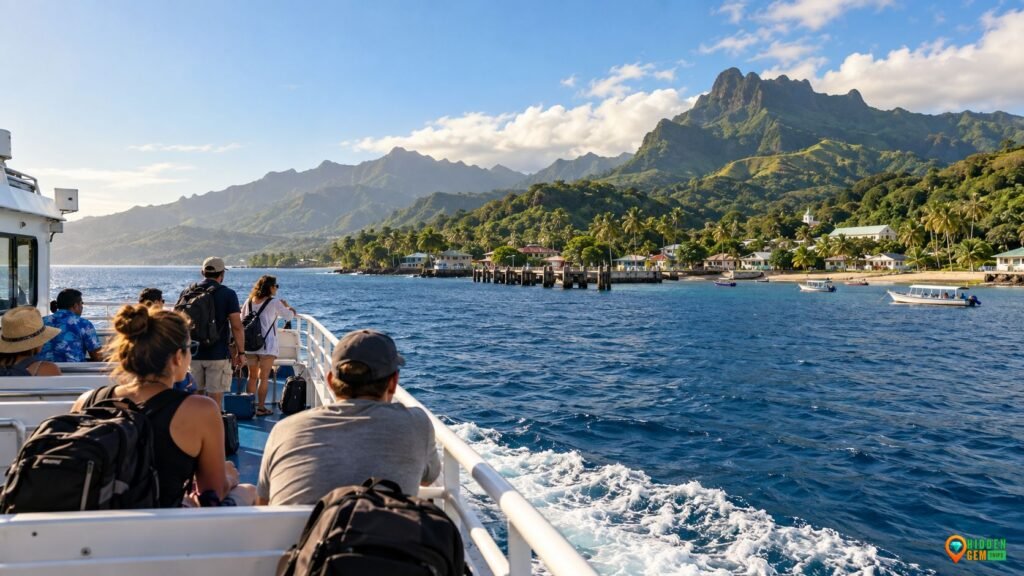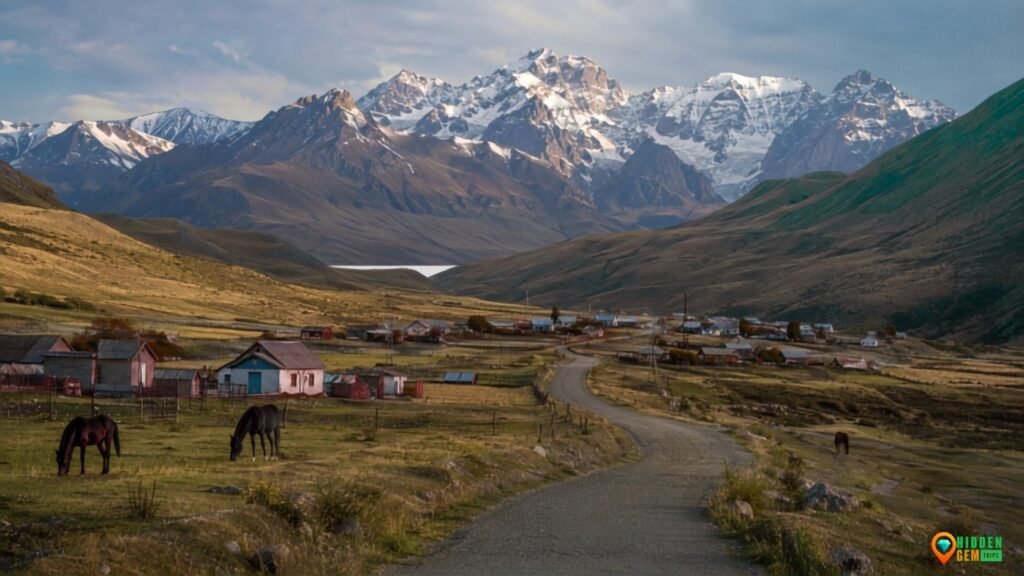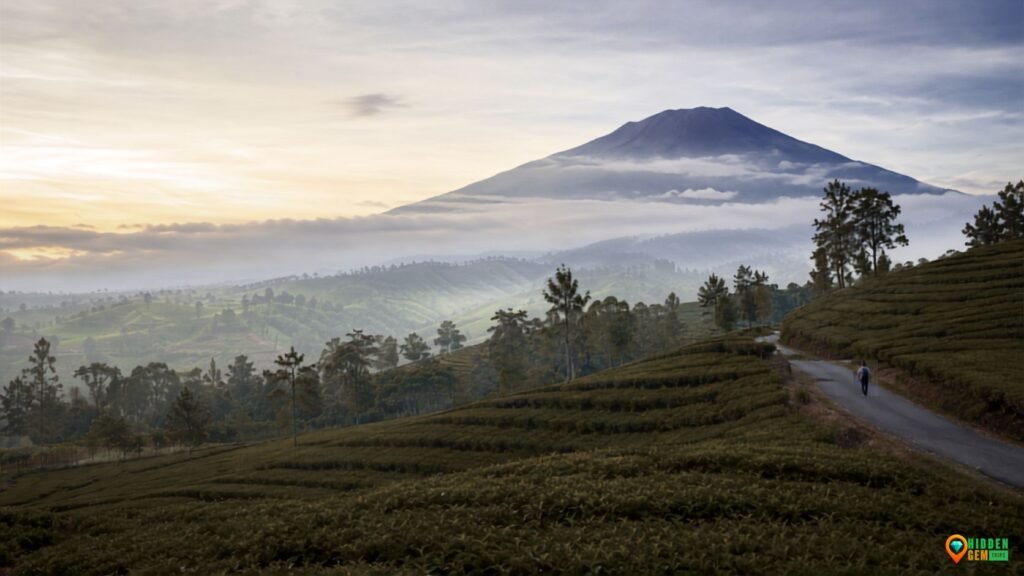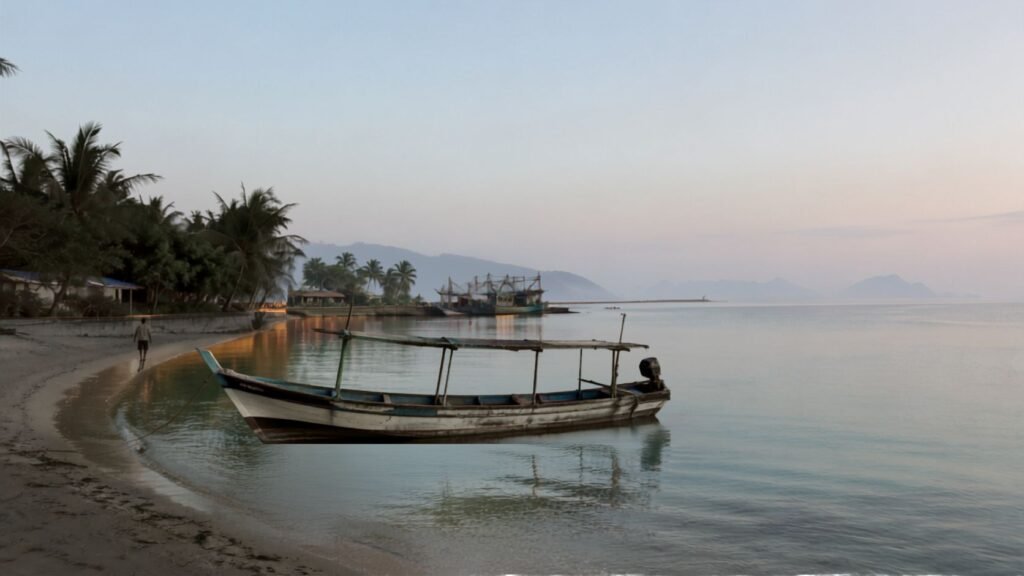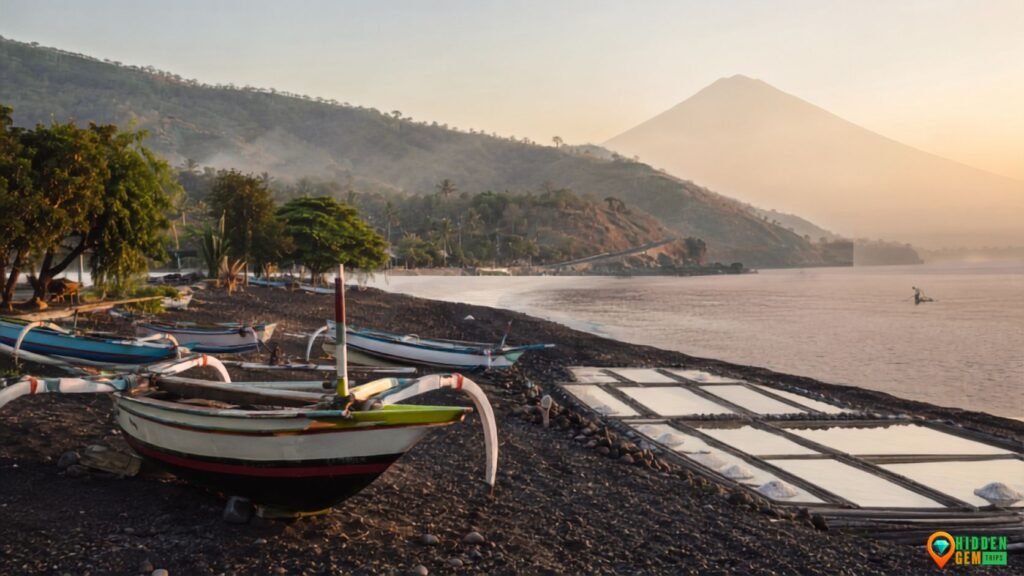

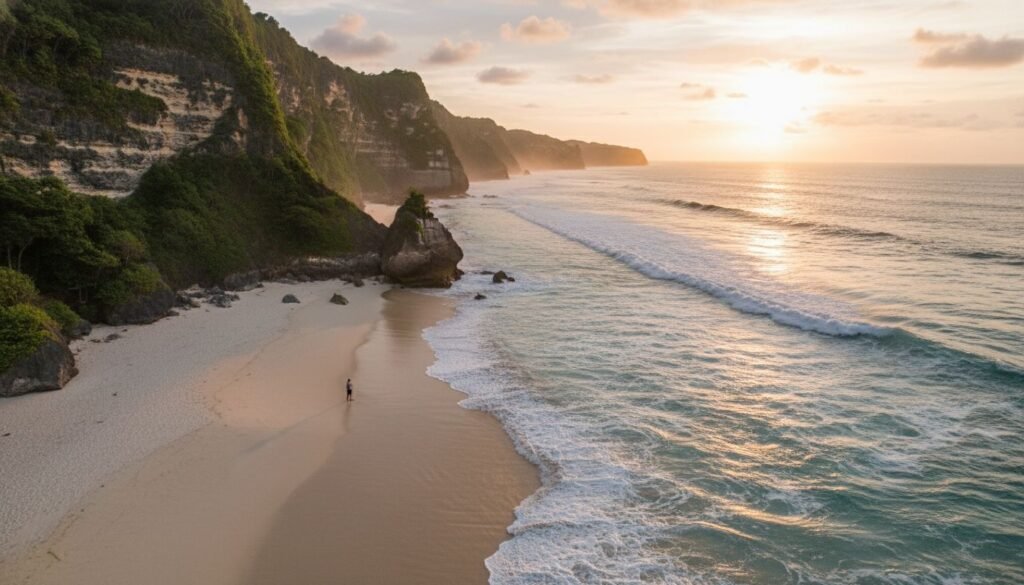
For years, travelers have treated Java as a mere transit point—a stepping stone between the heritage temples of Yogyakarta and the world-famous surf breaks of Bali. But as someone who has spent over a decade hunting for the most elusive secret beaches in Java, I can tell you that the island’s most rugged, raw, and rewarding coastline isn’t found in Uluwatu; it is hidden within the “Thousand Mountains” (Gunung Sewu) of Pacitan.
Pacitan is a paradox of Indonesian geography. It is the birthplace of a former president, yet its coastline remains blissfully ignored by the international masses. When I first navigated my motorbike through the karst limestone hills of East Java, I didn’t find the manicured luxury of a resort town. Instead, I found towering cliffs that looked like petrified giants, waves that roared with the ferocity of the Indian Ocean, and sand so white it felt like powdered sugar under my boots.
To truly understand this Java secret beaches guide, you must first accept that Pacitan is not for the “all-inclusive” tourist. It is for the pioneer, the slow traveler, and the digital nomad who finds inspiration in the sound of a blowhole rather than the hum of an air conditioner.
1. Klayar Beach: The Flute of the Sea and the Sphinx of Java
Klayar is often the entry point for most visitors to the region, but don’t let its growing local popularity discourage you. The true “secret” of Klayar lies in its eastern geography. While the crowds congregate near the entrance, a short hike toward the limestone cliffs reveals a different world.
The Phenomenon of Seruling Samudra
This is not just a beach; it is a geological instrument. The “Sea Flute” is a natural blowhole where the massive southern swells are forced through a subterranean crack in the limestone. When the pressure builds, a 10-meter plume of seawater screams into the sky with a haunting, flute-like whistle. This is the raw power of Java’s south coast that you won’t find on a Bali postcard.
The Sphinx of Java
From a specific angle on the cliffside, the rock formations strikingly resemble a giant sphinx guarding the coast. It’s a testament to the thousands of years of erosion caused by the unforgiving Indian Ocean. If you are staying nearby to catch the early morning light, I highly recommend browsing Agoda’s local homestay listings to find a balcony that overlooks these prehistoric formations.
2. Kasap Beach: The “Raja Ampat” of East Java
The most common complaint I hear from travelers in Indonesia is the high cost of flying to West Papua to see the karst islands of Raja Ampat. My response? Head to Kasap Beach in Pacitan.
The Puncak Kasap Viewpoint
This is when our Digital Breadcrumb Strategy really works. The beach is nice, but the “epic” part doesn’t happen until you trek the 15-minute trail to Puncak Kasap. From this vantage point, you see a cluster of small, green, limestone islands dotting a turquoise sea—a perfect miniature of the Papuan archipelago.
Navigating the Karst Labyrinth
The terrain here is part of the UNESCO-recognized Gunung Sewu Geopark. The sharp, porous limestone creates a unique ecosystem. If you are a content creator, this is the place to deploy your high-quality drone for travel. The emerald islands and the white sea foam provide for some of the most beautiful aerial shots in Java.
3. Buyutan Beach: The White Sands You Didn’t Know Java Had
If you want to find the “hidden” beaches in Java, Buyutan is the place to go. To get to this beach, you have to go down a steep, curving slope on the side of a cliff that functions as a natural filter. Only those who are really dedicated make it to the bottom.
The Tale of the Broken Crown
Local tales say that a large crown (Mahkota) fell from the sky and turned into the large rock formation that is near the offshore area today. Along with the stories, Buyutan features a long stretch of beach that remains empty even on busy weekends.
A Place of Peace for Slow-Mading
This is the best place to camp in the woods. There are no beach clubs, loud music, or people selling water in plastic bottles. It is just you and the elements. However, remember the core principles of Sustainable Travel International: if you pack it in, you must pack it out. This pristine environment is fragile and deserves our utmost respect.
4. Watukarung: The Pro Surfer’s World-Class Secret
Watukarung is a name whispered in the global surfing community. It features a “world-class barrel” that has attracted legends like Bruce Irons. The wave here is fast, hollow, and dangerous—much like the legendary breaks of the Mentawai Islands.
Beyond the Surf
Even if you aren’t a surfer, Watukarung is visually breathtaking. The bay is shielded by massive offshore islands that temper the Indian Ocean’s rage, creating pockets of emerald water perfect for swimming. Because the roads here are exceptionally narrow, consult our Budgeting & Cost Planning guide to see if it’s more cost-effective to hire a local guide with a small vehicle rather than struggling with a large car.
5. Srau Beach: The Three-Faced Coastline
Srau is massive, sprawling, and beautifully lonely. It is divided into three distinct areas, which locals call Srau 1, 2, and 3.
- Srau 1 (The Sunset Point): The best place to park your scooter and watch the sky turn fire-orange.
- Srau 2 (The White Sanctuary): The widest stretch of white sand, perfect for those who want to feel like they are on a deserted island.
- Srau 3 (The Fisherman’s Crag): A rocky, rugged area where local fishermen cast their lines into the deep. This area provides the best “human” insight into the local maritime culture.
For digital nomads, Srau is a challenge but a rewarding one. We’ve detailed how to stay productive in such remote locations in our Digital Nomad 2.0 guide.
6. The Logistics of a Pacitan Expedition
Reaching these Java secret beaches isn’t as simple as hailing a ride-sharing app. The isolation is precisely why they remain untouched.
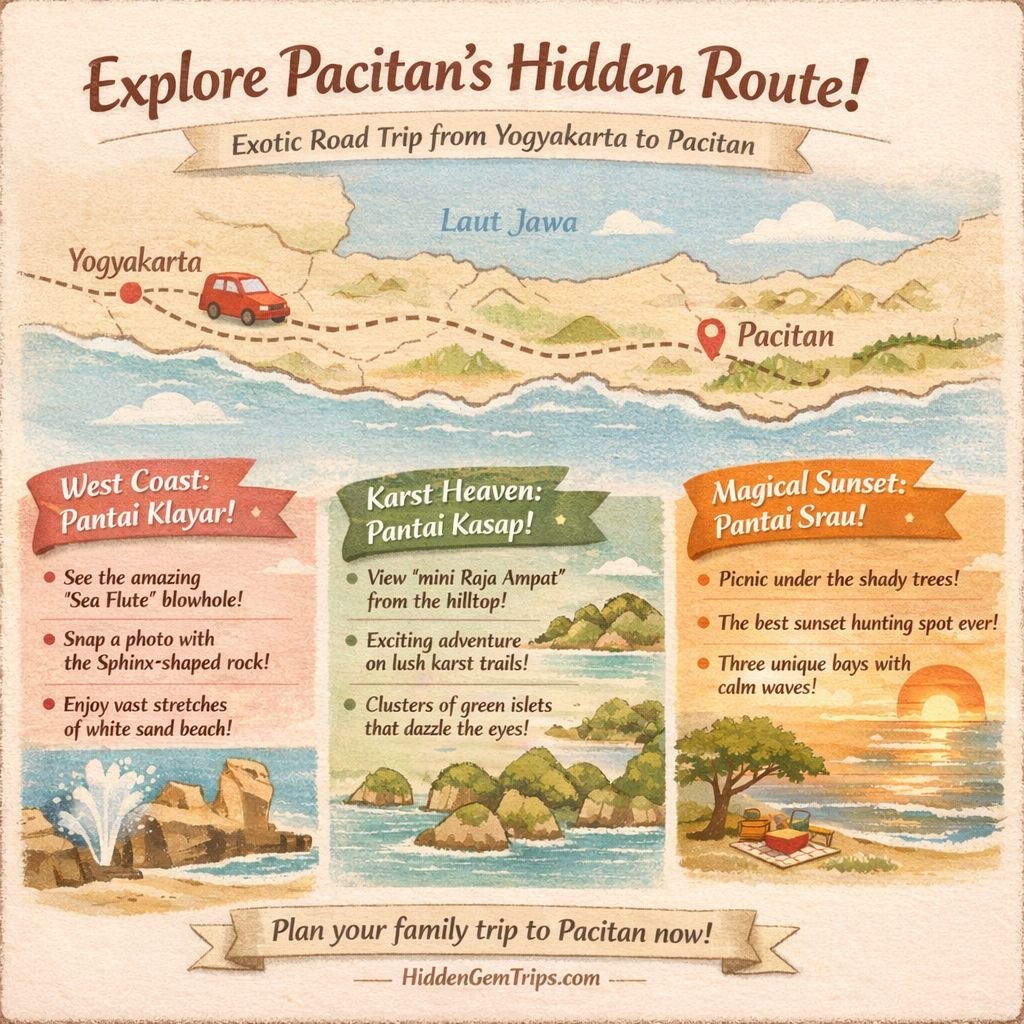
Getting There: The Journey from Yogyakarta
The nearest major aviation hub is Yogyakarta International Airport (YIA). From YIA, you are looking at a 3.5 to 4-hour journey. I highly recommend the Southern Cross Road (Jalur Lintas Selatan), which offers spectacular coastal views before you even reach Pacitan town.
Internal Transport: The 150cc Rule
Renting a 150cc scooter is the best way to navigate the narrow village roads that lead to beaches like Buyutan. For those who prefer four wheels, hiring a local driver is safer than self-driving due to the steep, hairpin turns of the karst hills.
7. Planning for the Unknown: Essentials & Budgeting
Traveling to under-the-radar spots requires a high level of preparation. You cannot rely on a 24/7 convenience store or stable 5G in these remote pockets.
Essential Gear & Logistics
Before you head into the hills, visit our Essentials section to understand the documentation and health precautions, like CDC Travel Health regulations, you need to consider.

I always pack a satellite messenger (like a Garmin InReach) when entering the “blind spots” on the Pacitan map. Additionally, make sure you have international travel insurance that specifically covers off-road motorcycle use.
Realistic Budgeting: The “Last Mile” Cost
Hidden gems aren’t always “cheap”. While local food is inexpensive, the cost of specialized transport—like hiring a 4×4 or a private boat to reach offshore islands—can add up. Check our Budgeting & Cost Planning guide to avoid financial surprises.
Conclusion: Why You Must Go Now
Java is changing at a breakneck pace. Infrastructure is improving, and the Java secret beaches of today will likely be the crowded commercial hubs of tomorrow. Pacitan remains in that “golden window”—it is accessible enough to reach, but difficult enough to keep the mass-tourist buses away.
By choosing Pacitan, you aren’t just taking a vacation; you are taking a stand for authentic exploration. You are choosing to support local homestays, eat at village warungs, and witness the raw, unedited power of the Indonesian coast. The “Thousand Mountains” are calling, and their secrets won’t stay hidden forever. Pack light, drive carefully, and prepare to lose your heart to the southern coast of East Java.
FAQ: Deep Insights for the Pacitan Explorer
Is Pacitan safe for solo female travelers?
Absolutely. The local Javanese culture in Pacitan is incredibly hospitable and respectful. However, because the beaches are remote, we recommend informing your homestay host of your destination before heading out for the day. For more safety tips, check our guide on Safest Under-the-Radar Cities.
What’s the best way to get from Yogyakarta to Pacitan?
The Southern Cross Road (Jalur Lintas Selatan) is the most beautiful road. It takes between three and four hours. You can rent a car and drive it yourself, but it’s advisable to hire a local driver to help you get across the steep, winding roads of the karst hills.
Do people in the rural villages speak different languages?
Yes, people in the villages near Srau or Buyutan don’t speak English very often. We recommend using a translation app to learn some basic Indonesian phrases. A simple “Terima Kasih” (Thank You) can help you get along with the local “Oracle.”
Are the beaches suitable for children?
Some areas, like the calmer pockets of Watukarung, are like that, but generally, the southern coast is known for powerful waves and rip currents. Always supervise children closely and never swim alone.
Disclaimer & Ethical Disclosure
The information provided in this guide to Java secret beaches is based on first-hand experience and current 2026 travel data. However, the Indian Ocean is unpredictable, and weather patterns can shift rapidly. We may earn a small commission from some affiliate links in this article (such as Agoda or World Nomads) at no additional cost to you, which helps us keep our guides free. Always cross-reference with IATA Traveler Guidance for international travel regulations and prioritize your safety above all else.