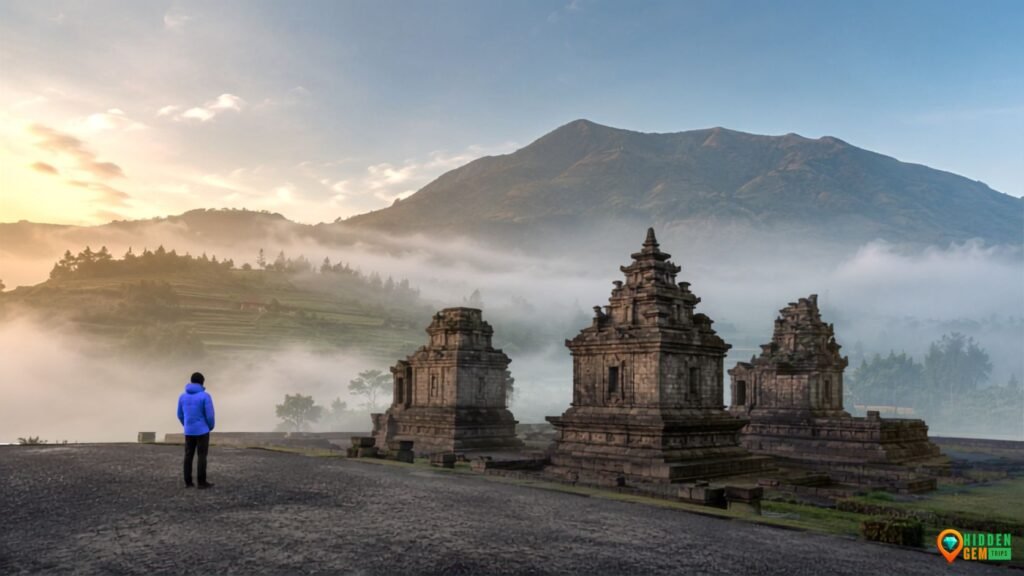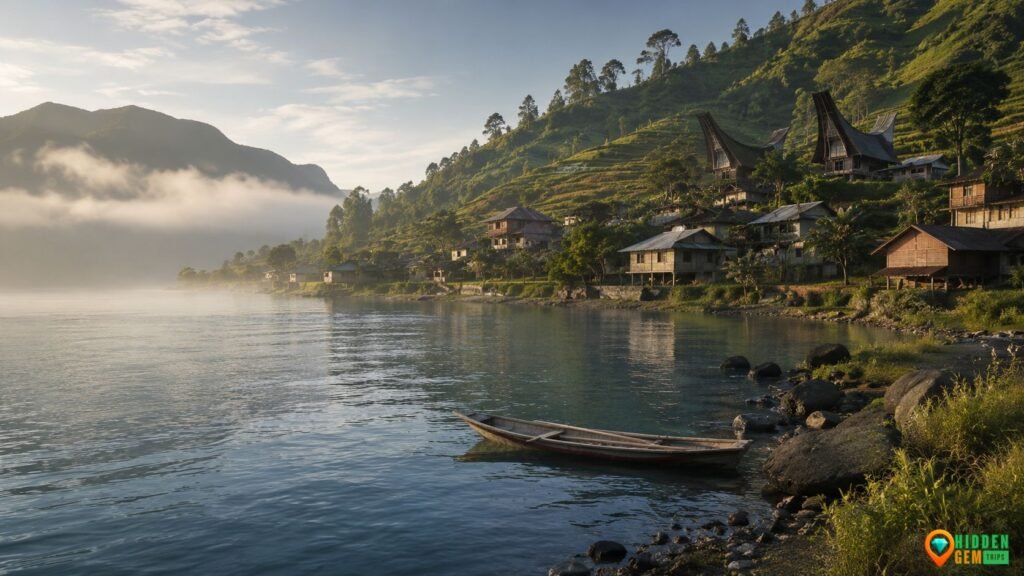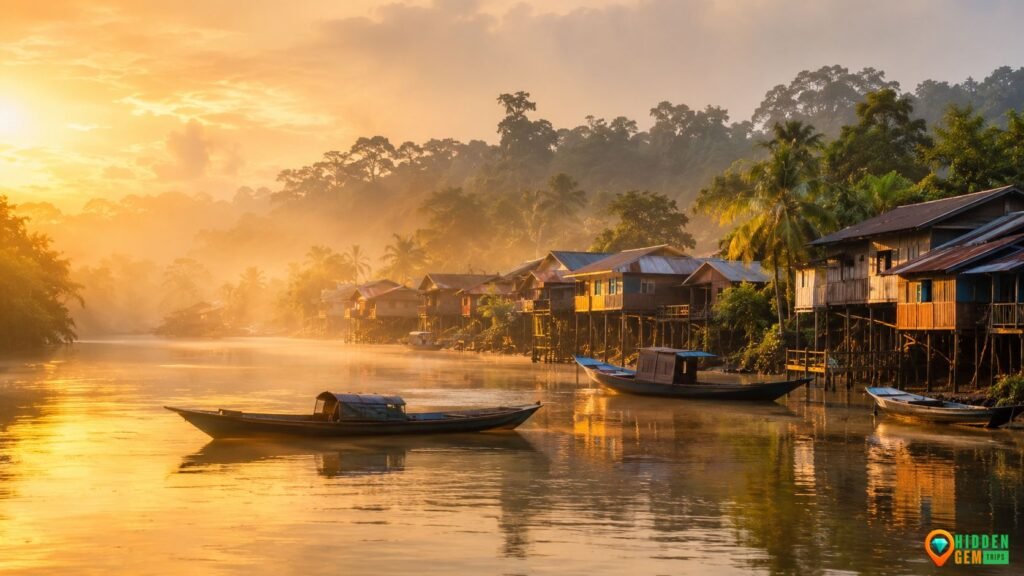

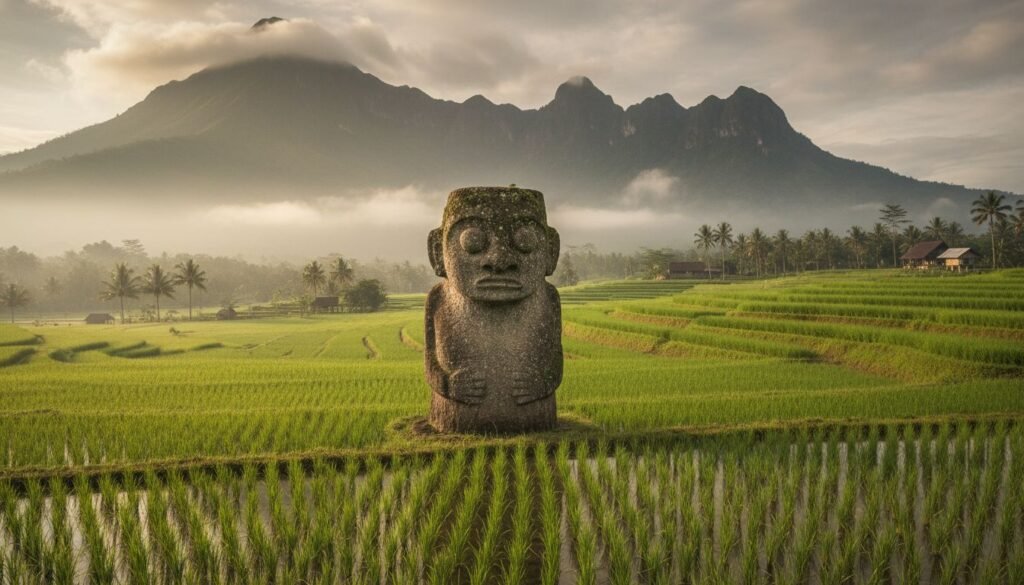
I remember standing in the middle of a muddy paddy field in the Bada Valley, looking up at Palindo, a four-meter-tall stone figure with a head that seemed like it was about to fall off. There were no ticket booths, no souvenir hawkers, no fences, and absolutely no other tourists within a fifty-mile radius. Just me, a local guide named Bapak Yusuf, and a stone giant that has been staring at the horizon for over 2,000 years, its origin still baffling the world's leading archaeologists. If you think you’ve truly “seen” Indonesia because you’ve ticked off the sunrise at Borobudur or braved the crowds in Ubud, this Lore Lindu Megaliths guide will shatter your preconceptions.
While most international travelers visit Tana Toraja for its famous funeral rites and boat-shaped houses, Central Sulawesi hides a secret that is arguably older, more isolated geographically, and far more mysterious. The Lore Lindu National Park, a UNESCO Biosphere Reserve, contains over 400 stone megaliths spread across the Bada, Besoa, and Napu valleys. This isn’t a museum where history is kept behind glass; it’s a living landscape where ancient stones sit among grazing buffalo and waving rice stalks.
1. Why Lore Lindu is the Ultimate “Mystery Dupe” for History Buffs
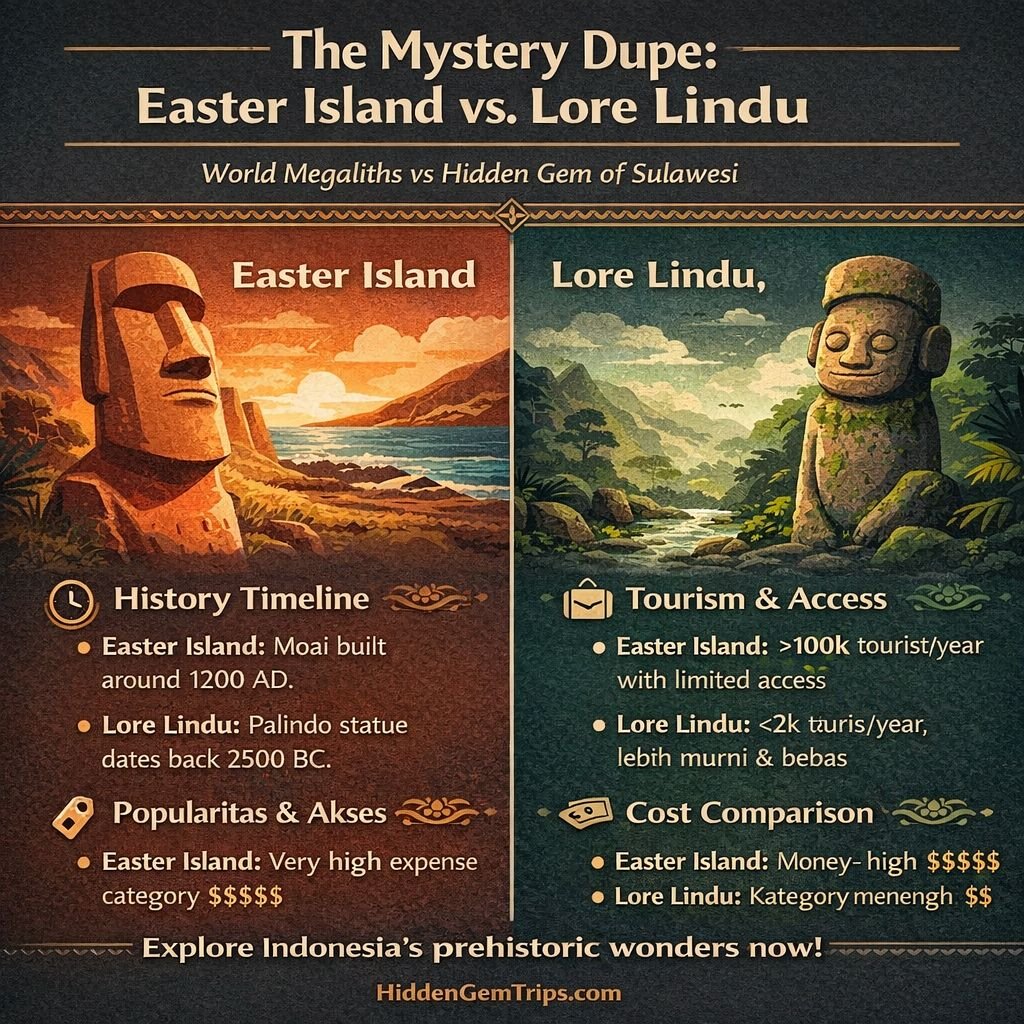
For decades, the Moai of Easter Island have been the worldwide symbol of “mysterious statues.” But getting to that small dot in the middle of the Pacific Ocean has become a logistical nightmare, marked by expensive flights and strict tourism rules. This Lore Lindu Megaliths trip offers a similar sense of ancient wonder but with a raw, Southeast Asian spirit that feels much more authentic.
The main difference? Unlike the Moai, which were carved from soft volcanic tuff found nearby, the statues in Central Sulawesi are made from extremely hard granodiorite and metamorphic stones. Geologically speaking, these stones are not native to the valley floors where they now stand. This raises a haunting question: How did a prehistoric civilization, supposedly lacking advanced pulleys or wheels, move multi-ton stone sculptures across some of the most rugged, mountainous rainforest terrain on Earth?
The Statistics of Silence: Why Lore Lindu Megaliths See Fewer Than 2,000 Visitors
According to the UNESCO World Heritage Tentative List, the megaliths of Lore Lindu date back as far as 2,500 BC, making some of them older than the pyramids of Giza. Despite their incredible historical significance, the park attracts fewer than 2,000 international visitors each year. For comparison, the Borobudur temple complex can see that many visitors in just one hour. This level of seclusion is what we focus on at Hidden Gem Trips—a sense of solitude similar to the pristine beaches of our Kei Islands Secret Guide, but with an added touch of Indiana Jones-style adventure.
2. In-Depth Exploration of the Three Valleys: Bada, Besoa, and Napu
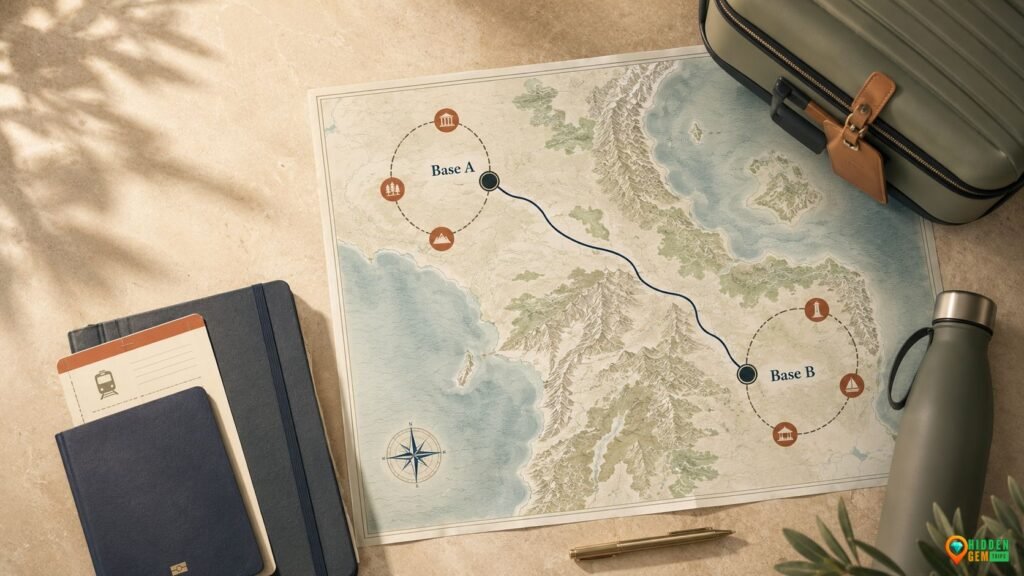
The Lore Lindu Megaliths are not centralized. They are spread across three separate valleys, each requiring varying levels of physical effort and logistical planning to reach. To see all three, you aren't just going on a trip; you are embarking on a multi-day expedition.
Bada Valley: The Home of the Stone Sentinels
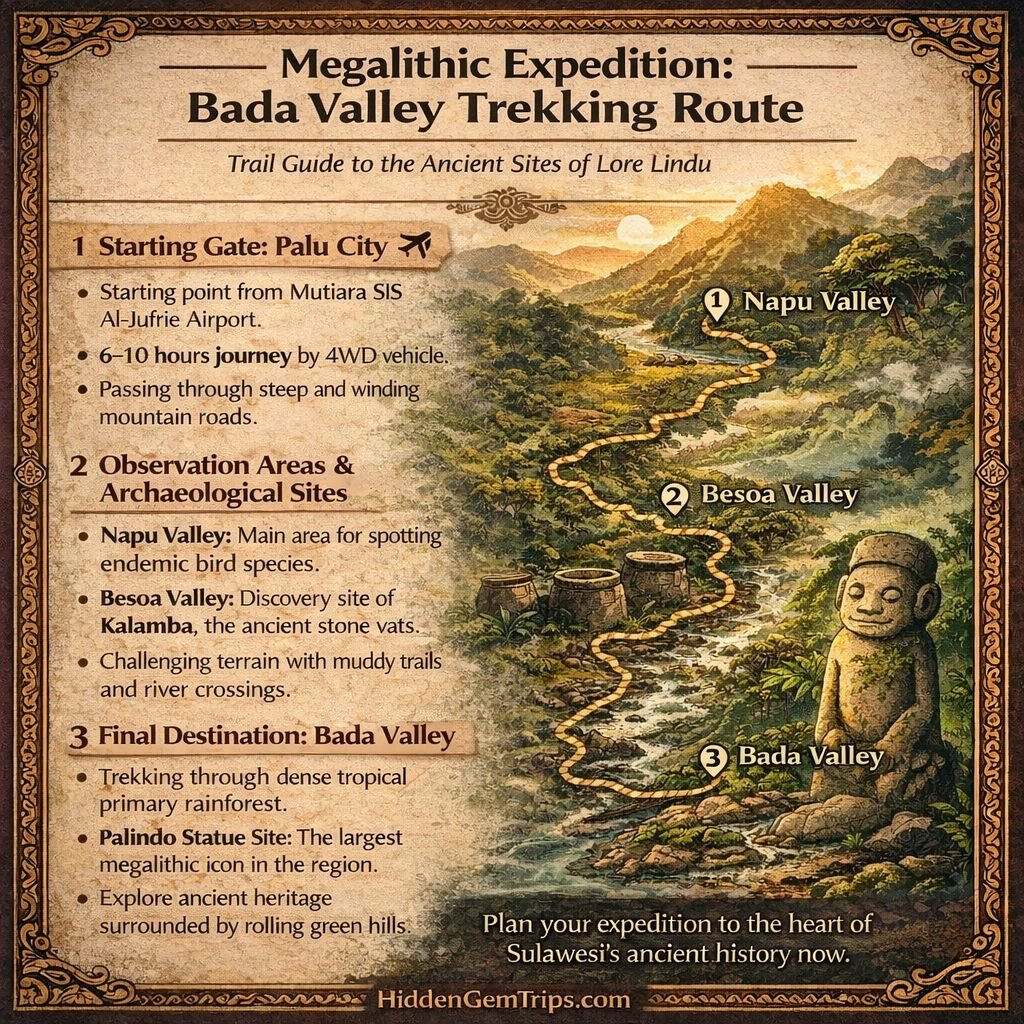
Bada Valley is the most iconic of the three. It is home to Palindo, the largest statue in the region. Local folklore suggests Palindo was once a court jester or an entertainer for an ancient king, hence his name, which translates to “The Entertainer.” But don't let the name fool you; standing in his shadow at dusk is an intimidating experience. The statues here, known as Statue Menhirs, feature large, oval eyes and distinct carvings of human genitalia—symbols of fertility and protection.
Walking through the Bada Valley feels like playing a real-life version of Zelda. One statue might stand proudly on a hill, while the next, like the Maturu (Sleeping) statue, is half-buried in a riverbed. If you’ve experienced the river challenges in our Mahakam Travel Guide, you’ll know that the best sights are always at the end of a muddy, sweat-filled trek.
Besoa Valley: The Enigma of the Kalamba
If Bada is about the people, Besoa is about the vessels. Here, you will find the Kalamba—massive stone vats that look like giant bathtubs or fermentation tanks. Some reach nearly two meters in diameter and are covered in intricate carvings of human faces and monkeys. Archaeological evidence from bone pieces reveals these were communal burial chambers for the elite, but the way the lids were carved shows a level of stonemasonry that shouldn't have existed at that time. In Besoa, the atmosphere feels heavier, quieter, and deeply spiritual.
Napu Valley: The Last Frontier
Napu Valley often serves as the starting or ending point of the trek. While it has fewer megaliths than Bada, the ones it does have are exceptionally well-preserved and are found near the edges of primary rainforests. This is where the Lore Lindu Megaliths experience blends with pure wildlife adventure. It’s not uncommon to be examining a 3,000-year-old stone while a Hornbill flies overhead or a Tarsier watches you from the trees.
3. The Raw Experience: Trekking Through a Living Museum
To truly understand the Lore Lindu Megaliths, you have to put in the effort. There's no air-conditioned bus waiting for you. You'll spend hours in a 4WD that feels like a cocktail shaker as it navigates broken mountain passes. You'll hike through leeches, cross rivers on fallen logs, and endure the relentless tropical humidity of Central Sulawesi.
The Gear You Need for Sulawesi’s Interior
Documentation in this environment demands careful preparation. The humidity can fry electronics in days. I personally depend on a Peak Design Everyday Backpack because its weather-sealing is the only thing that survives a Sulawesi afternoon downpour. Additionally, a high-capacity power bank is essential. In the villages of Bada and Besoa, electricity is a luxury, often only available via a noisy generator between 6:00 PM and 9:00 PM. If you aren't charged up by then, you’re shooting with a paperweight the next day.
The Human Element: Staying Connected with the Lore Community
Staying in a losmen (local guesthouse) is part of the “Brutally Honest” experience. You will sleep on a thin mattress, eat whatever the village has caught or harvested that day, and bathe with a bucket of cold mountain water (mandi). But in return, you get to hear the oral histories from the elders—stories of how the stones were once living people turned to rock for their sins. This human connection is what separates a tourist trip from a true Hidden Gem expedition.
4. Timing Your Visit: Avoid the Sulawesi Monsoons
The weather in central Sulawesi differs from Bali. Due to its proximity to the equator and surrounding high mountains, Lore Lindu develops its own microclimate.
- Dry Season (June – September): The optimum time for our Lore Lindu Megaliths tour is during the dry season. The “roads” (if we can call them that) are the most stable right now. Crossing rivers is easier, and the leeches aren't as vicious.
- Shoulder Season (October & May): This is the ideal time for photography. The valleys are a vibrant neon-green, and storm clouds create a dramatic backdrop for the stone statues. However, be prepared to get wet.
- The Monsoon (December to February): Stay away from this time of year at all costs. Landslides are common, and the road from Palu to the park might be closed for days. It's not simply a bother; it's a serious danger.
5. Strategic Logistics: How to Get to the Heart of Sulawesi
The fact that it is hard to get there is the “natural filter” that keeps Lore Lindu from being overrun by tourists. There would already be a Starbucks next to Palindo if it were easy to get to.
The Entry Point (Palu): You begin your trip by flying into Palu (PLW). Most flights go through either Jakarta or Makassar. Palu is a strong city that has bounced back after the 2018 earthquake. Staying here for a night benefits the local economy.
- The Entry Point (Palu): You begin your trip by flying into Palu (PLW). Most flights go through either Jakarta or Makassar. Palu is a strong city that has bounced back after the 2018 earthquake. Staying here for a night benefits the local economy.
- The 4WD Expedition: You can't use a regular rental car. You need a 4WD Toyota Land Cruiser or a tough Hilux with a driver who has “mountain blood.” The trip to Bada Valley takes 6 to 10 hours, depending on landslides.
- The Guide Requirement: You must hire a local guide from the Lore community. They will locate the megaliths that are literally hidden under jungle vines and serve as your cultural liaison with the village chiefs. This logistical problem is like what we saw in the Pacitan Hidden Beaches guide: the harder it is to get to, the better the payoff.
FAQ
1. Is it safe for solo travelers?
Central Sulawesi is very welcoming, but I wouldn't recommend going completely “solo” without a local guide. The jungle is easy to get lost in, and there is no cellular signal. For safety, we suggest carrying a Garmin InReach Mini for satellite messaging.
2. What about the food?
Expect a diet of organic red rice, freshwater fish from Lake Lindu, and sayur paku (forest ferns). It’s healthy, fresh, and delicious, but vegetarians should notify their guide in advance, since meat is a staple for energy here.
3. Do I need a special permit?
Yes, since it is a National Park, you must register at the TANAPA office in Palu or at the entry gates. Your guide usually handles this, but keep your passport (or a copy) handy.
4. Can I see the Pygmy Tarsier?
Yes! Lore Lindu is one of the few places where you can spot the Pygmy Tarsier. Night walks with a specialized wildlife guide can be arranged in the Napu Valley area.
5. How much should I budget?
A private 5-day expedition from Palu usually costs between $500 and $800 USD. This covers the high cost of 4WD fuel, the driver, guesthouses, and a specialized guide. It’s an investment in a once-in-a-lifetime experience.
Disclaimer
Travel Safety & Accuracy: This Lore Lindu Megaliths guide is based on data from 2026. Central Sulawesi is a remote, high-risk environment for those unprepared. Medical facilities outside Palu are nonexistent. We strongly advise having travel insurance that covers emergency helicopter evacuation. Road conditions are subject to the whims of nature and can change quickly. Hidden Gem Trips is not liable for travel disruptions, injuries, or any loss during your trip. Always put your safety before taking a picture.
Affiliate Disclosure: Hidden Gem Trips participates in affiliate marketing programs. We may earn a commission if you purchase gear (like the camera bags or power banks mentioned) through our links, at no extra cost to you. This helps us keep our guides free from sponsored bias.