
The “Land of Smiles” is often a land of selfies. From the sardine-packed shores of Maya Bay to the neon-soaked streets of Phuket, finding a true sanctuary in Thailand has become an elite skill. But for those willing to travel just a bit further east toward the Cambodian border, there is a place where the 7-Elevens don't exist, and the only traffic jams involve a stray dog and a fallen coconut. This Koh Kood guide is your roadmap to the last bastion of “Old Thailand.”
Koh Kood (or Ko Kut) is Thailand’s fourth-largest island, yet it remains blissfully under the radar. While the rest of the world is busy chasing the next viral beach club, Koh Kood remains a lush, jungle-clad paradise where the water is so clear it looks like gin. If you have already mastered the art of finding untouched paradises in a crowded world, then Koh Kood is the definitive next chapter in your journey.
Why Koh Kood is Thailand's Ultimate Secret Beach Sanctuary
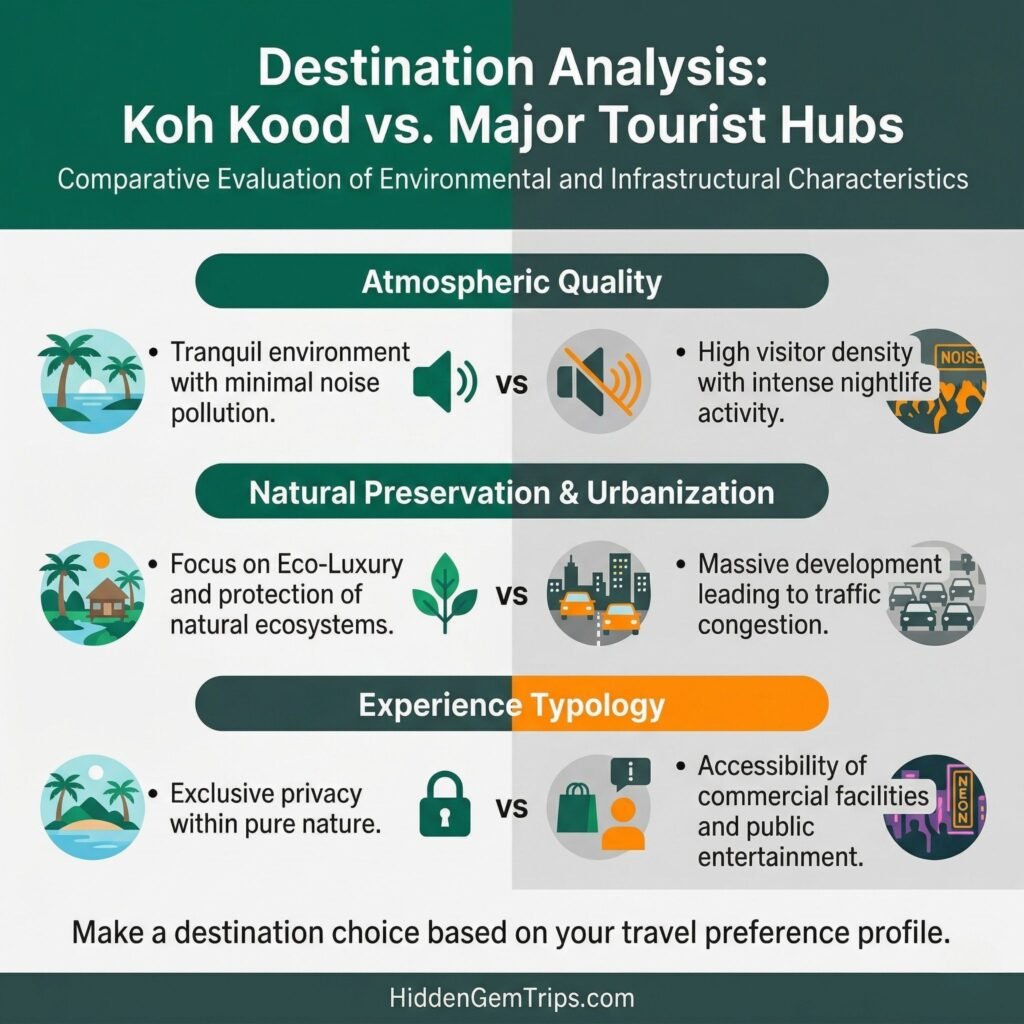
The magic of Koh Kood isn't just about what is there; it’s about what isn't. There is no nightlife, no shopping malls, and very few cars. It is a destination that demands you stop rushing and embrace the slow travel manifesto.
The Geography of Silence
Located in the Trat province, Koh Kood is heavily forested and mountainous. Its west coast is a jagged sequence of bays, each hiding beaches that rival the Kei Islands in Indonesia. Unlike Koh Samui or Koh Phangan, the resorts here are spaced out, often hidden behind mangroves or rubber plantations, ensuring that even in the peak season, the beaches feel deserted. According to the Tourism Authority of Thailand, the island’s commitment to low-impact tourism has helped preserve its unique ecological character.
A Journey into Deep Time
When you step onto the sands of Koh Kood, you aren't just visiting a beach; you are stepping back into a version of Thailand that existed forty years ago. The island lacks the aggressive commercialization found elsewhere. No jet skis are screaming across the horizon, and no hawkers are interrupting your peace to sell cheap trinkets. This silence is the island's most expensive luxury.
7 Secret Beaches You Must Explore
1. Klong Chao Beach (The Heart of the Island)
While it’s the most “central” beach, Klong Chao remains shockingly quiet compared to anything in the south. It is a wide crescent of powder-white sand with a river running into the sea. I recommend kayaking up the river to the Klong Chao Waterfall. It’s a sensory experience that reminds me of the secret waterfalls of North Lombok—cool, fresh, and deeply green. The brackish water where the river meets the sea creates a unique ecosystem where you can see small silver fish jumping in the golden hour light.
2. Ao Tapao
Ao Tapao is the longest beach on the island, lined with swaying coconut palms. At sunset, the sky turns a shade of bruised purple that you cannot find in more polluted areas. It is the perfect place to test your new island travel gear, specifically high-quality snorkeling masks, as the reefs here are incredibly healthy. The pier at Ao Tapao is a popular spot for locals to fish in the evening, offering a glimpse into the island's authentic rhythm.
3. Bang Bao Bay
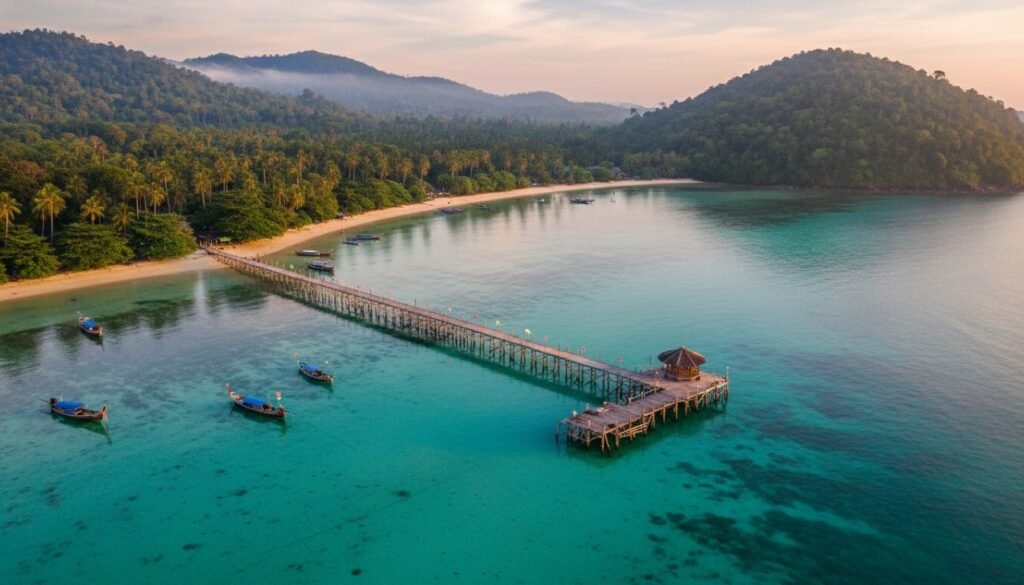
The bay is almost perfectly circular, protected from the open sea, making the water as still as a lake. The long wooden piers stretching into the turquoise water are iconic. It feels as exclusive as the luxury spots in Moyo Island, but with a uniquely Thai charm. The sand here is remarkably fine, almost like powdered sugar, and the surrounding hills are draped in primary rainforest that hums with cicadas.
4. Ao Noi
A small, private-feeling cove. If you want to feel like a castaway, this is it. There is only one resort here, and the wooden bridge leading to the beach offers one of the best photo ops on the island without a filter. Because of its orientation, Ao Noi remains calm even when the winds pick up elsewhere on the island, making it a perfect sanctuary for swimmers.
5. Ao Jak
Further south and much harder to reach, Ao Jak rewards those who endure the bumpy dirt roads. The sand is a dazzling white, and the coral starts just meters from the shore. This area is a prime example of why marine conservation is vital for sustaining island tourism. The lack of boat traffic here means the visibility is often 20 meters or more.
6. Ao Phrao
The southernmost beach on the island. It is a massive, sweeping bay with a small temple nearby. It feels like the end of the world in the best possible way. Because there isn't a lot of light pollution here, it could be a good place for our dark sky reserves guide. When you look at the stars from the beach in Ao Phrao, you can see the Milky Way with your own eyes.
7. Yai Kee's Secret Beach
This small cove is hidden away in the north and is often missed by people who adhere to the main road. It is rugged and wild, and the perfect place to practice conscious, ethical exploration by leaving absolutely no trace of your visit. There are no facilities here—just you and the ocean.
Navigating Your Koh Kood Guide Logistics
Getting to Koh Kood is the primary reason the crowds haven't arrived yet. It takes work, which keeps widespread tourism from happening naturally.
The Journey from Bangkok: A Test of Purpose
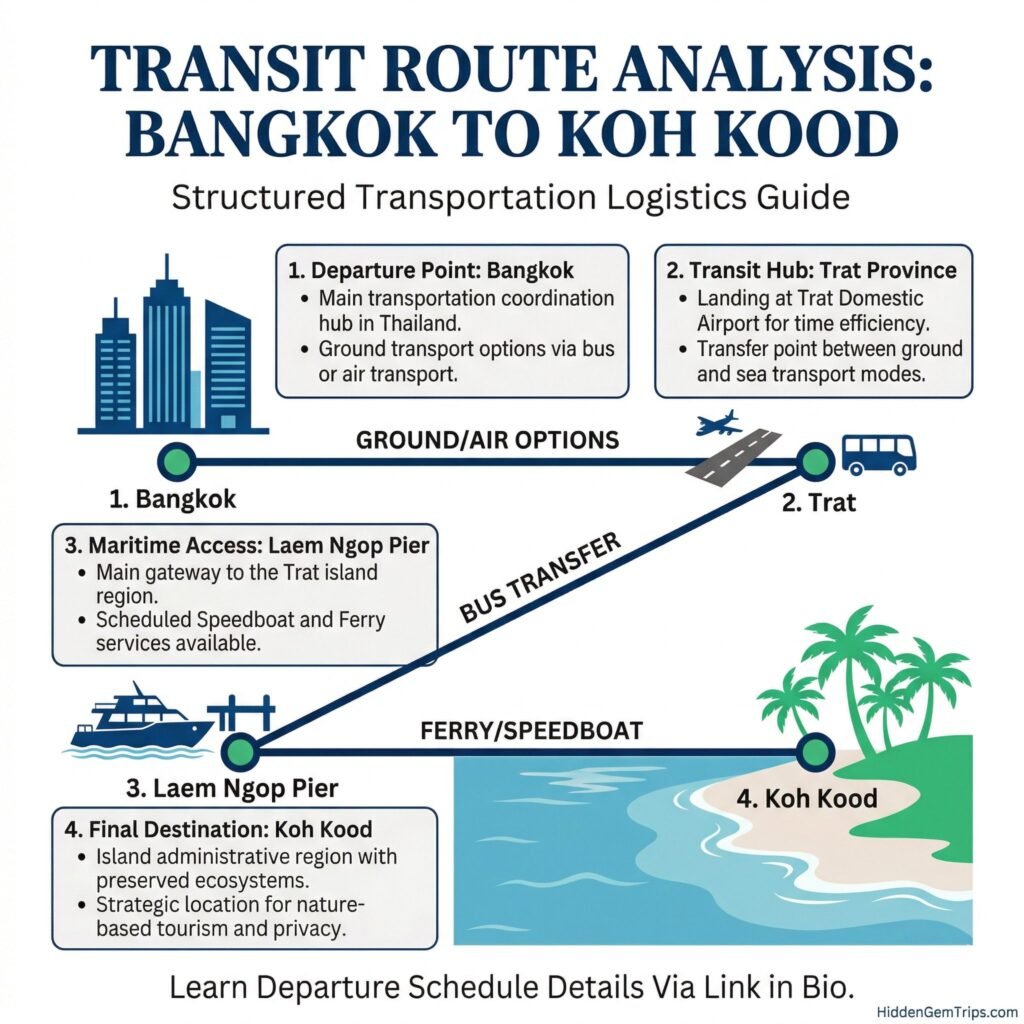
The change from the bright craziness of Bangkok to the emerald calm of Koh Kood is very big. You can fly from Bangkok to Trat or take a bus or private car travel to Laem Ngop dock that takes 5 to 6 hours. There, a fast catamaran ride takes about 60 to 90 minutes. This multi-leg journey means you must master the secrets of packing light—transferring from buses to speedboats with heavy luggage is an amateur mistake that will drain your energy before you even arrive.
Getting Around: The Scooter Challenge
No tuk-tuks or taxis are roaming the streets here. You either rent a scooter or stay put at your resort. The roads are paved but incredibly hilly and winding. Make sure you know what the prerequisites are for getting an international driving permit before you rent a car so that you are following local laws and insurance policies. Many resorts can pick you up in a private car for a charge if you don't feel safe on a bike.
The Cultural Heart: Ao Yai and Ao Yai Kii
To really get to know the island, you need to go to the old fishing towns. Ao Yai is a town on stilts that is built totally over the river. You can eat the freshest seafood in Thailand here. The people who serve it to you caught it that same morning. It teaches you how to travel like a local.
People in these villages are really friendly. People in Koh Kood still see visitors as guests, even though tourism in Bangkok is more of a business. You need to get involved with the community if you want to explore in a way that is positive for the people who live here and the environment.
Sustainability: The Battle for Thailand's Last Frontier
Climate change isn't the only thing that threatens Koh Kood; the promise of “easy money” from big projects is also a problem. I think that Koh Kood's future hinges on how well it can attract eco-conscious travelers who prefer peace and quiet to parties. The “Sumba Revolution” has turned Bali's neighbors into forgotten islands that are better than Bali. Koh Kood could start a similar movement in Thailand.
Supporting Local Ecosystems
By visiting the island, you are voting with your wallet for a different kind of Thai tourism. Support the local economy by eating at family-run stalls and choosing resorts that prioritize environmental health. This is the only way to ensure Koh Kood remains one of the underrated destinations worth visiting for decades to come.
Planning Your 2026 Expedition
If you are planning a trip to the Kimberley in Australia or a Simien Mountains hike, you are likely a traveler who seeks the edge of the map. Koh Kood has that similar feeling of discovery, yet it's warm like the tropics.
Making a budget for Paradise
Thailand is usually cheap, however Koh Kood can be a little more expensive than the mainland because it costs more to ship items to the island. But you can still enjoy luxury on a budget by staying at mid-range resorts that have 5-star vistas without the 5-star price.
FAQ: How to Get Around the Koh Kood Experience
1. Is it safe for women to travel alone to Koh Kood?
Absolutely. It is one of the safest islands in Thailand. As noted on our 2026 safe travel map, Koh Kood is a top recommendation for peace of mind. The community is small, and everyone knows everyone.
2. Is there an ATM on the island?
There are a few ATMs now, mostly located in the Klong Chao area, but they frequently run out of cash or fail to accept international cards. Always bring enough Thai Baht from the mainland to cover your stay, rentals, and meals.
3. What is the best time to visit?
The best time to visit is from November to April, when the waves are calm and the skies are blue. From May to October, during the monsoon, boat services are limited, many resorts close for maintenance, and the rainforest is quite humid with heavy rains that happen often.
4. Are there mosquitoes or sandflies?
Yes. Being a jungle-heavy island, mosquitoes are active at dawn and dusk. Some beaches are also known for sandflies, which can be avoided by staying on a towel or lounger rather than directly on the sand. Use a natural repellent and cover up in the evenings.
5. Can I get a 5G signal on Koh Kood?
Yes, surprisingly. A lot of the island has good AIS and True coverage, which makes it a popular destination for digital nomads who need to stay connected while they work from home.
Disclaimer
Traveling to remote islands is risky because there aren't many medical facilities, and the weather can be unpredictable. This Koh Kood guide is based on travel data from 2026. Before scheduling boat transportation, always check the local maritime weather forecasts. Also, make sure you have full travel insurance that includes emergency medical evacuation from remote places.