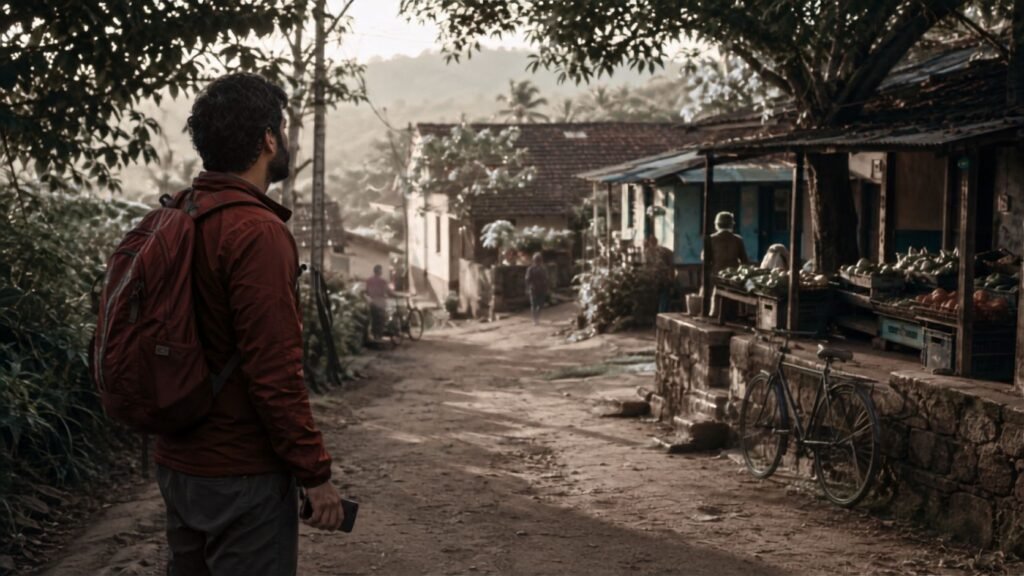

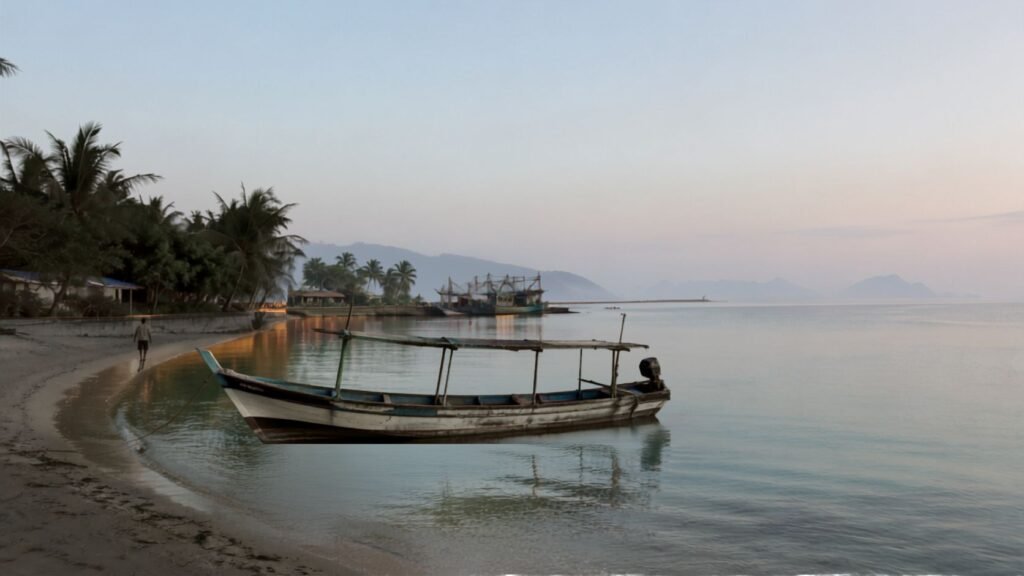
The finest Karimunjawa travel guide is not always the one that packs the most islands into the fewest days. Karimunjawa rewards a different instinct: arrive, slow the tempo, and let one area take up more of your attention than your itinerary software believes is effective. This Java Sea archipelago can undoubtedly offer reef days, white-sand beaches, mangroves, vistas, and seafood banquets. But the true joy is having enough room to appreciate how those pieces fit together — the port coming alive, the wind altering before you go on a boat, a beach changing character once the day-trippers depart, or a meal that turns into the evening, not a pit stop between attractions.
That’s the strategy that works for the geography.” Karimunjawa is an archipelago of 27 islands with around 1,500 hectares of land and more than 110,000 hectares of sea, located about 90km north of Jepara, according to the official tourism page of Indonesia. The sea is such a part of the experience, not just what’s on a tourism map. The official Karimunjawa location overview is a great place to start for access and seasonality; this guide adds in what many itineraries leave out: how to pace your time while you are there.
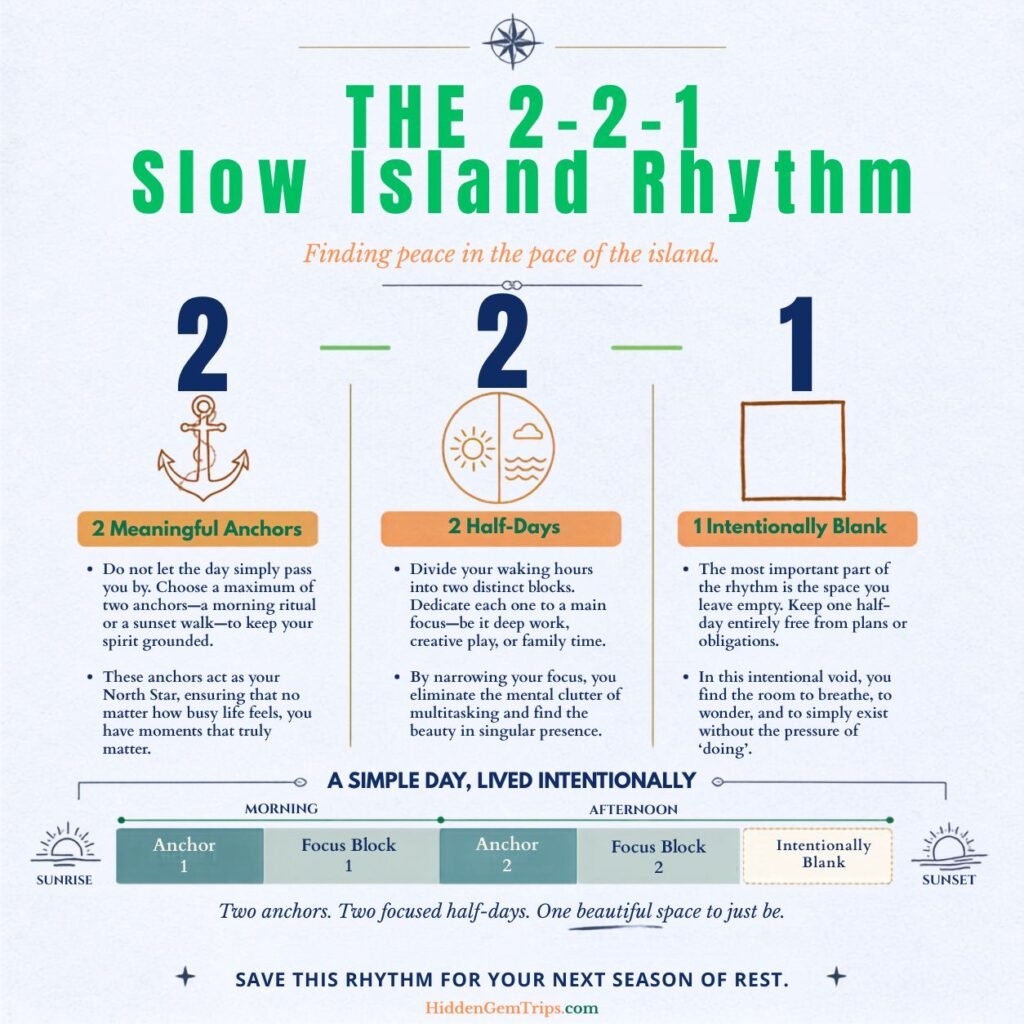
If you already travel with a mindset of “depth over distance,” the site’s slow travel framework discusses this idea in more detail. But here the idea becomes practical. The working rule is simple: one important anchor every half-day, two meaningful anchors max per day, and one purposefully blank half-day before you leave. You can call it the 2-2-1 beat, if you prefer. That sounds too simple. That’s exactly why it works.
Disclosure: This post contains affiliate links. If you purchase something through a relevant link, HiddenGemTrips will receive a commission at no additional cost to you. Editorial independent recommendations.
| Planning question | Slow-island answer |
| How long? | Four nights is workable; five nights is calmer if a boat day matters or you have a weather-sensitive onward connection. |
| How much should I schedule? | One anchor per half-day. Protect at least one blank half-day. |
| Where should a first-timer base? | A stable base on the main Karimunjawa/Kemujan landmass is simpler than changing accommodation for a short trip. |
| When to go? | April-October is the usual general window, but check marine forecasts close to departure. |
| What is the main risk? | Treating ferry and small-boat conditions as fixed. Weather can change the order – or feasibility – of plans. |
| What makes this guide different? | Seven pacing rituals, not seven must-see attractions. |
A Checklist is not the Answer, Why a Slow Trip to Karimunjawa is Better
Karimunjawa looks deceptively easy to ‘do’. A quick Google search pulls up a neat menu: snorkel here, photograph a sandbar there, catch a sunset, tick off the mangroves, hire a scooter, eat grilled fish, leave. The difficulty is not the badness of these things. Most of them are worth it. The thing is, island travel has a hidden cost structure – transport, boat loading, weather waits, salt, sun, exhaustion, wet gear, meal timing, the micro-decisions that go into every move.
Therefore, a celebration with fewer pins may seem more meaningful. A setup is added with each extra stop. You fill the sack. For the following ride, you bargain. You look at the time. You glance at the camera. You change into fresh clothes. You look around for somewhere to eat. On a map, five fast stops would look ideal, but a single day of them might convert the island into a series of micro-deadlines.
HiddenGemTrips already explores this “transfer tax” in its Two-Base Itinerary Method. Karimunjawa is a perfect place to take that logic one step further: keep the accommodation stable and reduce the number of activity transitions as well. Instead of asking, “How many places can I fit before sunset?” ask, “What is the one thing I want this half-day to feel like?”
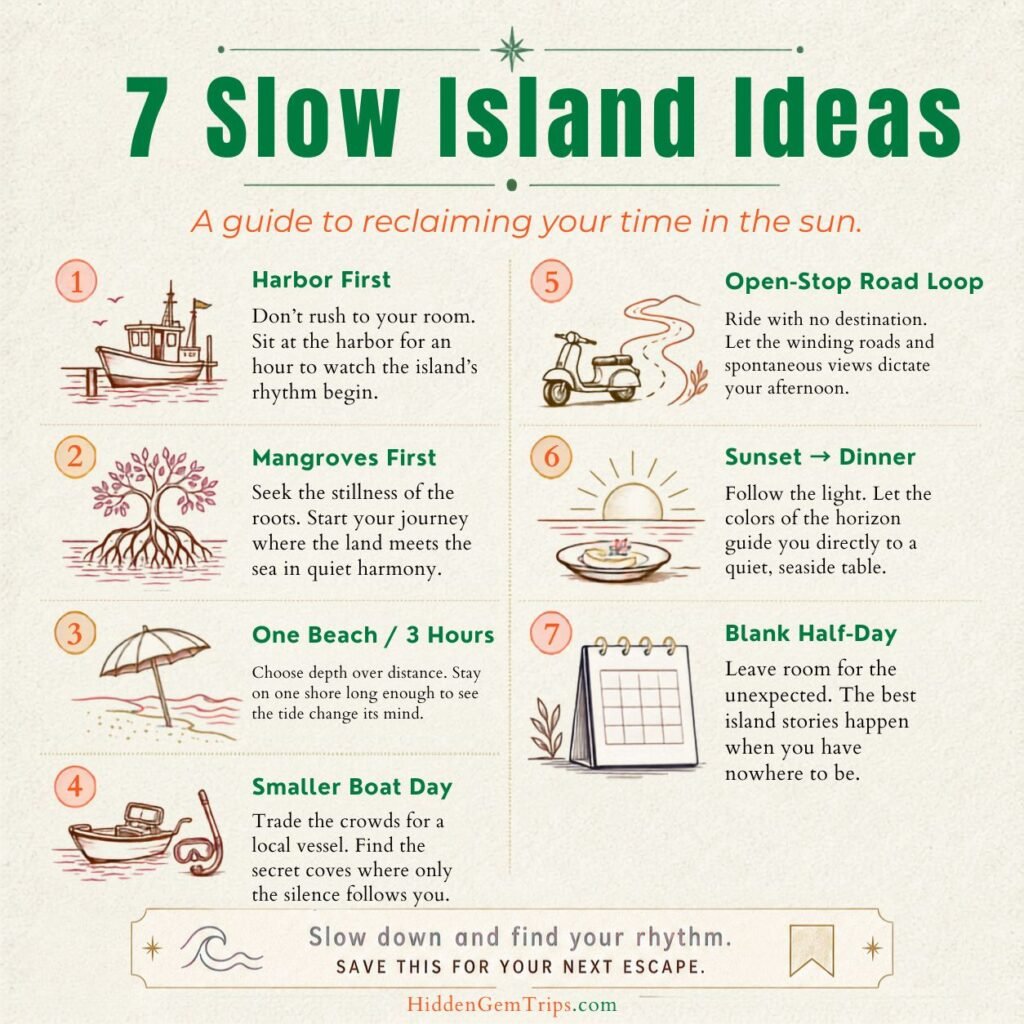
This also distinguishes the post from another good Indonesian island guide on the web. The Wakatobi local-island method is based on community-scale landing sites and island texture beyond the reef. Karimunjawa requires a particular treatment. Here are seven time rituals: harbor morning; mangrove first block; lengthy beach stay on purpose; smaller boat day; open-ended land loop; sunset-to-dinner transition; empty buffer. The objective is the same. The unit of travel is “attention” rather than “place.”
Travel Guide to Karimunjawa: Planning Details for 2026 and Today
Reaching a tight connection without taking a chance
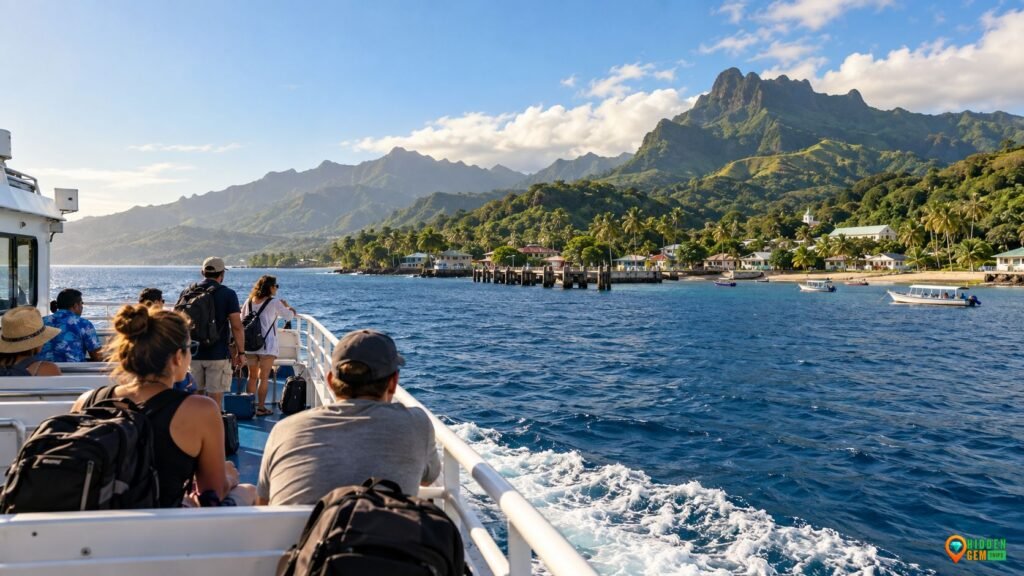
With ferry and speedboat connections to the mainland from Karimunjawa, Jepara serves as the main gateway. PELNI services from Semarang are also mentioned in official tourism material on a number of itineraries. The phrase “on some schedules” is crucial because timetables, pricing, vessel allocations, and weather limitations are all subject to change. Use the official PELNI website for the most recent PELNI information instead of building an unrefundable chain of connections based on an outdated timetable screenshot, and confirm Jepara departures with the relevant operator just before your trip.
As a general guideline, unless you have examined the operation pattern and have enough time to recover from any disruptions, avoid scheduling a same-day flight or other costly onward commitment soon after an island ferry. If the subsequent reservation is crucial, a mainland buffer nite can be as dull as it gets. Weather delays can range from disaster to nuisance. The website’s remote-trip budgeting advice is useful in this situation because the most costly island charge is often not the boat ticket but rather the cascading consequences of a lost connection.
Meanwhile, the Indonesian Central Statistics Agency (BPS) reported that maritime passengers arriving in Jepara Regency in June 2026 reached 33,850, an increase of 2.47 percent from May. This should not be misunderstood as a number of visitors to the island, as it is to the whole regency, not just Karimunjawa. However, it does underline that the mobility system of the gateway actively involves maritime transportation. The official source for that statistic is the BPS Jepara transport release.
The Ideal Season Is Not the Same as the Ideal Sea Conditions
The traditional general rule is April through October, when conditions are usually better. Think of that as a planning period rather than a commitment. Still within that general dry season range, the BMKG marine forecast for western Karimunjawa waters on August 20, 2026, called for seas of 1.4 meters, easterly winds of 18 knots, gusts to 25 knots, and possible waves of about 1.5 meters. Verify actual sea conditions 24 to 72 hours prior to ferry and boat plans, then double-check. This is a timeless lesson. But that snapshot will be out of date by the time many readers travel.
The last query “best month” is false for the same reason. The best course of action would be to choose a season with greater historical possibilities, then make the final go/no-go decisions based on current forecasts, operator advise, and port instructions. You should have enough flexibility in your timetable to adapt to changing weather conditions without running out of time.
Where to Start for a Slower First Journey
For a first stay of four or five nights, staying put is usually preferable to changing accommodations. You may enjoy urban life, road-based exploration, beaches, mangrove areas, and boat departures without having to pack every second morning if you stay on the major Karimunjawa/Kemujan landmass. This is a reminder that switching accommodations is a travel activity in and of itself, not a critique of stays outside of islands.
Check out the Moyo Island or Banda Islands travel guides on the website if you enjoy remote island logistics. Both demonstrate how the concept of “quiet” shifts when access is incorporated into the experience. The benefit of Karimunjawa for a leisurely first trip is that you can experience a strong island rhythm without making every day an adventure.
A Quick Look at the Seven Slow Island Concepts
| Slow-island idea | Suggested block | What you gain | What to resist |
| 1. Harbor before checklist | 1.5-2 hours | Orientation, local rhythm, lower-pressure start | Opening the day with a race to a viewpoint |
| 2. Mangroves first | 2-3 hours | Quiet observation, context for the national park | Treating the boardwalk as a 20-minute photo stop |
| 3. One beach, three hours | 3 hours | Time for light, tide, swimming, reading, doing nothing | Beach-hopping just to collect names |
| 4. Smaller boat day | Half to full day | Better reef behavior, less loading/unloading, more presence | Choosing an operator by maximum stop count |
| 5. Open-stop land loop | Half day | Road texture, food, unscripted pauses | Turning the scooter into a geotag scavenger hunt |
| 6. Sunset becomes dinner | 3-4 hours | A natural evening arc and more local spending | Adding a post-sunset transfer for one more attraction |
| 7. Blank half-day | Half day | Weather resilience, rest, spontaneity | “Recovering” the empty block with extra bookings |
1. Before the Island Becomes a Checklist, Start With the Harbor.
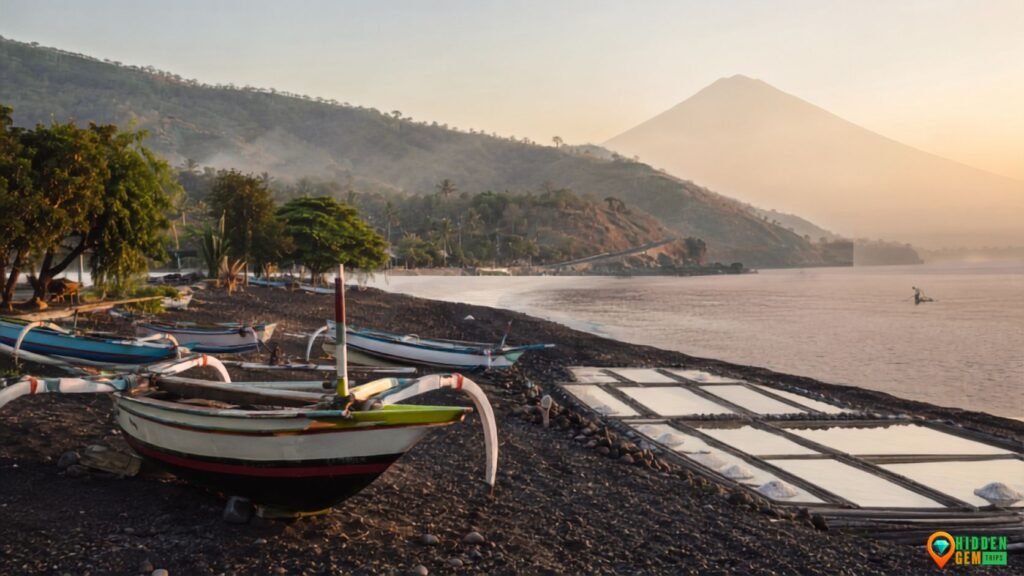
Don’t rush the transfer of your first significant Karimunjawa memory. Make the harbor and town your first stop the following morning if your ferry arrival does not allow for a peaceful orientation. Take a stroll while it’s still cool outside. Observe how supplies move, where locals purchase breakfast, which boats are getting ready to go, and how rapidly the waterfront transforms once tours start loading.
There is no “secret spot” here. It’s a method of reading the island before eating it. The harbor illustrates the importance of weather. It clarifies the logistical rather than abstract nature of fuel, groceries, water, and visitor transportation. A quick photo taken from a location marked “hidden” on the internet may not reveal as much about daily rhythm as a dish of breakfast in town.
The more comprehensive Hidden Gem Travel Guide highlights a crucial distinction for those who are unfamiliar with this type of travel: a hidden gem is more than just a location with fewer Instagram postings. When you comprehend access, local use, timing, and capacity, it is frequently a location whose value becomes more apparent. The same harbor can seem as infrastructure at midday and as the emotional hub of the trip at 6:30 in the morning, making Karimunjawa an excellent test of that idea.
This block should be purposefully left unoptimized. There are no “top five breakfast spots.” Not a timer. There is no need to create material. If you take pictures, take your time and get permission before taking close-up shots of people. Arriving mentally, rather than just physically, is the goal.
2. Don’t Waste Time; Give the Mangroves the Best Light Possible
Because mangroves are more accessible than a boat day, they are frequently sandwiched between a beach and lunch. Turn that reasoning around. While the temperature is milder and your focus is still fresh, commit a morning to the mangrove environment. Before you visit, you should read the official Karimunjawa National Park profile, which presents the islands as a protected landscape and seascape rather than an amusement park with a conservation label.
A brief observational job is necessary for a leisurely mangrove visit. Choose one, such as keeping an ear out for bird activity, observing how roots affect water flow, identifying areas where shadow affects temperature, or just taking a silent stroll. Gathering scientific data is not the task. It serves as a tool to divert your attention from the next picture to the biosphere in front of you.
Later on, this modifies behavior. Reef etiquette ceases to feel like a set of rules after spending a peaceful morning seeing how habitat and coastal protection work together. You are aware that the journey is taking place within interconnected systems. The marine biodiversity of Sabang, where the ocean is likewise viewed as a living setting rather than a blue landscape, can be compared to Karimunjawa by readers who are interested in that broader marine viewpoint.
Don’t make too much noise, stay on trails that have been established, obey park rules, and don’t take sightings of wildlife as a guaranty. When “more time” is used as a justification to get closer to animals or venture outside of designated areas, slow travel becomes reckless.
3. Adhere to the Three-Hour, One-Beach Rule
There are enough beaches in Karimunjawa to pique a collector’s interest. Oppose it. For the afternoon, pick one beach and spend about three hours there. Tanjung Gelam is well-known rather than hidden, which is precisely why it is helpful for this exercise: instead of evaluating a location based on whether it is “secret,” consider the timing, light, crowd flow, shade, water, and atmosphere you truly encounter.
When you break it down, three hours doesn’t seem like much. Parking, seeking shade, inspecting belongings, snapping pictures, and choosing a seat are typical arrival behaviors during the first 20 minutes. Next is the visit itself. Go swimming. Go through it. Take two walks along the same stretch. When appropriate, purchase a basic drink or snack. Observe how the sun’s angle shifts. Instead of running to another pin right away if the beach gets crowded, observe when the energy changes.
The idea is not to make yourself remain still. Giving a space enough time to experience multiple moods is the goal. On a five-beach loop, when every stop is assessed within the first ten minutes, that is challenging. For a more comprehensive comparison, Pacitan’s more subdued beach tour delves into a distinct Java coast where pacing and access also influence the experience.
Reducing scooter distance, parking options, frequent sun exposure when riding, and the temptation to leave baggage unattended during multiple transitions are all beneficial side effects of one continuous beach block. Sometimes “do less” is simply superior travel planning, not only esthetically attractive.
4. Reduce the Size of a Boat Day on Purpose
It’s easier to talk about leisurely travel on a boat day, but it’s toughest to really do. Naturally, tour menus compete on quantity: more islands, reefs, and photo spots. However, when half of that energy is spent getting in and out of a boat, a marine day gets shallower. Ask the operators what a day with less density may entail. A schedule based on maximum count may not be as memorable as two meaningful water stops and a leisurely island lunch.
Stop number is less important than operator quality. Find out how the group reacts to changing conditions, what reef rules are enforced, whether flotation gear is available and used appropriately, and how the guide handles visitors who are unable to swim confidently. Avoid standing on coral. Avoid touching or pursuing aquatic life. Avoid feeding wildlife in order to create a close contact. Let the interaction cease if an animal moves away.
The word “hidden” needs to be disciplined in this situation as well. It is possible to turn someone else’s low-impact location into tomorrow’s focused stop by geotagging every delicate reef or peaceful beach. Visitors are not owed a viral coordinate by a destination. When the desire to “discover” begins to surpass the location’s capacity, HiddenGemTrips’ method to determining whether a quiet destination is ready for tourists provides a helpful lens.
If snorkeling is your favorite part of the trip, plan your energy. Avoid planning an intense land loop right away, eat before boarding, have a regular bedtime the nite before, and pack enough water. The goal is to feel satisfied when you get back from the ocean, not to prove that you can still see a sunset from somewhere else.
5. Take a Ride on the Main Island Without Making It a Scavenger Hunt
Karimunjawa’s response to the notion that a boat is necessary for every island visit is a road trip. Only rent a scooter if you are able to do so legally, have the appropriate license for the vehicle class, are comfortable on the local roads, and are prepared to wear a helmet. Use a driver or another form of transportation if any of those requirements are not met. “Freedom” is not a valid justification for making a new route a test of one’s abilities.
Next, take off half of the pins from your map. Allow the remainder to be open stops while maintaining one broad direction and one anchor, such as a beach, a meal, or a view. A road day’s most memorable moments are frequently a store that appears to be bustling with locals, a drink by the side of the road that is shaded, or a stretch of coastline that makes you want to stop securely.
The same principle works on larger Indonesian routes. The West Java weekend escapes guide and Garut Highlands guide both show why the road between headline stops can be part of the trip. On Karimunjawa, the scale is smaller, so the temptation is to over-plan even more aggressively. Do not.
Avoid riding fast on unknown roads after dark, especially if you don’t know the terrain, lighting, animals, or traffic patterns. Keep in mind the gasoline and phone batteries. If the weather gets worse, shorten the circle without viewing it as a failure. A slow road day is successful when the island is still bigger than your schedule.
6. Allow The Sunset to Transform into Dinner Rather Than Making Another Transfer
Sunset is often treated like a reservation: arrive, snap a photo, and leave. Try a more natural evening arc. Choose a spot where the sun is setting, stay long enough for the color to fade, and then allow dinner to become an extension of the same experience rather than a new island attraction.
Going back to the main settlement or evening food area for dinner can be more grounding than trying to find the “best” restaurant. When pricing are unclear, inquire about them. Place an order for a quantity you can complete. Try the local seafood if it suits your diet and what the vendor has to offer, but keep in mind that responsible travel is not determined by how unusual the plate appears. It is determined by how politely you shop, dine, take pictures, and engage with others.
The site’s respectful village travel checklist applies even to an island tourist destination: people are not atmosphere. Ask before shooting close-up pictures, avoid blocking work areas, use drones within the limitations of current legislation and local comfort, and don’t make ordinary family or religious life into content without permission.
Spending is also shifted into the times when local companies are a part of your experience rather than just providers in between tours thanks to this sunset-to-dinner habit. Without having to create a unique “community tourism” activity, you get a more balanced travel economy and a slower evening.
7. Don’t “Recover” From A Blank Half-Day
The least picturesque and most radical Karimunjawa suggestion in this handbook is to set aside one half-day for nothing. Don’t reserve it. Don’t covertly call it “backup snorkeling.” Keep it empty.
If the weather is nice, take use of it for a leisurely breakfast, laundry, swimming close to your lodging, reading, photo editing, coffee, a nap, or a discussion with your host. The blank block can accommodate any weather-related changes to an earlier activity without requiring all of the remaining plans to be adjusted. In any case, time has served its purpose.
This is not philosophy masquerading as laziness. Whether you recognize it or not, traveling by ferry involves uncertainty. A blank block is only the system’s obvious slack. The idea is similar to the seven-day itinerary concepts seen elsewhere on HiddenGemTrips: an itinerary gains strength when there is room for actual travel in between the scheduled sections.
The more difficult requirement is to avoid “recovering” the blank half-day at the last minute out of guilt. The optimization issue you were attempting to avoid is recreated by that instinct. Don’t do one thing. You can have reasons to go back to a place you truly enjoyed.
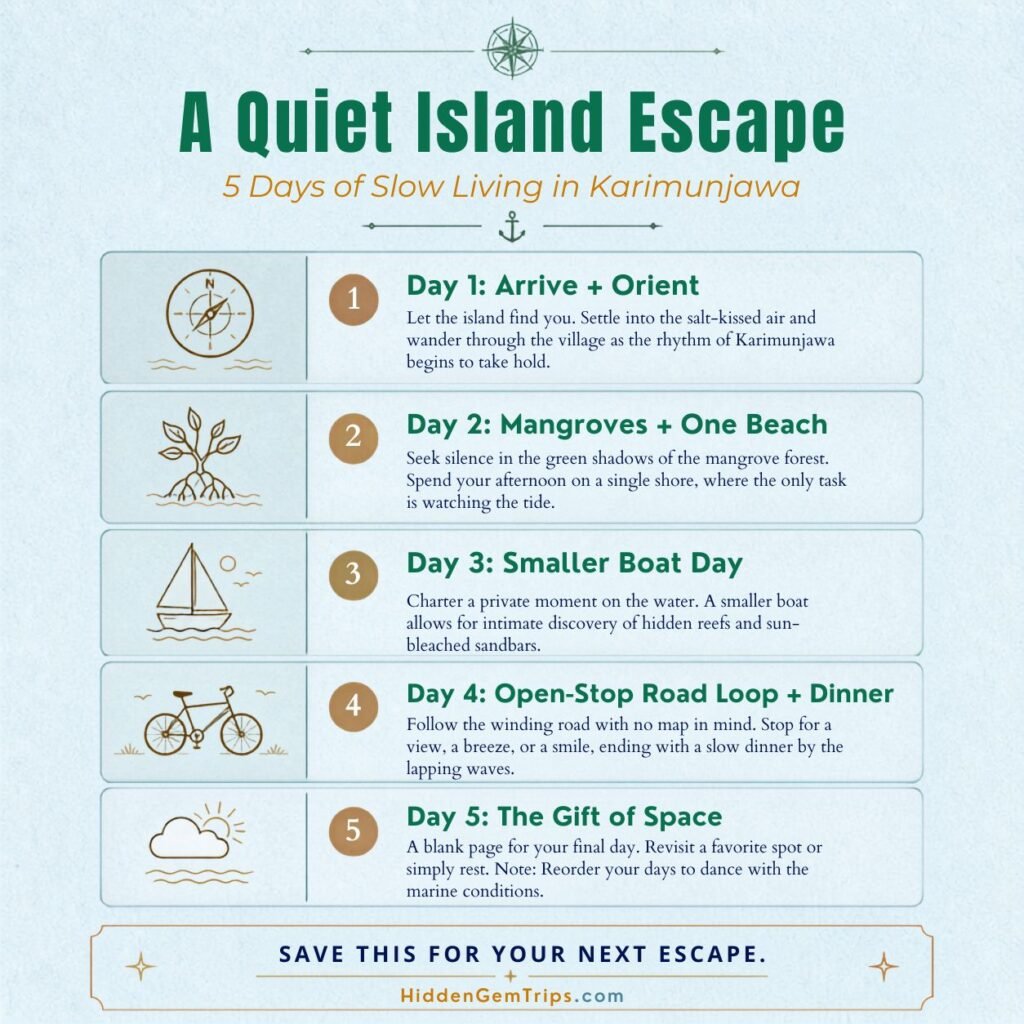
A Slow 5-Day Itinerary for Karimunjawa
This sample is purposefully light. It should be rearranged based on real boat schedules, maritime predictions, park guidelines, and operator availability. It is based on a main-island base. Instead of using the ferry day as a precise connection, think about staying the last nite on the mainland if your next flight or train is costly or rigid.
| Day | Morning | Afternoon / evening | Why it stays slow |
| Day 1 | Travel and settle in | Town orientation; easy dinner | No major tour immediately after ferry arrival |
| Day 2 | Mangrove-focused morning | One beach for three hours; sunset | Only two anchors, both land-based |
| Day 3 | Smaller boat day | Long lunch; early night | Marine day gets the energy it deserves |
| Day 4 | Open-stop road loop | Sunset flows into dinner | Exploration without a checklist race |
| Day 5 | Blank / weather buffer | Departure according to verified schedule | Slack absorbs weather or becomes genuine rest |
Be brutal if you only have three days and two nights. Don’t act like you have a five-night schedule crammed into a weekend; instead, choose a fuller land day or a marine day. Refrain from adding a new island every day if you have a week. Instead, add a second peaceful beach, longer mornings, frequent cafés, or an additional weather margin.
The Indonesia budget travel practices guide is excellent for cost discipline, but the underappreciated Indonesia places guide can offer suggestions for routes for readers planning a more comprehensive vacation to Indonesia. The ideal way to experience Karimunjawa is as a stand-alone island block rather than as an additional two-day stop on a hectic Java schedule.
Spend Less on Attractions and More on Slowness
Slow travel is frequently marketed as being inherently inexpensive. That’s just too easy. Although staying longer includes lodging and meals, it can lower the daily cost of hurried transfers. “Is slow cheaper?” is not a useful question. “Which spending only creates motion, and which spending creates calm?” is the question.
| Budget line | Spend deliberately on | Do not underestimate |
| Access | Reliable ferry/boat bookings from current sources | Buffer accommodation if a missed connection would be expensive |
| Accommodation | A base you are happy to return to midday | Location friction if every meal or departure needs a long transfer |
| Marine day | Operator behavior, safety briefing, realistic group plan | Weather cancellation, motion-sickness needs, food/water |
| Land transport | Helmet, competent driver/rider decision, fuel | Night riding, poor weather, unfamiliar roads |
| Food | Local meals you can enjoy without rushing | Cash availability and price differences by setting |
| Contingency | A modest disruption reserve | Rebooking transport after ferry changes |
A strict “Karimunjawa costs exactly X per day” figure should not be published unless you are ready to stick with it. Holiday prices, accommodation rates, boat packages, and ferry fares all fluctuate. An undated number posing as evergreen reality is not helpful, but a range dated to a particular month may be. For the same reason, this guide refers readers to current operator or official sources rather than quoting a set ferry fare.
Friction reduction is a good spending test. It may be more cost-effective to pay a little bit more for a mainland buffer nite, a base that allows you to stroll to supper, or a boat operator who speaks well than to spend the same amount on an additional attraction. Travel value is the quality of the day that is created by the purchases made, not the quantity of goods acquired.
Traveling Sensibly in a Marine National Park
Karimunjawa is a national park containing mangrove, coastal, and marine environments; it is more than just an island playground. A variety of inhabited and deserted islands are described in provincial tourism literature, which also highlights sea turtle protection in the surrounding region. Rules and zoning are subject to change, so don’t assume that your entry from the previous year is still valid; instead, adhere to the most recent national park guidelines.
| Situation | Better practice |
| Snorkeling / swimming | Use flotation if needed; do not stand on coral; keep hands off marine life; follow guide instructions. |
| Wildlife encounter | Keep distance; never chase, hold, feed, or block an animal for a photo. |
| Mangroves | Stay on designated routes; keep noise low; do not remove plants or natural objects. |
| Beaches | Carry out what you carry in; reduce disposable packaging; do not leave cigarette butts or food waste. |
| People / villages | Ask before close portraits; respect prayer, family, and work spaces; avoid intrusive drones. |
| Boat operator choice | Prefer clear safety practices and responsible behavior over the highest number of stops. |
The Mentawai cultural travel guide serves as a helpful reminder that access is never the same as entitlement if your broader Indonesian itinerary encompasses more delicate communities. That idea holds true for both people and ecosystems in Karimunjawa: just because a boat can reach a location doesn’t mean that tourists should throng it, geotag it, or demand a close-up look at the local fauna.
Things to Bring Without Packing Too Much
An expedition loadout is not necessary for Karimunjawa. Water, heat, boat movement, and the fact that wet things stay wet longer than you anticipate are all factors to consider when packing. Several “just in case” outfits are less practical than a compact dry bag or dependable waterproof pouch for your phone and documents. Add a reusable bottle, clothes that protects you from the sun, grip-enhancing sandals or shoes, any motion-sickness prevention technique you already know works for you, a simple prescription you often take, and enough cash to cover your travel expenses.
Instead of copying a complete checklist below, use the site’s island packing technique for a fuller system. Packing light is a preferable option for remote trips if your trip includes ferries and lengthier overland travel.
Particularly if you are carrying a single cabin-size bag, a tiny set of compression packing cubes might assist keep dry clothes apart from the turmoil of frequent boat and beach days. This is an affiliate link; only purchase if it resolves a packing issue you are now facing. Purchasing a new organizer that you won’t use is less environmentally friendly than using the plastic bag you currently own.
In Conclusion, Depart with Fewer Pins and More Pleasant Memories
Karimunjawa can become gorgeous without assistance. Travelers must give it enough time to observe the harbor as more than a point of departure, the mangroves as more than a boardwalk, a beach as more than a place to take pictures, and a reef as more than a tour package backdrop.
This Karimunjawa Travel Guide’s main contention is that. Scooters, island hopping, snorkeling, and sunsets are not rejected by the seven lazy island ideas. They serve as a means of preventing those events from condensing into a lengthy checklist. Every half-day, use one anchor. Don’t let your ambition overwhelm the boat day. Let’s have dinner in the evening. Keep a blank block safe. Before you put your trust in the calendar, check the sea.
And if you leave with one beach unvisited and one island name still on the map, good. Hidden-gem travel is healthier when a destination is allowed to remain larger than the content we make from it.
Frequently Asked Questions
1. If I don’t dive, is Karimunjawa still worth seeing?
Indeed. A non-diver can create a compelling trip around snorkeling at a suitable comfort level, beaches, mangroves, road-based exploration, harbor and town life, sunsets, food, and purposefully unstructured time. Diving can be a huge draw, though. If you don’t want to go in the water at all, give land days greater importance and only go on boat excursions if you enjoy the voyage and island stops.
2.In Karimunjawa, how many days do I need?
For the slow approach in this guide, four nites is a good minimum; five nites allows extra space for a weather buffer and a marine day. A two-night excursion may be feasible, but it puts pressure on activities and is far more susceptible to ferry schedule. You might choose to spend your last nite on the mainland if you have an expensive onward connection.
3. Which month is ideal for traveling to Karimunjawa?
In general, official tourism guidelines indicate that the best time to travel is from April to October. That does not ensure that your dates will be peaceful. Near departure, review the operator/port guidance and BMKG maritime forecasts. The ultimate choice is influenced more by the weather, wind, and wave conditions than by the month name alone.
4. Is it possible to travel to Karimunjawa without renting a scooter?
Indeed. Scooters are useful for exploring the land on your own, but they shouldn’t be required. Use a driver or other locally accessible transportation and plan your day around fewer stops if you are unlicensed, unconfident on local roads, or just don’t want to ride. Since the slow framework doesn’t rely on gathering far-off pins, it actually functions effectively without a scooter.
5. What happens if bad weather causes ferries to be delayed?
Don’t force a crew to operate against regulations; instead, obey the operator, port, and official weather instructions. If at all feasible, make accommodations and future plans flexible enough to accommodate a delay. The safest itinerary planning avoids placing an expensive, time-sensitive link right after the island leg and instead considers that maritime transportation may alter.
Disclaimer Regarding Travel and Affiliates
Travel conditions in Karimunjawa are subject to change. (See Ferry schedules, tickets, vessel assignments, sea forecasts, road conditions, park zones, entrance requirements, and municipal regulations, which may differ from those in effect when this article was reviewed on August 20, 2026.) Check BMKG marine forecasts, follow local authority and Karimunjawa National Park directions, and confirm transportation with current operators and official sources directly.
This article offers general travel information; it does not ensure weather, transit, personal safety, or suitability for any specific traveler. It may contain affiliate links; HiddenGemTrips may receive a commission from qualified purchases at no extra cost to the reader. Affiliate agreements have no bearing on editorial choices.