
Research-based travel guide | Last checked: 9 November 2026 | Field-tested: No
Madagascar parks reward travelers who plan around habitat, not a checklist of famous animals. An indri’s call in an eastern rainforest, a sifaka moving through dry forest, and a gecko resting on limestone are not interchangeable “lemur sightings”; they belong to different landscapes, travel corridors, and rhythms. The island’s long geological isolation has produced exceptionally high endemism. UNESCO reports that the eastern Rainforests of the Atsinanana support roughly 80–90 percent endemism across groups, while the western dry-forest system protects a very different set of species and ecological communities.
That difference is the point of this guide. The seven trips below span wet forest, dry forest, mountain slopes, caves, karst pinnacles, and a peninsula where forest meets reef. Some are comparatively accessible; others are expedition-like. A park name on a map does not tell you how long the transfer takes, whether a trail is physically demanding, or whether the park you imagined is open in the season you have chosen. In Madagascar, logistics are part of the wildlife experience.
How to choose among Madagascar’s parks
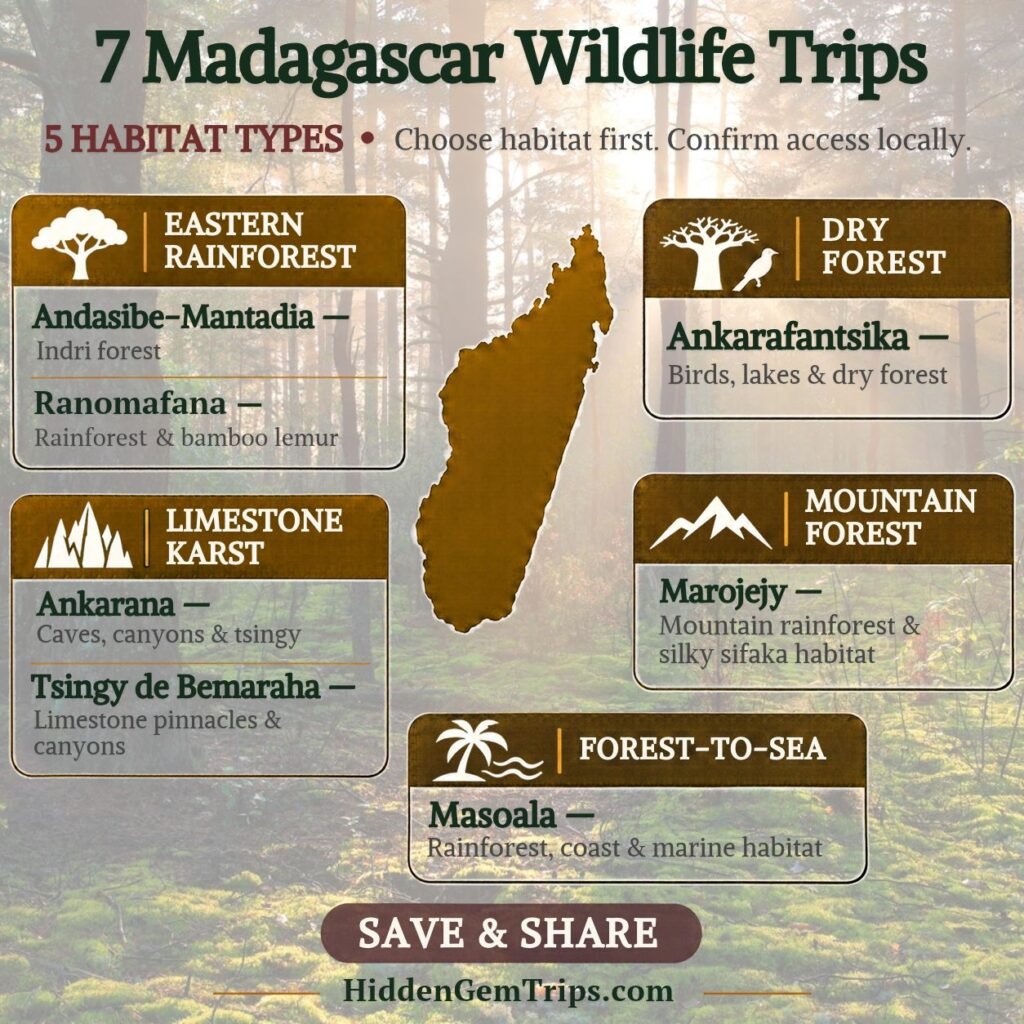
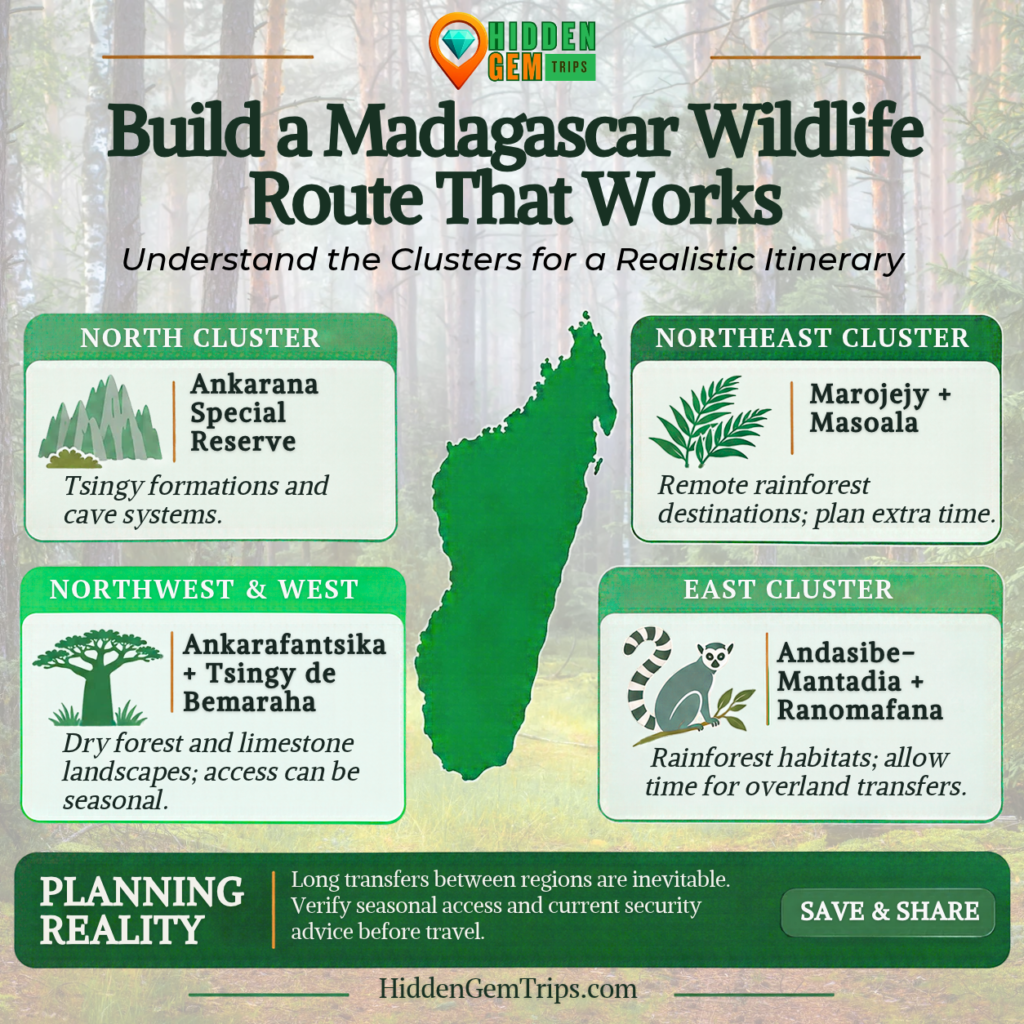
Start with the landscape you most want to understand. For a first encounter with the indri and an eastern rainforest, Andasibe is the natural gateway. For a more varied highland forest walk, Ranomafana adds steep terrain and a broad range of habitats. Ankarafantsika and Ankarana show the western and northern dry-country story. Marojejy and Masoala reward travelers willing to devote more time to the northeast. Bemaraha is a geological spectacle as much as a wildlife destination, but its access is seasonal and demanding.
Madagascar is the world’s fourth-largest island, yet road travel can be slow. The U.S. State Department warns that intercity journeys are difficult and time-consuming, roads can be dangerous at night, and domestic flights face frequent cancellations. This is why the two-base itinerary method matters: build a trip around geographic clusters rather than trying to stitch every habitat into one rushed loop. A useful planning framework for remote transfers is also covered in the site’s guide to the costs travelers forget.
| Park or protected area | Habitat-led reason to go | Effort and access character | Best fit |
| Andasibe-Mantadia / Analamazaotra | Indri calls, humid forest, night walks nearby | Easiest major forest gateway from Antananarivo; Mantadia trails need more time | First Madagascar wildlife trip |
| Ranomafana | Elevation changes, rainforest streams, bamboo forest | Steep, wet trails; long road leg south | Walkers who want forest diversity |
| Ankarafantsika | Dry forest, lakes, birdlife and sifaka habitat | RN4 road corridor; hot and exposed in places | Birders and westbound itineraries |
| Ankarana | Tsingy, caves, canyon and dry forest | North-country road transfer; guided route choice matters | Karst landscapes and mixed wildlife |
| Marojejy | Mountain forest zones and highland trekking | Remote northeast; multi-day commitment | Fit hikers seeking a slower expedition |
| Masoala | Lowland rainforest, coast, reef and mangroves | Boat and weather-dependent logistics | Travelers with time for a remote coast |
| Tsingy de Bemaraha | Limestone pinnacles, canyon and dry forest | Seasonal access; lengthy overland and ferry logistics | Adventure travelers with flexible dates |
The table is a comparison tool, not a promise of sightings or a substitute for current local information. Protected-area rules and route conditions can change. Confirm opening status and permitted circuits directly with Madagascar National Parks or the site’s local office. For broader preparation, use a realistic seven-day itinerary framework as a starting point, then add transfer days rather than squeezing the drives into wildlife time.
1. Andasibe-Mantadia: Hear the forest before you see it
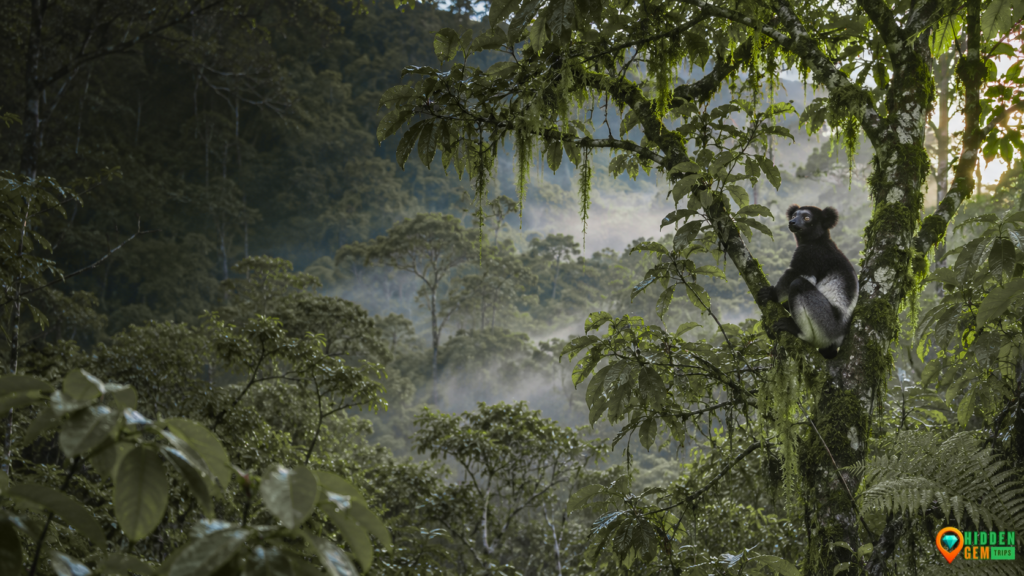
Andasibe is often the first rainforest stop on a Madagascar itinerary because it is reachable from the capital by road and offers a vivid introduction to eastern forest. The headline animal is the indri, the largest living lemur, whose territorial calls can travel a surprising distance through the canopy. The best way to approach this forest is to listen, pause, and let a guide interpret the calls; rushing from one landmark to the next makes the forest feel smaller than it is.
The area is commonly discussed as Andasibe-Mantadia, but visitors should understand that Analamazaotra and Mantadia are distinct park experiences. Analamazaotra is the more accessible forest walk near Andasibe village. Mantadia lies farther along the road and offers a more extensive, less immediate forest outing. Madagascar National Parks lists Mantadia’s biodiversity as including 14 lemur species, 108 bird species, 51 reptiles, and 84 amphibians. Those are park-level recorded totals, not a checklist a visitor should expect to complete in a day.
A strong two-night plan gives you one early morning walk, one optional night walk with an authorized local guide, and enough time for Mantadia if conditions and transport allow. Night walks are especially useful for noticing how the forest changes after dark: mouse lemurs, chameleons, frogs, and insects may become easier to detect, but sightings are never guaranteed. Keep lights on the trail and do not touch or handle animals.
This is the most sensible choice for a short trip that begins in Antananarivo, but it is not a miniature version of every Madagascar ecosystem. Add another region if you want dry forest, karst, or coastal habitat. Travelers who like pairing wildlife with local context can borrow the site’s approach to slower, place-led travel: stay long enough to learn the difference between a loud call and a visible animal.
2. Ranomafana: Follow the altitudinal changes
Ranomafana National Park is not simply “another rainforest.” Its steep slopes, streams, bamboo patches, and changes in elevation create a more layered walk than a quick glance at the map suggests. Madagascar National Parks describes 14 lemur species recorded in the park, along with 125 bird species and 101 amphibians. The park is also a major water source, so the streams and wet ground are part of the ecological story, not scenery around it.
The experience is physical. Trails can be muddy and steep, and warm, humid conditions make a short distance feel longer. Choose a route with your guide according to fitness, recent weather, and the animals or habitats you hope to understand. A shorter circuit can still be rewarding if it leaves room to stop and observe. The aim is not to accumulate kilometers; it is to notice how species and vegetation change across the slope.
Ranomafana pairs naturally with the RN7 southbound journey, but distances should be measured in travel time, not a straight line. Give the transfer a full day where needed and avoid planning a strenuous trail immediately after a long drive. A small dry bag, quick-drying layers, and reliable footwear are more useful than an overpacked camera kit; the remote-road gear checklist covers the practical side of rough transfers.
The park forms part of the UNESCO-listed Rainforests of the Atsinanana, a serial World Heritage property of six eastern national parks. That designation is a reminder that the value lies in connected ecological processes and threatened species, not only in a single charismatic lemur. Consider staying in the area long enough to support local guiding and accommodation rather than treating the park as a dawn stop between distant towns.
3. Ankarafantsika: Watch the dry forest wake up
Northwest Madagascar offers a dramatic change of mood. Ankarafantsika protects dry deciduous forest, savanna, wetlands, and lakes; it is not the lush green image many travelers associate with Madagascar. The park is a strong choice for birders and for anyone interested in how wildlife uses a seasonal landscape. Madagascar National Parks reports eight lemur species, 127 bird species, and a wide range of reptiles and plants within the protected area.
The most revealing visit is not necessarily a long hike in midday heat. Start early, when birds are active and the forest is cooler, then choose a lake or forest circuit with your guide. Ask about the difference between a lake-edge habitat and dry woodland. That simple question can turn a list of sightings into an understanding of where animals feed, shelter, and move as water availability changes.
Ankarafantsika also adds a valuable westward stop on the RN4 corridor between Antananarivo and Mahajanga. It can make geographic sense alongside a west-coast plan, but it should not be treated as an easy detour if your schedule is already tight. The broader lesson is similar to planning quiet valleys beyond a headline destination: the side route is worthwhile only when you allow enough time to experience it rather than drive through it.
Seasonality matters. Dry periods may make some routes easier, while the green season can bring flowering, water, and different wildlife activity. Ask the local office what is currently accessible and what time of day is best for the circuit you plan to walk. For a bird-focused itinerary, bring binoculars and a field notebook; a powerful zoom lens is optional, patience is not.
4. Ankarana: Read the limestone as habitat
Ankarana Special Reserve in northern Madagascar is a place where geology controls the itinerary. Tsingy—sharp limestone pinnacles and ridges—create a maze of crevices, caves, canyons, and small pockets of vegetation. Madagascar National Parks describes a range of dry, canyon, and riverine forests here, with 670 recorded plant species, 77 percent endemic to Madagascar and 39 reported as unique to Ankarana. The reserve is managed with local community participation, an important detail for travelers choosing where their park fees and guiding spend go.
The wildlife experience is not just “lemurs in a dramatic setting.” A guided walk can reveal how plants root in thin soils, where shade holds moisture, and how birds and reptiles use the edges of the rock formations. The reserve’s caves and underground water systems are especially sensitive, so follow the route and safety instructions given by the local guide. Tsingy terrain can be sharp, hot, and physically awkward; closed shoes and a realistic assessment of height or balance concerns matter.
Ankarana is often paired with northern destinations such as Montagne d’Ambre or the Diego Suarez area, but the route should be built around actual road conditions and current park access. Official visitor information instructs visitors to complete formalities at the Mahamasina reception office before entering. Confirm the exact entrance and circuit before departure, because a name like “Ankarana” can refer to a broad region as well as the protected reserve.
This is a particularly good stop for travelers who want to compare dry forest with eastern rainforest. It also complements the site’s respectful village travel checklist: park visits take place within living landscapes, and respectful behavior includes listening to local guidance, paying agreed fees, and not treating communities as scenery.
5. Marojejy: Make the climb part of the wildlife trip
Marojejy, in the northeast, suits travelers who want the walk itself to shape the trip. The park’s mountain forest rises through different vegetation zones, and the experience unfolds gradually: humid lowland forest gives way to cooler upland environments as the trail gains elevation. This is the setting associated with the silky sifaka, but a visit should not be sold as a guaranteed encounter. Weather, route, time, and animal movement all matter.
Marojejy is a serious logistical commitment compared with Andasibe. Plan several days for the park and surrounding transfers, ask the local office about current trail and camp conditions, and decide honestly whether the group can handle the elevation and wet ground. The value is in moving slowly through changing forest, not in reaching a camp at any cost. Guides and porters are part of the local trekking economy; agree on services and costs clearly before setting out.
The park is one of the six components of the UNESCO Rainforests of the Atsinanana. UNESCO notes that the eastern rainforest property protects exceptional endemic diversity and threatened species, while also facing pressures that require coordinated management. That makes a small-group, locally guided visit more than a personal preference: it keeps the visit legible and manageable in a sensitive place.
Do not combine Marojejy with a distant park simply because both appear in the northeast on a small map. Internal connections can be slow and weather-sensitive. If Marojejy is the main purpose of the trip, protect the days around it. The site’s light-packing guide for remote expeditions is a useful starting point: carry what makes a wet multi-day walk safer, and leave the rest behind.
6. Masoala: Where rainforest reaches the sea
Masoala National Park offers one of the most unusual combinations in the country: lowland rainforest descending almost to the coast, with marine habitats, reefs, seagrass, and mangroves nearby. Madagascar National Parks describes forest from sea level to 1,311 meters and notes that the protected area includes both land and marine environments. That makes Masoala a better choice for travelers interested in ecological transitions than for anyone trying to tick off one flagship species.
The trip demands time. Access often depends on boat transfers, local weather, and arrangements with community-based stays or operators. Build in flexibility rather than stacking a boat arrival, a long walk, and a departure connection on the same day. Ask what the boat plan is if wind or sea conditions change, and make sure your accommodation and park arrangements are confirmed before leaving the main transport corridor.
The forest-and-coast combination invites a different kind of wildlife day: a morning forest walk, a rest during the heat, and perhaps a later coastal or marine activity if conditions are suitable. Do not assume snorkeling or boat wildlife will be available on demand. Reef health, visibility, weather, and local rules govern what is responsible and feasible. Never collect shells, coral, plants, or animal souvenirs.
Masoala is a natural choice for a longer northeast itinerary, possibly paired with Nosy Mangabe if local transport and permits align. It is not a quick add-on from Antananarivo. Travelers planning this kind of remote route should review how to spot destinations that are not yet visitor-ready and use that same discipline here: confirm real operating details, not just a polished itinerary description.
7. Tsingy de Bemaraha: Explore a wildlife landscape in three dimensions
Tsingy de Bemaraha is famous for its limestone “forest,” but the park’s wildlife story is more interesting when read vertically. Dry forest, canyon, underground passages, and limestone pinnacles create different microhabitats in close proximity. UNESCO’s Andrefana Dry Forests property includes Bemaraha as one of its components and describes the western system as a distinctive center of endemism, separate from the humid eastern forests.
This is a demanding trip, and the access question comes first. The southern approach via Bekopaka involves a long overland journey and river crossings; during the wet season, roads can become difficult and visitor infrastructure may close. Madagascar National Parks and protected-area information advise travelers to confirm access with local park offices. Do not book a tight onward flight or a fixed same-day connection after leaving the park. The journey can take longer than the map suggests, and conditions change.
Inside the park, choose a circuit that matches your comfort with ladders, bridges, exposure, and uneven rock. The famous Grand Tsingy routes are not appropriate for every traveler. A shorter route can still reveal the geology and dry-forest ecology without turning the day into an endurance test. Bring water, sun protection, and sturdy shoes, then follow the guide’s instructions at every exposed section.
Bemaraha works best as the centerpiece of a west Madagascar journey, not as a side trip from the capital. It also pairs conceptually with Ankarana: both show how limestone shapes habitat, but they belong to different regions and should not be treated as nearby stops. The site’s Tana Toraja slow-travel feature makes a related point about allowing local routes to set the pace; in Bemaraha, patience is a practical requirement.
A practical route logic for a first Madagascar wildlife trip
For a first visit of about two weeks, one coherent approach is to combine Andasibe with a southbound route that includes Ranomafana, then leave time for the highland towns and transfers between them. This gives you two eastern rainforest experiences with different terrain. It will not cover the island’s dry west or remote northeast, and that is a reasonable trade-off.
A second option is a northwest-focused trip: Ankarafantsika, then a longer westward journey toward Bemaraha if the season and road conditions permit. This creates a dry-forest and karst story, but requires flexibility and extra travel days. A northern itinerary can combine Ankarana with other northern protected areas; Marojejy or Masoala should generally be treated as the central objective, not a short extension.
Avoid trying to connect all seven parks in a single short holiday. A map compresses distance; roads, ferries, weather, vehicle availability, and flight changes expand it again. For travel days, plan daylight arrivals, build a spare day into remote sections, and avoid road travel after dark. The current UK travel advice for Madagascar and the U.S. country advisory should be reviewed close to departure. Their security guidance can change, and local conditions may differ by region.
Budget for the full park experience, not only the entrance ticket: guide fees, transport, lodging, meals, porters where appropriate, and possible weather delays. Madagascar National Parks announces a revision of park entrance fees from 1st November 2026 (previously deferred) with rates depending on the park and the category. Local reporting describes public debate over implementation, so confirm the amount and collection procedure directly before travel.
Check the current official tariff directly before travel. A generic older blog post may show outdated figures. Travel insurance should explicitly address medical evacuation and remote-area access; compare policy terms carefully, and consider SafetyWing’s travel medical cover only after confirming it meets your trip, residency, and activity requirements. This is a commercial link, not a recommendation that one policy fits everyone.
For long drives and wet trails, practical basics can make the day easier. Consider a compact dry bag for electronics and spare layers, a refillable water bottle, and binoculars for wildlife watching; for examples and sizing, see travel dry bags on Amazon. Replace the placeholder tag with your approved Amazon Associates ID before publishing, and disclose affiliate relationships near the links.
Responsible wildlife watching and field etiquette
- Keep a respectful distance and never touch, feed, chase, bait, or surround wildlife for a photograph.
- Use the park’s authorized guide and follow the route, especially in caves, on exposed tsingy, and during night walks.
- Keep voices low and lights on the path. Avoid flash unless the guide and park rules explicitly allow it.
- Do not share precise locations of sensitive species online when that could increase disturbance or collection pressure.
- Pay local guides and community services fairly and openly. Ask first before taking photos of people or private places.
- Pack out all of your waste including food scraps and batteries. • Do not take plants, rocks, shells, feathers or other natural objects.
Wildlife tourism does not automatically fund conservation simply because it takes place inside a park. Ask how fees are collected, use official channels, and choose locally accountable services where possible. The aim is a trip that leaves the habitat and the people who live beside it with a fairer balance than a quick visit does.
The takeaway: choose a habitat, then build the route
The most rewarding Madagascar parks itinerary is rarely the one with the most pins on a map. Choose the habitat that genuinely interests you: indri forest, steep rainforest, dry woodland, northern limestone, northeast mountain forest, coastal rainforest, or the stone labyrinth of Bemaraha. Then build the route around realistic travel days and current park access.
That approach makes room for uncertainty, which is part of wildlife travel. You may hear an animal and never see it. You may spend an hour with one forest edge and learn more than you would from racing between five viewpoints. Madagascar’s wildlife is not a performance scheduled for visitors; it is a living system, and the best trip begins by giving it time.
Frequently asked questions
1. Which Madagascar park is best for a first-time visitor?
Andasibe-Mantadia is often the most practical first rainforest experience from Antananarivo and is known for indri habitat. It is a gateway, not a complete picture of Madagascar’s wildlife. Choose a second region only if you can give the transfers enough time.
2. When is the best time to visit Madagascar’s national parks?
There is no single best month for every park. The dry season, often roughly May to October, can make many routes easier, but wildlife activity and conditions vary by region. Rainy-season travel can affect roads and park access, especially in the west. Check park specific updates and cyclone forecasts before you make your bookings.
3. Is a guide necessary for visiting parks in Madagascar?
Many park trails require or strongly prefer guided visits. Rules vary by protected area and activity. A local guide also helps identify wildlife, interpret habitat, and keep visitors on safe routes. Confirm the current rule with the park office before arrival.
4. How many parks should I include in a two-week trip?
Usually two or three areas in one geographic corridor are more realistic than trying to see all seven. Overland transfers can be slow, and domestic flights may change. Keep at least one flexible day for remote routes and weather-related delays.
5. Will Madagascar raise park fees in 2026?
Madagascar National Parks announced revised entrance fees effective 1 November 2026 after an earlier schedule was postponed. The amount depends on the park and visitor category. Confirm the current tariff with Madagascar National Parks or the local park office; do not rely on a fee quoted by an older article.
Disclaimer
This article is a research-based planning guide, not a guarantee of wildlife sightings, road access, safety, medical suitability, or park opening status. Conditions, fees, conservation rules, travel advisories, and transport schedules can change. Confirm details with Madagascar National Parks, local authorities, a reputable local operator, and your insurer shortly before departure. Affiliate links may earn the publisher a commission at no additional cost to the reader. The author has not personally field-tested the routes described.