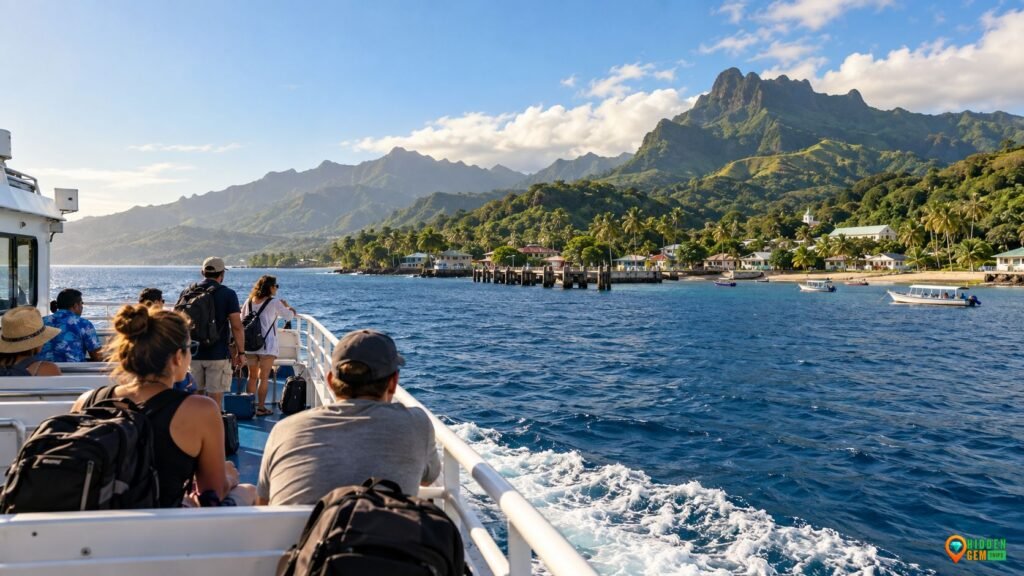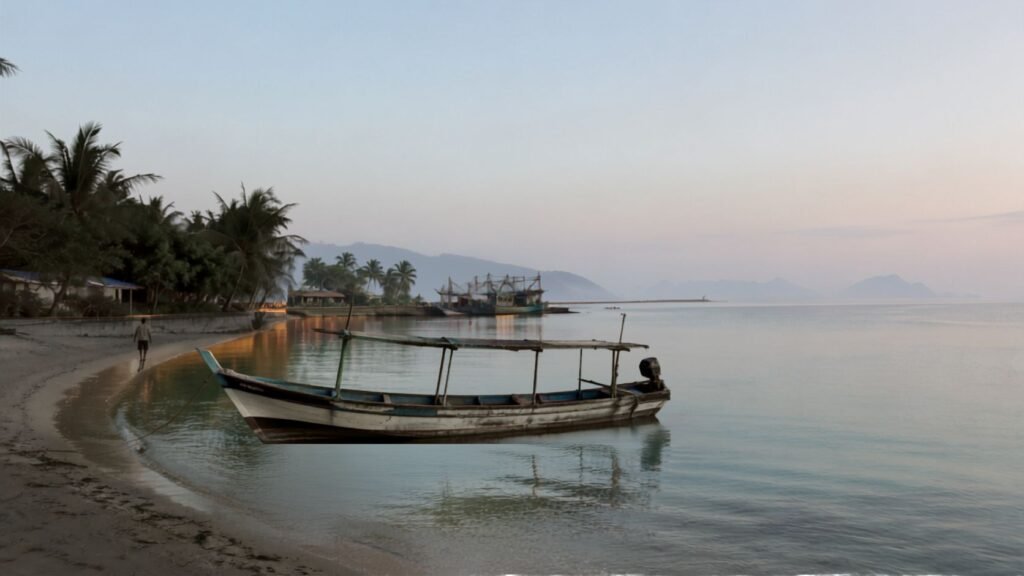

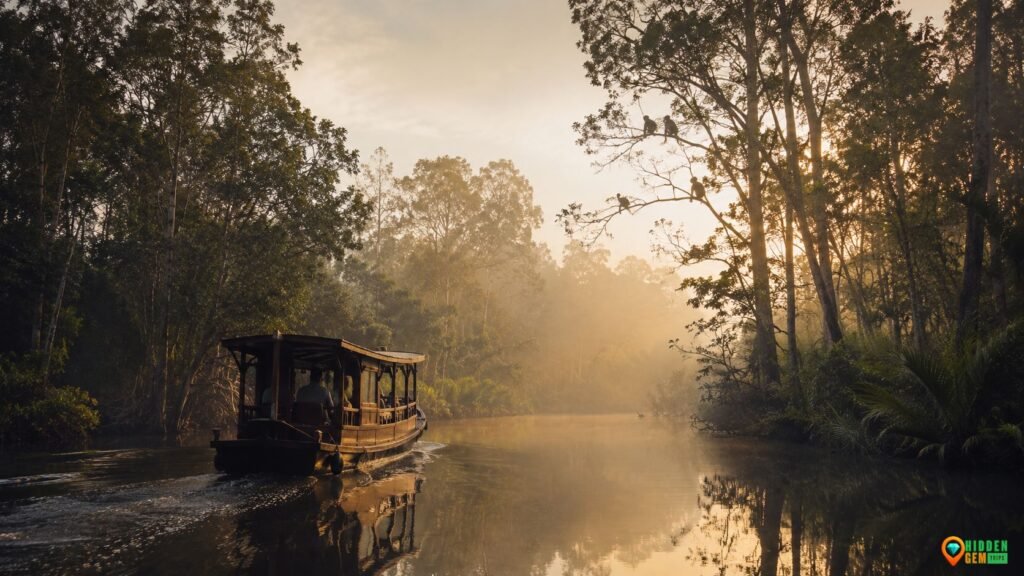
Tanjung Putting, beyond wildlife cruises, is the version of Indonesian Borneo many travelers almost miss. Most visitors arrive with one mental image: a wooden klotok moving through a brown-green river while orangutans swing somewhere in the forest. That image is not wrong. It is one of the reasons Tanjung Puting became internationally known. But it is incomplete, and the incomplete version can turn a living landscape into a three-day animal checklist.
The better trip begins with a shift in attention. Yes, you come for the orangutans, proboscis monkeys, hornbills, and the strange quiet of peat-swamp forest. But you stay awake for the river villages, the boat crew’s daily rhythm, the changing color of the Sekonyer River, the food cooked in narrow boat kitchens, the way local guides read water like a map, and the small negotiations that keep tourism, conservation, and community life from falling apart. That is the story most travel itineraries compress into a line item. Big mistake. Tiny font, huge meaning.
For HiddenGemTrips readers, this matters because Tanjung Puting is not simply a wildlife cruise. It is a river-based cultural landscape wrapped inside one of Indonesia’s most important conservation areas. The UNESCO Man and the Biosphere profile for Tanjung Puting describes a biosphere reserve and national park on the Tanjung Peninsula in southern Borneo, with swampy alluvial areas between Kumai Bay and the Seruyan River and a diversity of lowland, freshwater swamp, heath, peat-swamp, mangrove, and coastal forest ecosystems. That ecological mix is exactly why the journey feels bigger than the brochure.
It is also why this article does not treat Tanjung Puting as a “see orangutans and leave” destination. That kind of travel is easy to sell, but it is too thin. A more useful guide should help travelers notice the local systems that make the trip possible: the port town of Kumai, the gateway town of Pangkalan Bun, the boat families and crews, the riverside settlements, the food supply chain, the conservation rules, the research history, and the quiet responsibilities that come with entering fragile habitat. For readers building hidden gem travel planning around experience rather than bragging rights, Tanjung Puting rewards slower attention.
Why Tanjung Puting Beyond Wildlife Cruises Deserves a Slower Look
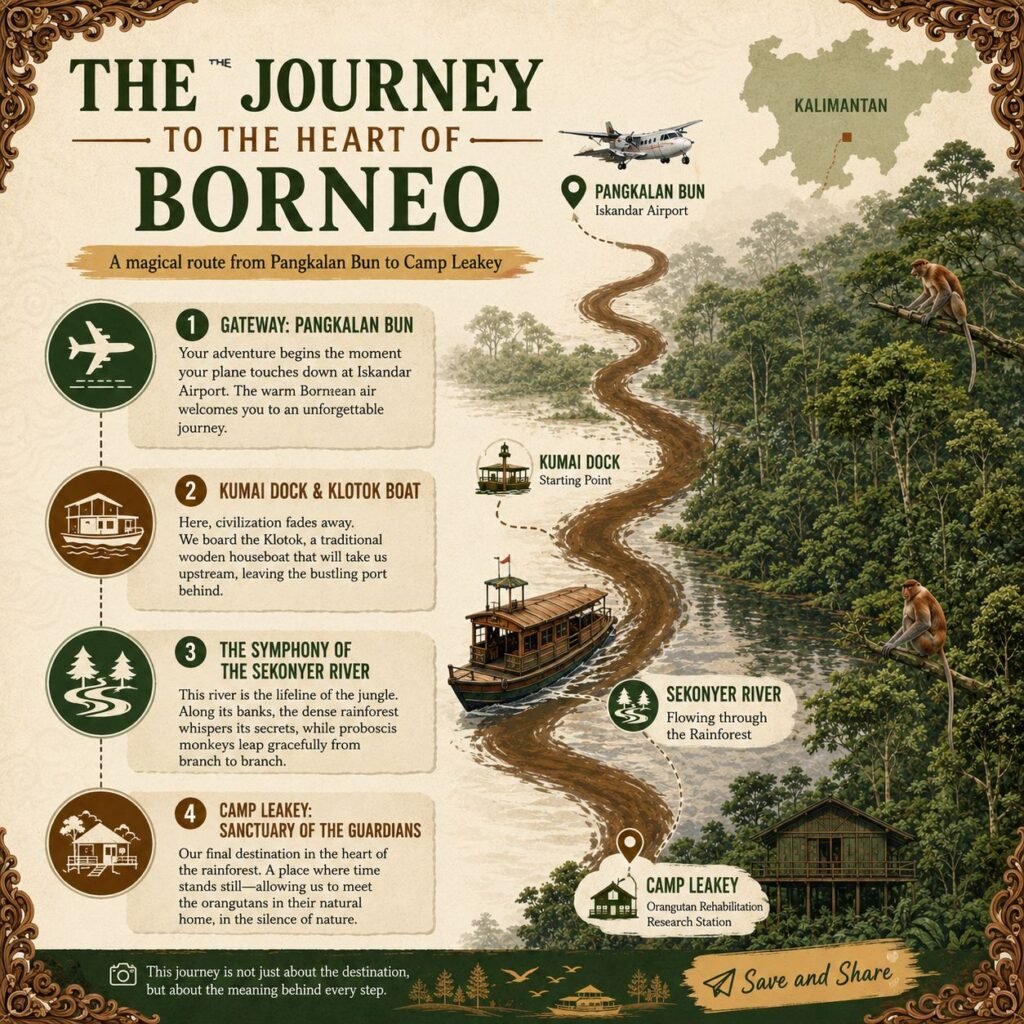
The standard Tanjung Puting itinerary is usually sold as a river cruise into orangutan country. It works because it is simple: fly to Pangkalan Bun, transfer to Kumai, board a klotok, travel along the Sekonyer River, visit feeding or observation areas, sleep on the boat, and return with photos that look almost too cinematic to be real. For many travelers, that alone is worth the journey. But simplicity can also flatten the destination. It can make the river feel like a hallway and the villages feel like scenery.
Tanjung Puting beyond wildlife cruises asks a different question: what happens if the river is not just a route to wildlife, but the main character? Once you ask that, the trip changes. The boat becomes a moving homestay. The crew becomes part of the interpretation. Kumai becomes more than a pier. Sekonyer becomes a lived corridor, not just a channel. The park becomes a conservation landscape with social edges, not a sealed fantasy forest.
This approach fits the larger Indonesia hidden-gem context because many of Indonesia’s most memorable places are not hidden in the literal sense. They are often famous for one reason and overlooked for ten better ones. Tanjung Puting is famous for orangutans, but the deeper experience is river life. That distinction matters for travelers who want authenticity without pretending they discovered a place locals have known forever.
The slower approach is also more respectful. When wildlife tourism becomes the only lens, animals can become content assets. When river life, local work, conservation history, and visitor behavior become part of the story, the experience becomes more balanced. You stop asking only, “Will I see orangutans?” and start asking, “How does this place function, who keeps it functioning, and how can I move through it without being a problem with a camera?” That question does not ruin the magic. It upgrades it.
Tanjung Puting is not a destination where speed makes you look smart. The river teaches the opposite. Boats move with water, weather, tide, and schedule. Feeding times may shape the day, but silence fills the spaces between. A traveler who treats those spaces as wasted time will miss half the trip. A traveler who treats them as the trip will leave with a richer story and fewer performative monkey selfies. Harsh, but fair.
Quick Facts Before You Plan a Tanjung Puting Trip
Use this table as a planning snapshot. Details can change, especially fees, flight schedules, boat prices, and park procedures, so always confirm with your operator, local guide, or official sources before booking.
| Planning Point | What It Means for Travelers | Why It Matters |
| Main gateway | Most travelers fly into Pangkalan Bun and continue by road to Kumai, where klotok trips usually begin. | This keeps the trip accessible without making it feel urban or overbuilt. |
| Core experience | River travel through the Kumai and Sekonyer corridor, forest walks, wildlife viewing, and boat-based overnight stays. | The boat is part transport, part accommodation, part viewing platform, and part classroom. |
| Official status | Tanjung Puting is a national park and UNESCO biosphere reserve. | The trip should be treated as conservation travel, not a casual theme-park cruise. |
| Ecosystems | Peat swamp, freshwater swamp, heath forest, mangrove, coastal forest, and lowland forest. | This explains the biodiversity and the strong river-and-wetland character of the journey. |
| Best pace | Three days and two nights is the classic minimum, but slower travelers may want extra time around Pangkalan Bun, Kumai, or nearby village experiences. | A slower pace makes the trip less extractive and less exhausting. |
| Main risk | Over-focusing on wildlife sightings while ignoring local etiquette, safety, waste, and guide instructions. | The quality of the trip depends on behavior as much as scenery. |
For conservation context, the official KSDAE profile of Tanjung Puting National Park notes the park’s long history of protection for orangutans and proboscis monkeys, its 415,040-hectare area under the 1996 designation, and its Ramsar and UNESCO biosphere importance. Those details are not decorative. They explain why visitors should approach the area with discipline, not just excitement.
The Real Geography of the Journey: Pangkalan Bun, Kumai, Sekonyer, and the Park
A good Tanjung Puting trip starts before the boat. Pangkalan Bun is the practical gateway: the airport, the hotels, the last-minute supplies, the place where many travelers realize Borneo is not a fantasy map but a living region with traffic, shops, mosques, markets, families, and workdays. It is tempting to rush through it. Do not. Even one meal or one night here can give context to the journey, especially if you have arrived after a long flight chain and your brain is still buffering like airport Wi-Fi from 2009.
Kumai is where the travel mood changes. The town functions as a river gateway, and that role shapes its energy. Boats, supplies, crews, guides, port activity, river smells, fuel, food, and weather all meet here. If Pangkalan Bun feels like the entry point, Kumai feels like the hinge. Once you board the klotok, the trip becomes less about road distance and more about river time.
The Sekonyer River is the famous corridor, but it should not be reduced to a photo backdrop. It is a working and ecological line, carrying boats, stories, sediments, reflections, and tourism expectations. The water may shift color as tributaries and land use patterns change. The banks may open into nipa palms, forest walls, or settlement edges. A guide who knows the river can explain far more than animal names: why certain areas are quiet, why boats slow down, why the river looks different in different stretches, and where visitor behavior needs extra care.
This is where Tanjung Puting differs from many land-based national park trips. You are not simply driving to a viewpoint. You are living inside the rhythm of water. Meals happen on the boat. Conversations happen between bends. Wildlife is seen from the deck, from forest paths, and sometimes from silence. Weather is not a minor inconvenience; it changes the mood of everything. If you are used to highly controlled travel, this can feel messy. That is the point. The trip is not polished; it is alive.
For readers who have explored deep-river travel in Borneo, Tanjung Puting offers a different but related lesson. River travel in Kalimantan is not merely scenic transportation. It is an organizing logic. Communities, forests, markets, conservation posts, and visitor routes are all shaped by water. Understanding that makes the trip less touristy and more intelligent.
The River Is Not Just Transport; It Is the Destination
The biggest mistake travelers make in Tanjung Puting is treating the river as a waiting room before the “real” attraction. The river is the attraction. It is where the trip slows down enough for your attention span to behave like a grown adult. You watch the banks instead of scrolling. You listen for monkeys before you see them. You learn how the crew moves around each other in a small kitchen and narrow deck. You notice how quickly the forest can swallow sound.
A klotok trip works because it puts you in close contact with the environment without pretending you are roughing it in heroic explorer mode. You are not hacking through untouched jungle with a machete. You are traveling through a known route with local knowledge, local labor, and conservation rules. That is good. Responsible travel does not require pretending to be the first human with a backpack. It requires noticing who made the experience possible and behaving accordingly.
The best river moments are often unplanned. A proboscis monkey group settling into trees near sunset. The smell of dinner from the back of the boat. A guide pointing out a bird you would have dismissed as background movement. A sudden rainstorm that turns the roof into percussion. Fireflies near the river edge when conditions allow. These moments rarely fit cleanly into an itinerary table, which is exactly why they matter.
The river also exposes the limits of visitor control. You cannot force weather, animal movement, or perfect light. You cannot demand wilderness to perform on schedule. This is where the slow travel mindset becomes practical, not philosophical wallpaper. A slower traveler does not see gaps between activities as wasted money. A slower traveler understands that gaps are where place enters the trip.
For content creators, the river is dangerous in a different way: it gives you too much beauty. That sounds like a humblebrag, but it is a real creative trap. If every bend becomes footage, you stop being present. Film some. Photograph some. Then put the device down before your trip becomes a documentary about your inability to stop documenting. The most valuable memory may be the one you did not interrupt with a vertical pan.
Villages Around Tanjung Puting: Where Local Life Gives the Trip Meaning
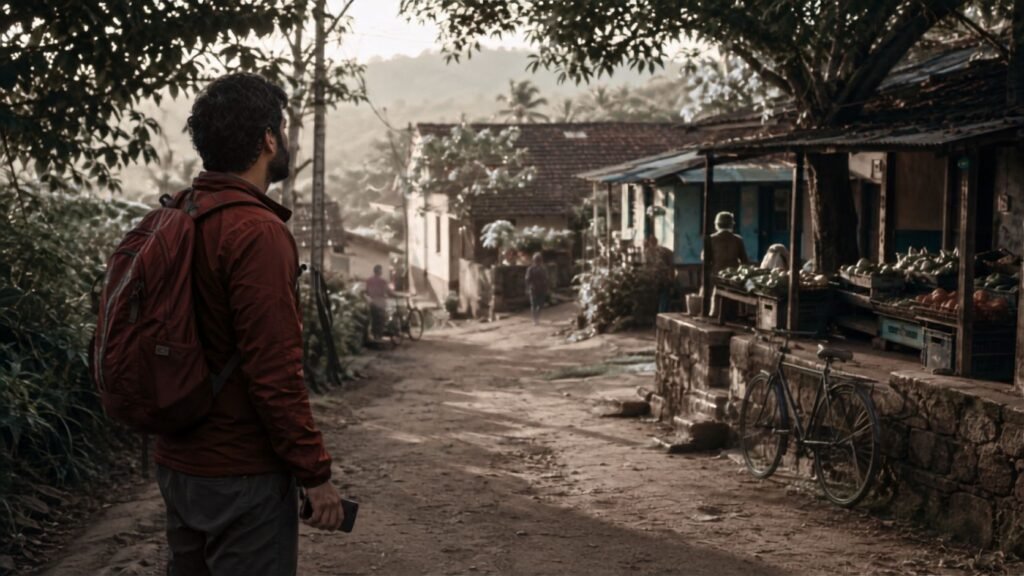
Tanjung Puting beyond wildlife cruises becomes more meaningful when travelers pay attention to the human edges of the park. Villages and small settlements around the wider travel route are not side content. They are part of the destination’s reality. The boat crew may come from nearby communities. Food and supplies often come through local networks. Guides carry family histories, river knowledge, language skills, and conservation experience that no generic itinerary can replicate.
The goal is not to turn village life into another attraction. That would be lazy and honestly a little cringe. The better approach is to treat local life as context. When you stop for food, buy supplies, talk to a guide, or pass homes along the river, remember that your vacation overlaps with someone else’s daily routine. Respectful curiosity is fine. Entitled access is not.
One reason village attention matters is economic leakage. In remote and conservation-adjacent destinations, a traveler’s money can either stay partly local or disappear into distant booking layers. Not every traveler can audit an entire supply chain, but you can make better choices: hire licensed local guides, use operators with transparent local crews, eat locally when possible, tip fairly, and avoid bargaining so aggressively that you save a few dollars while making yourself spiritually bankrupt. Congratulations, you won the price and lost the plot.
Village-based attention also changes how couples, solo travelers, and younger travelers experience the trip. Couples get more than a romantic boat deck; they get conversations about place, conservation, and daily life. Solo travelers get social texture without needing party scenes. Gen Z and millennial travelers get stronger storytelling material than another “I found paradise” caption. The better story is not “look where I went.” The better story is “look what this place taught me to notice.”
This is where the article’s title matters. Tanjung Puting beyond wildlife cruises does not mean ignoring wildlife. It means refusing to make wildlife the only thing worth seeing. Local life is not a decorative extra. It is the social infrastructure of the trip. Without it, the cruise is just a floating room with better monkeys.
If you enjoy this more grounded form of travel, HiddenGemTrips’ guide to remote-island patience in Indonesia offers a useful parallel: the quieter the destination, the more the traveler’s attitude matters. Tanjung Puting is not an island escape, but the same principle applies. Slow down, spend locally, ask better questions, and do not treat remote places as content farms with humidity.
Wildlife Still Matters, But It Should Not Consume the Whole Story
Let us be clear: wildlife is still a central reason to visit Tanjung Puting. Pretending otherwise would be ridiculous. The orangutans are extraordinary. Proboscis monkeys are unforgettable in a completely different way, with faces that look designed by nature after one too many jokes. Birds, crocodiles, insects, fish, and forest sounds all add layers to the experience. But the ethical issue is not whether wildlife matters. It is whether wildlife becomes the only thing travelers value.
The Orangutan Foundation International Australia overview of Tanjung Puting describes the park as home to the largest wild orangutan population in the world, nine species of primates, over 230 bird species, two crocodile species, and many other reptiles, amphibians, and fish. Those numbers help explain the global appeal. They also remind visitors that one selfie-friendly species is only part of a broader ecosystem.
When travelers obsess only over close orangutan encounters, several things can go wrong. They may crowd viewing areas. They may ignore guide instructions. They may pressure crews for better angles. They may forget that distance protects animals as much as people. Orangutans are powerful wild apes, not theme-park mascots. Even semi-wild or habituated individuals deserve space. The correct mindset is awe with restraint.
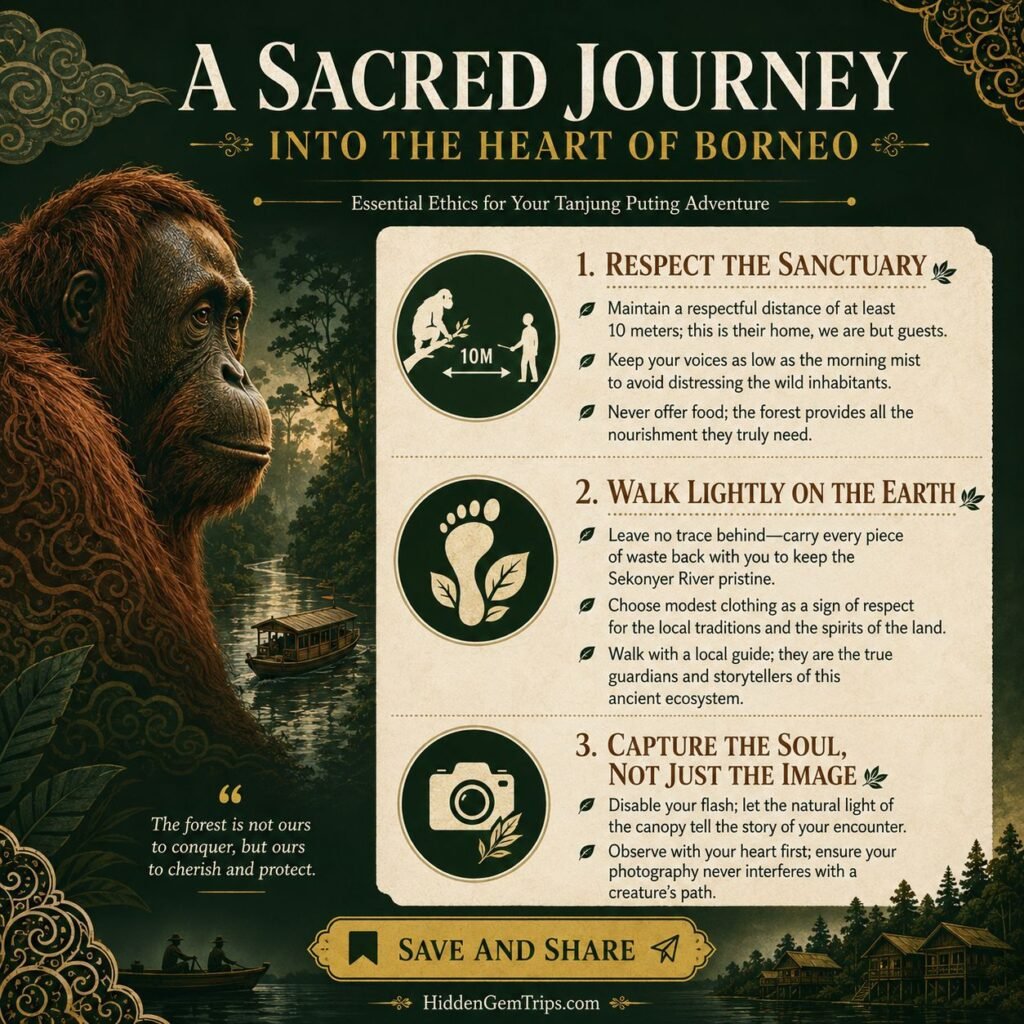
Good guides usually understand this better than visitors. Listen to them. If they say stay back, stay back. If they say no flash, no flash. If they say do not eat near wildlife, do not suddenly become a snack influencer. Human food, disease transmission, stress, and habituation are serious concerns in wildlife tourism. The moment a traveler believes their photo is more important than animal welfare, the trip has gone morally sideways.
This is also why Tanjung Puting pairs well with Borneo beyond the obvious wildlife story. Borneo is often marketed through charismatic animals, but its deeper appeal includes rivers, coastal ecosystems, communities, and landscapes shaped by water. Wildlife is the doorway. It should not be the whole house.
For photographers and social media creators, a useful rule is simple: if getting the shot requires bending the rules, the shot is bad. It does not matter how beautiful it looks. Ethical travel content is not only about what appears in the frame; it is about what happened outside the frame to get it. Nobody needs another viral clip built on bad behavior wearing hiking sandals.
Camp Leakey, Research History, and the Human Side of Conservation
Camp Leakey is one of the names travelers hear before visiting Tanjung Puting, and for good reason. It carries scientific, conservation, and tourism significance. The Camp Leakey research history from Orangutan Foundation International states that Camp Leakey was established in 1971 in what is now Tanjung Puting National Park by Dr. Biruté Galdikas and Rod Brindamour. That history matters because the destination’s global reputation is tied not only to sightings, but to decades of research, rehabilitation, debate, and conservation work.
A helpful official Indonesian perspective appears in the Camp Leakey background from Indonesia’s Ministry of Finance office in Pangkalan Bun, which describes Camp Leakey as a famous visitor point and explains its research and rehabilitation legacy. For travelers, this history should create humility. You are not entering a simple tourist site. You are entering a landscape shaped by science, policy, local labor, conservation conflict, and long-term human commitment.
The human side of conservation is messy, and that is not a reason to ignore it. Parks do not protect themselves by magic. Rangers, guides, researchers, local communities, NGOs, government agencies, boat operators, and visitors all interact in complicated ways. Tourism can assist conservation and livelihoods, but can also cause pressure, waste, crowding and false expectations. A mature traveler can hold both truths at once. Yes, your visit can help. No, your visit does not automatically make you a hero.
Camp Leakey and the other viewing areas are often where travelers feel the emotional peak of the trip. That is understandable. Seeing an orangutan move through the forest can rearrange your internal furniture. But do not let emotion remove discipline. Keep distance. Keep noise down. Keep food secured. Follow your guide. Do not romanticize closeness as connection. In wildlife travel, distance can be a form of respect.
This research history also gives HiddenGemTrips an opportunity to cover Tanjung Puting with more authority than a basic itinerary blog. The real story is not “come see orangutans.” The real story is how a river landscape became one of Indonesia’s most globally recognized conservation destinations, how tourism now moves through that landscape, and how travelers can participate without flattening it into a commodity.
A 3-Day Tanjung Puting Itinerary Beyond Wildlife Cruises
Most travelers choose a three-day, two-night klotok route. The version below keeps the classic wildlife structure but adds more attention to local life, river rhythm, rest, and interpretation. Treat it as a framework, not a military operation. If the river changes the plan, the river wins.
| Day | Core Plan | Beyond-the-Cruise Upgrade | Travel Note |
| Day 1 | Arrive in Pangkalan Bun, transfer to Kumai, board the klotok, begin the river journey, watch for riverside wildlife, sleep on the boat. | Arrive early enough to buy small local supplies, ask your guide about crew roles, and spend the first evening learning the river instead of chasing every photo. | If you arrive tired, prioritize hydration, mosquito protection, and rest. |
| Day 2 | Visit key forest or feeding-area stops according to park rules and guide advice; spend long stretches on the river. | Ask about forest types, village connections, conservation challenges, boat logistics, and local food. Make the day educational, not just visual. | This is usually the emotional center of the trip. Do not rush the quiet parts. |
| Day 3 | Slow morning on the river, return toward Kumai, transfer back to Pangkalan Bun, fly out or stay one more night. | Add a local meal, market stop, or simple town walk if timing allows. Let the trip end in a real place, not just an airport queue. | A buffer night reduces stress if flights shift or weather affects timing. |
The itinerary looks simple because the river carries much of the experience. That is why travelers should not overload it with extra demands. If you try to turn three days into a maximalist checklist, you will turn the boat into a moving spreadsheet. Nobody crossed Borneo to become a project manager in quick-dry pants.
One useful planning trick is to assign each day a different type of attention. Day one is orientation: river, crew, weather, boat life. Day two is immersion: wildlife, forest, research history, conservation rules. Day three is integration: local economy, reflection, slow return. This prevents the trip from becoming one emotional spike surrounded by logistical blur.
If you are traveling as a couple, use the river time well. Talk. Read. Watch the banks. Share silence without making it weird. If you are traveling solo, choose an operator and boat arrangement that matches your comfort level; some solo travelers prefer joining a small shared trip, while others prefer a private boat if budget allows. If you are creating content, build a schedule that protects the experience from your own ambition. Your audience can survive without 97 clips of water reflections. Probably.
For wider preparation, especially if you are combining Tanjung Puting with other Indonesian routes, read up on long-haul recovery before a remote trip. Many travelers underestimate how much fatigue affects patience. And patience is not optional on a river trip. A tired traveler becomes irritable, careless, and dramatically worse at appreciating small miracles.
Budget, Booking, and Logistics for a More Grounded Trip
Tanjung Puting is not usually a bargain-basement backpacker trip, especially if you book a private klotok with meals, guide, crew, park fees, transfers, and overnight boat accommodation included. But it can still be good value because the experience bundles transport, lodging, food, guiding, and access into one river-based format. The key is understanding what you are paying for. Cheap is not always smart when safety, local wages, boat quality, guiding, and conservation rules are involved.
Before booking, ask what is included: airport transfer, Kumai transfer, meals, drinking water, guide language, boat sleeping setup, mosquito nets, toilet and shower arrangements, park permits, camera fees if applicable, and whether the itinerary uses licensed or locally recognized operators. Ask how large the group will be. Ask what happens in heavy rain. Ask whether plastic waste is minimized. The answers will tell you more than a glossy sunset photo.
This is where smarter budget habits for hidden gems are useful. Hidden-gem travel is not about choosing the cheapest option and hoping the universe handles the consequences. It is about spending where money protects the quality of the trip: a responsible guide, a safe boat, fair crew conditions, clean water, realistic timing, and enough buffer to avoid panic decisions.
The BPS Kotawaringin Barat visitor statistics page is also worth checking for readers who like data, because it connects Tanjung Puting to local tourism monitoring rather than just anecdotal hype. Visitor numbers can affect operator availability, pricing, and crowd dynamics, especially around domestic holidays and peak international travel windows.
If you prefer comfort, frame it honestly. Paying more for a cleaner, safer, better-managed boat is not “inauthentic.” It may be responsible if the money supports better service and local work. But luxury should not become insulation from place. The sweet spot for many HiddenGemTrips readers is mid-range hidden–gem planning: enough comfort to stay healthy and present, not so much insulation that you stop noticing where you are.
Booking timing matters. Better operators can be booked out early in peak seasons. During rainy periods, the experience can be lush and atmospheric, but conditions may be wetter, muddier, and less predictable. During dry periods, some conditions can be easier, though haze or regional fire issues may occasionally affect wider Borneo travel. Always check local conditions before finalizing a trip, because Borneo does not care about your aesthetic calendar.
| Budget Area | Do Not Cheap Out On | Where You Can Save |
| Guide and boat safety | Licensed or experienced guide, reliable boat, clear communication, clean water, basic safety. | Travel dates, group sharing, simpler accommodation before/after the cruise. |
| Food and hydration | Safe drinking water, adequate meals, dietary clarity, snacks for long river stretches. | Skip unnecessary imported snacks; buy simple local supplies where appropriate. |
| Gear | Mosquito protection, rain protection, dry bags, breathable clothing, power bank. | Avoid overpacking outfits and heavy camera gear you will barely use. |
| Flights and buffer | Reasonable connection times and one buffer night if possible. | Flexible dates can reduce fares, but avoid risky same-day tight transfers. |
What to Pack for Rivers, Humidity, and Village Stops
Packing for Tanjung Puting is not complicated, but it does require discipline. The environment is humid, river-based, insect-friendly, and sometimes wet. You need clothing that dries quickly, a small dry bag, secure sandals or lightweight shoes, breathable long sleeves, a hat, sunscreen, mosquito repellent, basic medication, a power bank, and a small flashlight or headlamp. You do not need half your closet. This is a river trip, not a fashion week hosted by mosquitoes.
The goal is to stay comfortable without creating luggage drama. Boats have limited space. Transfers can involve moving bags between vehicles, piers, and decks. Overpacking makes everything more annoying for you and for the people helping you. HiddenGemTrips’ guide to packing light for remote expeditions is especially relevant here because Tanjung Puting rewards a lean setup: breathable layers, compact gear, and essentials that serve more than one purpose.
Bring a reusable water bottle if your operator can refill it safely. Bring a dry bag for phone, documents, camera batteries, and a light layer. Bring a small trash bag for personal waste if needed. Bring cash in small denominations for tips, local stops, or unexpected purchases. Bring patience. It weighs nothing and somehow many travelers still fail to pack it.
For camera gear, be realistic. Humidity, boat movement, rain, and narrow spaces make heavy setups less fun than they look on YouTube. A weather-sealed camera or phone with protective case may be enough for most travelers. If you bring serious lenses, protect them from moisture and avoid changing lenses in dusty, wet, or unstable conditions. The best camera is the one you can use without turning the boat into a mobile equipment panic room.
Clothing should be respectful for village stops and practical for forest areas. Lightweight long pants and modest tops are usually safer and more culturally considerate than beachwear. Even when the climate is hot, you are not on a resort deck. You are moving through a living region where modesty, comfort, and insect protection can all work together. Revolutionary concept, apparently.
Responsible Travel Rules for Tanjung Puting Beyond Wildlife Cruises
Responsible travel in Tanjung Puting is not a branding accessory. It is the difference between a trip that supports the destination and a trip that extracts from it. The landscape carries conservation value, tourism pressure, local livelihoods, and ecological vulnerability. Visitors should not arrive with the energy of “I paid, so nature owes me.” Nature owes you nothing. The guide owes you safety and interpretation, not miracles on demand.
The official conservation context is strong. The Ramsar-site listing by Indonesia’s KSDAE includes Tanjung Puting among Indonesia’s internationally recognized wetlands, while the park profile highlights its role in protecting peat-swamp ecosystems and flagship species. Wetlands are not empty swampy spaces waiting for tourism development. They regulate water, store carbon, support biodiversity and sustain local livelihoods. Treat them accordingly.
First, keep distance from wildlife. Second, do not feed animals. Third, keep food secure. Fourth, follow guide instructions even when another tourist is being foolish. Fifth, reduce plastic waste. Sixth, do not play loud music on the river. Seventh, ask before photographing people. Eighth, tip fairly. Ninth, avoid operators that promise irresponsible closeness to animals. Tenth, remember that “authentic” does not mean access without consent.
Responsible behavior also includes emotional control. Wildlife sightings are unpredictable. If you see less than expected, do not punish the guide with your disappointment. A guide cannot summon an orangutan like a ride-share driver. If weather changes the plan, adapt. If your preferred angle is unavailable, survive this historic tragedy with grace. Travel maturity is what remains when the itinerary stops obeying you.
This is where responsible solitude in remote landscapes becomes useful as a mindset comparison. The environments are different, but the principle is the same: remote or fragile places demand humility. Silence, distance, and patience are not passive. They are active forms of respect.
Finally, responsible travel should not be performed only in front of other travelers. It shows up when nobody is watching: how you handle trash, whether you pressure your crew, whether you respect quiet hours, whether you photograph local children without consent, whether you treat a guide as a professional or as a servant with bird facts. Hidden-gem travel is not just where you go. It is how you behave when the place has less power than you do.
Who This Trip Is Best For
Tanjung Puting is best for travelers who can enjoy stillness. If you need nightlife, constant stimulation, luxury shopping, and instant restaurant variety, this is probably not your happiest match. If you enjoy river time, wildlife ethics, local conversations, humid mornings, and the slow reveal of a place, it can be unforgettable.
For couples, the trip works because it creates shared memory without needing polished luxury. Sleeping on a boat under mosquito nets, waking to river sound, and sharing meals in the open air can feel more intimate than a resort that looks like every other resort with a different welcome drink. But choose your comfort level honestly. Romantic does not mean pretending a basic toilet is a five-star spa. Communication saves relationships. So does bug repellent.
For solo travelers, Tanjung Puting can be excellent if booked carefully. A guided river trip provides structure, local support, and social interaction without forcing you into hostel-party energy. Solo women and first-timers to Borneo should look for reliable operators and straightforward transfers and communication. HiddenGemTrips’ solo travel safety thinking can help frame the planning mindset: freedom is better when paired with preparation.
For Gen Z and millennial travelers, the destination offers powerful storytelling potential. But the better story is not just wildlife. It is the relationship between river, village, forest, conservation, and visitor behavior. That angle is more original, more responsible, and frankly more interesting than “monkey saw me, I cried.” Not judging. Maybe judging a little.
For photographers, birders, and wildlife enthusiasts, Tanjung Puting is rich but requires restraint. For cultural travelers, it offers human context if you make space for it. For families, it can work well with older children who can follow safety rules and handle boat life. For travelers who hate humidity, insects, and limited control, it may be character development with a boarding pass.
How to Add Local Life Without Turning It Into a Performance
Adding local life to a Tanjung Puting trip does not mean demanding a village show. It means designing the trip so everyday context is not invisible. Ask your operator whether there are appropriate local food stops, market visits, village walks, or community-based experiences that are respectful and properly arranged. If the answer is no, accept that. Not everything needs to be accessed for your enrichment.
If you do visit a village or local stop, keep your behavior simple. Dress modestly. Ask before taking photos. Buy something if a local business is part of the stop. Learn a few Indonesian greetings. Do not turn poverty, labor, or ordinary domestic life into aesthetic content. Avoid giving gifts to children unless coordinated through appropriate local channels, because random giving can create dependency and awkward dynamics. The best traveler is not always the loudest giver.
Food is one of the easiest ways to connect without forcing intimacy. A simple meal in Pangkalan Bun or Kumai can teach you more about regional travel than another generic international snack packed from home. Ask your guide what local dishes are common, what the crew eats, and what supplies are practical for boat cooking. Food turns logistics into culture if you pay attention.
Language matters too. You do not need fluency, but a few words change the tone. Terima kasih. Permisi. Selamat pagi. Enak. These are small gestures, but they signal that you know you are not traveling through a backdrop. You are entering someone else’s language environment. That effort will not make you local. It will make you less of a roaming inconvenience. Progress.
When writing or posting about the trip, describe local people as people, not props. Avoid captions that romanticize “simple life” while ignoring labor, cost, or complexity. If you mention guides or crews, credit their expertise. If you learned something from someone, say so. The hidden-gem travel space needs fewer vague adjectives and more respect for the people who actually know the place.
Best Time, Trip Length, and Planning Mindset
Tanjung Puting can be visited in different seasons, but the “best” time depends on what you value: drier conditions, greener atmosphere, fewer travelers, photography, or flexibility. Instead of chasing one perfect month, ask your operator about current river conditions, recent weather, expected crowd levels, and whether any park procedures have changed. Local information beats generic seasonal advice every time.
Three days and two nights is the most common structure because it balances cost, wildlife opportunities, and schedule efficiency. Four days can feel better if you want a slower route, more interpretation, or less pressure to make every stop perfect. One-night trips are possible in some forms, but they often turn the experience into a rushed extract. If you fly all the way to southern Borneo, give the river time to work on you.
Build buffers around flights whenever possible. Regional travel can be smooth, but delays happen. If your international connection depends on a same-day return from Pangkalan Bun, you may spend the final day emotionally attached to your boarding pass instead of the river. A buffer night in Pangkalan Bun or another Indonesian city can protect the trip from stress.
Use the first evening to decompress. Many travelers arrive with urban nervous systems still vibrating. The river has a way of slowing you down, but only if you let it. Do not immediately demand peak experiences. Let the first hours be orientation. Watch the crew. Learn the boat. Understand the toilet. Locate your dry bag. Apply repellent before mosquitoes write their own review on your ankles.
For travelers combining Tanjung Puting with Java, Bali, or other parts of Indonesia, avoid packing the itinerary too tightly. Indonesia is not small. Maps lie by making islands look manageable. Transit eats energy. A smarter route leaves space between major experiences so each place has room to become memorable rather than becoming another tab in your travel spreadsheet.
Safety Notes: Rivers, Wildlife, Heat, and Common Sense
Tanjung Puting is accessible, but it is still a river-and-forest trip. Basic safety matters. Wear footwear with grip on wet surfaces. Move carefully on boat decks. Keep gadgets away from rain. Stay hydrated. Use mosquito protection. Tell your guide about medical conditions. Keep essential medication in a small bag that stays with you. Do not wander away from designated areas. Do not swim unless your guide clearly says it is safe, and even then, think very carefully. This is Borneo, not a hotel pool with dramatic lighting.
Crocodiles exist in parts of the broader wetland environment, and calm water should not be treated casually. Wildlife distance rules protect both sides. Heat and humidity can also sneak up on travelers who are used to air-conditioned city life. If you feel dizzy, weak, feverish, or unusually unwell, tell your guide early rather than trying to be brave for no audience.
Insect protection is not glamorous, but neither is scratching yourself through dinner. Wear long sleeves during high mosquito periods, use repellent, and consider permethrin-treated clothing where appropriate and legal in your home country. Check health guidance before travel, especially for malaria or other regional risks, because medical advice changes and should come from qualified sources, not travel vibes.
Boat safety is another reason not to choose operators based only on price. Ask about life jackets, sleeping arrangements, toilet setup, rain cover, communication, and emergency procedures. A good operator will not be offended by basic safety questions. If they are, congratulations, you found your red flag before the river did.
Finally, protect your documents and cash. Keep passport, phone, cards, and cash in a dry bag or waterproof pouch. Carry enough cash for tips and small expenses, but do not flash it around. Remote travel does not need paranoia, but it does need boring practical habits. Boring habits are underrated. They keep the adventure from turning into admin chaos.
The Original Angle: Tanjung Puting as a Living River Classroom
The most original way to understand Tanjung Puting is not as a cruise, a safari, or a jungle escape. It is a living river classroom. The subject is not only orangutans. The subject is relationship: between water and forest, tourism and local work, conservation and livelihood, visitor desire and ecological limits. Once you see that, the trip becomes more complex and more rewarding.
A classroom requires attention. The river teaches pace. The crew teaches coordination. The guide teaches interpretation. The forest teaches humility. The village edges teach context. The wildlife teaches restraint. The weather teaches that your plans are suggestions. None of these lessons arrive as a lecture, which is why many travelers miss them. They are too busy waiting for the next “main attraction.”
This framing also helps avoid shallow travel writing. Many articles will tell readers how to book a klotok, where to see orangutans, and how many days to spend. Useful, yes. But HiddenGemTrips can go further by asking what kind of traveler Tanjung Puting produces. Does the trip make you more patient? More aware of ecological fragility? More respectful of local labor? More careful with wildlife content? If yes, then the trip has done more than entertain you.
That is why this destination belongs on HiddenGemTrips, not as a secret nobody knows, but as a famous place with a hidden layer. Some hidden gems are geographically hidden. Others are hidden by lazy attention. Tanjung Puting’s deeper story is hidden in plain sight, between the famous orangutan moments and the quiet river hours travelers forget to describe.
For readers who like this angle, why some places deserve slower attention offers a useful bridge to another Indonesian destination where landscape, culture, and pacing matter more than checklist tourism. The common thread is simple: the place gets better when the traveler stops treating it like content to extract.
Final Thoughts: Tanjung Puting Is a River Story, Not Just a Wildlife Show
Tanjung Puting beyond wildlife cruises is not a rejection of the classic orangutan river trip. It is an upgrade. The wildlife remains extraordinary, but the experience becomes richer when you notice the villages, boats, guides, food, research history, wetlands, and everyday river life that hold the journey together.
The best travelers will come for the orangutans and leave remembering the river. They will remember the way the boat slowed near a bend, the meal served as the forest darkened, the guide’s quiet explanation, the strange comedy of proboscis monkeys, the humility of distance, and the feeling that Borneo did not perform for them so much as allow them to pass through for a while.
That is a privilege. Treat it like one. Book responsibly, spend locally when possible, listen to guides, respect wildlife distance, reduce waste, and give yourself enough time to notice the destination beyond its most marketable image. Tanjung Puting does not need travelers who collect it like a badge. It needs travelers willing to become better guests.
In a travel culture obsessed with the next untouched place, Tanjung Puting offers a sharper lesson: sometimes the more ethical move is not to search for a place nobody has heard of, but to visit a known place with better attention. The river has been telling the story the whole time. The question is whether you are quiet enough to hear it.
FAQ: Tanjung Puting Beyond Wildlife Cruises
1. Is Tanjung Puting only worth visiting for orangutans?
No. Orangutans are a major reason to visit, but the full experience includes river travel, local boat life, village context, peat-swamp ecosystems, birdlife, research history, and conservation learning. Travelers who focus only on animal sightings usually miss the deeper character of the trip.
2. How many days do I need for Tanjung Puting?
Three days and two nights is the classic minimum for a meaningful klotok experience. Four days can feel better if you want a slower pace, more interpretation, or more buffer. One-night trips may be possible, but they often feel rushed after the effort of reaching Pangkalan Bun and Kumai.
3. Is Tanjung Puting nice for solo travellers?
Yes, if booked with a respected operator and clear logistics. Solo passengers should verify transports, boat arrangements, guide language, safety measures and if the tour is private or shared. The structure of a guided boat trip can make the destination easier than many independent remote routes.
4. Can I visit villages around Tanjung Puting?
Maybe, but only within the framework of polite, well-structured encounters. Do not treat village life as an attraction you can access on demand. Ask your operator what is appropriate, dress modestly, ask before taking photos, buy locally when possible, and respect privacy.
5. What should I pack for Tanjung Puting?
Pack light, breathable, quick-drying clothes; mosquito protection; sunscreen; a hat; a dry bag; a power bank; basic medicine; a reusable water bottle if refills are available; and modest clothing for local stops. Avoid heavy luggage because boat space and transfers are easier with a compact setup.
Disclaimer
This page is for general travel and editorial planning purposes only. Conditions and information at Tanjung Puting National Park, such as permits, visitor procedures, park restrictions, weather, river access, operator availability, flight schedules and costs are subject to change. Things may have changed since the last update. Always check the official site and with licensed operators, local guides and authorities before you book and travel. Viewing of wildlife must be done responsibly within the guidelines of the guides and the park rules. HiddenGemTrips does not promote feeding, touching, approaching, disturbing or pressuring wildlife for images or movies. Travelers are responsible for their own safety, travel insurance and health preparedness and local rules compliance.