
As someone who spends their life mapping out the world’s most remote places, I’m really thankful for the huge blind spot in the global travel circuit. While millions of tourists flock to the congested streets of Seminyak or wait in line for a picture at Mount Bromo, one of the most spectacular geological formations on Earth remains largely untouched by international mass tourism. Welcome to West Sumatra.
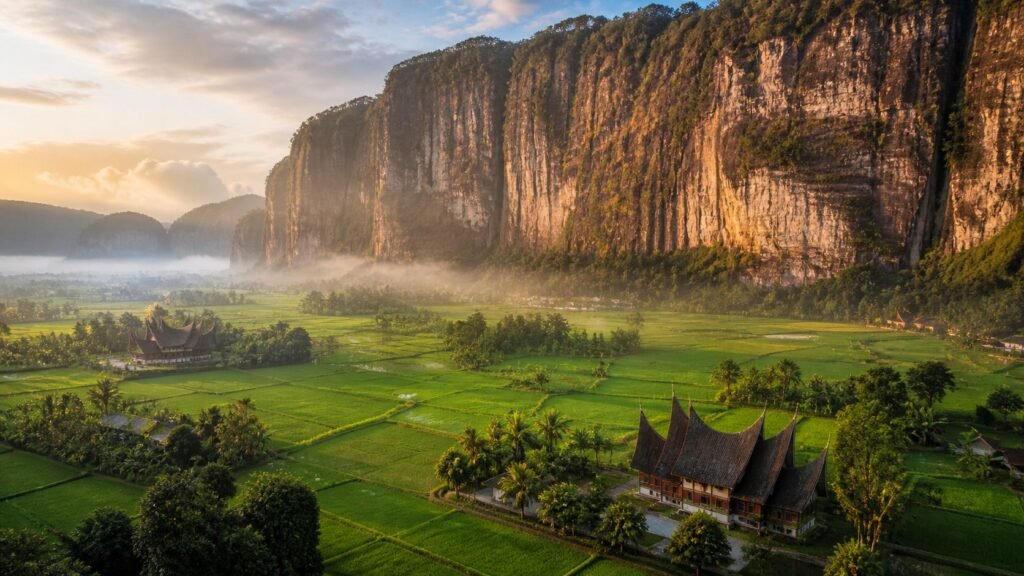
If you are exhausted by the over-commercialization of Southeast Asia and are looking for underrated destinations to visit, it is time to recalibrate your compass. Much like the raw isolation I’ve documented in the Epic Banda Islands travel guide, the Harau Valley demands a different kind of traveler. This is a place where towering 300-meter granite cliffs rise vertically from emerald-green rice paddies, echoing with the calls of macaques and the roar of hidden waterfalls.
People often call this canyon the “Yosemite of Indonesia.” You can’t get this profound, physical connection to nature in more popular places. This is the best Ultimate Harau Valley Guide that has ever been made. It was painstakingly put together for 2026 to help you navigate around, respect the place, and uncover the astonishing truth about Sumatra’s best-kept secret.
The Psychological Detox: Escaping the Island Traffic
There is a distinct psychological shift that happens when you leave the bustling coastal city of Padang and wind your way up into the Minangkabau highlands. The air cools, the chaotic traffic thins out, and the landscape transforms into a prehistoric painting.
We talk a lot about finding “authentic” travel, but that word has been hijacked by luxury resorts selling curated local experiences. True authenticity is found in the quiet moments: drinking Kopi Kawa Daun (a traditional West Sumatran beverage made from brewed coffee leaves) in a small wooden warung while watching the morning mist burn off the canyon walls. It’s the same grounding energy that draws adventurous souls to unveil Lore Lindu’s mysterious megaliths.
The Harau Valley does not cater to you; you adapt to it. It is a vital detox from the algorithm-driven world, forcing you to look up at the sheer scale of the Earth rather than down at a screen.
The Geological Marvel: The Walls of Harau
To truly understand the magnitude of Harau, you must look at its geological bones. According to geological surveys highlighted by the Ministry of Tourism and Creative Economy, the Harau Valley is a massive tectonic fracture that occurred millions of years ago. A river carved its way through the resulting fault line, leaving behind a sprawling, flat valley floor flanked by sheer, multicolored granite and sandstone cliffs.
1. The Echoing Canyons and Sarasah Waterfalls
The sheer verticality of the cliffs creates a natural acoustic amphitheater. If you shout into the valley, the echo bounces back with startling clarity. But the true jewels of these rock faces are the waterfalls, known locally as Sarasah.
Unlike the highly regulated, ticketed waterfalls in tourist hotspots, the falls in Harau—such as Akar Berayun and Sarasah Bunta—plunge directly into natural, unpaved pools right at the edge of the road or deep within the jungle edge. When the rainy season hits, the cliffs weep with dozens of temporary cascades, creating an ethereal landscape that easily rivals the drama of the High Tatras.
2. The Micro-Climate and Biodiversity
Because these massive walls shelter the valley, it has developed its own microclimate. It is lush and incredibly fertile, supporting a staggering array of wildlife. While you won’t find Sumatran tigers wandering the rice fields (for that, you need to look toward the conservation efforts supported by WWF Indonesia in the Leuser Ecosystem), you will encounter long-tailed macaques, rare tropical birds, and an astonishing variety of endemic orchids clinging to the cliff walls.
Beyond the View: The Heart of Minangkabau Culture
You cannot write the ultimate Harau Valley guide without dedicating deep reverence to the people who inhabit it. West Sumatra is the homeland of the Minangkabau people, the world’s largest matrilineal society. Property, land, and family names are passed down from mother to daughter.
Living in a Traditional Rumah Gadang
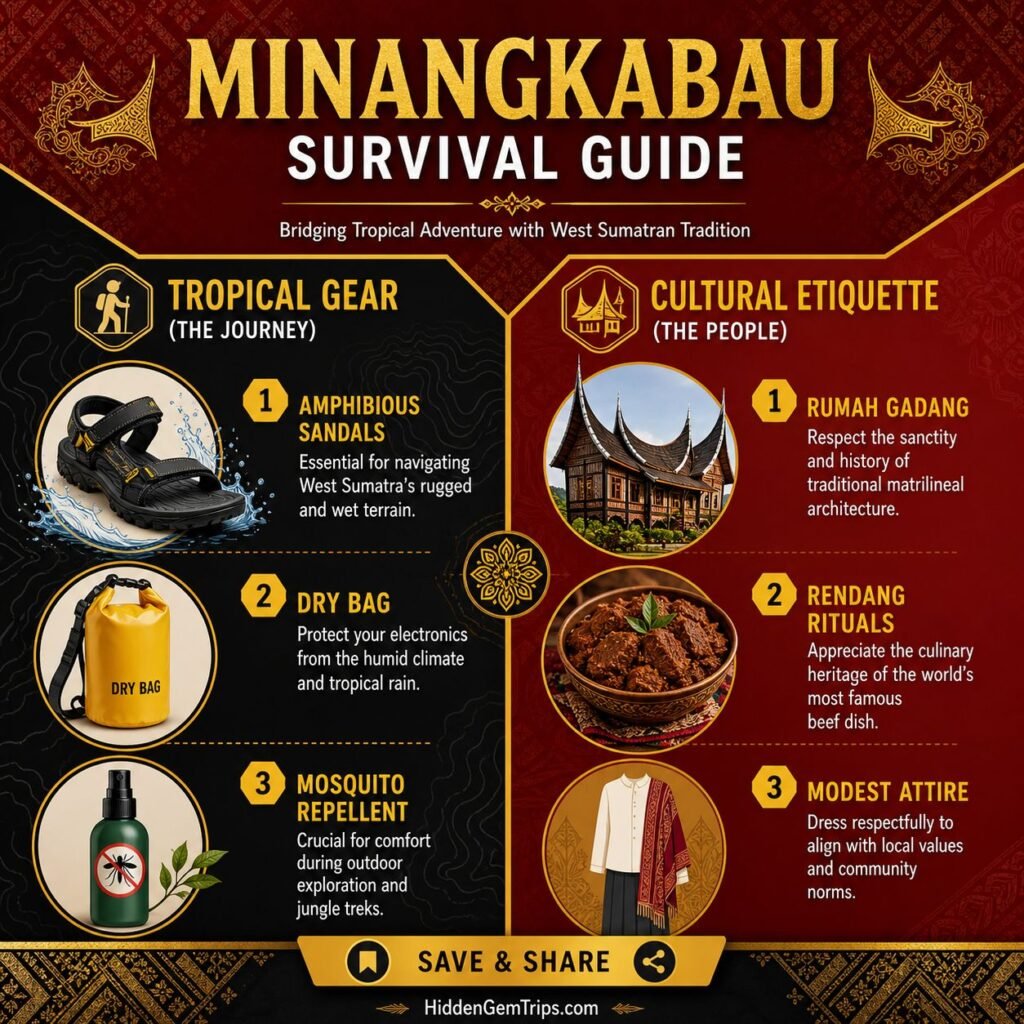
If you really want to get into the culture, skip the modern guesthouses and go for a homestay with the style of a Rumah Gadang (Big House). The roofs of these beautiful wooden buildings curve up like the horns of a water buffalo, making them easy to spot.
Staying in a local village in the valley offers a level of cultural immersion that even outpaces the Sumba revolution. You will wake up to the sound of the call to prayer echoing off the canyon walls, followed by the rhythmic thumping of rice being pounded for breakfast.
The Culinary Capital of Indonesia
West Sumatra is the birthplace of Rendang, which has been voted the most delicious food in the world multiple times. Eating Rendang in Harau Valley, slow-cooked over a wood fire by a local matriarch using spices harvested from the surrounding hills, is a gastronomic revelation. It is rich, complex, and deeply tied to the land. You haven’t truly eaten Indonesian food until you’ve eaten it here.
The 2026 Expert Itinerary: 3 Days in the Valley
If you are planning an expedition, do not make the mistake of treating Harau Valley as a mere day trip from Bukittinggi. To feel the pulse of the canyon, you need at least three days.
Day 1: The Descent and the Echo
- Morning: Arrive in the valley via rented motorbike from Bukittinggi. The drop into the canyon is amazing. The quick shift from rolling hills to tall, straight stone is something I’ll never forget.
- Afternoon: Check into your homestay. Rent a bicycle and ride through the flat, paved paths that bisect the rice paddies. Visit the Akar Berayun waterfall, the tallest in the valley, which plunges directly into a pool near the main road.
- Evening: Eat a Padang supper that you made yourself at your homestay. Sit outside and listen as the sounds of farming life transition to the sounds of the jungle at night.
Day 2: The Long Trek Through the Deep Backcountry
- Morning: Hire a local guide to show you the “hidden” waterfalls. You can get to the main falls, but the real magic is a few hours’ journey into the thick jungle beyond the cliffs. You can find peaceful pools here, perfect for a cold plunge.
- Afternoon: Get on the same page as the local farmers. People grow or pick rice at different periods of the year. It makes us wonder about how well people have adapted to this huge geology.
- Evening: go for a short ride to one of the valley’s higher points to see the sun set. When the light hits the granite walls, they shine in bright pink and orange colors.
Day 3: Climbing rocks and leaving
- Morning: Harau Valley is slowly becoming a world-class rock climbing spot for people who love adrenaline. There are hundreds of bolted routes, from easy to hard. The rough granite gives you great grip, and climbing the walls gives you a whole different view of the valley bottom.
- Afternoon: Pack up, drink one last cup of local robusta, and begin the winding ascent out of the valley, perhaps moving on to tackle Mount Raung’s brutal ascent or exploring Java’s hidden Pacitan beaches.
Logistics, Budgeting, and Survival
Navigating Sumatra requires more planning than flying into a mainstream hub. Here is the operational intelligence you need for a frictionless trip.
How to Get There
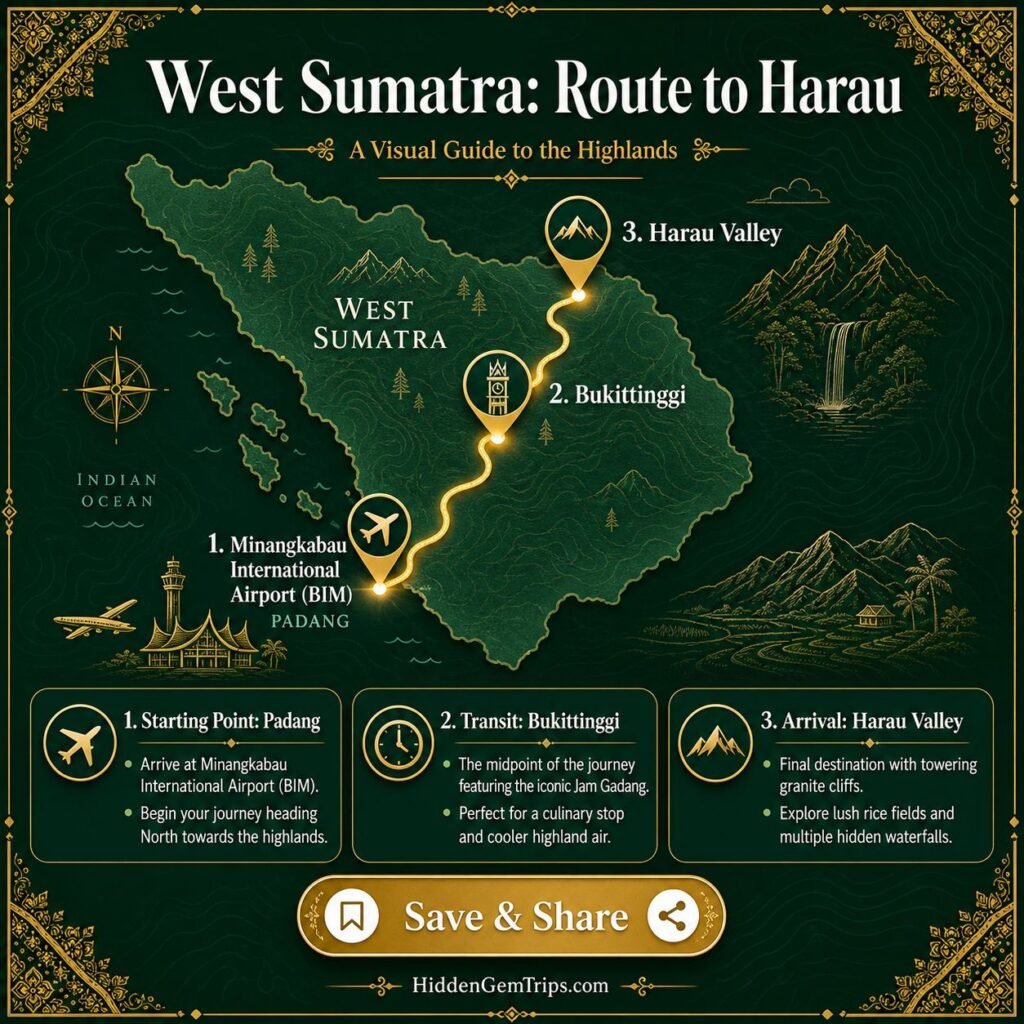
The gateway to Harau Valley is Minangkabau International Airport (PDG) in Padang. From Padang, it is a scenic, albeit winding, 3.5 to 4-hour drive to the town of Payakumbuh, followed by a short 20-minute jump into the valley itself.
- Pro Tip: Do not rent a car unless you are highly experienced with aggressive, unwritten Indonesian traffic rules. Instead, use local shared taxis (travel) or hire a private driver from Padang.
Strategic Budgeting
One of the most appealing aspects of West Sumatra is its affordability. If you use the genius budget hacks to find hidden gems, your money will stretch incredibly far here. A night in a stunning, locally-owned homestay surrounded by rice fields will cost a fraction of what you would pay for a basic room in Bali, leaving you plenty of budget to explore premium hidden corners like the Kei Islands.
Packing List for the Sumatran Tropics
The equator dictates the climate here. It is hot, highly humid, and prone to sudden, violent downpours.
- Footwear: Bring amphibious hiking sandals (like Tevas or Chacos) and lightweight, quick-drying trail runners. Your feet will get wet.
- Clothing: Breathable, moisture-wicking fabrics are essential. Leave the heavy denim at home.
- Gear: A good dry bag is a must-have for keeping your electronics safe during sudden rainstorms or excursions by waterfalls. Always have an offline international map on your phone, because cell reception in the deep canyon is known to be bad.
The Sustainable Travel Imperative
As we map these pristine locations, we carry the heavy responsibility of protecting them. The Harau Valley is a fragile ecosystem. The Minangkabau people’s traditional farming methods and the natural streams that haven’t been altered make it beautiful.
When you go, follow the strict “Leave No Trace” rules. Do not buy single-use plastics, which are notoriously difficult to recycle in rural Indonesia. Instead of arranging through foreign-owned companies, choose local guides for your jungle excursions to help the local economy directly. The goal is to ensure that when the next generation seeks out this sanctuary, the walls of Harau still echo with the sounds of nature, not the machinery of mass tourism. Initiatives supported by the Global Geoparks Network continually emphasize the importance of community-led tourism to preserving geological heritage.
Conclusion: The Final Frontier of Sumatra
The time to see a site like the Harau Valley in its natural, uncommercialized nature is running out quickly. The secret of Sumatra’s granite fortress will ultimately get out as the world’s infrastructure gets better and tourists become more adventurous.
But for now, in 2026, it’s still a secure place to be. A good Harau Valley guide isn’t just a list of waterfalls and places to stay; it’s a chance to think about how you travel. When you’re there, you need to slow down, look up, and listen. You have to slow down, look up, and listen there It is a place that demands you slow down, look up, and listen. If you are willing to trade the convenience of a resort for the profound, towering silence of the canyon, pack your dry bag and book your ticket to Padang. The Yosemite of Indonesia is waiting, and it is more majestic than you could ever imagine.
Frequently Asked Questions (FAQ)
1. Is it safe to go to West Sumatra and the Harau Valley?
Yes, West Sumatra is usually a fairly safe place for tourists. People from Minangkabau are noted for being very welcoming. But you should still take normal travel safety measures. The greatest safety issue is the curving, crowded roads between Padang and Bukittinggi. That’s why it’s better to hire a local driver than to drive yourself.
2. What is the best time to go to Harau Valley?
The best time to visit is during the dry season, which runs from May to September. The skies are usually clear, which makes for great photos against the cliffs. The jungle trekking pathways are also much safer and less muddy. While the rainy season (October to April) brings out dozens of temporary waterfalls on the cliff faces, it can disrupt travel plans.
3. Are there ATMs or credit card facilities in the valley?
No. Harau Valley is a rural, cash-based micro-economy. You must withdraw all the Indonesian Rupiah (IDR) you will need for your homestays, meals, guides, and incidentals in the nearby city of Payakumbuh or Bukittinggi before entering the valley.
4. Do I need a guide to see the waterfalls?
You don’t need a guide to get to the main waterfalls that are directly off the paved valley road, including Akar Berayun. If you want to hike into the jungle to find the hidden, multi-tiered waterfalls beyond the cliffs, you must hire a local guide for your safety because the pathways are not signposted and the vegetation is thick.
5. What is the internet and cellular coverage like?
Cellular coverage (specifically Telkomsel) is available but can be highly unreliable due to the towering granite walls that block the signal. Some homestays offer basic Wi-Fi, but you should treat a trip to Harau Valley as an opportunity to disconnect. Always download offline maps before arriving.
Disclaimer
This post is simply meant to give you information, teach you something, and inspire you. Things like costs, travel conditions, and infrastructure in Indonesia’s remote districts can change quickly. There are risks that come with activities like rock climbing and jungle hiking. The author and publisher are not responsible for any accidents, damages, or losses that happen while traveling. Readers are responsible for their own safety, must do their own research, and should always follow local customs and environmental rules.