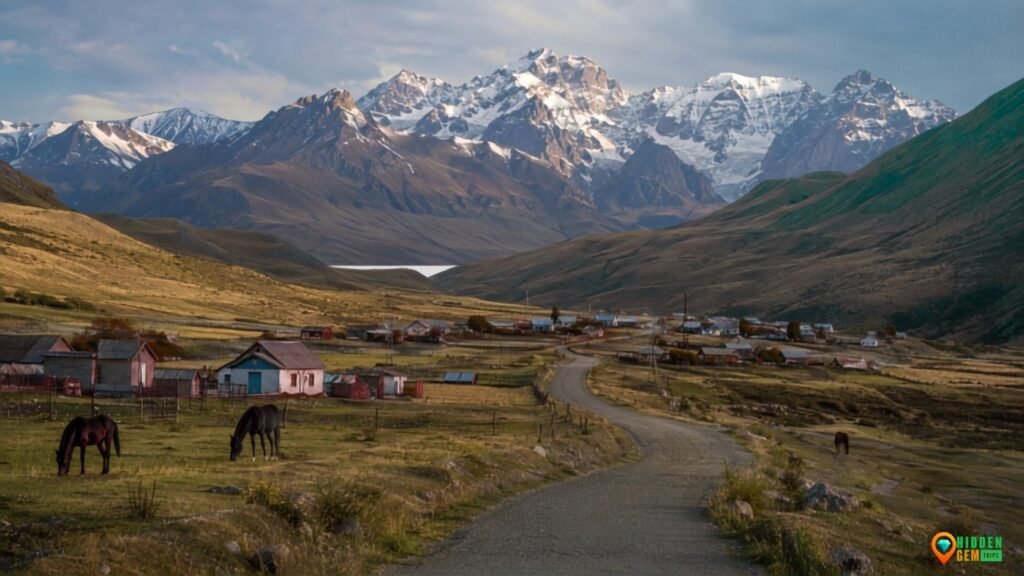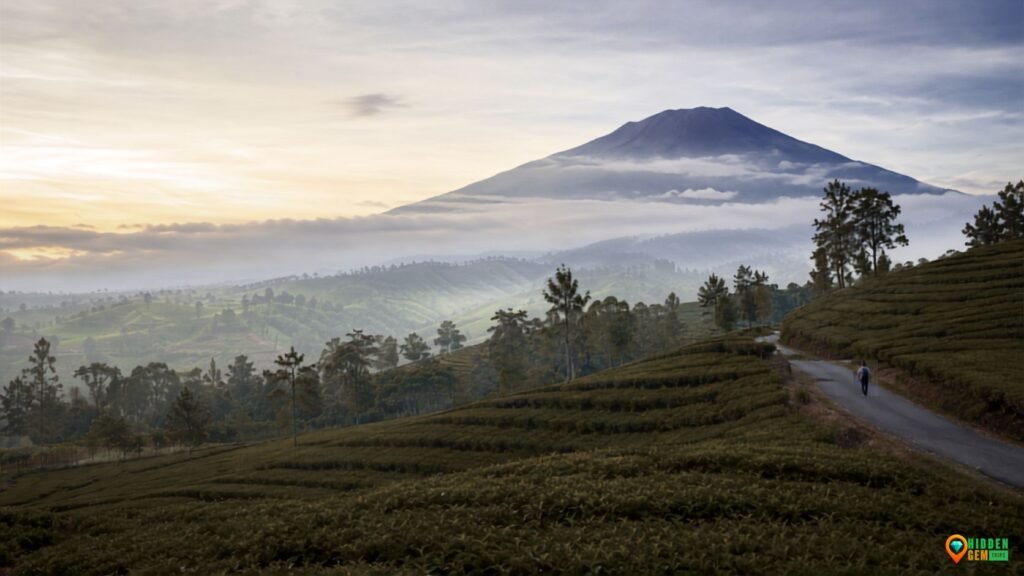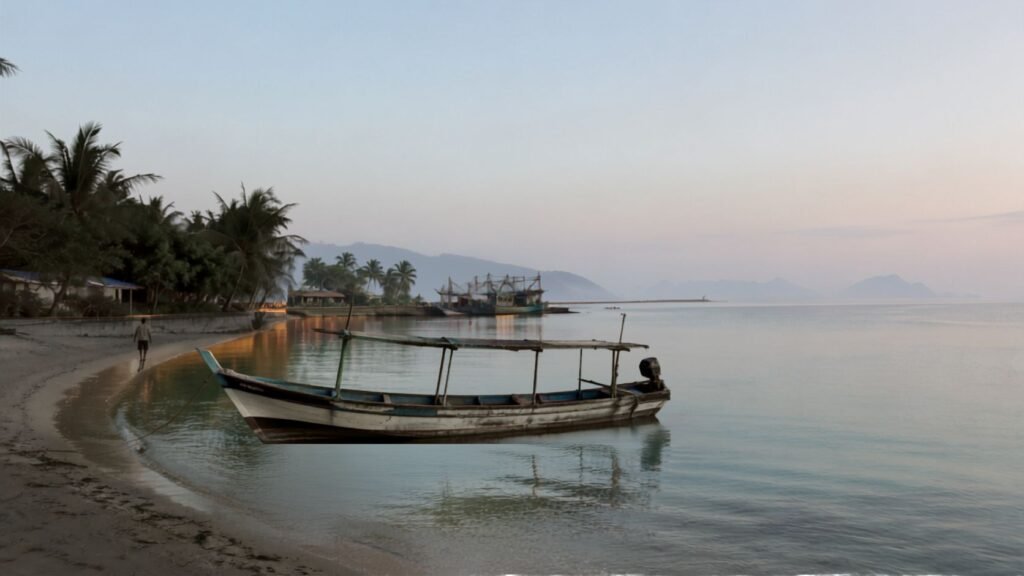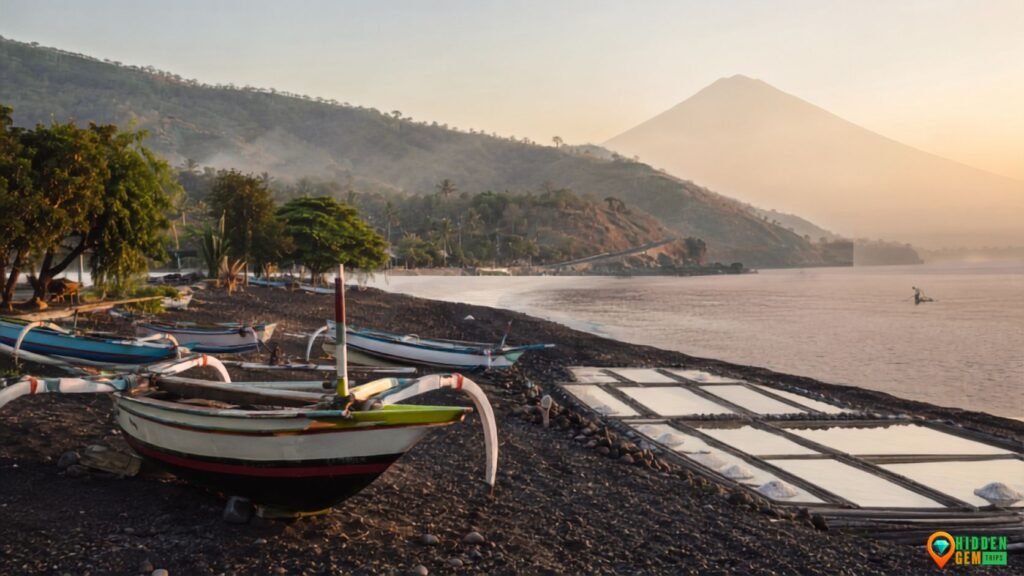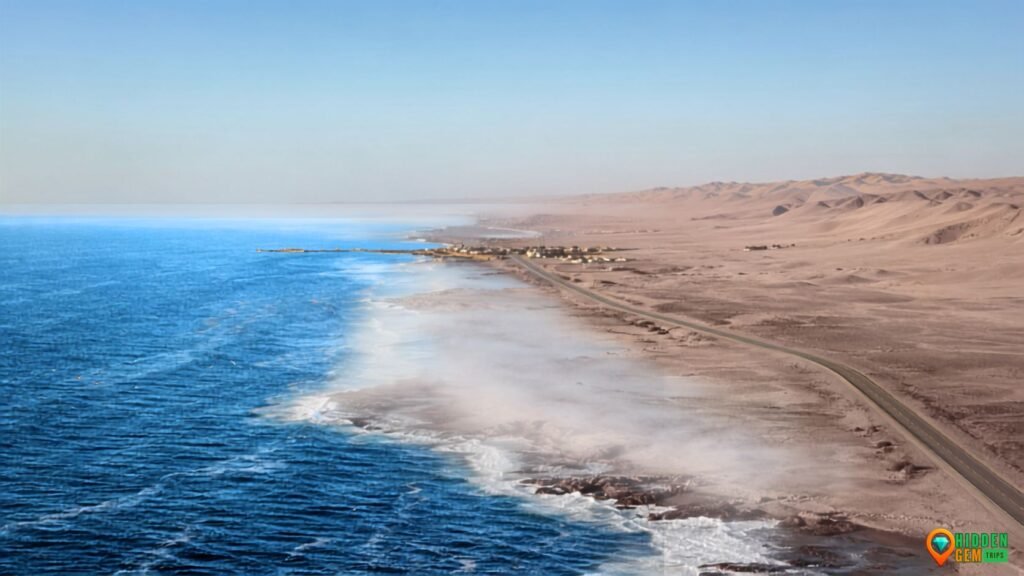

When most people think of the huge, wild island of Borneo, they imagine dense, impenetrable rainforests. They think of the thick humidity of the jungle canopy, the muddy rivers that swirl through it, and the famous orangutan hair, rust-colored, that swings through dipterocarp trees. While exploring East Kalimantan’s terrestrial wonders is undoubtedly a bucket-list adventure, stopping at the jungle’s edge means missing one of the greatest ecological wonders of our time. If you want to experience the pinnacle of marine biodiversity, you must set your sights offshore to the breathtaking Derawan Islands.
Located in the Celebes Sea, just off the eastern coast of Indonesian Borneo, the Derawan Archipelago is a constellation of 31 islands, though most of the magic centers on four main landmasses: Derawan, Maratua, Kakaban, and Sangalaki. As coral reefs across the planet experience unprecedented bleaching events, Derawan remains a defiant, flourishing refuge in 2026. This is a place where nature is still in charge, where ocean currents control the day, and where every time you go under the water, you feel like you're in a National Geographic documentary.
Why You Need to Look Past Borneo’s Jungles
Indonesia is a vast archipelago, and while tourists traditionally flock to the well-developed infrastructure of the southern islands, those looking to escape the Bali crowds are increasingly seeking out remote frontiers. Even adventurous divers often head straight to the eastern provinces. But if you are looking for an alternative to Raja Ampat that offers comparable megafauna without the exorbitant liveaboard prices, East Kalimantan is the answer.
The beauty of Borneo lies in its duality. You can spend a week navigating the Mahakam River in search of freshwater dolphins and indigenous Dayak culture, and within a day’s travel, be swimming alongside ancient sea turtles in crystal-clear waters. The Derawan Archipelago is the ultimate frontier for ocean lovers. However, because it lacks the massive marketing budgets of other Indonesian hubs, it has remained largely off the radar for casual vacationers.
Those who make it here are usually dedicated divers, marine biologists, or intrepid backpackers who use budget travel hacks to reach remote corners of the globe. The absence of five-star mega-resorts is not a drawback; it is the archipelago’s greatest asset. It compels you to connect with the local Bajau (Sea Nomad) communities, respect the fragility of the atolls, and appreciate the raw, unfiltered power of the ocean.
Entering the Realm of the Breathtaking Derawan Islands
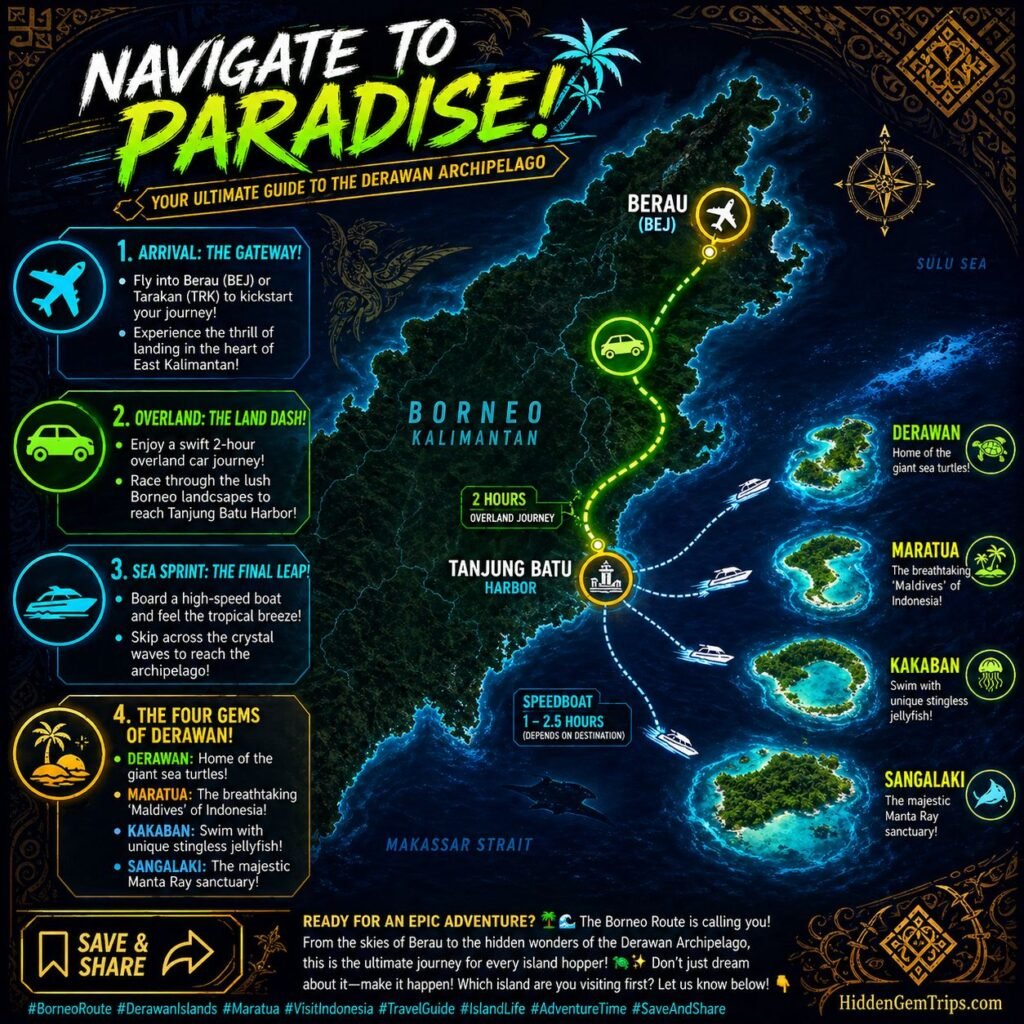
Reaching this aquatic paradise is an adventure that requires patience. The breathtaking Derawan Islands lack an international airport. Your journey will typically begin with a flight to either Balikpapan or Samarinda, followed by a domestic flight to the smaller regional airport of Berau (Kalimarau Airport).
From Berau, you must hire a car for a two- to three-hour overland journey along winding roads and through palm oil plantations until you reach the small, sleepy harbor town of Tanjung Batu. Here, you will charter a speedboat. As the boat tears across the open ocean, the murky coastal waters slowly give way to an electrifying, translucent turquoise. After about 45 minutes, the stilt houses of Derawan Island will rise from the horizon, signaling your arrival in another world.
Because of multiple transport legs, boat transfers, and the sea's unpredictability, the right gear is non-negotiable. Pack essential island gear — heavy-duty dry bags, reef-safe sunscreen, polarized sunglasses, and a dependable rash guard. Leave the rolling luggage at home; you will step directly from boats into waist-deep water.
7 Epic Experiences in the Archipelago
The magic of Derawan lies in the fact that each of its main islands offers a distinct, world-class ecological phenomenon. You are not just visiting one ecosystem; you are traversing a vast, diverse marine playground. Here are the seven secrets that make this archipelago so spectacular.
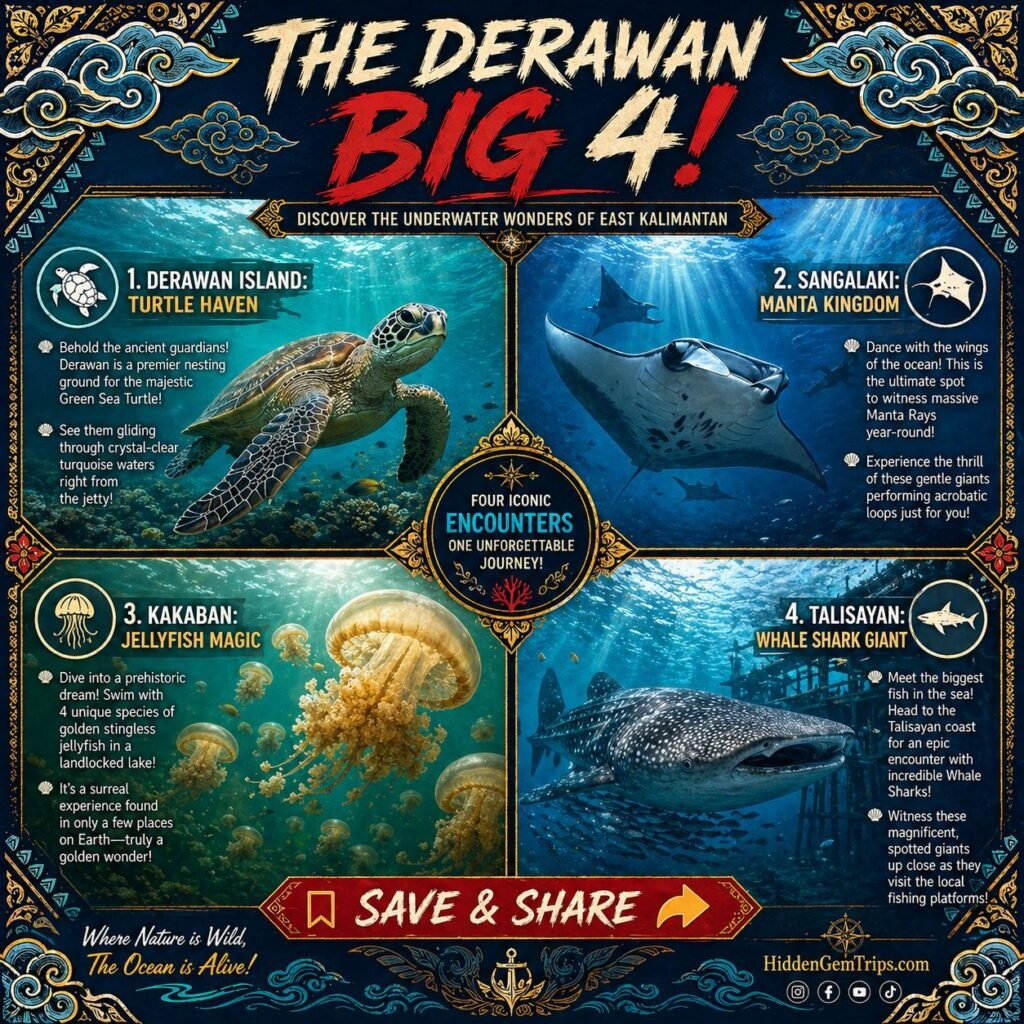
1. Kakaban Island: Swimming with Stingless Jellyfish
Kakaban Island is a massive, uplifted coral atoll covered in dense jungle. At the island's center lies a large, brackish lake. Thousands of years ago, geological forces lifted the reef above sea level, trapping seawater and marine life. Over millennia, rainwater diluted the lake, and the trapped wildlife evolved in total isolation.
Because the lake lacks natural predators, the jellyfish here have evolved to lose their stinging cells. Today, Kakaban Lake is filled with millions of stingless jellyfish across four distinct species: Moon jellyfish, Upside-down jellyfish, Spotted jellyfish, and Box jellyfish (which, unlike their deadly oceanic cousins, are completely harmless here). Slipping into the warm, green waters of the lake and swimming through a dense, pulsating cloud of golden jellyfish is a surreal, almost otherworldly experience. It feels like floating through a living lava lamp.
2. Sangalaki Island: The Manta Ray Cleaning Stations
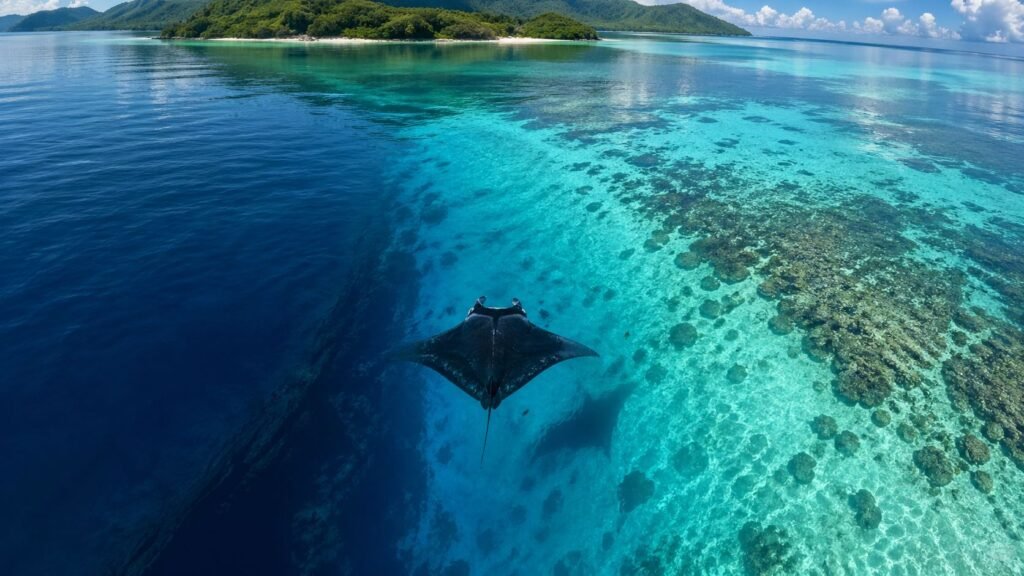
If Kakaban is famous for what is trapped inside it, Sangalaki is famous for the giants that patrol its outer edges. Sangalaki is a globally recognized hotspot for Reef Manta Rays (Mobula alfredi). The currents around this small, sandy island bring nutrient-rich plankton to the surface, creating an endless all-you-can-eat buffet for these graceful leviathans.
You do not need to be an advanced scuba diver to experience this; mantas often feed at the surface, making it one of the best snorkeling experiences on earth. As you slip into the water, you might see a wingspan of up to 4 meters emerge from the blue gloom. They glide effortlessly, looping and barrel-rolling as they filter-feed. Sangalaki is also home to several “cleaning stations”—coral bommies where mantas hover motionlessly while tiny wrasse pick parasites off their skin. Organizations dedicated to marine megafauna conservation actively study the Sangalaki populations because protecting these gentle giants is vital to the health of the entire oceanic ecosystem.
3. Maratua Atoll: Dropping into the Blue Light Cave
While Derawan and Sangalaki are highly accessible to snorkelers, Maratua Atoll is the holy grail for advanced scuba divers. Maratua is a massive, U-shaped atoll with dramatic vertical drop-offs and strong oceanic currents. These currents draw in the big pelagic fish: massive schools of barracuda, dogtooth tuna, eagle rays, and reef sharks.
The most famous dive site here is “The Channel” (also known as Big Fish Country). Divers use reef hooks to tether themselves to the rock face, hanging like kites in the roaring current as walls of apex predators swim past. But the true secret of Maratua is the Blue Light Cave. This cavern dive begins with a descent into a dark hole in the reef flat. As you walk down the chimney, you enter a large cave deep beneath. The only light comes from a blue ray of sunlight that comes in through the door above. It is a haunting, breathtaking dive reserved strictly for experienced underwater explorers.
4. Derawan Island: Sleeping Above the Sea Turtles
Derawan Island is the hub of the archipelago, where most homestays and guesthouses are located. These accommodations are built on wooden stilts that extend over the shallow reef. But the true residents of Derawan are the Green Sea Turtles.
Derawan is one of Indonesia's largest nesting sites for green turtles. You don't even need to get in a boat to see them; you can sit on the balcony of your overwater bungalow with a cup of local coffee and watch massive turtles casually grazing on the seagrass beds just a few feet below. At high tide, they pop their heads out of the water to breathe, filling the quiet air with the sharp hiss of their exhalations. At night, if you are lucky and incredibly quiet, you may witness female turtles dragging themselves onto the beaches to lay their eggs in the moonlight.
5. Talisayan: Dawn Encounters with Whale Sharks
While not technically an island, the coastal waters off the mainland town of Talisayan (often visited on a day trip from Derawan) hide a massive secret: whale sharks. These are the largest fish in the ocean, reaching up to 12 meters in length.
The captivating thing about this place is the interplay between whale sharks and the local bagans (traditional floating fishing platforms). The fisherman pulls up nets full of little baitfish in the early morning. Over time, whale sharks have learned that the bagans are a reliable food source. They congregate around the wooden structures at dawn, slurping up the small fish that slip through the nets. Snorkeling beside a creature the size of a school bus, looking into its eye, and realizing it is completely gentle is a humbling experience that permanently alters your understanding of the ocean.
6. Finding Hidden Karst Lagoons
The geology of the beautiful Derawan Islands hides amazing things that only those who are ready to explore will find. There are hidden lagoons and sea caves around Kakaban and Maratua that were formed in the sharp limestone karst.
If you hire a local guide with a small motorized canoe, you may explore tight rock fractures that lead to secret emerald-green lagoons. The surf waves can't reach this water because the tall rock walls are covered with wild orchids and pitcher plants. Baby blacktip reef sharks and stingrays need these lagoons to grow up. It's the finest place to drop anchor, turn off the engine, and float in peace.
7. The Best Digital Detox on Empty Sands
In a society where everything is connected, being alone is a luxury. While Derawan Island has patchy cell service, the outer islands have almost none. If you are serious about finding untouched paradises, you must be willing to disconnect.
You can ask your boat captain to drop you off on a completely uninhabited sandbank (like Gusung Sanggalau) at low tide. For a few hours, you will have an entire island to yourself. There is nothing but blindingly white sand, turquoise water in every direction, and the sound of the wind. It is the ultimate setting for embracing slow travel. Without the distraction of social media or email, you are forced to be fully present, feeling the sand’s granular texture and watching the tide slowly reclaim the beach.
How to Visit the Derawan Archipelago in a Responsible Way
The Derawan Islands' ecological balance is very delicate. Coral reefs are very susceptible to changes in temperature, pollution, and damage to their bodies. What you do as a guest directly affects how long this paradise lasts.
First, never touch marine life. Whether it is a sea turtle, a manta ray, or the coral reef itself, your touch can transmit harmful bacteria and destroy the protective mucus layer on marine animals. When swimming in Kakaban Lake, you must not wear sunscreen (even reef-safe varieties), as the chemicals can accumulate in the enclosed lake and harm the jellyfish. Furthermore, you must not wear fins in the lake, as a single forceful kick can shred the delicate bodies of the stingless jellyfish.
When diving or snorkeling, practice perfect buoyancy. If you are looking to get certified, ensure you train with reputable organizations that prioritize dive safety and insurance, so you understand how to navigate strong currents without panicking or grabbing the reef.
Support the local economy by dining at locally owned warungs (small restaurants) and by hiring native Bajau boat captains. Advocate for coral reef protection by refusing single-use plastics during your stay. Everything you bring to the islands must be taken back to the mainland, as waste management on small atolls is virtually nonexistent.
The beautiful Derawan Islands show what the oceans looked like before the effects of global civilization. This part of the world is wild, untamed, and very beautiful. We can make sure that mantas keep dancing, turtles keep hatching, and reefs stay healthy for years to come by traveling responsibly.
Frequently Asked Questions (FAQ)
1. What time of year is ideal to go to the Derawan Islands?
From April to October, when it is dry, is the greatest time to go. The waters are usually calmer during these months, which makes boat trips easier and diving and snorkeling much better because you can see better underwater.
2. Do I have to be a skilled scuba diver to enjoy Derawan?
Not at all! While sites like Maratua require advanced certification because of strong currents, the main attractions—the turtles at Derawan, the jellyfish at Kakaban, and the manta rays at Sangalaki—are easily accessible and spectacular for snorkelers.
3. Are there ATMs or banks on the islands?
No. There are no ATMs on Derawan, Maratua, Kakaban, or Sangalaki. You must withdraw all the Indonesian Rupiah you will need in Berau or Tarakan before you begin your journey. Many homestays and local boat operators do not accept credit cards.
4. Is there a risk of malaria in the Derawan Archipelago?
While the risk on the small islands is lower than in the deep Bornean jungle, East Kalimantan is a malaria-endemic zone. You should consult a travel doctor before your trip about antimalarial medication and be rigorous about using mosquito repellent, especially at dawn and dusk.
5. How long should I plan to stay in Derawan?
Because travel to the islands is significant (often taking a full day from Jakarta or Bali), you should plan for a minimum of 5 to 7 days in the archipelago. This gives you enough time to visit the “Big 4” islands without feeling rushed by the weather or boat schedules.
Travel Disclaimers
The Derawan Archipelago is a remote marine environment subject to unpredictable weather and strong ocean currents; travelers must assess their swimming and diving abilities before entering the water. Medical facilities on the islands are extremely limited, offering only basic first aid, so comprehensive travel and dive evacuation insurance is mandatory. Wildlife encounters, including mantas and whale sharks, are natural occurrences and cannot be guaranteed on any given day. Finally, visitors must strictly adhere to local conservation rules, including bans on certain sunscreens in enclosed lakes and on maintaining safe distances from all marine megafauna.