
Research-Based Guide • Last Verified: 12 September 2026 • Field-Tested: No
For many hikers, European mountain travel is closely associated with the Alps, Dolomites, and Pyrenees. Northern Albania offers a different experience: village-based accommodation, long mountain trails, dramatic limestone peaks, and considerably less large-scale resort infrastructure than many established alpine regions.
Improved roads, guesthouses, and maintained trails have made the Albanian Alps easier to explore in recent years. Theth in particular has developed into an established alpine tourism center, so the region should no longer be described as undiscovered or untouched. Its appeal instead comes from the combination of increasing accessibility, rural communities, protected landscapes, and trail-based travel.
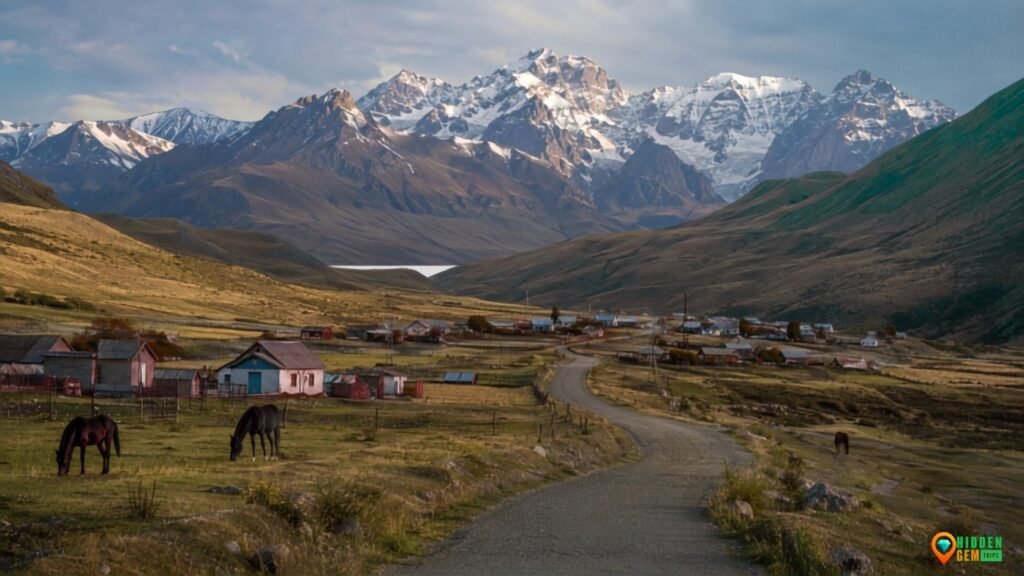
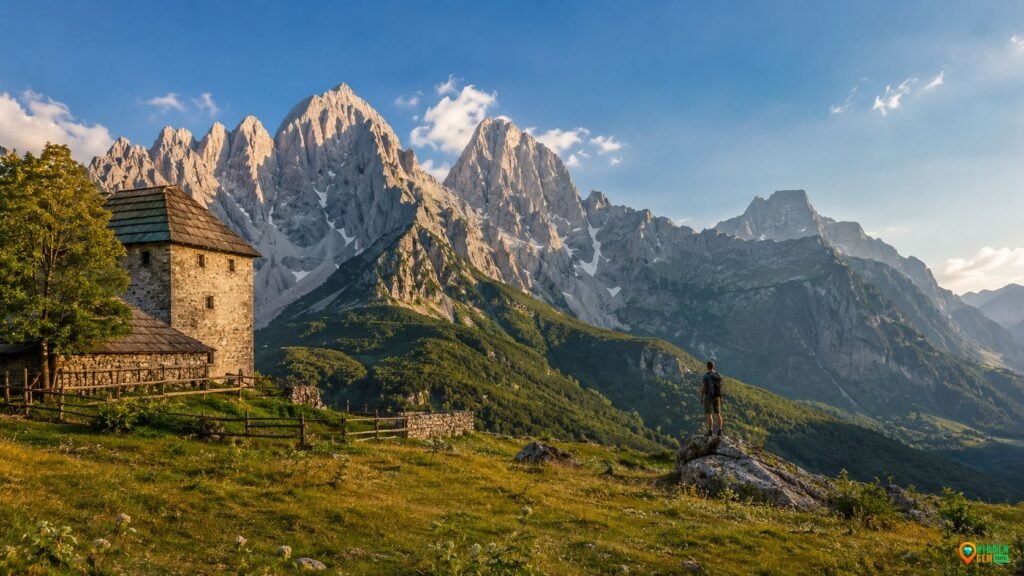
The Accursed Mountains—known in Albanian as Bjeshkët e Namuna and regionally as Prokletije—extend across Northern Albania and neighboring parts of Kosovo and Montenegro. The route between Theth and Valbona has become one of the best-known ways to experience the range, combining steep limestone peaks, remote valleys, family-run guesthouses, and a trekking culture that remains less intensively developed than many major Alpine destinations.
For travelers drawn to dramatic mountain landscapes, remote valleys, and multi-day trekking, Northern Albania offers a compelling alternative to Europe’s more developed alpine regions. Clear streams, family-run guesthouses, shepherding traditions, and long sections of trail through forests and limestone peaks all contribute to the character of the Accursed Mountains. Hikers should still treat or filter water from natural sources unless its safety has been confirmed locally. For more ideas on similarly remote destinations, explore our guide to lesser-known wilderness escapes.
Why Albania’s Accursed Mountains Are Drawing More Trekkers
Albania’s Accursed Mountains are attracting growing attention from hikers who want dramatic scenery, family-run guesthouses, and trekking routes that feel less intensively developed than many of Europe’s best-known mountain regions. The Theth–Valbona route in particular has become a recognizable gateway to Northern Albania’s alpine landscape, while longer cross-border routes offer options for more experienced trekkers.
Albania’s tourism sector has expanded rapidly in recent years, but that growth should not be interpreted as proof that eco-conscious travelers are specifically driving demand in the Accursed Mountains. A World Bank analysis of Albania’s tourism sector highlights the country’s natural landscapes, traditional villages, and potential to diversify beyond concentrated sun-and-sand tourism. For the Accursed Mountains, that broader shift creates opportunities for hiking, rural guesthouses, and nature-based tourism while also increasing the need for careful management as visitor numbers grow.
The Shift from the Alps: Seeking a Less-Developed Mountain Experience
The Accursed Mountains offer a different kind of trekking experience from Europe’s heavily developed alpine regions. Instead of extensive lift networks and large resort infrastructure, much of the visitor experience is built around village-based accommodation, hiking trails, road transfers, and locally run services. For travelers seeking a more rural alternative to the Alps, Northern Albania can provide dramatic mountain scenery without the same level of large-scale tourism development.
Accessibility has improved considerably in recent years, particularly around Theth and Valbona, where guesthouses, roads, and maintained hiking routes have made independent travel easier. That growth also means the region should no longer be described as untouched or infrastructure-free. Its appeal lies in the balance between increasing accessibility and the continued presence of mountain villages, protected landscapes, and trail-based travel.
Why Are They Called the “Accursed Mountains”?
The name is as striking as the landscape itself. In Albanian, Bjeshkët e Namuna and the regional name Prokletije both translate roughly as “Accursed Mountains.” The exact origin of the name is uncertain, and several different legends have developed around the range over generations.
Folklore Behind the Name
One widely repeated legend says that the devil created the mountains in a single day, carving their steep ravines and jagged limestone peaks. Another tells of a mother traveling through the mountains with her children who, unable to find water during a difficult journey, cursed the harsh landscape. These stories should be understood as folklore rather than established explanations for the name, but they reflect how generations of communities have interpreted the range’s difficult terrain and dramatic appearance.
A Landscape Shaped by Isolation
Geography has played a major role in the region’s history. Deep valleys, high passes, severe winters, and difficult access allowed many northern highland communities to remain relatively isolated for long periods, preserving distinctive traditions and social structures. The relationship between these communities and successive political authorities, including the Ottoman Empire, was complex and varied, so the mountains should not be described simply as an impenetrable barrier that kept outside rule away.
Isolation During Albania’s Communist Era
Albania experienced almost five decades of political isolation under communist rule from 1944 to 1990, with border regions subject to strict state control. The mountainous frontiers with Montenegro and Kosovo were especially sensitive areas during this period, and remnants of military infrastructure can still be encountered in parts of the country. Today, improved roads, guesthouses, and hiking routes have made the Albanian Alps far more accessible, although their geography still creates a sense of remoteness compared with many established European mountain destinations.
The Kanun, Besa, and Highland Hospitality
Northern Albania’s highland culture has long been influenced by customary traditions associated with the Kanun of Lekë Dukagjini. The Kanun is commonly linked to the 15th-century Albanian nobleman Lekë Dukagjini, although the customary rules themselves developed over a much longer period and were transmitted orally before being collected and published in written form in the early 20th century. Its provisions historically addressed subjects including family life, property, dispute resolution, honor, hospitality, and community obligations.
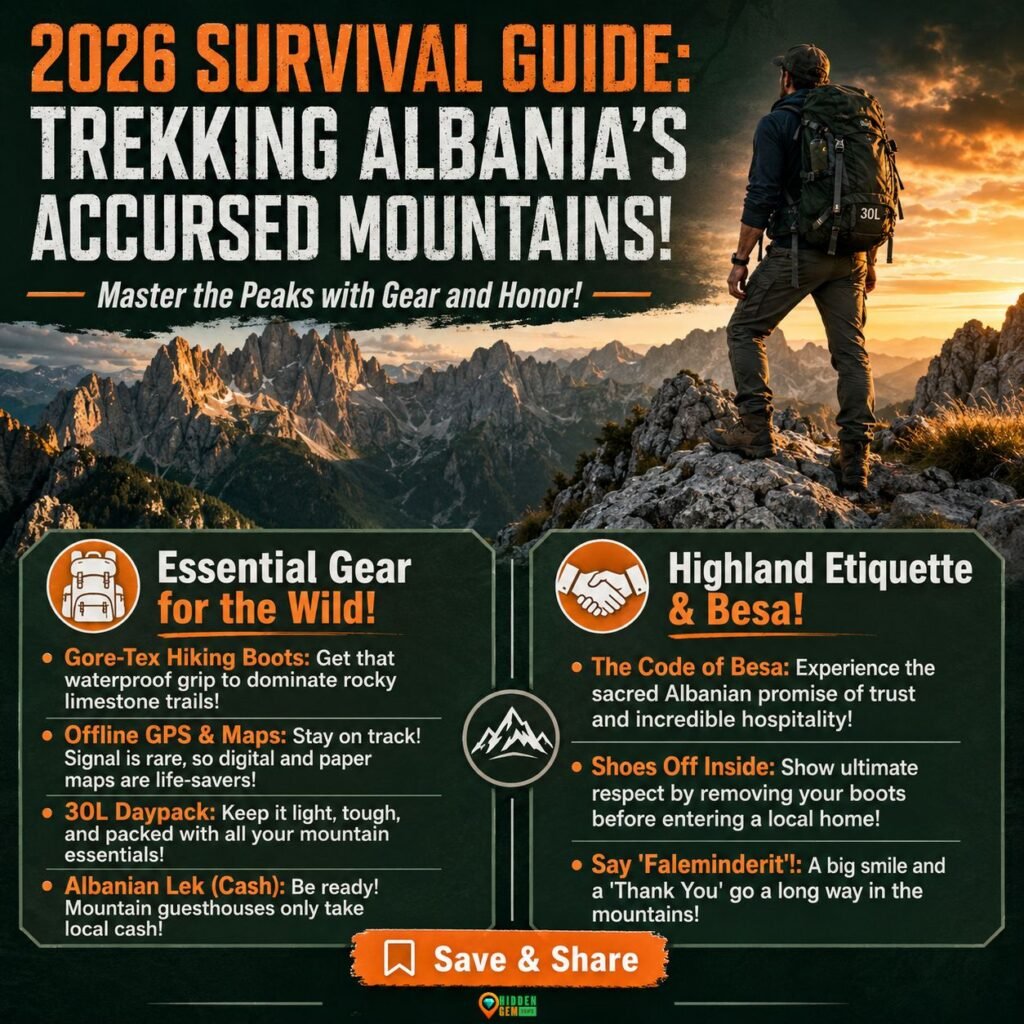
One of the best-known concepts associated with Albanian customary culture is besa, often understood as a pledge of honor, trust, or keeping one’s word. Hospitality also holds an important place in the Kanun; one well-known passage states that “the house of the Albanian is of God and of the guest.” Travelers staying in family-run guesthouses in Theth, Valbona, and surrounding villages may still encounter a strong culture of hospitality, although modern guesthouse experiences should not be treated as literal expressions of historical Kanun rules.
Understanding these traditions can add useful context to a journey through Northern Albania, but cultural hospitality should never be interpreted as a guarantee of personal safety. Hikers should still follow normal travel precautions, use reputable accommodation and transport providers, and check current official travel advice before entering remote mountain areas.
The Theth–Valbona Hike: Crossing the Valbona Pass
The point-to-point hike between Theth and Valbona is one of the best-known routes in the Albanian Alps. It crosses the Valbona Pass at roughly 1,800 meters and links two mountain valleys through forest, alpine meadows, rocky slopes, and high-pass terrain. The route can be walked in either direction, and logistics often influence the choice more than scenery alone.
Technical Breakdown: What to Expect on the Trail
This is a full-day mountain hike rather than a casual village walk. Trail measurements vary slightly depending on the exact start and finish points, but most route descriptions place the crossing at roughly 14 to 17 kilometers, usually requiring around 6 to 8 hours for reasonably fit hikers.
- Distance: Approximately 14–17 kilometers.
- Duration: Around 6–8 hours, depending on fitness, weather, trail conditions, and stops.
- Highest Point: Valbona Pass, at roughly 1,800 meters.
- Terrain: Forest paths, alpine meadows, rocky sections, scree, and sustained uphill and downhill walking.
- Difficulty: Moderate to challenging for hikers accustomed to full-day mountain routes.
Planning the Crossing
The route can be completed from Theth to Valbona or in the opposite direction. Some hikers prefer Valbona to Theth because the approach to the pass can feel more gradual, while others choose their direction based on onward transport and accommodation plans. Arrange luggage transfer or leave unnecessary gear at your accommodation so you can hike with a lighter daypack.
Start early enough to allow a generous margin before afternoon weather or darkness, and check trail and snow conditions locally before departure. Conditions at the pass can differ significantly from those in the valleys, particularly early or late in the hiking season.
Stay on marked trails and avoid following faint livestock paths or unverified shortcuts simply for a better viewpoint. Weather, loose rock, and route-finding errors can turn a short detour into a much more serious problem in high mountain terrain.
Hidden Trails Beyond the Basics: Maja Jezercë and the Peaks of the Balkans
Beyond the Theth–Valbona crossing, experienced hikers can explore more demanding objectives and longer routes across the Albanian Alps.
Maja Jezercë: A Serious High-Mountain Objective
At 2,694 meters, Maja Jezercë is the highest peak in the Albanian Alps and the second-highest mountain in Albania. Reaching the summit is considerably more demanding than the Theth–Valbona crossing and can involve long approaches, steep rocky terrain, scrambling, route-finding, and lingering snowfields depending on the season and chosen route.
Experienced hikers and mountaineers should check current mountain conditions locally before attempting the summit. Snow and ice can persist well into summer in shaded couloirs, and equipment such as crampons or an ice axe may be appropriate in some conditions. Travelers without strong alpine experience should consider hiring a qualified local mountain guide.
The Peaks of the Balkans: A Cross-Border Long-Distance Trail
For travelers with more time, the Peaks of the Balkans trail offers a much longer journey through Albania, Kosovo, and Montenegro. The official route forms a roughly 192-kilometer circuit through high mountain landscapes, remote villages, and cross-border passes, typically divided into around 10 stages.
The route reaches elevations of about 2,290 meters and involves substantial cumulative ascent, so it requires good fitness, mountain equipment, and careful navigation. Although much of the trail is marked, hikers pass through remote and sometimes uninhabited terrain. Cross-border sections also require advance planning and, depending on the itinerary, appropriate border-crossing permissions. Travelers should use current official trail information, recent GPS data, and local advice when organizing the route.
The Budget Advantage: Lower-Cost Mountain Travel
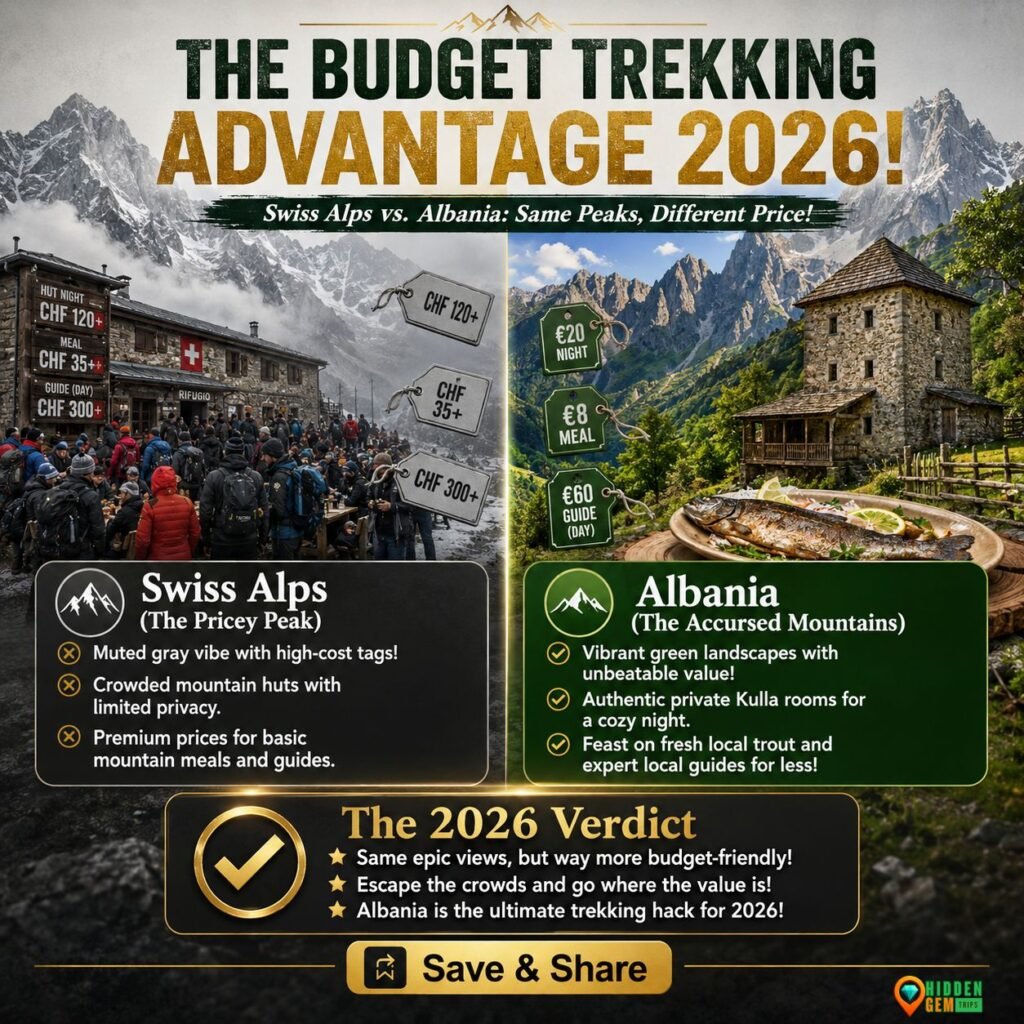
One of the practical attractions of trekking in Northern Albania is that accommodation, meals, and local transport can still cost considerably less than in many established Western European mountain regions. That does not make the Accursed Mountains a universally “cheap” destination—prices rise during the summer hiking season and vary by comfort level—but travelers can often build a multi-day mountain itinerary without the costs associated with major Alpine resorts.
Typical Costs in Theth and Valbona
According to Theth.net’s 2026 practical guide, indicative prices in Theth include roughly €30–60 for a guesthouse room, €8–15 for a guesthouse dinner, and about €25–40 per person for half-board. Current booking listings in both Theth and Valbona also show that rates can vary substantially by property, season, room type, and included meals, so travelers should confirm prices directly before relying on a fixed budget.
For comparison, the Swiss Alpine Club reports that an overnight stay with half-board at a staffed mountain hut in Switzerland typically costs around CHF 70–100. The comparison is not exact—Swiss huts and Albanian family-run guesthouses offer different types of accommodation—but it illustrates why Northern Albania can remain attractive to hikers looking for a lower-cost European mountain experience.
A realistic budget should also account for transfers between Shkodër, Theth, Valbona, and Lake Koman, luggage transfers if needed, guides for more technical routes, and extra nights when weather affects plans. Booking locally run accommodation and services can also keep more tourism spending within mountain communities.
Responsible Tourism in the Albanian Highlands
Tourism is creating new economic opportunities in Northern Albania, but rapid growth also brings pressure on mountain landscapes, village infrastructure, waste systems, water resources, and local culture. Rather than assuming that every rural stay is automatically “regenerative,” travelers can look for businesses that employ local residents, buy food and services locally, manage waste responsibly, and respect the environmental limits of mountain communities.
UN Tourism’s rural tourism framework emphasizes tourism as a tool for rural development, community well-being, cultural heritage protection, and stronger local value chains. In the Accursed Mountains, these principles are particularly relevant as villages such as Theth become easier to reach and attract more visitors.
Family-Run Guesthouses and Agritourism
Family-run guesthouses are an important part of the trekking experience in Theth, Valbona, and surrounding villages. World Bank reporting on improved access to Theth has documented growing demand for local accommodation and services, along with residents converting family homes into guesthouses, hostels, and other small tourism businesses.
Albania’s broader agritourism sector also creates opportunities to connect tourism with local agriculture, traditional foods, and rural livelihoods. Choosing locally owned accommodation, eating at family-run businesses, and purchasing locally produced food or crafts can help keep a larger share of visitor spending within mountain communities.
Travelers should still avoid romanticizing rural life or assuming that every guesthouse operates in the same way. Ask hosts about local products, food sourcing, village customs, and environmental practices, and approach the stay as an exchange with a living community rather than as a staged version of traditional mountain life.
Culinary Heritage: Tasting the Mountains
Food in Northern Albania reflects the practical traditions of mountain communities, with meals often built around locally available meat, dairy products, bread, seasonal produce, and preserved ingredients. Rather than treating every dish as uniquely tied to the Accursed Mountains, travelers can use guesthouse meals as a way to learn how regional food traditions vary between valleys and families.
- Fërlik: Roasted meat is one of the dishes specifically associated with traditional cuisine in Theth. The official Albania tourism guide to Theth also highlights locally prepared trout and dairy products as characteristic foods of the area.
- Flija: This layered dish is prepared gradually under a saç, with thin layers cooked one at a time and typically served with cream, sour cream, or fresh butter. Albania’s official tourism website describes flija as a symbolic mountain dish closely associated with hospitality, family gatherings, and community traditions.
- Local Dairy and Trout: Cheese, yogurt, butter, and trout may appear on guesthouse menus depending on the location and season. Availability varies, so meals are often shaped by what individual families produce or source locally rather than by a fixed “Albanian Alps menu.”
- Rakia: Fruit brandy is an established part of Albanian culinary culture and may be offered as a gesture of hospitality. Northern Albanian varieties can be made from fruits such as plums, grapes, pears, or other locally available produce. The official Albania tourism site describes family-produced rakia as part of regional hospitality traditions. Visitors who do not drink alcohol can simply decline politely; accepting it should never be presented as a cultural obligation.
Biodiversity in the Albanian Alps
The forests, rivers, alpine meadows, and rocky highlands of Northern Albania support a diverse range of wildlife. Species recorded in the wider Albanian Alps include brown bears, grey wolves, chamois, wild goats, and golden eagles, although sightings of large mammals are uncommon and should never be expected as part of a hiking itinerary. Albania’s official tourism information for Theth also highlights the area’s rich birdlife, alpine habitats, and rare wildlife.
The Balkan Lynx: Critically Endangered and Rarely Seen
The Balkan lynx (Lynx lynx balcanicus) is one of Europe’s rarest wild cats and is classified as critically endangered. According to the Balkan Lynx Recovery Programme, fewer than 50 mature individuals are estimated to remain across its range in the southwestern Balkans.
In Albania, conservation organization PPNEA estimates that only a very small number of mature animals remain, with confirmed or potential habitat in several mountainous regions. Lynx have been recorded in northern Albania, but travelers should not expect to see one. Their presence is better understood as an indicator of the ecological importance of connected forest and mountain habitats than as a wildlife-viewing attraction.
The Blue Eye of Theth
The Blue Eye of Theth, or Syri i Kaltër, is one of the area’s best-known natural attractions. The spring-fed pool lies near Nderlysa in a forested gorge and is known for its vivid blue and turquoise water. Albania’s official tourism website includes the Blue Eye among the main natural attractions around Theth.
Reaching the pool involves walking over uneven and occasionally steep terrain, so sturdy footwear and adequate water are useful. The spring water remains extremely cold even in summer, and visitors should avoid jumping from rocks or entering the water where currents, depth, or submerged hazards are unclear.
Stay on established trails when exploring the gorge. Rather than following faint side paths or unverified shortcuts in search of secluded swimming spots, use marked routes and ask locally about current trail conditions, especially after rain when rocks and stream crossings can become slippery.
Essential Logistics for the Albanian Alps
Reaching Theth, Valbona, and the surrounding Accursed Mountains requires more planning than visiting Albania’s main cities, but access has improved considerably. Most itineraries begin in Shkodër, with road transfers to Theth or combinations of bus, ferry, and minibus connections toward Valbona. Schedules can change seasonally, so confirm transport with your accommodation or operator shortly before departure.
Lake Koman: A Scenic Route Toward Valbona
Lake Koman is one of the most memorable ways to approach Valbona, but it is not a mandatory part of every itinerary. The reservoir was created in 1985 following construction of the Koman Dam, and Albania’s official tourism website describes its canyon scenery and ferry journey as among the most spectacular in Europe.
Passenger ferries operate between Koman and Fierzë, with onward transfers available toward Valbona. Current schedules, seasonal operating periods, and prices should be checked directly with ferry operators such as Komani Lake Ferry Berisha before travel, particularly during shoulder season or when connecting with same-day transport.
Hiking Season and Weather Preparation
The main hiking season for the Theth–Valbona crossing is generally from mid-June into early October. Snow can remain around the high pass into early summer, while shorter daylight, colder temperatures, and reduced guesthouse availability become more important considerations later in the season. Current trail conditions should always take priority over fixed calendar dates.
For the classic crossing, carry appropriate hiking footwear, sun and rain protection, warm layers for the pass, enough food and water, and an offline map. More technical routes such as Maja Jezercë may require additional alpine equipment depending on snow and weather conditions.
Mountain weather can change quickly, so check forecasts locally before setting out and leave enough time to complete the route before dark. Mobile coverage can be inconsistent in valleys and remote sections of trail, making offline navigation and a clearly communicated hiking plan especially useful.
Conclusion: Why the Accursed Mountains Are Worth the Journey
Albania’s Accursed Mountains offer a distinctive combination of high mountain scenery, village-based hospitality, long-distance hiking, and cultural traditions that continue to shape life in the region. Improved access has made places such as Theth and Valbona easier to reach, but the experience still rewards travelers who are comfortable with mountain conditions, slower logistics, and itineraries that leave room for weather and local advice.
For hikers looking beyond Europe’s most developed alpine destinations, Northern Albania can provide a compelling alternative without needing to be described as untouched or undiscovered. Approaching the region with realistic expectations, respect for local communities, and careful preparation allows the landscape and culture to remain the focus of the journey.
Frequently Asked Questions (FAQ) About the Accursed Mountains
1. Are Albania’s Accursed Mountains safe for solo travelers?
Solo travelers regularly visit Theth, Valbona, and the surrounding Albanian Alps, but no mountain destination should be described as completely safe. The main practical risks include rapidly changing weather, difficult terrain, navigation errors, injury, and limited access to assistance in remote areas. Tell your accommodation where you plan to hike, stay on established trails, carry offline navigation, and avoid unfamiliar off-trail routes. Travelers should also review the latest official Albania travel advice before entering remote mountain areas.
2. Do I need to hire a local guide?
A guide is not essential for every hike. The classic Theth–Valbona crossing follows an established and marked route and can be suitable for experienced independent hikers when trail and weather conditions are good. A qualified local guide becomes more valuable for technical objectives such as Maja Jezercë, unfamiliar routes, early-season snow conditions, or itineraries involving difficult navigation. Always check current conditions locally rather than assuming a normally straightforward trail will be safe on a particular day.
3. Is there ATM access or Wi-Fi in Theth and Valbona?
Cash remains important in the Albanian Alps. ATMs are limited or may be unavailable in the mountain valleys, and many guesthouses, local transport services, restaurants, and small businesses still rely heavily on cash. Withdraw enough Albanian lek before leaving Shkodër or another larger town rather than depending on finding a working ATM after arrival.
Wi-Fi is available at many guesthouses, but speed and reliability vary considerably. Mobile coverage can also become patchy or disappear on high passes and remote sections of trail. Theth.net’s current practical information recommends arriving prepared with cash and offline navigation rather than relying on continuous connectivity.
4. Can I drink the water in guesthouses or from mountain streams?
Do not assume that all mountain water is automatically safe simply because it looks clear. Some guesthouses use spring-fed water that hosts consider suitable for drinking, but water sources and treatment systems vary. Ask your accommodation directly if its tap water is considered potable.
For streams, springs, and other untreated natural water sources on the trail, filtering or otherwise treating the water is the safer approach. The CDC’s guidance for hikers and travelers recommends treating water whenever its safety is uncertain.
5. How many days do I need for the Accursed Mountains?
A focused trip of around 3 to 4 days can work if your priority is the Theth–Valbona crossing and one or two nearby attractions. Around 5 to 7 days provides a more comfortable pace and allows additional time for village walks, the Blue Eye of Theth, weather delays, or another hiking route.
Longer itineraries are appropriate for travelers attempting Maja Jezercë or sections of the Peaks of the Balkans trail. Lake Koman can also be incorporated into a Valbona itinerary, but it is an optional scenic route rather than a mandatory part of every visit.
Disclaimer
The hiking, transport, cultural, and logistical information in this guide is based on research and sources available at the time of the latest review. Mountain conditions, trail accessibility, ferry and transport schedules, accommodation availability, and weather can change with little notice.
Hiking in remote alpine terrain involves risks including falls, sudden weather changes, loose rock, snow, navigation errors, and delayed access to medical assistance. Travelers should assess routes according to their own experience and fitness, check current conditions locally, stay on established trails, and seek professional guidance for technical or unfamiliar routes.
Travel insurance that covers the activities and elevations included in your itinerary, as well as emergency medical treatment and evacuation where appropriate, may be worth considering. Always review policy exclusions carefully and consult current official travel advice for Albania before departure.