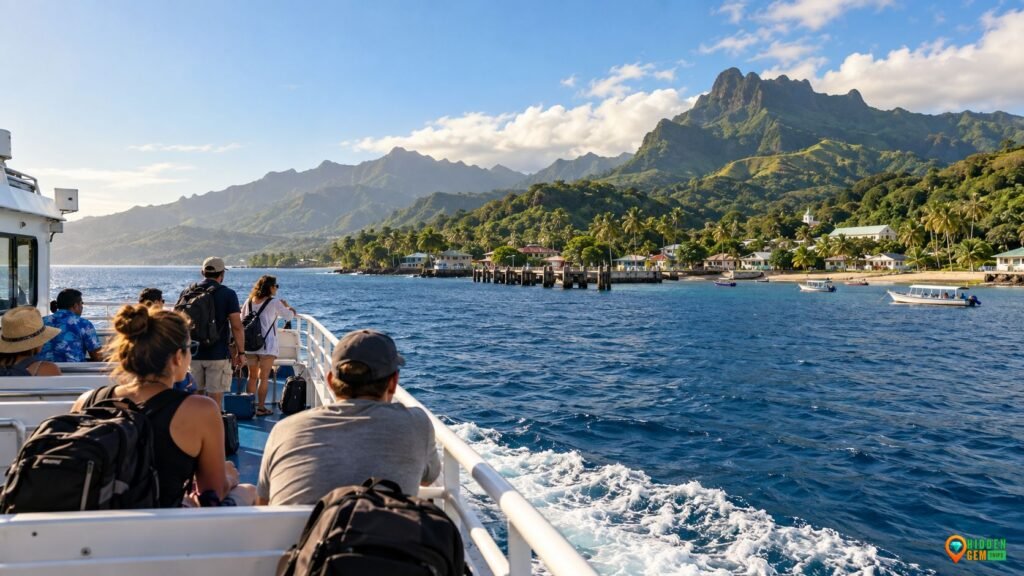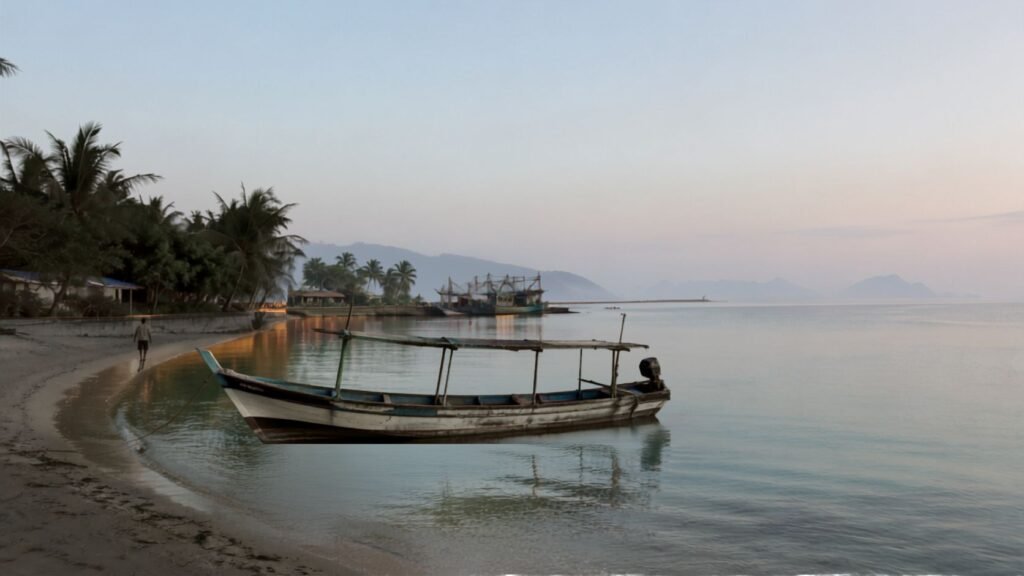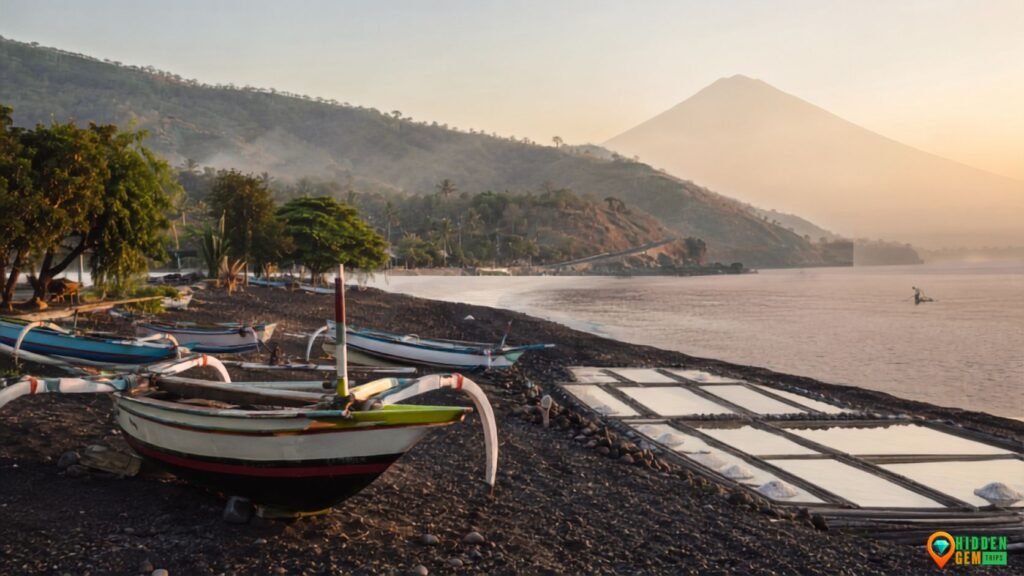

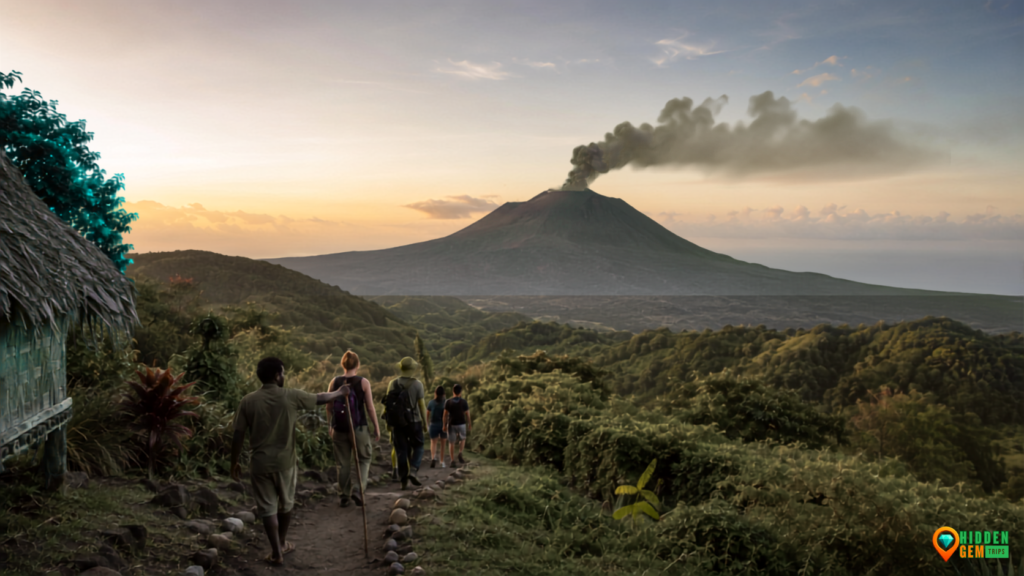
Vanuatu Outer Islands are where the nation begins to emerge as an archipelago of distinct worlds rather than as a single tropical destination. The vista and everyday choices on Tanna are shaped by an active volcano. Instead of using a guest schedule on Pentecost, Naghol uses a seasonal community calendar. Ambrym, Malekula, and Gaua, located further north, mix living kastom, village economies, linguistic diversity, volcanic topography, and transportation systems that don’t act like city breaks.
An out-of-island journey is made unforgettable by this variety, but it also makes planning challenging. You shouldn’t assume that you will visit every stop just because a booking engine displays seven locations on a map. Ceremonies rely on local communities, domestic schedules fluctuate, ships may not run on time, and access to volcanoes may change due to weather, gas, hazard levels, and local decisions.
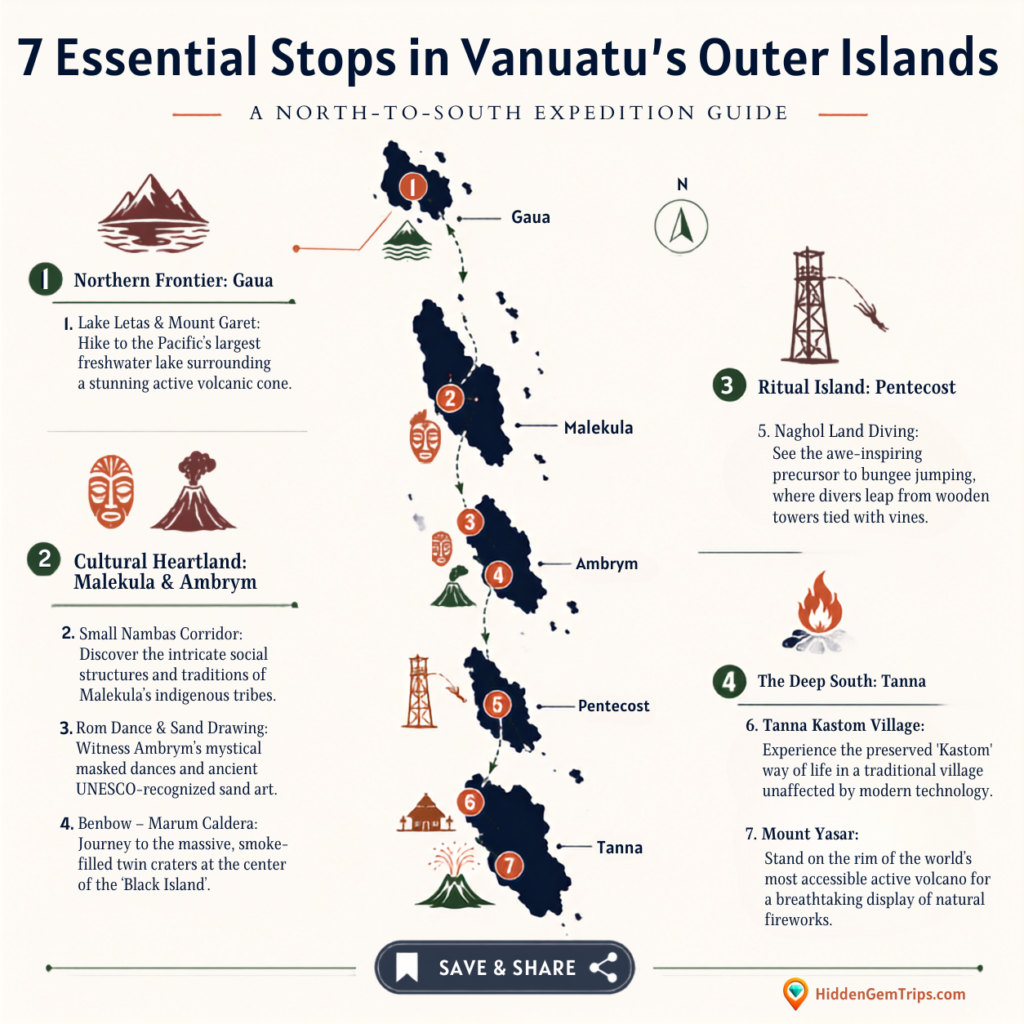
The seven stops—Tanna, Pentecost, Ambrym, Malekula, and Gaua—are considered planning alternatives in this tour. Not every tourist should use it as a checklist. The goal is to align landscapes with contemporary culture while accounting for community requirements, delays, and changes.
Take a look at the Two-Base Itinerary Method for additional travel planning advice. This strategy entails selecting fewer bases, remaining longer at each location, and depending less on potentially unreliable connections.
| Guide Type | Research-Based Guide |
| Last Verified | 31 August 2026 |
| Field-Tested | No — this guide does not claim a personal outer-island trip |
| Verification Focus | Official tourism, current VMGD volcano alerts, Air Vanuatu schedules, culture-sensitive sources, and current government travel advice |
| Current Hazard Snapshot | Yasur, Benbow–Marum, and Mount Garet were all listed at VMGD Alert Level 2 when verified; readers must check again immediately before travel. |
Affiliate disclosure. This article contains affiliate links. If you book or purchase through a qualifying link, Hidden Gem Trips may earn a commission at no extra cost to you. Affiliate relationships do not determine which islands, routes, products, or services are covered, and research is not presented as personal use or first-hand travel experience.
Which Outer Islands in Vanuatu Should You Pick?
Select one or two island anchors and safeguard the last few days before your international flight if this is your first excursion outside of the island. Since Mount Yasur can be combined with a community-led kastom visit, Tanna is the most obvious place to start. When your dates coincide with Naghol, Pentecost is a seasonal option. Ambrym is ideal for those who are ready for challenging volcano logistics and experiences driven by culture. Malekula is effective when the primary motivation for travel is cultural. Gaua should have the biggest buffer because it is the most distant option in this guide.
A weak chain is created when every stop is attempted to be included in a brief vacation. Choosing three to five experiences rather than all seven is a more resilient rule, unless you have at least two and a half weeks and are okay with canceled events and altered flights.
| No. | Stop | Island | Why Go | Time | Main Check |
| 1 | Mount Yasur | Tanna | Accessible active-volcano experience | 1 day | Live VMGD alert + local access |
| 2 | Kastom-village circuit | Tanna | Community-led cultural context | Half/full day | Consent + village protocol |
| 3 | Naghol land diving | Pentecost | Seasonal ceremony + yam calendar | 1–2 days | Current event calendar + flights |
| 4 | Rom dance + sand drawing | Ambrym | Living performance + visual knowledge | 1–2 days | Community schedule + boundaries |
| 5 | Benbow–Marum caldera trek | Ambrym | Remote volcanic trekking | 2–4 days | VMGD level + guide + weather |
| 6 | Small Nambas cultural corridor | Malekula | Culture-first village travel | 2–3 days | Host arrangement + road access |
| 7 | Lake Letas + Mount Garet + water music | Gaua | Volcano, lake, trek, performance | 3–5 days | Flight buffer + multi-day logistics |
Why the Vanuatu Outer Islands Need a Different Planning Mindset
National tourism numbers are useful context, but they do not tell you how much capacity a remote island actually has. The Vanuatu Bureau of Statistics records 95,919 visitor arrivals by air for 2025. In March 2026, provisional data showed 7,127 visitor arrivals by air and an average intended stay of about 11 days. Those figures describe Vanuatu as a whole; they should not be treated as visitor counts for the outer islands.
Even if a location receives a small portion of the country’s traffic, it may nevertheless have a small number of rooms, few cars, a single guide, or a flight pattern that complicates a “simple” connection. Remote should never imply ready on demand, and hidden should never mean empty.
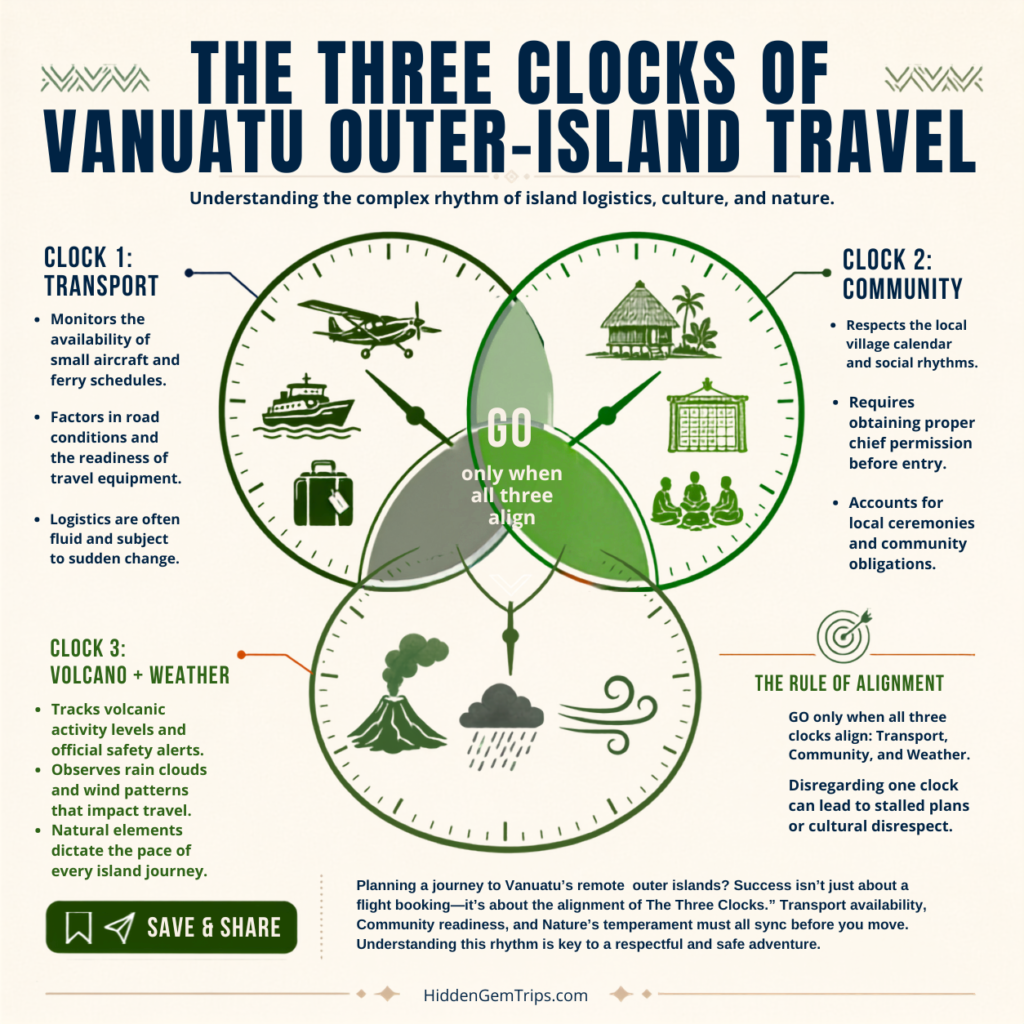
Outer-Island Travel’s Three Clocks
- The clock for conveyance. Movement is determined by a number of factors, including domestic flights, charters, ferries, cargo boats, road access, fuel, baggage restrictions, and airport transfers.
- The community clock. Ceremonies, festivals, church days, funerals, harvests, village decisions, and chiefs or community hosts determine whether a cultural experience is appropriate or available.
- The volcano-weather clock. Ash, gas, rain, cyclone systems, visibility, sea state, and official hazard zones determine whether an activity should proceed.
A confirmed booking controls only part of the first clock. It does not overrule the other two. The most resilient itineraries assume that these clocks can disagree—and leave enough room to adapt without blaming local people or guides.
Apply the Volcano–Kastom Pairing Technique
The best route design combines live culture and scenery on the same island. Yasur and community-led kastom trips are combined by Tanna. When community schedules permit, Ambrym can blend Rom-related cultural events with volcanic terrain. Gaua blends village life, water music, and Lake Letas and Mount Garet. By using this approach, susceptible flight connections are decreased and each island has ample time to develop into more than just a transfer point.
When to Go: Drier Months, Naghol Season, and Cyclone Reality
There is no single perfect month because different experiences run on different calendars. The cooler, generally drier part of the year—roughly May to October—is often easier for walking, outer-island transport, and longer days outside. The wetter period from November to April is also Vanuatu’s tropical-cyclone season. The Vanuatu Meteorology and Geo-Hazards Department (VMGD) says the Vanuatu area receives about two to three cyclones in a typical season, with the greatest frequency in January and February.
Naghol has its own seasonal calendar, which makes Pentecost unique. Events were advertised on Saturdays during the official Vanuatu Tourism Naghol listing in Ratap, Pentecost, from April 4 to June 27, 2026. As of this guide’s August verification, the 2026 season has already ended, therefore travelers shouldn’t use those dates for 2027 or later. Before purchasing flights, check the calendar for the actual year of trip.
Transportation Reality in 2026: Although flights are running, buffers are still important
The official Vanuatu outer-island travel guidelines state that ships don’t always adhere to set times and that domestic planes are the quickest option to reach many outside islands. Partial connectivity is possible, and travelers are especially encouraged to save buffer days for the end of their stay.
Domestic operating schedules are once again being released by Air Vanuatu. The airline’s flight schedule page showed a domestic schedule starting on July 13, 2026, at the time of verification. Additionally, Vanuatu Tourism cautions that on some northern routes, smaller-island flights may have less frequencies, several stops, varying baggage allowances, and overnight connections through Santo. The existing schedule should be viewed as an operational pattern rather than a guaranty that every leg will go according to plan.
Compare international gateway flights and then directly verify domestic legs against the most recent operational schedule before making a payment for a complicated trip. If at all possible, keep your international departure and your outer-island return days apart.
Getting Ready Practically Before Departing Port Vila or Luganville
Create a buffer rather than a fantasy schedule.
If your last island has very little service, a sensible plan will safeguard you for at least the last 48 hours before an international trip. The buffer is the portion of the itinerary that prevents one modification from ruining everything that comes after it, so it is not “wasted” if a remote leg moves or is canceled.
Presume Partial Connectivity and Bring Cash
In particular, Vanuatu Tourism’s outer-island advise cautions that distant locations can have limited shops, ATMs, electricity, and mobile coverage. Keep enough local cash on hand in multiple locations for village fees, transport, lunches, and emergencies. When charging is sporadic, a high-capacity USB-C power bank might be helpful, particularly if your phone serves as a map, camera, translation tool, and flight update device.
Prepare for Boats, Village Visits, Ash, Rain, and Mud
Closed walking shoes, a light rain layer, sun protection, a flashlight, refillable water capacity, bug repellent, necessary medication, and modest apparel for village visits make up the practical packing list. Adding equipment for its own sake is not as beneficial as using the Island Packing Strategy and Remote Expedition Packing Guide as internal references.
One of the few affiliate gear recommendations that readily suits the trip is a waterproof dry bag for boat transfers and unexpected downpours. Instead of encouraging dangerous travel, it should protect essentials.
Treat Insurance as Logistics, Not Permission
Medical facilities are limited outside the main centers, and evacuation from a remote island can be difficult and expensive. The current Australian Government Vanuatu travel advice also notes active volcanoes, cyclone disruption, earthquakes, tsunami risk, and limited medical capacity. If comparing policies, review exclusions for trekking, active volcanoes, natural disasters, known events, and missed connections. Travelers may review SafetyWing’s current travel medical coverage and exclusions as one option, but should compare it with alternatives rather than assume any policy covers every outer-island activity.
A Note on Health for Remote Islands
Additionally, health conditions are subject to alter. In August 2026, Smartraveller stated that there was a dengue outbreak in the southern region of Efate and that there was a risk of malaria, especially in the northern provinces of Sanma, Penama, and Torba. That does not take the place of individualized medical guidance. Take protection against mosquitoes, stay up to date on routine immunizations, and seek advice from a trained travel health professional before to departure if your itinerary involves remote trekking or malaria-risk areas.
Stop 1 —Mount Yasur, Tanna: Accessible Does Not Equate to Predictable
Since it provides one of the most striking active-volcano landscapes in the South Pacific without needing a multi-day trek, Mount Yasur is the ideal first visit. The road ascends from the more verdant interior of Tanna into an ash plain where the horizon is dominated by a cone.
Active is the key term. A 361-meter scoria cone with a roughly 400-meter-wide summit crater and long-observed activity is described on the VMGD Yasur page. Yasur was placed at Alert Level 2 (“Major Unrest”) by VMGD on August 22, 2026. That is not a guaranty of a reservation; it is a dated status. Decisions about local access, gas, wind, visibility, and exclusion zones may vary even if the quantity remains constant.
Accept the possibility of a shortened, rescheduled, or canceled visit and choose a locally authorized operator. The best Yasur experience is the one that adheres to local guidelines and current hazard regulations, not the one with the biggest explosion.
How to Experience Yasur Well
- Spend at least two nites on Tanna to ensure that the island visit is not ruined by a change in the weather or access.
- Prior to the excursion, check VMGD and pay attention to the operator’s turnaround guidelines.
- Carry closed shoes, water, a light source, and any dust protection specifically recommended by the operator.
- Keep drones packed unless local and regulatory permission is explicitly confirmed.
Stop 2: Visits to Tanna Kastom: Culture Is Not Scenery
A excursion to Yakel, Lowinio, or another village that is highly regarded by the locals can offer context that a tour focused just on the volcano cannot. The promise of a “frozen traditional lifestyle” is not the value. Kastom is locally governed, dynamic, and adaptable. The community determines what is shared, although visitors may observe gardens, food preparation, dance, architecture, storytelling, or casual conversation.
Steer clear of terms like “untouched” and “primitive.” Before taking a picture, find out if it’s okay to do so, especially in areas with children, houses, ritual items, and places of worship. The boundary is the solution if a host or guide states that something is restricted.
The updated Tana Toraja Slow Travel guide is now based on the same editorial principle: ceremonies do not become attractions just because tourists can occasionally witness them, and cultural access is not a right.
Stop 3 — Naghol Land Diving, Pentecost: Travel for the Calendar, Not the Clip
Pentecost’s Naghol is one of Vanuatu’s best-known ceremonies. Men leap from tall wooden towers with vines attached to their ankles in a practice connected to community tradition and the yam season. It is visually intense, but reducing it to “the origin of bungee jumping” strips away much of the cultural context.
According to the official tourism listing, Naghol will be open in Ratap, Pentecost, from April 4 to June 27, 2026. The adult gate price is 9,500 vatu. These specifics are only helpful as an outdated example. For the actual journey year, it is important to confirm event dates, villages, fees, viewing regulations, and flight packages.
An overnight stay can lessen the fragility of a same-day flying itinerary while allocating more funds to local lodging and food suppliers. If you go, adhere to the current photography guidelines and the approved viewing places; do not coerce participants or their families into taking pictures before or after the event.
Stop 4: Sand Drawing and Ambrym Rom Dance: Sacred Performance Has Limits
Although images of volcanoes are frequently used to introduce ambrym, its cultural significance is just as powerful. Masked dancers, leaf costumes, graded knowledge, narrative, eating, carving, and other techniques that are not entirely accessible to outsiders can all be found in Rom-related performances. Not every tale, symbol, mask, or ritual becomes public property when it is paid for.
Events that mix dancing, storytelling, food, sand drawing, and local heritage are described in the Vanuatu Tourism Rom festival information. Verify what is truly open to guests as schedules differ by year and town.
Continuous-line drawings provide history, cosmology, kinship, farming expertise, melodies, and ritual information across linguistic groups, according to UNESCO’s study of Vanuatu sand drawings. The practical lesson is straightforward: don’t use a design as free clip art. Find out if it can be copied, photographed, or recreated.
Stop 5 — Benbow and Marum, Ambrym: Trek the Caldera Without Chasing an Old Lava-Lake Promise
Ambrym’s central caldera is one of the most serious activities in this guide. Routes can involve long days on rough volcanic terrain, ash, gas, changing visibility, camping, limited water, and limited evacuation options. This is not a casual sunset viewpoint.
The well-known lava lakes vanished following the 2018 eruption, according to the VMGD Benbow and Marum page. Ambrym is sometimes described as being very energetic. Benbow and Marum were placed at Alert Level 2 by VMGD on August 22, 2026. For local alert status and access considerations, VMGD should be given precedence over the Smithsonian Global Volcanism Program, which has more eruption history.
Even without a guarantyd radiance, the journey is nevertheless significant. The caldera’s size, the volcanic landscape, and its isolation are the reasons to visit, not the requirement that the current volcano replicate an old brochure.
Ambrym Planning Regulations That Are Non-Negotiable
- Make use of a locally recognized or accredited guide with up-to-date route and hazard information.
- Verify VMGD both locally and right before departure.* When planning a multi-day hike, include at least one weather day.
- Build at least one weather day into a multi-day trek.
- Carry appropriate rain protection, a reliable headlamp, enough water, and enough power for essential devices.
- Turn back when the guide, hazard information, weather, or your own condition says to turn back.
Stop 6: Malekula: Let Culture Take Center Stage
The best counterbalance to an itinerary rich on volcanoes is Malekula. Labels like Big Nambas and Small Nambas shouldn’t be used as quick cuts to treat the island as a human museum because it is a culturally and linguistically varied place. An improved route connects villages, walking trails, markets, cultural institutions, and multi-day community stays with the help of local hosts or guides.
Malekula’s primary entry point is Norsup, while Ambrym’s entry point is Craig Cove, according to the official Malampa Province tourism guide. Additionally, rather than assuming everyday access, it emphasizes the significance of present domestic flight patterns.
Here, drivers, petrol, local guides, basic lodging, meals, village taxes, and buffer days are frequently the significant expenses, so budgeting is important. Because distant excursions typically fail because to accumulated friction rather than a single, extraordinarily expensive purchase, the distant Trip Budget advice is helpful.
Stop 7: Gaua: A Remote Island with Lake Letas, Mount Garet, and Water Music
Gaua is the stop in this trip with the most layers and the least tolerant of a hurried timetable. The island features a black sand beach, waterfalls, rainforest, Lake Letas, active volcanic topography, and water music performed by women. It is the best illustration of how an island might merit a few days without another aircraft.
Mount Garet and Lake Letas are highlighted as significant adventure experiences in the official Torba Province guide. Mount Garet is an active volcano inside a 6-by-9-kilometer crater encircled by Lake Letas, according to VMGD. Additionally, it was designated under Alert Level 2 on August 22, 2026.
Appropriate walking shoes, wet-weather equipment, water, extra batteries, sunscreen, bug repellent, and a basic first-aid kit are suggested on the official Lake Letas and Mount Garet hike page. That list serves as a helpful reminder that this is not a lighthearted beach extension.
Limerous Water Music, in which women use coordinated movement and drums in the water to produce intricate rhythms, is Gaua’s cultural antithesis. The value lies not just in the splash photo but also in technique, collective timing, language, and communication.
Suggested Vanuatu Outer-Island Itineraries
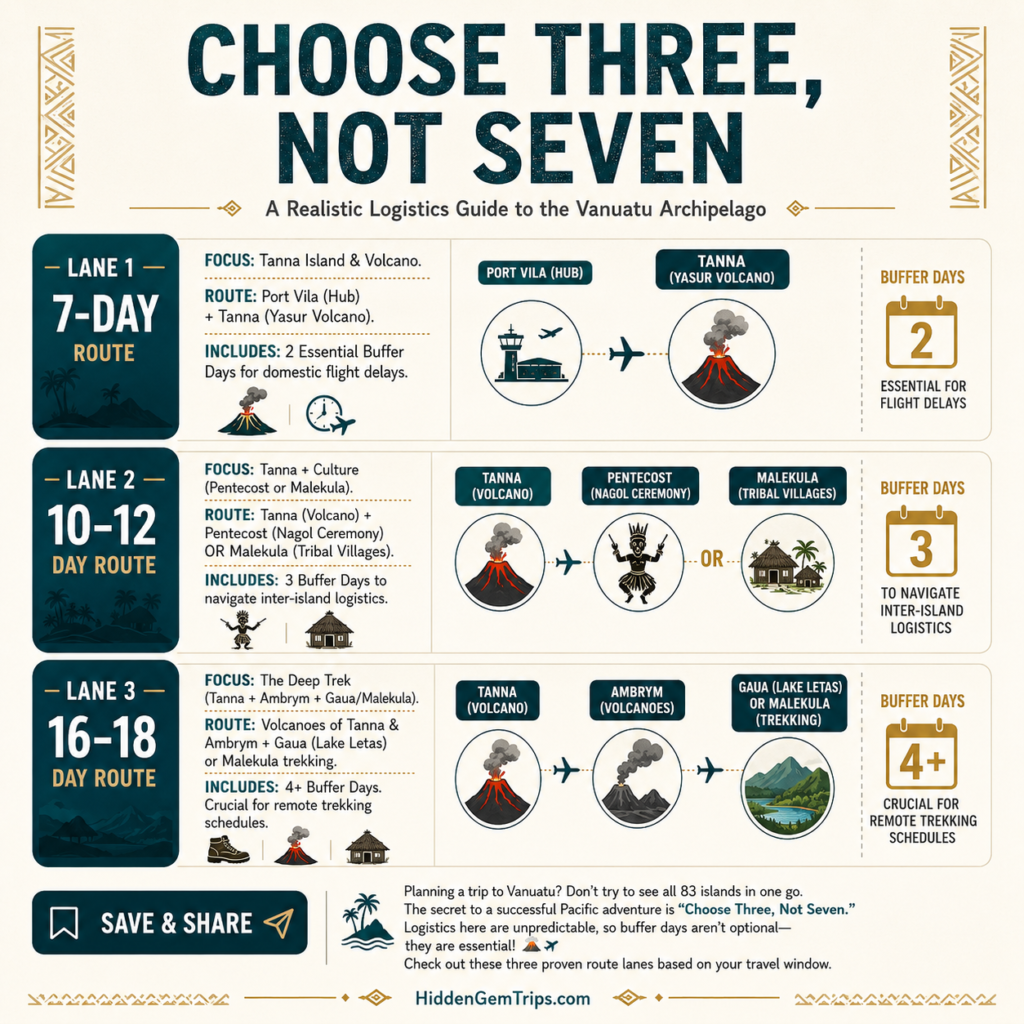
| Trip Length | Route | Likely Experiences | Reality Check |
| 7 days | Tanna only + Port Vila buffers | Yasur + kastom visit + one soft day | Best first trip; least fragile |
| 10–12 days | Tanna + Pentecost or Malekula | Two Tanna experiences + seasonal Naghol or Malekula | Good balance if flights align |
| 12–14 days | Tanna + Ambrym | Yasur + village visit + Rom-related experience + caldera plan | Physically demanding; multiple moving parts |
| 16–18 days | Tanna + Ambrym + Gaua or Malekula | Five to seven experiences with 3–4 buffer days | Only for flexible travelers |
Seven Days: Depth Rather Than Distance
Spend one nite in Port Vila upon arrival, four nites on Tanna, and safeguard the last nite or two prior to departure. Yasur, a community visit, a modified weather window, and relaxation are all made possible by this. The goal is to reduce the number of places where a single delay could ruin the entire journey, not to maximize islands.
Ten to Twelve Days: One Extension Based on Culture or Season
Choose Malekula for a route less reliant on a single ceremony date, or combine Tanna with Pentecost only when the event calendar and flights coincide. Instead of returning from an outer island on the same day as an international flight, use Port Vila or Luganville as a connection buffer.
Three Anchors, Not Seven Hops: Sixteen to Eighteen Days
Select Malekula or Gaua, Tanna, and Ambrym. This is still ambitious, but the approach makes sense: volcano and culture on Tanna, another volcano-culture pair on Ambrym, and either Malekula for culture-first depth or Gaua for a remote lake-volcano-water-music combination.
The Actual Price of an Outer-Island Trip to Vanuatu
For one reason, a voyage to a secluded island is rarely costly. Aviation, transfers, gasoline, village fees, guide days, meals, lodging, weather-related nights, luggage restrictions, and substitute transportation all add up to costs. After the initial disturbance, an inexpensive schedule with little recovery space may end up costing more than a flexible one.
- Gateway expenses include international travel, lodging in Port Vila or Luganville, and airport transportation.
- Island-access expenses include trucks, boats, ferries, domestic flights, charters, and baggage fees.
- Costs associated with the experience include local guides, admission to ceremonies, community contributions, logistics of the journey, lunches, and permits as needed.
- Costs associated with resilience include buffer nights, insurance, emergency funds, substitute transportation, and communication.
Publishing a single daily budget, which might become out of date as soon as aircraft itineraries or fuel prices change, is less helpful than this approach. Additionally, it maintains economic integrity because community fees and local guides are necessary for access and should not be eliminated.
Guidelines for Responsible Travel That Are More Important Than a Perfect Picture
- Before taking pictures of individuals, houses, rituals, masks, sand art, kids, or places of worship, get permission.
- When visiting communities, going on remote walks, or visiting volcanoes, use local guides. There are two types of safety: route knowledge and social consent.
- Don’t make unfulfilled promises of presents, publications, cash, or future business.
- If a host or community wants restricted exposure, don’t geotag sensitive locations.
- When local disposal is restricted, dispose of batteries, packaging, and other non-biodegradable waste.
- Don’t transform local caution into a bad review by accepting “no,” cancelation, altered access, or delay.
The fundamental idea is the same as in the updated Tana Toraja Slow Travel guide: cultural curiosity is only acceptable when local authority and consent are present.
Prior to Each Volcano or Remote Island Leg, a Safety Checklist
Instead of using outdated videos, use current official information. Examine the VMGD volcanic summary both locally and before to travel. On Yasur, Ambrym, or Mount Garet, the current Alert Level 2 denotes “Major Unrest,” not “safe.” Authorities and local operators continue to decide on access restrictions and hazard zones.
- Confirm the current alert level, danger zone, and access status.
- Ask the operator what conditions would trigger cancellation or turnaround.
- Tell your accommodation or host where you are going and when you expect to return.
- Bring a light source, drink, sun and rain protection, and any necessary medications.
- Don’t depend on constant mobile coverage.
- Move to higher ground and heed local tsunami advice following a prolonged or powerful earthquake close to the shore.
A dangerous road cannot be made safe by insurance, a handbook, or a satellite gadget. These are layers of preparation, not authorization to disregard local government.
Conclusion: Choose the Stops That Can Survive a Changed Plan
Reaching all seven stops is not the ideal Vanuatu outer-island plan. When a flight shifts, a summit closes, a ceremony shifts, or the trail is erased by rain, it is the one that remains significant.
If this is your first trip, start with Tanna. Add Pentecost if the seasonal calendar truly works for you, Malekula if culture is your primary motivation for traveling, Ambrym if you are ready for challenging logistics, or Gaua if you have enough time for a far-off multi-day island. Next, leave the plan surrounded by empty space.
Travelers who recognize that the most significant moments might not be the loudest are rewarded in Vanuatu. Examples include a guide explaining why a road is closed, a host choosing what can be photographed, a women’s water-music ensemble demonstrating a beat, or a peaceful day spent waiting for a flight. Patience is not a waste of time on the outlying islands. It is a component of the final destination.
FAQ
1. In a single trip, how many Vanuatu outer islands can I actually visit?
One primary outer-island anchor, often Tanna, is the safest design for seven to ten days; a second island should only be used when links are strong. Ten to fourteen days can be supported by two island anchors plus buffers. It is best to book three islands for a minimum of 16–18 days when using flexible reservations.
2. Is it safe to go to Mount Yasur?
No visit to Mount Yasur is risk-free because it is an active volcano. VMGD listed Yasur at Alert Level 2 on August 22, 2026. Before visiting, travelers must verify the most recent VMGD information and abide by local access regulations; alert levels and exclusion zones are subject to change.
3. When is Pentecost land diving visible to tourists?
Naghol is a seasonal event. Ratap, Pentecost hosted the official 2026 listing from April 4 to June 27. It is not appropriate to utilize those dates for upcoming years as they have already passed. Verify the current schedule directly with Vanuatu Tourism or a reputable local host before making travel plans.
4. Is it feasible to combine Ambrym’s volcano with Rom-related cultural experiences?
Yes, perhaps, but their clocks are not the same. Cultural schedules are determined by the community, whereas weather, guides, route conditions, and VMGD notifications all affect volcano hiking. Give yourself a few nites and consider either activity to be flexible rather than certain.
5. Is travel insurance necessary for Vanuatu’s offshore islands?
Travel insurance is strongly advised because medical evacuation, weather disruption, missing domestic connections, and solitary treks can be expensive. Examine policy exclusions carefully, especially those that deal with known events, hikes, active volcanoes, and natural disasters.
6. Will Vanuatu have domestic flights in 2026?
Indeed, at of the time this document was verified, Air Vanuatu is issuing domestic timetables, including an operating schedule starting on July 13, 2026. Verify the precise route before traveling and use buffer days to safeguard international connections because frequencies to outer islands are still restricted and subject to change.
Editorial and Travel Disclaimer
This page is intended only for general travel planning information and should not be used in place of official government guidance, medical advice, operator instructions, choices made by local authorities, or information about live hazards. Weather, health alerts, transportation, entry regulations, ceremony timings, costs, danger zones, and volcano alert levels are all subject to sudden changes. Prior to departure, confirm important arrangements directly with local providers and current government sources. Trekking, visiting volcanoes, traveling by boat, and engaging in activities on remote islands are all risky