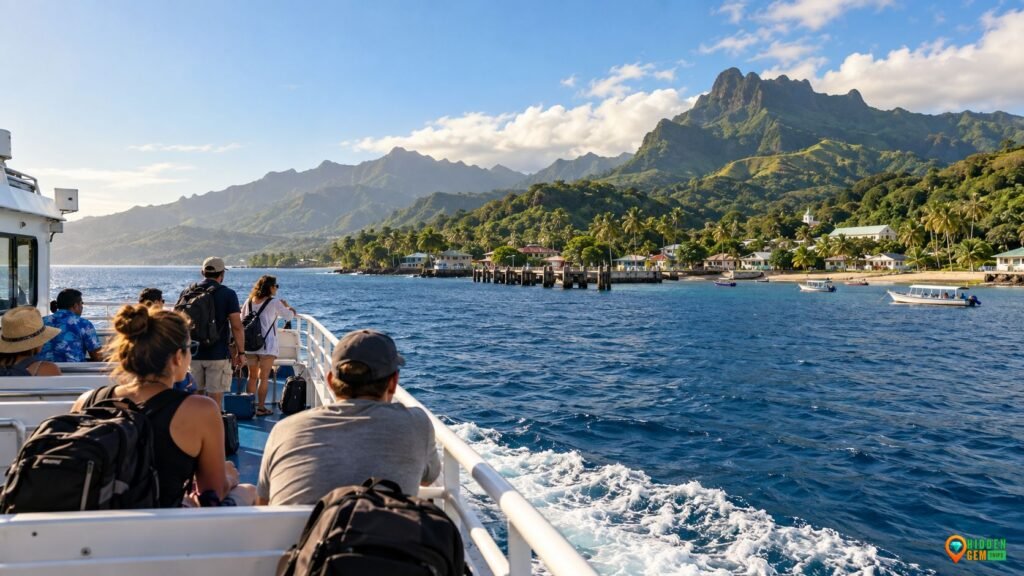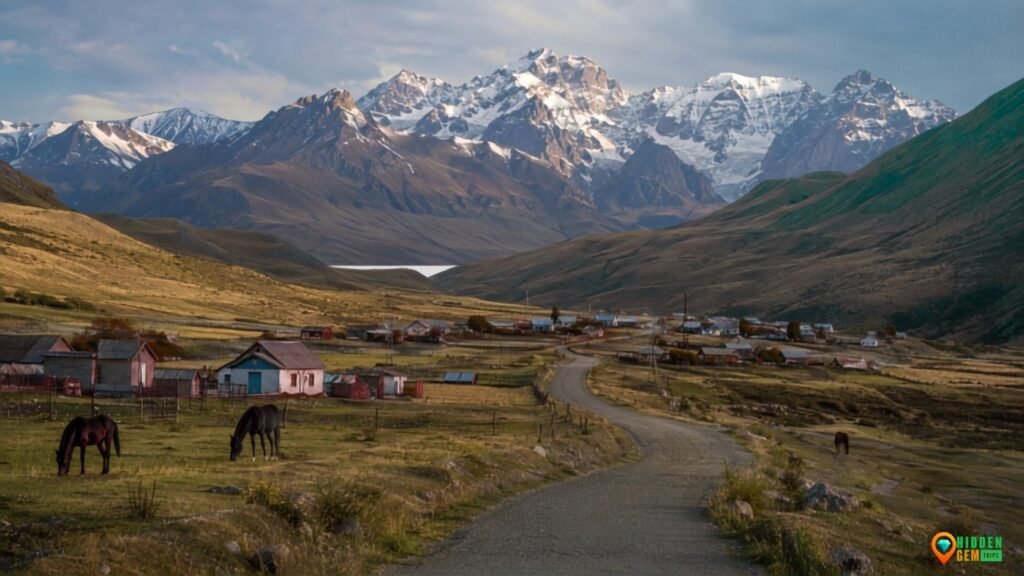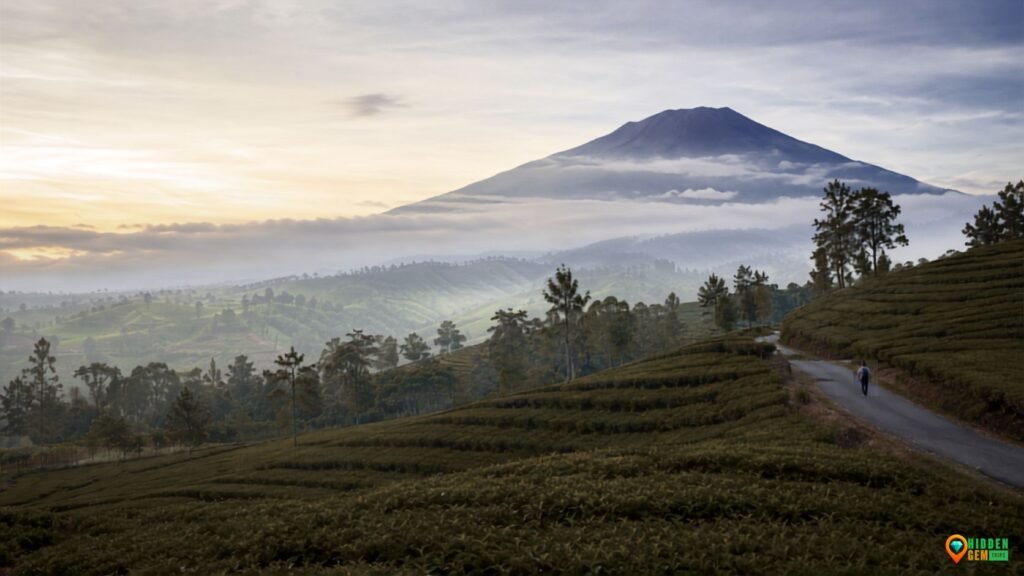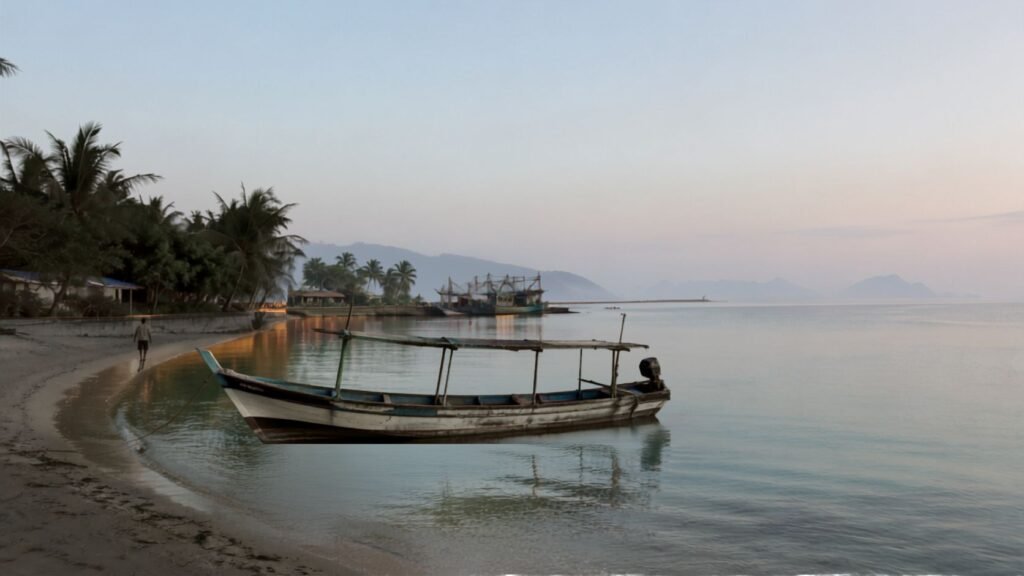

Let’s be brutally honest about the current state of global tourism. The world of exploration has changed a lot. We are no longer in the time when a woman could only go to a small number of well-known, well-kept places on her own. As we enter 2026, the Solo Female Travel Map is no longer just for the popular party areas in Southeast Asia or the famous routes in Western Europe.
Today’s female explorer wants more: safety without sacrificing everything and the ability to feel connected even when alone. We are profoundly tired of looking over our shoulders in crowded Parisian metro stations or constantly fending off aggressive touts in mainstream tourist traps. The Solo Female Travel Map 2026 is more than just a way to identify lovely places to visit; it’s also a way to find places where safety and wonder can coexist.
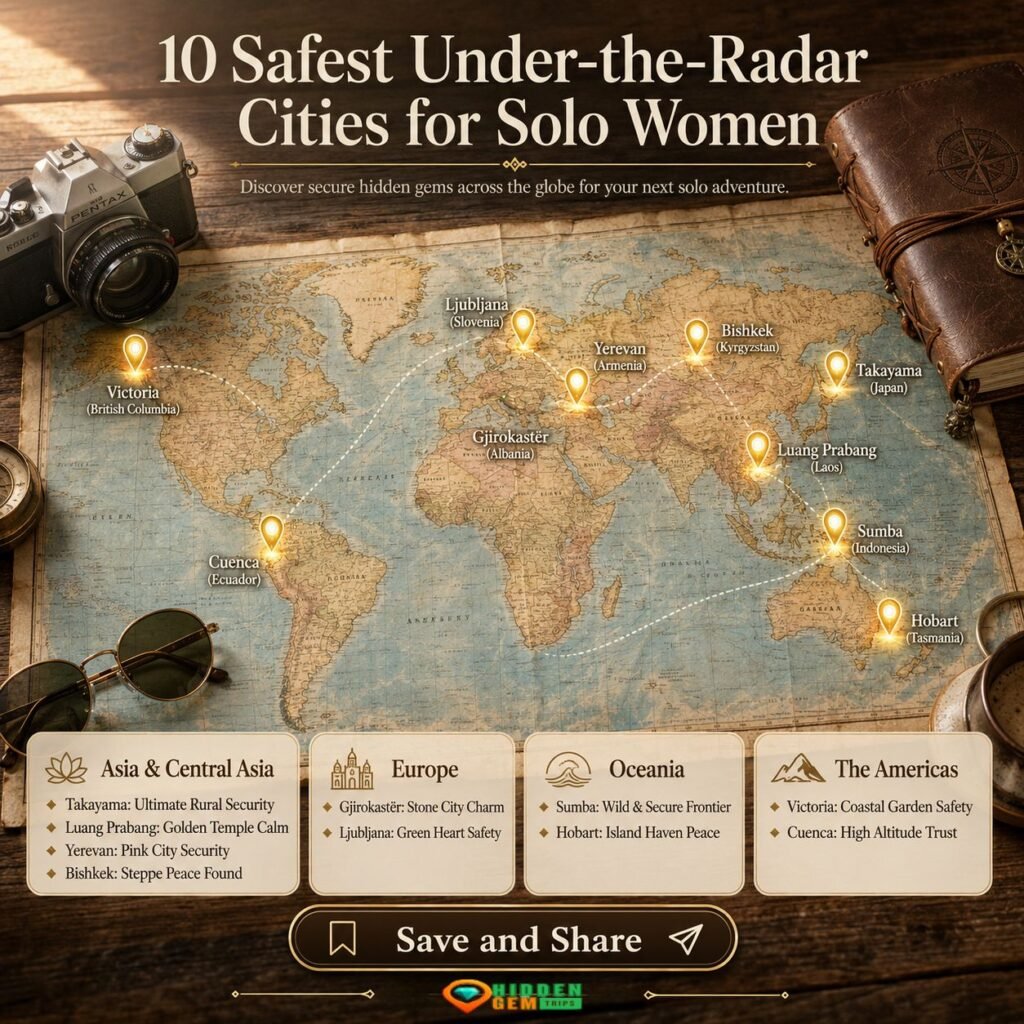
As the landscape of global exploration shifts, today’s female adventurer is moving away from overcrowded tourist traps to seek deeper, more secure experiences in the world’s most rewarding ‘under-the-radar’ cities. If you are ready to reclaim your independence without the constant underlying anxiety that often plagues solo trips, you need a fundamentally different kind of destination. In 2026, let’s look at the 10 safest cities that aren’t well known but will help you get your sense of wonder again. This is the best guide to adventurous travel, whether you want to go to off-the-beaten-path places near home or around the world.
The Growth of Women’s Exploration in 2026
For years, women who traveled alone were told to stay in busy, pricey tourist areas for their own safety. The theory that old travel books pushed was simple: if there are a lot of people, you can see them, and seeing them is supposed to mean safety. But in 2026, thanks to the rise of decentralized tourism and AI-driven safety apps, some of the best things to do in the world are now in places once considered “unknown”.
Why the Safest Under-the-Radar Cities Outperform Mainstream Hubs
You might wonder why a hidden gem would be safer than a significant capital. The reality of modern travel is that extreme crowds breed extreme anonymity, which provides the perfect psychological cover for petty crime. Overtourism in cities like Paris and Barcelona has led to more opportunistic petty crime in 2026. Sadly, pickpocketing, hotel scams, and aggressive street harassment are now common in many major cities around the world.
On the other hand, “under-the-radar” cities are investing heavily in Regenerative Tourism, which encourages local communities to safeguard and welcome visitors. In these tiny, culturally rich areas, a woman traveling alone is more than just a tourist; she is a welcomed visitor. People who live in these cities are very sensitive of their reputation and very welcoming.
To substantiate this with empirical evidence, we refer to the Georgetown Institute for Women, Peace and Security (WPS Index), which assesses inclusion, justice, and security for women. The Institute for Economics & Peace’s Global Peace Index often shows that their data is related to global stability. Both respected agencies say that smaller, culturally coherent cities always have much lower rates of violent and petty crime against women than big cities.
Women can avoid the chaos of mass tourism and choose places that value community-led security by following the ideas in our 2026 Slow Travel Manifesto.
The Non-Negotiable Solo Safety Toolkit for Remote Travel
Before we get into the cities, let’s talk about getting ready. It’s naïve to think that a place’s low crime rate is enough to keep you safe. An expert traveler always plans ahead. Technology can help you in 2026, but your main defense will still be physical tools.
Furthermore, absolute preparation means addressing your physical health—always cross-reference the CDC Travel Health notices to ensure you have the required vaccinations for remote regions. Make sure to review the authoritative health guidelines from the CDC Travelers’ Health before booking flights to frontier destinations. If you are looking to experience world-class hidden gems on a mid-range budget, investing a fraction of that budget into security will pay massive dividends.
Physical and Digital Security Essentials for Independent Women
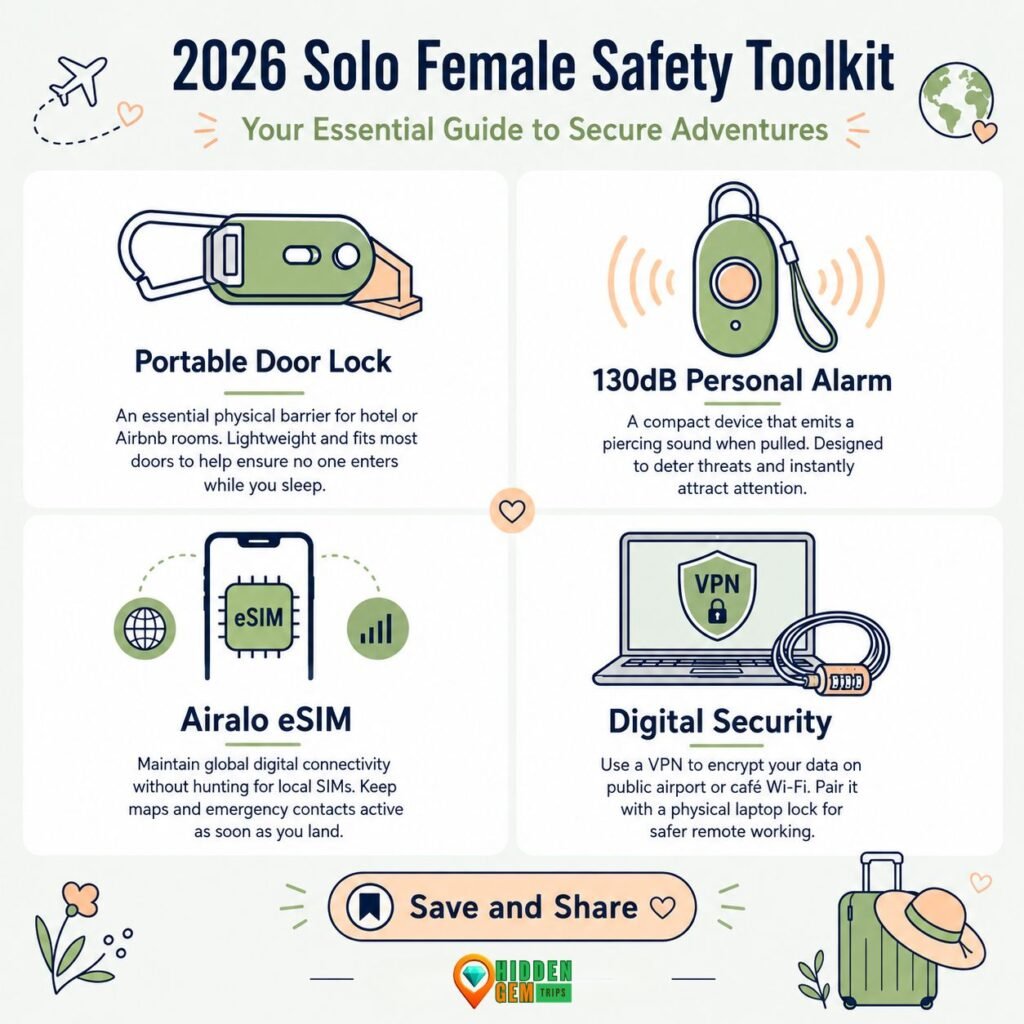
When curating your must-have packing list for remote trips, prioritize these specific items that bridge the gap between vulnerability and total peace of mind:
- Portable Security: Don’t just trust hotel locks. Even in the safest under-the-radar cities, carrying a Portable Door Lock that installs in seconds on any door is a non-negotiable habit. It gives you extra peace of mind, especially in traditional guesthouses.
- Personal Alert Systems: If you ever feel unsafe, a Personal Safety Alarm with a 130dB siren can get people’s attention right away. It is significantly more effective than shouting in an unfamiliar environment.
- Stay Connected: Safety means being online. Being unable to hail a secure ride or translate a menu because you are hunting for a local SIM kiosk is a massive vulnerability. Skip the hassle of physical SIM cards and use an Airalo eSIM so you can share your live location the moment you land.
Europe & The Caucasus: Ancient Culture and Zero Street Crime
Western Europe may be buckling under the weight of tourism, but the eastern fringes and the Caucasus offer profound historical depth paired with astonishingly low crime rates.
1. The Stone City of Honor in Gjirokastër, Albania
Gjirokastër is where history and safety meet, on the other side of Albania’s rough Accursed Mountains. This UNESCO World Heritage site is defined by its steep, cobblestone streets and magnificent Ottoman-era tower houses. If you plan on exploring Albania’s Accursed Mountains, this city serves as the perfect, secure cultural basecamp.
The city is protected by a local code of honor called Besa. Besa roughly translates to “to keep the promise,” and it mandates absolute, unwavering hospitality and protection for guests.
- Why it’s safe: Crime rates are near zero. Women can walk the ancient stone alleys at midnight without fear. The city’s communal nature means locals are always subtly watching out for your well-being.
- Where to Stay: Stone City Hostel or Hotel Kalemi. These historical stays are generally run by families, which makes them feel like a “home away from home.”
2. Ljubljana, Slovenia: The Green Heart of Europe That’s the Safest
Slovenia is the quiet overachiever in Central Europe. It consistently ranks among the top five safest countries globally. Ljubljana, its capital, feels more like a large, highly organized village than a bustling European metropolis. The city’s commitment to sustainability translates directly into a secure, meticulously maintained urban environment.
- Highlight: The city center is car-free, perfectly lit at night, and has a very active community of female expats. You can stroll along the emerald-green Ljubljanica River for hours, enjoying the café culture without a hint of street harassment.
- Where to Stay: Vander Urbani Resort or Hostel Celica (a former prison turned art gallery).
3. The Pink City of Yerevan, Armenia
Yerevan is one of the most underappreciated cities in the world. The buildings are made of volcanic tuff rock, which gives them a rose color. The safety here is mostly cultural, based on strong family values and a society that strongly disapproves of public disruption. Yerevan (along with nearby Tbilisi) is a great place to go if you want to avoid pricey capitals.
Carved from volcanic tuff, which gives the buildings a rosy hue, Yerevan is one of the most underrated cities in the world. The safety here is largely cultural, driven by deep-rooted family values and a societal structure that heavily frowns upon public disorder. If you are looking for alternatives to expensive capitals, Yerevan (alongside neighboring Tbilisi) is an absolute revelation.
- The Vibe: Its cafe culture thrives until the early hours, ensuring the streets never feel empty or unsafe. There is safety in numbers, and the communal evening strolls make walking alone at night perfectly normal.
- Where to Stay: The Alexander. Located near Northern Avenue, it’s the heart of the “always-on” cafe district.
Asia & The Pacific: Deep Traditions and Absolute Solitude
For women seeking deep spiritual immersion, high-end wellness, or dramatic wilderness, Asia and the Pacific rim offer some of the most strictly policed and culturally respectful environments on earth.
4. Takayama, Japan: The Pinnacle of Rural Security
While Tokyo is undeniably safe, its overwhelming crowds can induce sensory overload. Nestled high in the mountainous Hida region, Takayama offers a serene alternative. It represents the gold standard of safety. The narrow streets lined with wooden merchant houses date back to the Edo period, and the local crime rate is virtually nonexistent.
- The Experience: In Takayama, you can leave your wallet on a cafe table and find it still there an hour later. Safety here is on another level. This is rooted in the deep cultural concept of Omotenashi—a philosophy of wholehearted, selfless hospitality.
- Where to Stay: Honjin Hiranoya Kachoan. Experience a traditional Ryokan where hospitality (Omotenashi) includes attending to your overall well-being.
5. Bishkek, Kyrgyzstan: The Silk Road Sanctuary
Central Asia often intimidates first-time solo travelers, but Bishkek is the massive surprise of 2026. This Silk Road hub offers Soviet-style order blended with nomadic warmth. The wide, tree-lined boulevards are heavily monitored, and the younger generation is exceptionally eager to welcome international travelers.
- Safety Tip: Use Community-Based Tourism (CBT) networks to find qualified local female guides who can safely take you to the bazaars. These networks empower local women and ensure your money goes directly into the hands of female entrepreneurs.
- Where to Stay: Orion Hotel Bishkek. It is close to well-lit public places and has top-notch security.
6. Luang Prabang, Laos: Riverside Spiritual Peace
Laos moves at a remarkably slow, gentle pace compared to neighboring Thailand or Vietnam. Nestled at the confluence of the Mekong and Nam Khan rivers, Luang Prabang is deeply influenced by Theravada Buddhism, which permeates the city with an atmosphere of absolute non-violence and calm.
- The Vibe: The city operates on a cycle of early mornings and quiet nights. The complete lack of aggressive nightlife makes it a haven for introverted explorers.
- Where to Stay: Belmond La Résidence Phou Vao. Stay near the old town so you can easily walk to the morning alms-giving ceremony.
7. Tambolaka, Sumba (Indonesia): The Wild and Secure Frontier
If Bali has become too congested, the island of Sumba is the exact antidote. As we explored in our deep dive into The Sumba Revolution, Tambolaka is now the route to long-lasting opulence. Despite its rugged, megalithic culture, high-end tourism here is tightly controlled and deeply respectful of solo guests.
- The Experience: It may seem unusual, but hotels here provide discreet local escorts who value privacy. This ensures you can explore the dramatic coastlines and ancient Marapu villages without ever feeling vulnerable.
- Where to Stay: Alamayah or Sanubari. These resorts work closely with nearby villages to ensure guest safety.
8. Hobart, Australia: Wilderness at the Edge of the World
For solo women who prioritize outdoor adventure, Tasmania offers first-world safety with dramatic wilderness views. The island state operates like a small, tight-knit community where locals are fiercely protective of their pristine environment and the visitors who come to appreciate it.
- The Vibe: Hobart is exceptionally friendly for solo hikers, offering easy access to Mount Wellington and secure, well-marked coastal trails.
- Where to Stay: MACq 01 Hotel at the waterfront. It’s near major transport hubs and world-class street lighting.
South America & Africa: Redefining Continental Safety
It is a common misconception that solo female travelers must avoid entire continents. By choosing specific, highly developed enclaves, you can experience the vibrancy of South America and Africa with total peace of mind.
9. Cuenca, Ecuador: The Andean Expat Haven
Perched high in the Andes, Cuenca is characterized by its stunning colonial architecture, cobblestone streets, and massive flower markets. Cuenca is proof that South America can be incredibly safe.
- The Experience: With a large global expat population, safety standards here are very high for female travelers. The local police force is highly visible, and the city relies heavily on foot traffic, meaning you are rarely isolated in urban areas.
- Where to Stay: Mansión Alcázar. This colonial mansion offers a boutique experience with 24/7 localized security patrols.
10. Victoria, Seychelles: Gated Island Privacy
Often dismissed as merely a couples’ destination, the Seychelles archipelago has aggressively pivoted to welcome solo luxury travelers. It is not just for honeymooners.
- The Vibe: The main island of Mahé built a robust network of female-only transport services in 2026. This infrastructure allows women to navigate the lush mountainous interior and pristine beaches without relying on unvetted taxis.
- Where to Stay: STORY Seychelles at Beau Vallon. It offers a gated resort feel while remaining accessible to local beaches.
Digital Nomad 2.0: Working Securely from Hidden Gems
The rise of the “Slow-mading” trend requires us to stay productive. However, working in public carries cyber risks. Moving to the safest under-the-radar cities isn’t just about physical safety; it is about protecting your digital assets.
When establishing your base in a new city—a topic covered extensively in our Digital Nomad 2.0 Guide—you must treat digital security with the same gravity as physical security. Always use a trusted VPN, and ensure you have a Laptop Lock when working in cafes in cities such as Yerevan or Ljubljana. Never connect to unsecured public Wi-Fi networks in airports or transit hubs without end-to-end encryption.
Conclusion: The World is Yours to Explore
Solo travel isn’t about braving danger; it’s about having the right systems to explore smartly. By choosing the destinations on the Solo Female Travel Map 2026, you are taking the first step toward a safe and transformative journey. The world is vast, and you do not need to share it with ten thousand other tourists to experience its magic. If you are committed to finding untouched paradises, utilizing smart budget hacks will allow you to explore these secure havens for months on end.
Frequently Asked Questions (FAQ) About Solo Female Travel in 2026
1. What if I don’t speak the local language in these remote cities?
In 2026, use AI translation tools. However, in cities like Gjirokastër, a smile and hand gestures are often enough to receive local help. The safest under-the-radar cities are defined by their hospitality, not their fluency in English.
2. Is specialized travel insurance actually essential?
Mandatory. This is especially true for “frontier” destinations like Sumba or Albania. We recommend SafetyWing for its easy digital claim process. It explicitly covers remote work scenarios and emergency medical evacuations.
3. When is the absolute best time to arrive in a new city?
Always schedule your arrival before 4:00 PM. Arriving during daylight hours allows you to familiarize yourself with your accommodation’s surroundings, figure out the local currency, and find a safe place for dinner before dark.
4. How do I handle unwanted attention in culturally conservative regions?
Dress codes matter significantly. Research the modesty standards of your destination. Wearing a faux wedding ring and confidently stating that you are meeting your partner is a universally understood deterrent when someone becomes overly conversational.
5. Are Community-Based Tourism (CBT) guides truly safer?
Yes. CBT organizations operate under strict local governance. When you hire a guide through a CBT network (as in Kyrgyzstan), they are vetted by village elders or local tourism boards, which drastically reduces the risk of scams or inappropriate behavior.
Disclaimer
The information provided in this guide is for educational and inspirational purposes and is based on global safety indices and travel conditions as of 2026. Hidden Gem Trips is committed to independent, unbiased travel journalism, and all accommodations, gear, and services mentioned are strictly editorial choices based on our own rigorous standards and experiences. Because global safety dynamics can shift rapidly, we strongly advise all solo travelers to consult current official government travel advisories, health guidelines (such as the CDC), and local authorities immediately before departure.