
Let’s be brutally honest about the state of remote work. The romanticized image of typing on a sandy beach while sipping coconut water is practically dead. The glare on your screen, the sand destroying your keyboard, and spotty internet have shown that the early days of location independence were often more about aesthetics than productivity. Planning your career transition with this Digital Nomad 2.0 Guide is the first step toward reclaiming your time and sanity in 2026.
The era of “traveling for the ‘gram” is dead. Today, we enter the age of the “Slow-mad”. If you are exhausted by the constant packing, superficial networking events, and soaring rents in traditional remote hubs, a radical pivot is required. This Digital Nomad 2.0 Guide will show you how to stop chasing flights and start seeking meaningful experiences in the safest, least-known towns in the world.
In 2026, the most successful remote professionals are no longer flocking to overcrowded tropical islands; they are heading to the mountains, the steppes, and the quiet historic capitals of the world. They are changing what it means to be location-independent by adopting a worldview that values profound cultural immersion, financial stability, and mental health over passport stamps. This complete guide is your roadmap for the future of work, whether you want to visit underrated places or explore new continents.
The Paradigm Shift: Why the Digital Nomad 2.0 Guide Doesn’t Like “Hustle Culture”
For the last ten years, being a nomad meant moving around a lot. The race around the world was exciting, but it was also quite tiring. If you want to be a nomad who focuses on getting things done instead of just working from home, you need to put depth ahead of distance.
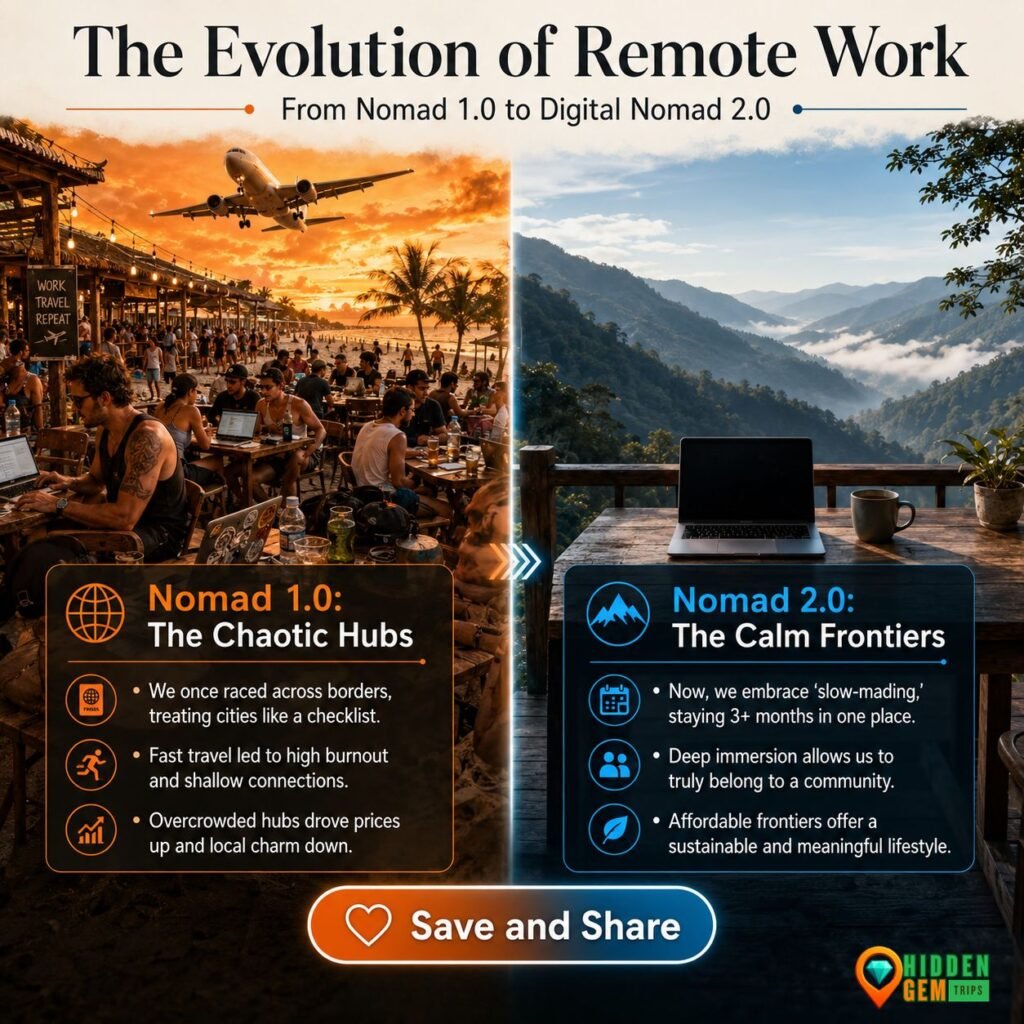
The End of Nomad 1.0: Getting Away from the Crowded Hubs
Nomad 1.0 hubs—think Canggu in Bali, Chiang Mai in Thailand, or Medellin in Colombia—have reached a tipping point. What were once affordable, culturally rich destinations have transformed into gentrified bubbles. Traffic gridlock, skyrocketing short-term rental costs, and the displacement of local communities have stripped these locations of the very magic that originally drew remote workers there. As we discussed in our analysis of the Sumba revolution outpacing Bali, the search for authenticity requires us to look far beyond the established paths.
Furthermore, the relentless pace of moving every few weeks—constantly adapting to new grocery stores, new time zones, and new social circles—inevitably leads to severe burnout. Your career suffers, your relationships become entirely transactional, and your mental health deteriorates.
Defining the “Slow-mad”: Prioritizing Depth Over Distance
The Digital Nomad 2.0 Guide for 2026 focuses on “slow-mading,” meaning remaining in one place for months rather than days. This is not merely a logistical shift; it is a profound psychological realignment. This approach is not just a trend; it is a safe and transformative journey that prevents burnout and fosters genuine connection with local cultures.
When you adopt the 2026 slow travel manifesto, you transition from being a transient consumer to a temporary resident. You build morning routines, you recognize the barista at the local cafe, and you engage in meaningful work without the looming anxiety of an upcoming flight. The shift toward less-crowded destinations has made places like Central Asia the new lifestyle destinations. Unlike the oversaturated hubs of 2024, these hidden gems offer a remote work lifestyle that is both affordable and highly secure.
Infrastructure for the Wild: The Digital Nomad 2.0 Guide Tech Stack
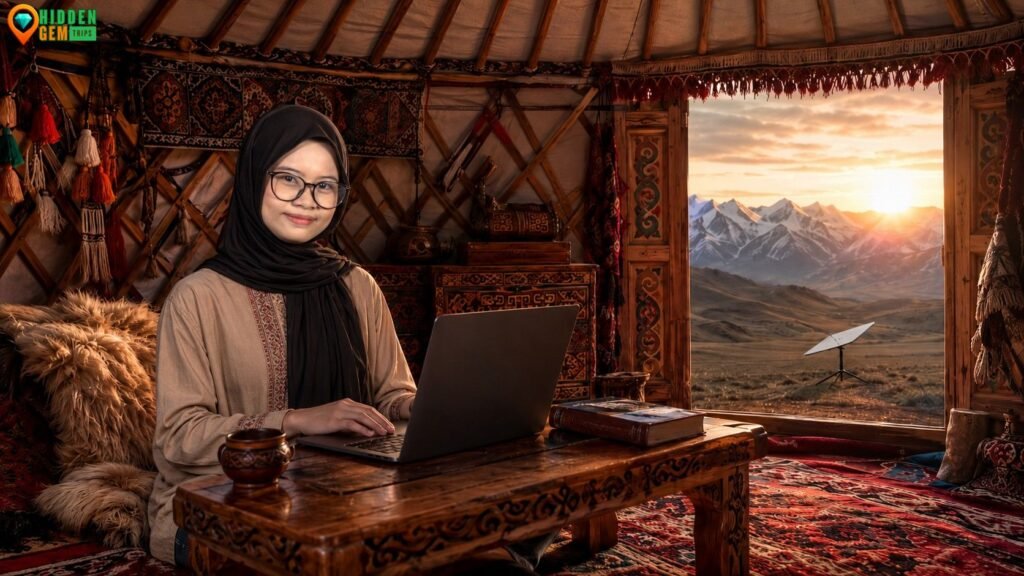
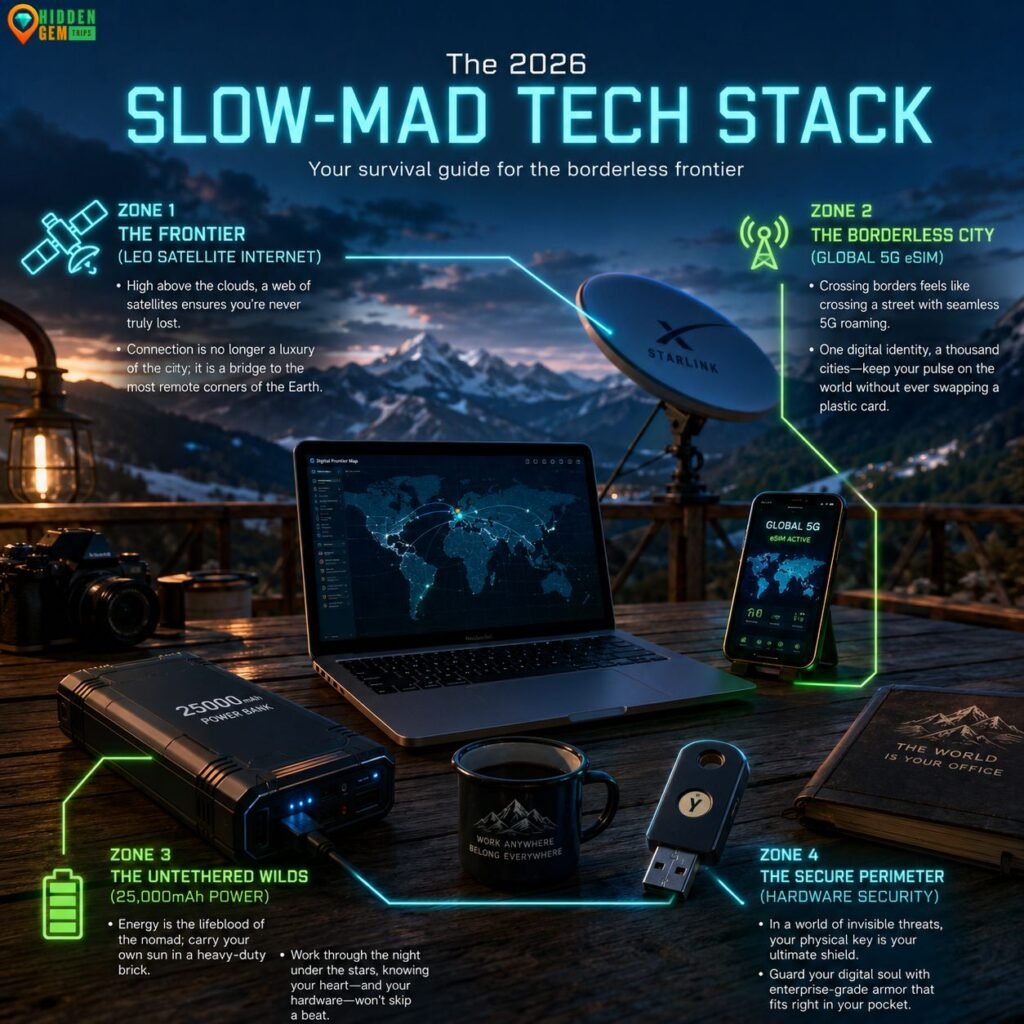
The romance of working from a remote mountain village quickly fades when you drop a crucial client call due to a failing router. To work effectively from anywhere, your infrastructure must be invisible and invincible. You cannot rely on spotty cafe Wi-Fi when you are managing a global team from a yurt in Kyrgyzstan.
Redundant Connectivity: Satellite Backups and eSIMs
In the Nomad 2.0 era, connectivity is your lifeline. You must treat it with military-grade redundancy.
- Connectivity Strategy: Always secure an Airalo eSIM for immediate 5G access in urban centers like Bishkek or Almaty. This ensures that the moment your plane touches down, you are online and able to navigate or check urgent emails without hunting for a local vendor.
- Satellite Back-up: For true Digital Nomad 2.0 Guide followers, having a satellite internet backup like Starlink Mini is the gold standard for high-altitude lifestyle peaks. The deployment of low-earth orbit (LEO) satellites has revolutionized remote work. According to global broadband data from the International Telecommunication Union (ITU), satellite connectivity has bridged the digital divide, allowing enterprise-level data speeds in regions previously considered absolute dead zones.
Enterprise-Grade Cybersecurity and Power Management
Your hardware and data security must be uncompromising. Just as you would carefully curate your must-have travel gear for remote island trips, you should apply the same scrutiny to your digital backpack.
- Power Reliability: In remote Central Asian villages, power surges can happen. A high-capacity power bank (25,000mAh+) is an essential part of the remote work lifestyle. Furthermore, using a high-quality surge protector is critical to preventing a sudden voltage spike from frying a $2,000 laptop.
- Cybersecurity: As a productivity-focused nomad, using a hardware security key (like YubiKey) is now more important than a simple VPN. While a VPN encrypts your traffic, hardware keys prevent phishing and unauthorized access to your professional accounts, which is vital when connecting to public networks in emerging markets.
- Health Insurance: Never leave home without specialized coverage tailored to the remote-work lifestyle. Standard travel insurance rarely covers long-term stays or the nuances of remote work. Ensure your policy covers emergency medical evacuations from high-altitude regions.
Legal Mastery: Navigating Nomad Visas and Tax Incentives in 2026
Operating in a legal gray area by working on a tourist visa is an outdated and increasingly risky practice. Understanding your legal rights is a big aspect of the Digital Nomad 2.0 Guide. Governments worldwide have realized the immense economic benefit of attracting high-earning remote workers. In 2026, many countries have moved away from “Tourist Visa Runs” and toward official “Nomad Visas”.
To stay compliant and informed about global mobility policies, reviewing resources from the United Nations World Tourism Organization (UNWTO) policy frameworks can provide deep insights into how nations are restructuring their visa programs for remote workers.
Kyrgyzstan’s Revolutionary Digital Nomad Status
Kyrgyzstan has emerged as a pioneer in Central Asia by aggressively courting remote professionals. Kyrgyzstan offers a specialized “Digital Nomad” status that allows citizens of certain countries to stay and work without a work permit for up to one year.
This is a game-changer for anyone looking for the safest under-the-radar cities to base themselves in. It eliminates the anxiety of border runs, allows you to legally open local bank accounts, and provides a stable framework to sign long-term apartment leases.
Uzbekistan’s IT Visa: The Silicon Valley of the Silk Road
Uzbekistan has introduced an IT Visa specifically for tech professionals and productivity-focused nomads. This visa provides access to local tax incentives and modern IT Parks in Tashkent and Samarkand. By essentially creating special economic zones for digital workers, Uzbekistan is transforming its ancient Silk Road cities into formidable modern tech hubs.
Central Asia Hubs: The Premier Destinations for Slow-mading
While Europe still offers incredible spots—such as the majestic High Tatras alternative to the Alps—The Digital Nomad 2.0 Guide identifies three major Central Asian hubs that dramatically outperform traditional European cities in terms of their “Life-to-Cost” ratio.
Bishkek, Kyrgyzstan: The High-Altitude Basecamp
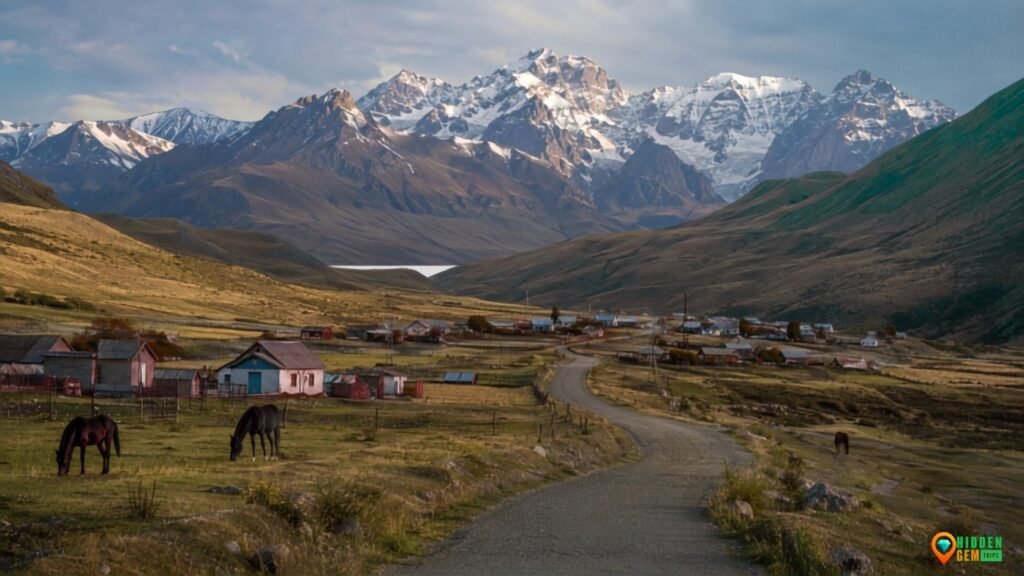
Bishkek is the absolute heart of the Digital Nomad 2.0 Guide. Framed by the snow-capped Tian Shan mountains, the city is a fascinating juxtaposition of eras. With its Soviet-era parks and ultra-modern coworking spaces like ololo, it offers a balance of grit and grace. It is frequently cited as one of the safest, under-the-radar cities for those who fundamentally prefer dramatic mountains to crowded beaches. The community here is tight-knit, collaborative, and incredibly welcoming.
Almaty, Kazakhstan: The Modern Alpine Hub
If your career requires uninterrupted, high-bandwidth corporate calls and you enjoy a cosmopolitan lifestyle, look no further. Almaty feels like a blend of Switzerland and Central Asia. If you need high-speed infrastructure and a European cafe vibe, Almaty is your work-from-anywhere destination. It is absolutely ideal for those who want a safe, transformative journey without sacrificing urban comforts.
Samarkand, Uzbekistan: The Cultural Productivity Peak
For the Digital Nomad 2.0 Guide enthusiast who loves history, Samarkand is unmatched. This city was the intellectual center of the world centuries ago, and returning here to engage in modern knowledge work feels incredibly profound. Working from a terrace overlooking the stunning azure mosaics of the Registan is a true lifestyle peak.
The Economics of Slow-mading: Budgeting for the Future
A key element of our Digital Nomad 2.0 Guide is financial sustainability. The primary goal of remote work should not be simply to spend your Western salary in an expensive expat enclave, but to leverage geographic arbitrage to build long-term wealth, invest in your business, or fund passion projects. Implementing genius budget hacks for finding hidden gems allows you to dramatically extend your runway.
Cost of Living Breakdown: Bali vs. Bishkek
Let’s look at the hard data. Below is a detailed look at the numbers:
Monthly Budget Comparison (2026 Estimates)
| Category | Canggu, Bali (Nomad 1.0) | Bishkek, Kyrgyzstan (Nomad 2.0) |
| Luxury Apartment | $1,800 – $2,500 | $600 – $900 |
| Coworking Membership | $250 | $120 |
| Local Meals (Daily) | $30 – $50 | $10 – $20 |
| Internet (Satellite/Fiber) | $100 | $40 |
| Visa Ease | Complex / Expensive | Simple “Nomad Status” |
| Total Est. Monthly | $3,500+ | $1,200 – $1,500 |
This stark financial comparison unequivocally shows why nomads seeking productivity and a safe, life-changing adventure should work from home in Central Asia. By relocating to Bishkek, a remote worker can easily save over $2,000 a month while actually increasing their quality of life, access to nature, and personal security. For travelers keen on experiencing world-class hidden gems on a mid-range budget, the math here is undeniably attractive.
Safety, Community, and the Solo Traveler
Safety is the absolute foundation of any Digital Nomad 2.0 Guide. You cannot be productive if your nervous system is constantly on high alert. Statistically, Central Asia is safer than many Western capitals, but we always advise trusting your “cultural intuition”.
To stay safe in the long term, you need to deeply embed yourself and get to know the “gatekeepers” in your area—the local shop owners, the coworking space managers, and the neighborhood elders. For women traveling alone, referencing our Solo Female Travel Map 2026 remains the best way to uncover safe, community-supported hidden treasures.
Regenerative Travel: The Ethical Core of the Digital Nomad 2.0 Guide
The old model of digital nomadism was largely extractive: arriving in a developing nation, utilizing its cheap infrastructure, driving up local housing prices, and leaving when the visa expired. The Digital Nomad 2.0 Guide mandates a fundamental ethical shift. It states that regenerative travel is a good idea. This means leaving the ecosystem and the economy tangibly better than you found it.
Skill-Sharing and Micro-Mentorships
You possess a highly valuable global skill set. Sharing it is the ultimate currency. This involves mentoring local tech students in Bishkek or Almaty. By hosting free workshops at local universities or coworking spaces on topics such as digital marketing, software development, or international client acquisition, you empower local youth to participate in the global digital economy.
Environmental Stewardship in Fragile Ecosystems
The mountains of Central Asia are breathtaking, but they are also ecologically fragile. Regenerative practice means actively reducing plastic use in high-altitude lifestyle peaks. Furthermore, it involves local economic support: prioritizing family-run homestays, which are true hidden gems for solo female travelers, over massive foreign-owned hotel chains. This guarantees that your foreign capital directly supports local families and preserves indigenous culture.
Conclusion: Reclaiming Your Freedom in the Digital Nomad 2.0 Era
The transition to a remote work lifestyle in 2026 is no longer about escaping your life; it is about building one that you don’t need a vacation from. By meticulously following this Digital Nomad 2.0 Guide, you are choosing to prioritize depth, safety, and community over the superficial “check-list” travel of the past decade.
Whether you are working from a high-tech hub in Almaty or a serene yurt at a lifestyle peak in Kyrgyzstan, the goal remains the exact same: to experience a safe and transformative journey that enriches both your career and the world around you. Remember, becoming a productivity-focused nomad is a journey, not a quick fix. Central Asia’s safest hidden cities are ready to welcome you as your home, but the very first step is a shift in your mindset.
Are you truly ready to trade the crowded, exhausted “Nomad 1.0” hubs for the authentic, hidden gems that we’ve explored today? If you are dedicated to finding untouched paradises globally, the mountains of Central Asia are calling.
Join the Conversation! We want to hear from you: If you could move your work-from-anywhere setup to a mountain yurt tomorrow, what is the one thing you would miss most about home? Or, have you already started your “Slow-mading” journey in 2026? Share your thoughts and questions in the comments below! Let’s build the slow-travel community together by sharing our real-world experiences.
Frequently Asked Questions (FAQ) About Slow-mading
1. Is the internet in Kyrgyzstan fast enough for video calls in high definition?
Yes. High-speed fiber-optic connections are common in cities like Bishkek. For people who want to go to rural or hilly places, 2026 satellite coverage (like Starlink) makes sure you stay a productive nomad even while you work from a traditional yurt.
2. Do I need to get a special visa to work from home in Central Asia?
In 2026, many Central Asian countries began offering more flexible “Digital Nomad Visas”. Before booking flights, our Digital Nomad 2.0 Guide strongly suggests reviewing the latest open data from the World Bank and local embassy warnings for precise information on visa-free entry and tax requirements.
3. If I don’t know Russian, how hard is it to understand the language?
Russian and Kyrgyz are the main languages; however, the younger generation speaks English very well. Also, this is a safe and life-changing trip, no matter how good your language abilities are, thanks to sophisticated AI translation systems.
4. How can I find a long-term, safe place to stay without getting ripped off?
For long-term stays, steer away from sites that are mostly for tourists, like Airbnb. Instead, join Facebook groups for expats in your area, get in touch with the administrators of coworking spaces (like ololo in Bishkek), or employ a reliable local real estate agent. The simplest way to get the greatest rates is to sign a local lease for three to six months.
5. Is the medical infrastructure good enough for expats who stay for a long time?
Almaty and Bishkek, two major cities, feature high-quality private clinics where doctors understand English. But if you live in a rural place and need specialist care or are in a serious emergency, you really need full global health insurance that includes medical evacuation for your safety.
Disclaimer
As of 2026, the material in this Digital Nomad 2.0 Guide is based on the most up-to-date travel, legal, and economic statistics. Changes can happen quickly in the rules for visas, taxes, travel, and digital infrastructure around the world. Hidden Gem Trips encourages safe, life-changing trips through ethical, responsible, and legal remote work practices. This article is an independent editorial work. We don’t use affiliate links, and all our suggestions for services, destinations, or products are based solely on our stringent editorial standards and independent research.