
Introduction: The “Alps Fatigue” is Real
High Tatras Europe: I remember standing in a queue for a gondola in Chamonix, surrounded by high-fashion ski gear and a day-pass price tag that made my eyes water. The Alps are legendary. But as we get closer to 2026, more and more people are saying they don’t like the crowds, the commercialization, and the high prices. We want the granite peaks, alpine lakes, and crisp air without taking out a second mortgage.
Enter the High Tatras in Europe. Straddling the border between Slovakia and Poland, this “pocket-sized” mountain range is the highest in the Carpathians. It offers a raw, rugged authenticity that the Alps lost decades ago. In this deep dive, I’m sharing why you should pivot your 2026 plans to the Tatras, covering everything from cost realities to logistical secrets mainstream agencies won’t tell you.
A Harsh Cost Comparison: The “Alps Dupe”
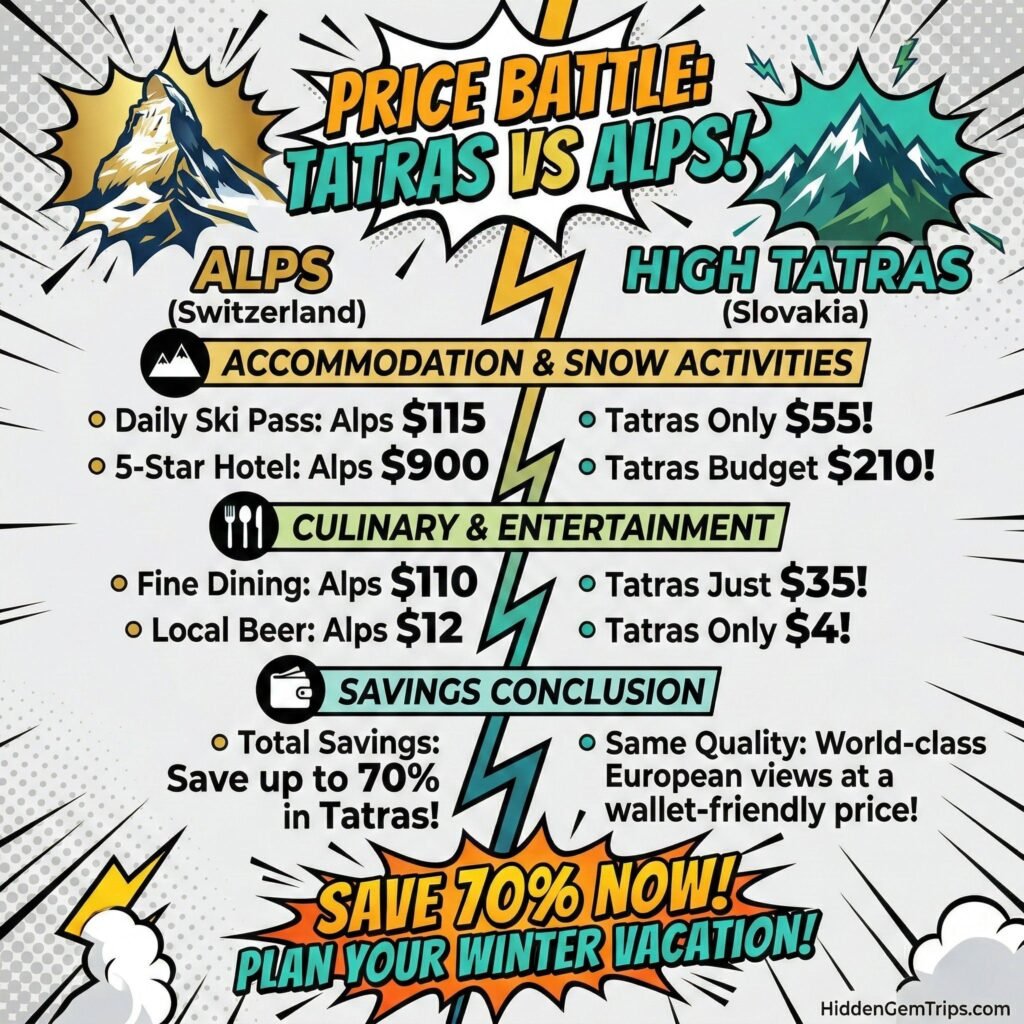
Let’s talk about the big issue: your financial account. The most compelling reason to visit the High Tatras is the value for money. While high-end Swiss or French resorts are playgrounds for the ultra-wealthy, the Tatras remain accessible to those seeking affordable opulence.
Table 1: 2026 Price Index—High Tatras vs. French/Swiss Alps (USD)
| Full-Day Adult Ski Pass | $42 – $55 | $85 – $115 | ~50% Savings |
| 5-Star Mountain Resort (Night) | $130 – $210 | $450 – $900 | ~70% Savings |
| Standard 3-Course Dinner | $25 – $35 | $75 – $110 | ~65% Savings |
| Local Draught Beer (0.5 L) | $2.50 – $4.00 | $8.00 – $12.00 | ~70% Savings |
| Ski Equipment Rental (Full Set) | $20 – $35 | $55 – $80 | ~60% Savings |
Luxury for Less: From 5-Star Spas to Alpine Huts
A five-star hotel with spa facilities and mountain views in Zakopane or Štrbské Pleso usually costs between $120 and $200 per night. In Zermatt or St. Moritz, you’d be lucky to find a three-star guesthouse for that price.
For the true adventurer, the mountain huts—known as “Chata” in Slovak or “Schronisko” in Polish—offer beds for as little as $25–$40. These aren’t just hostels; they are cultural institutions serving hot garlic soup and cold local beer to weary hikers at 2,000 meters.
Ski Passes and Lift Logistics
If you visit in winter, the price difference is even starker. In 2026, a day pass at a top Tatra resort like Jasná or Tatranská Lomnica is around €35–€45. Compare that to the €80–€105 charged in major Alpine domains. You get the same high-speed lift technology and groomed slopes for less than half the price.
The Geography of the Granite Heart: Poland and Slovakia
A unique feature of the High Tatras is the duality of the experience. You get two countries for the price of one.
Slovakia: The High-Altitude Adventure Hub
Slovakia holds most of the mountain range, including its highest peak, Gerlachovský štít (2,655 m). The Slovak side is marked by steep drop-offs and an efficient Tatra Electric Railway that connects the main resort towns of Starý Smokovec, Tatranská Lomnica, and Štrbské Pleso.
This side of the border is perfect for those practicing slow travel. The pace is slower, the trails are rugged, and the focus is on connecting with nature rather than the après-ski party scene.
For official trail conditions and safety alerts, always consult the Horská záchranná služba (Slovak Mountain Rescue Service), which provides real-time data for hikers.
Poland: The Cultural Capital of Zakopane
Cross to the Polish side, and the vibe shifts. Zakopane is the “Winter Capital of Poland,” a bustling town famous for its Goral culture and unique wooden architecture. While it can get crowded, it serves as the ultimate base for exploring the iconic Morskie Oko lake, widely considered one of the most beautiful glacial lakes in the world.
If you want to experience underrated destinations in Europe, wandering the side streets of Zakopane to find traditional smoked Oscypek cheese is a sensory journey you won’t find in the sterile luxury of the Alps.
Detailed information about the Polish side of the park can be found on the official Tatrzański Park Narodowy (TPN) website.
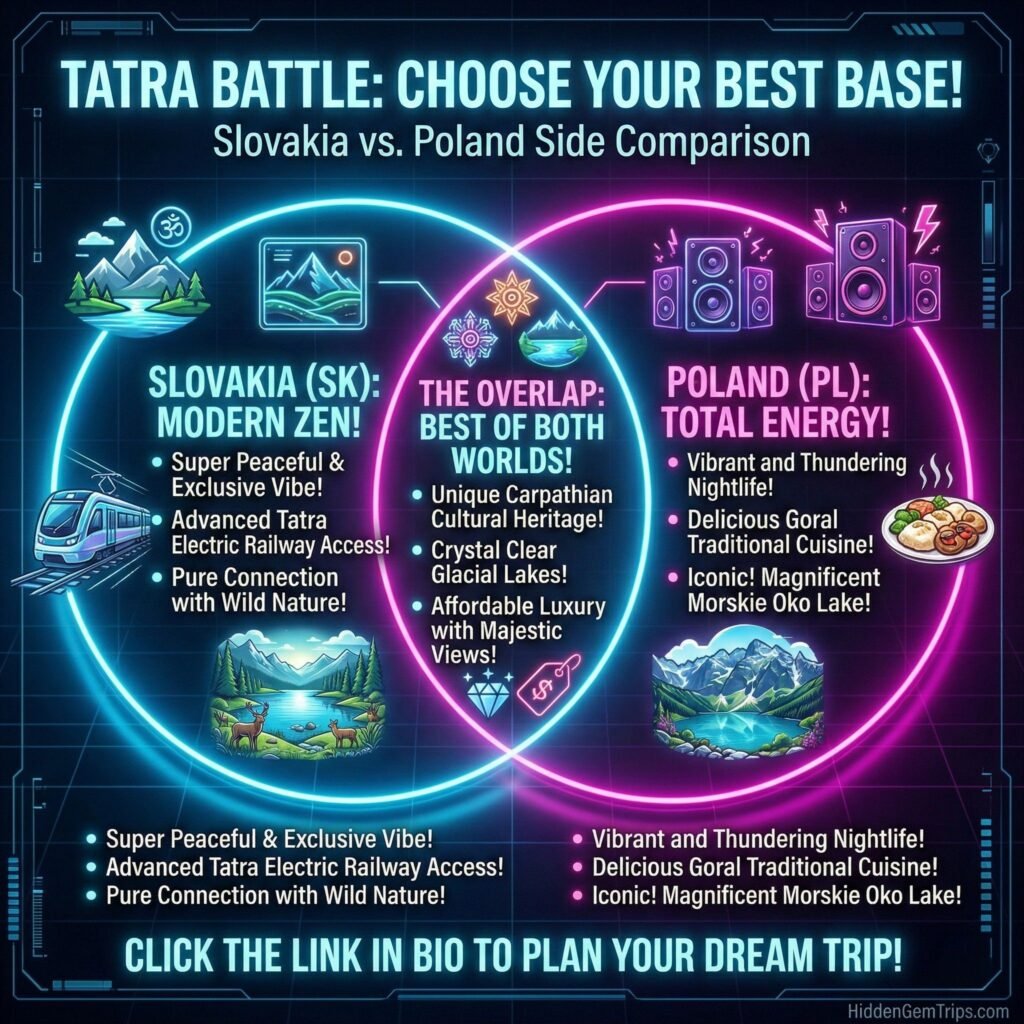
Table 2: Choosing Your Base—Slovak Tatras vs. Polish Tatras
| Main Tourist Hub | Starý Smokovec / Štrbské Pleso | Zakopane |
| Vibe | Quiet, Rugged, Nature-Focused | Vibrant, Cultural, Busy |
| Best For | Hardcore Hikers & Peaceful Retreats | Families, Foodies, Nightlife |
| Top Landmark | Gerlachovský štít (Highest Peak) | Morskie Oko (Most Iconic Lake) |
| Transport | Tatra Electric Railway (Excellent) | Local Minibuses (Crowded but Frequent) |
| Currency | Euro (€) | Polish Złoty (PLN) |
Top 5 Experiences You Can’t Miss in the High Tatras, Europe
Having hiked and skied these peaks for years, these are the non-negotiables for your itinerary.
1. Conquering Rysy: The Cross-Border Summit
Rysy is unique. It has three peaks, the highest in Slovakia, but the middle peak is the highest point in Poland. You can hike up from the Slovak side, a long but manageable day hike, and stand with one foot in each country. The view from the top, overlooking the emerald-green lakes below, defines a world-class landscape.
2. The Science of the “Green Lake” (Zelene Pleso)
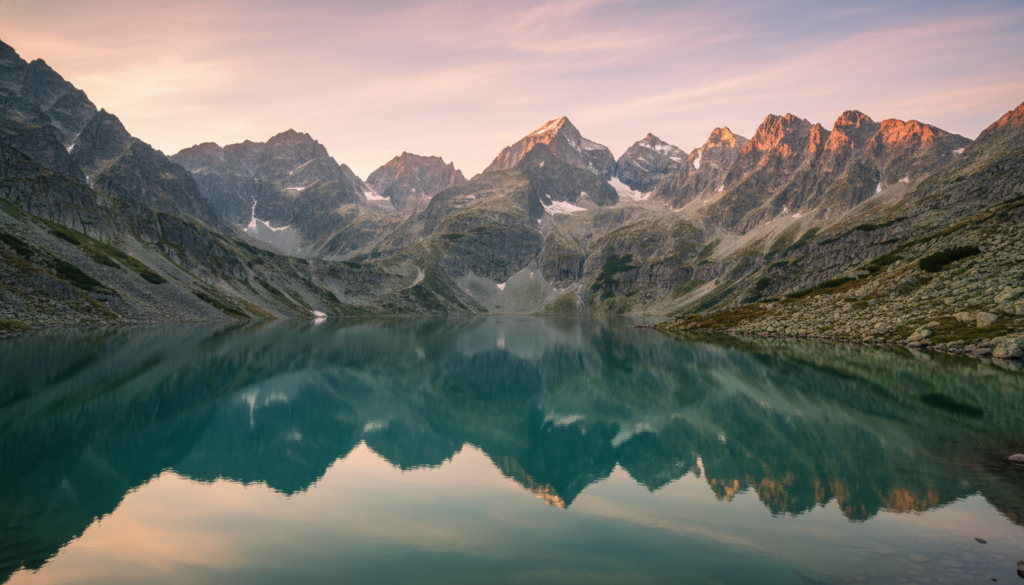
Nestled in a valley surrounded by 2,500 m peaks, Zelene Pleso is famous for its turquoise-green color. This isn’t magic; it’s geology. The color comes from mineral runoff and glacial silt suspended in the water. Staying at the Chata pri Zelenom plese is an experience of pure isolation. There is no Wi-Fi, no cell signal, just the sound of the wind and the clinking of hiking poles.
3. Lomnický štít: Coffee at the Edge of the World
If you aren’t a hiker, you can still experience the high peaks. A cable car from Tatranská Lomnica takes you to the summit of Lomnický štít (2,634m). There is a small café at the top where you can drink coffee while looking out over the Carpathian range. It’s an easy way to find affordable opulence without the sweat. You can check the current weather and lift status via the Official Slovakia Travel Portal, which is the national authority for tourism data.
4. Thermal Relaxation: The Post-Hike Recovery
The region sits on a geothermal basin. After a day on the trails, heading to AquaCity Poprad or the Zakopane Thermal Baths is a must. Floating in 38°C mineral water while watching snow fall on the peaks you just climbed is the ultimate luxury.
5. The Belianske Tatras: The Forbidden Peaks
For a true hidden gem, look to the easternmost part of the range. The Belianske Tatras are limestone peaks, unlike the granite of the High Tatras. Much of this area is a strictly protected nature reserve with limited access, offering a glimpse into what the mountains looked like before human intervention.
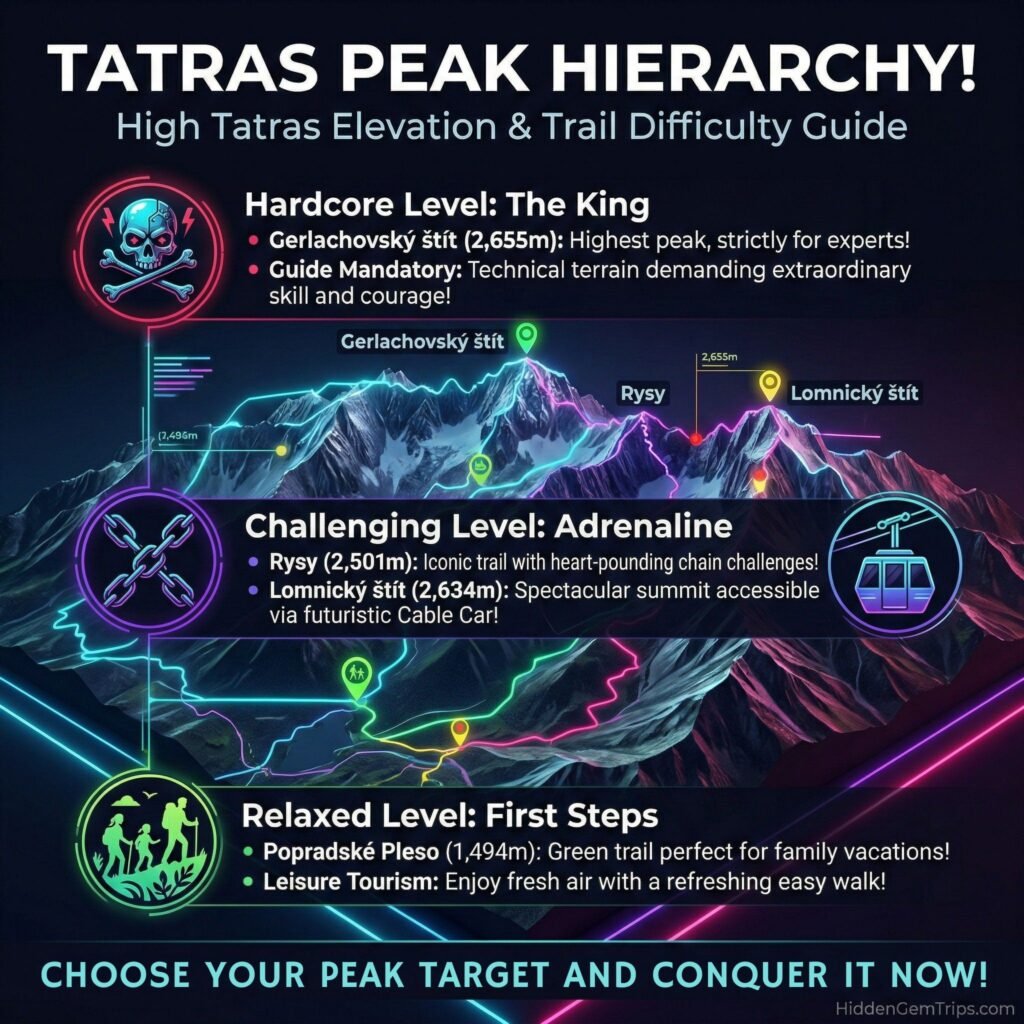
Table 3: Technical Guide to Iconic Tatra Peaks
| Gerlachovský štít | 2,655 m | Extreme (Guide Required) | 8 – 10 Hours | Sliezsky Dom (SK) |
| Rysy (North Peak) | 2,501 m | Challenging (Chains) | 6 – 8 Hours | Popradské Pleso (SK) |
| Lomnický štít | 2,634 m | Easy (Cable Car Access) | 15 Minutes (via Lift) | Tatranská Lomnica (SK) |
| Kasprowy Wierch | 1,987 m | Moderate | 3 – 4 Hours | Kuźnice (PL) |
| Kriváň | 2,494 m | Strenuous | 7 – 9 Hours | Tri Studničky (SK) |
Logistical Secrets: Getting to High Tatras, Europe
Reaching these mountains is straightforward if you know where to look.
- Fly to Krakow (KRK): the most popular route. From Krakow, it’s a 2.5-hour drive or bus ride to Zakopane.
- Fly to Poprad-Tatry (TAT): This location is the closest airport, right at the foot of the mountains in Slovakia. It’s a smaller airport with fewer connections, but if you can get a flight, it’s only a 15-minute drive to the trails.
- The Tatra Electric Railway: Once on the Slovak side, you don’t need a car. This narrow-gauge railway is reliable, cheap, and offers some of the best window views in Europe.
Expert Tip: Use the Bolt app for affordable taxi rides in towns, but rely on the local bus network (ZTM in Poland, SAD in Slovakia) to reach trailheads. It’s how you travel like a local and avoid the “tourist tax” on parking.
You can also find statistical data on tourism growth in the region via the Statistics Poland (GUS) portal to see why it’s trending for 2026.
Safety and Ethics: The Fragile Beauty of the Carpathians
The High Tatras are a National Park on both sides of the border (TANAP in Slovakia, TPN in Poland). The rules are strict for a reason. As we advocate in our guide to environmental wanderlust, we must be stewards of these landscapes.
- Insurance is Mandatory: In Slovakia, mountain rescue is not free. If you twist your ankle and need a helicopter, you’ll be looking at a bill of $5,000+ unless you have specific mountain insurance (which costs about $2/day).
- Stay on the Trails: These mountains are home to the brown bear, the lynx, and the endemic Tatra chamois. Straying off-trail isn’t just dangerous for you; it’s devastating for the ecosystem.
- Solo Safety: For women traveling alone, this region is exceptionally safe. Check our 2026 Solo Female Travel Map for more context on why Eastern Europe is a top safety choice.
FAQ: Your High Tatras Europe Travel Briefing
Do I need a visa?
Slovakia and Poland are both in the Schengen Area. If you have a US, UK, or EU passport, you typically don’t need a visa for short stays.
Is it English-friendly?
The answer is yes, especially in resort towns and among younger people. In the remote mountain huts, a few words of Slovak or Polish will go a long way.
Can I hike in the winter?
Most high-altitude trails in Slovakia are seasonally closed from November to mid-June for nature protection and safety. Stick to the lower valleys or winter sports during this time.
What is the currency?
Slovakia uses the u003cstrongu003eEuro (€)u003c/strongu003e, while Poland uses the u003cstrongu003eZłoty (PLN)u003c/strongu003e. Most places accept cards, but carry cash for the mountain huts.
Disclaimer: The Nature of the Peaks
This High Tatras Europe guide is based on current 2026 travel trends and personal expertise. Mountain environments are inherently unpredictable. The weather can change in minutes, and trails can be closed without warning. Hidden Gem Trips and its authors are not liable for any injuries, financial losses, or travel disruptions. Always check local weather reports via HZS.sk (SlovakMountain Rescue) before setting out.