
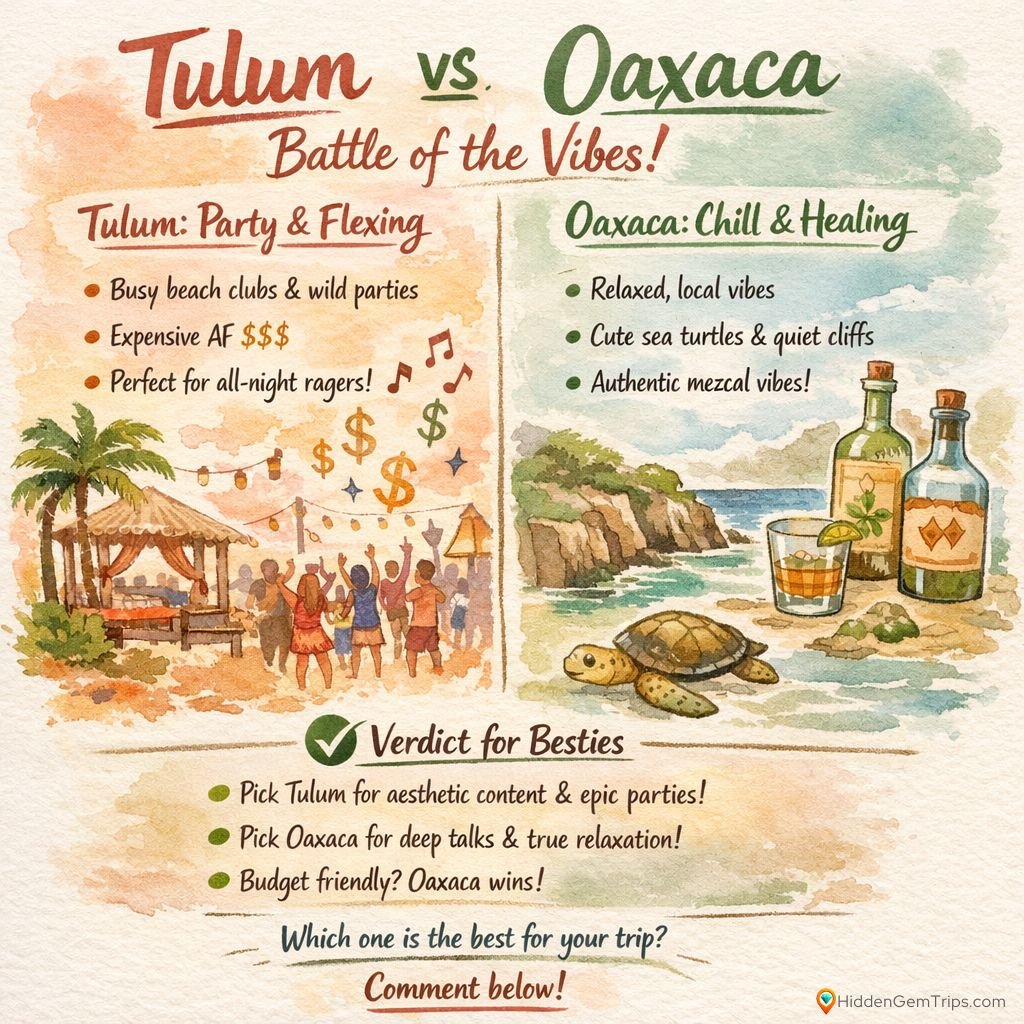
If you close your eyes and think of a Mexican beach getaway, you likely picture the white sands and turquoise waters of the Riviera Maya. But let’s be honest: the Tulum we once loved is dead. It has been replaced by $20 avocado toasts, thumping techno beats that drown out the ocean, and a “spiritual” scene that feels more like a staged photoshoot than a soul-searching journey.
As an explorer who prioritizes authenticity over aesthetics, I decided to head south. What I found was Oaxaca’s hidden coastline—a rugged, soulful, and remarkably affordable alternative that still feels like the Mexico of thirty years ago. While the crowds in the north are fighting for a square inch of sand in a congested beach club, I was watching the sunrise on a deserted cliffside in Mazunte with nothing but the spray of the Pacific for company. This guide is your roadmap to the last frontier of true Oaxacan coastal magic.
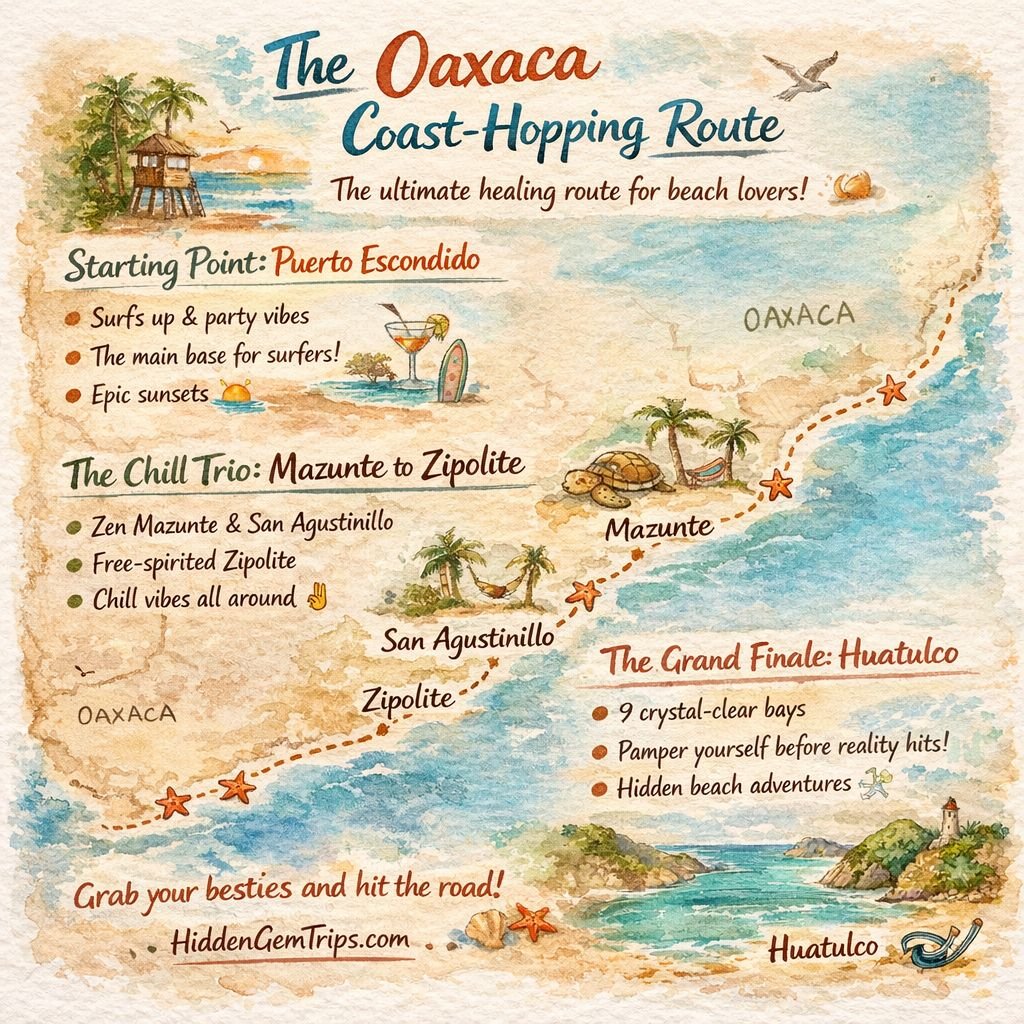
1. Mazunte: The Soulful Heart of Oaxaca’s Hidden Coastline
Mazunte is a “Pueblo Mágico” (Magical Town), but unlike the polished versions near Cancun, it has kept its grit and its heart. This town was once the grim center of the sea turtle hunting industry; today, it is the global center of their conservation. The transformation of Mazunte is a masterclass in Sustainable Travel International principles.
The Spiritual Magnet: Punta Cometa
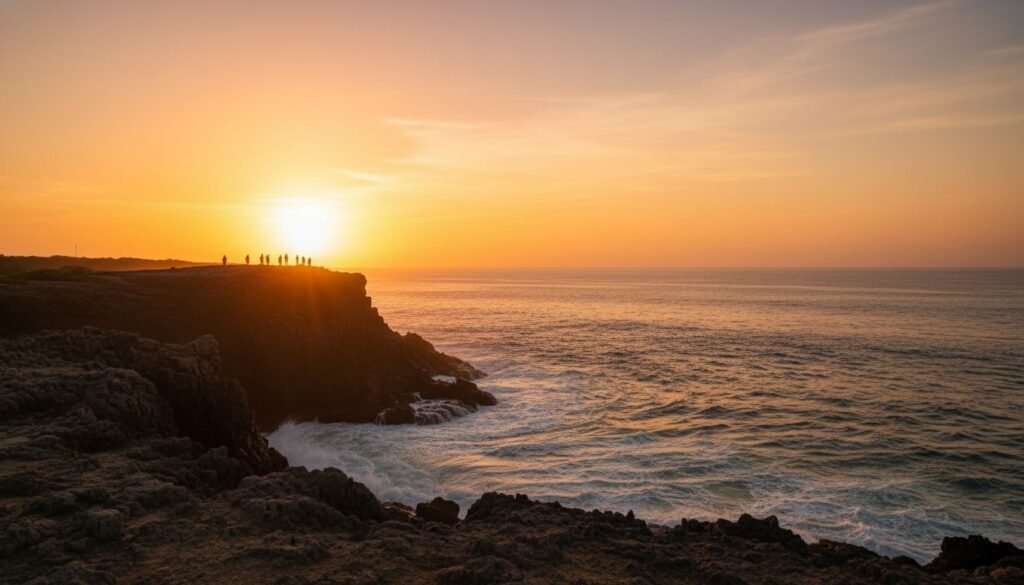
Punta Cometa is the southernmost point of the state and the most iconic spot on Oaxaca’s hidden coastline. This semi-circular mountain juts into the sea, creating a natural amphitheater for the cosmos. Every evening, a silent ritual occurs: hundreds of travelers and locals gather on the cliffs to watch the sun dip into the Pacific. There is no DJ, no bottle service—just a collective hush as the sky turns into a bruised purple and orange canvas. It is a communal experience that Tulum’s over-commercialized party scene simply cannot replicate.
Conscious Living and the Turtle Center
A visit to the Mexican Turtle Center is essential. It serves as a living museum of the town's evolution from exploitation to protection. Living here feels intentional. Whether you are taking a world-class yoga class or eating at a family-run comedor, you are participating in a local economy that values the land. If you’re looking for a place to stay that aligns with these values, I always check Agoda's boutique listings for eco-huts that use solar power and composting toilets.
2. Zipolite: Fearless Freedom and Golden Sands
Just a few kilometers down a winding coastal road lies Zipolite. Famously known as Mexico’s only legal “clothing-optional” beach, it represents a level of fearless freedom that is hard to find elsewhere. But even if you choose to stay fully clothed, the vibe here is one of absolute, radical non-judgment.
The Power of the “Beach of the Dead”
The name Zipolite actually translates to “Beach of the Dead” in the local Zapotec language, referring to the dangerous undertows. The waves here are massive and powerful—reminiscent of the wild swells we explored in our Java Secret Beaches guide. This is not a beach for casual splashing; it is a beach for respecting the raw power of the Pacific.
The Architecture of Simplicity
In Zipolite, luxury is redefined as having a thatched palapa roof over your head and sand between your toes. The development here is strictly low-rise, preserving the skyline of palm trees. To truly immerse yourself, stay in one of the beachfront posadas. Waking up to the thunderous roar of the ocean is a sensory experience that no high-end Tulum resort can match for under $500 a night.
3. Puerto Escondido: The Surfer’s Frontier
Puerto Escondido is the most “famous” spot on Oaxaca’s hidden coastline, yet it maintains a dual identity. It is home to the Mexican Pipeline (Zicatela), a wave so dangerous only pros dare to touch it, but it also hides quiet, swimmable coves.
The Sanctuary of Playa Carrizalillo
To reach Playa Carrizalillo, you must descend 167 steep stone steps. This physical barrier acts as a natural filter; it keeps the mass-market crowds and the infirm away, leaving a pristine, turquoise bay that feels like a private Mediterranean cove. It is the perfect place to learn to surf on gentler waves before graduating to the bigger breaks.
La Punta: The Nomad’s Dirt Road Paradise
At the southern end of Zicatela lies La Punta. The roads here are unpaved and dusty, lined with open-air mezcal bars and vegan cafes. It has become a hub for “Slow-mading”—digital nomads who stay for months rather than days. If you’re planning to work from here, be warned: the infrastructure is still catching up. Check out our Digital Nomad 2.0 guide to learn how to maintain productivity when the town’s transformer inevitably blows during a tropical storm.
4. The Secret Coves: San Agustinillo and Beyond
Between the main hubs of Puerto Escondido and Mazunte lie the true “gems” of Oaxaca’s hidden coastline. San Agustinillo is a tiny fishing village tucked between rocky outcrops. It offers perhaps the most balanced experience on the coast: quiet enough for a honeymoon, but close enough to Mazunte for a night out.
The Ritual of the Colectivo
Traveling between these coves is an adventure in itself. Forget Uber; here, you use the “colectivo”—a modified pickup truck with a bench in the back. It’s hot, dusty, and you’ll likely be sitting next to a local farmer and his produce. It is the only way to travel if you want to understand the authentic rhythm of Oaxacan life. We’ve broken down the cost-efficiency of this local transport in our Budgeting & Cost Planning guide.
5. The Logistics of a Oaxacan Expedition
Reaching this part of the world requires a “fearless” mindset because the geography itself guards these hidden spots. Unlike the flat plains of the Yucatan, Oaxaca is guarded by the Sierra Madre del Sur mountains.
The “Bus of Death” vs. Flying
You have two choices: fly into Puerto Escondido (PXM) or Huatulco (HUX), or take the legendary 7-hour bus from Oaxaca City. Locals call it the “Bus of Death” not because of safety, but because of the infinite hairpin turns that test even the strongest stomachs. However, the reward for the overland journey is witnessing the vegetation shift from high-desert cacti to lush, steaming tropical jungle as you descend toward the sea.
Essential Gear for the Pacific Coast
The Pacific sun is significantly more intense than the Caribbean. Beyond standard gear, I recommend bringing a high-quality travel water purifier to avoid the “gringo gallop” and reduce your plastic footprint. Always consult the CDC Travel Health advisories for the latest on regional health before you depart.
6. Planning for the Unknown: Budgeting and Safety
One of the primary reasons to avoid Tulum is the predatory pricing that has taken over the region. In Oaxaca, you can still find a world-class meal for the price of a coffee in New York.
Realistic Budgeting for the Hidden Coast
You can comfortably live on Oaxaca’s hidden coastline for $40 to $60 a day, including a private room and incredible seafood. However, “hidden” doesn't always mean “convenient.” Private taxis to remote surf breaks can be expensive. We recommend following our Slow Travel Manifesto to stretch your pesos over a multi-month expedition.
Safety for the Modern Explorer
Oaxaca is one of the safest states in Mexico, but it is still a place where you must use common sense. Like the remote jungles of Sumatra, the biggest dangers are often natural—rip currents and sunstroke. Always ensure you have international travel insurance that covers adventure sports and remote medical assistance.
7. The Ethical Dilemma: To Share or To Shield?
As we publish this guide, we face the “Gatekeeper’s Dilemma.” How do we share Oaxaca’s hidden coastline without turning it into the very thing we are trying to avoid? At Hidden Gem Trips, our philosophy is built on IATA Traveler Guidance and the concept of “dispersal tourism”.
The goal isn't to bring 10,000 people to one beach; it's to encourage 10,000 people to find 10,000 different beaches. When you visit Oaxaca, be a guest, not a consumer. Tip your boat captains generously, support the local turtle hatcheries, and never, ever leave trash on these sacred shores.
Conclusion: The Final Frontier of Authentic Mexico
Tulum has become a brand; Oaxaca remains a feeling. By choosing to uncover Oaxaca’s hidden coastline, you are making a conscious decision to prioritize community over celebrity and nature over nightlife. Whether you are sipping artisan mezcal in a dusty roadside bar in La Punta or watching humpback whales breach off the coast of Mazunte, you will realize that the best parts of travel are the ones you have to work for.
The Pacific Ocean is wild, unpredictable, and profoundly beautiful. It doesn't care about your Instagram followers or your luxury luggage. It only cares that you show up with an open mind and a respectful heart. Leave the Tulum crowds to their photo-ops—the real Mexico is waiting for you on the hidden shores of Oaxaca.
FAQ: Secrets of the Oaxacan Coast
1. Is the water safe for swimming?
The Pacific is much more powerful than the Caribbean. Always look for protected bays like Playa Carrizalillo or San Agustinillo. If you see a red flag on a beach like Zipolite, do not enter the water.
2. How is the internet for Digital Nomads?
It is improving but still “sketchy” during storms. Puerto Escondido has the most reliable Starlink setups, while Mazunte relies more on local towers. Always have a backup plan.
3. Do I need to carry cash?
Yes. Puerto Escondido has a lot of ATMs, although they regularly run out of money on the weekends. Mazunte and Zipolite have very few reliable ATMs. Cash is king for local warungs and colectivos.
4. Can I see whales on the Oaxaca coast?
Yes! Humpback whales migrate through these waters from December to March. You can often see them breaching from the shore at Punta Cometa.
5. Is Oaxaca City worth visiting on the way?
Absolutely. We recommend spending 3 days in the city to enjoy the world-class food scene before taking the mountain journey down to the coast.
Disclaimer & Ethical Disclosure
The information provided in this guide to Oaxaca’s hidden coastline is based on firsthand experiences and travel data curated for 2026. Travel conditions, safety in the area, and environmental rules can change at any time. This guide is meant only for inspiration and learning.
Some of the links in this article are affiliate links, such as Agoda, Amazon, World Nomads, and LifeStraw. If you buy something through these links, we may get a small commission at no extra cost to you. This helps us achieve our goal of finding hidden gems for people all across the world. Before going on any foreign trip, always put your own safety first by checking the official IATA Traveler Guidance and your country's travel warnings.