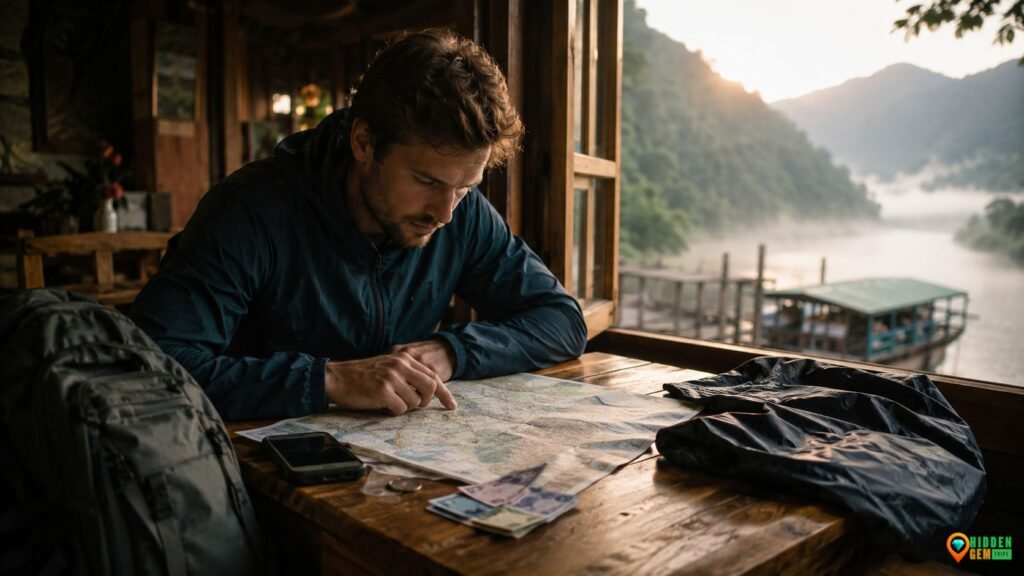

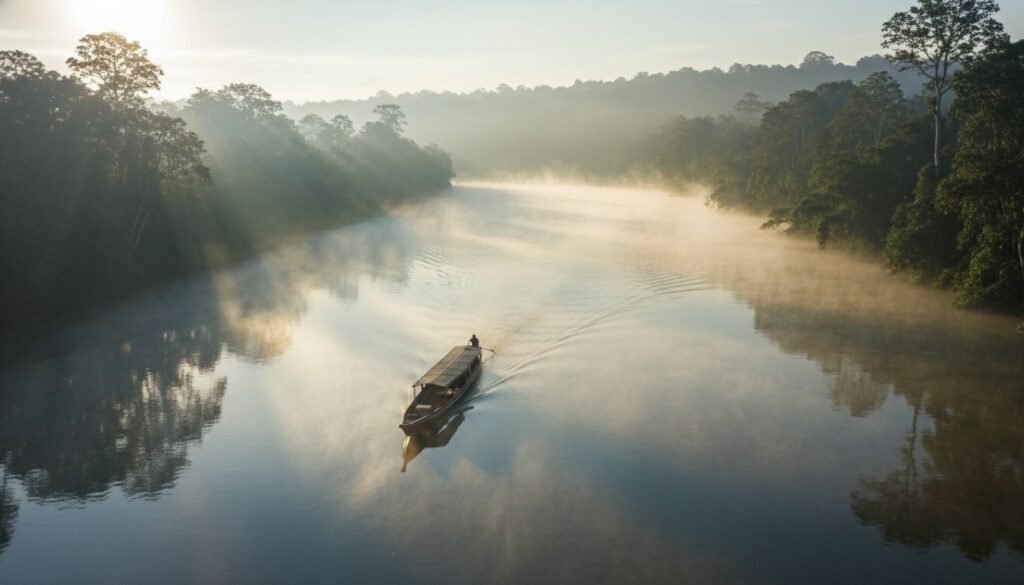
The word “adventure” is often overused in travel brochures, but when you are drifting on a wooden longboat 400 kilometers away from the nearest airport, the word finally finds its true meaning. As the founder of Hidden Gem Trips, I’ve navigated many waters, but nothing prepares you for the Mahakam River in East Kalimantan. This is not a “tour”; this is an expedition into the beating heart of Borneo.
This Mahakam Travel Guide is for people who have outgrown the busy streets of Bali and want to go somewhere that seems real, uncensored, and a little scary. We're moving past the orangutan sanctuaries and into the world of the Irrawaddy dolphins and the last actual Dayak longhouses.
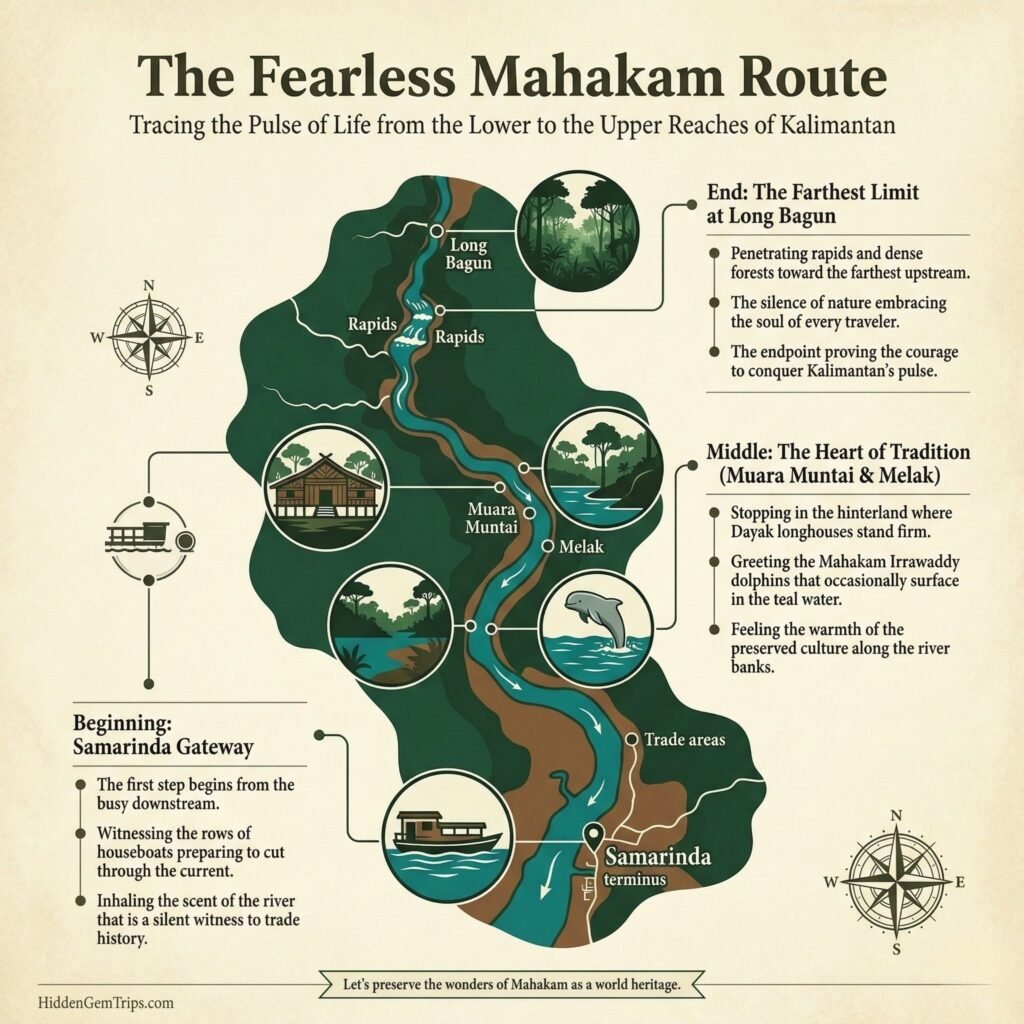
1. The Gateway: Samarinda to Muara Muntai
Your journey begins in Samarinda, the capital of East Kalimantan. While the city itself is bustling, it serves as the final frontier of modern convenience before you head “Upriver”.
- The Public Houseboat (Kapal Biasa): For the most authentic experience, hop on a public wooden houseboat. It’s slow, loud, and crowded with locals, but it’s where the best stories are told.
- Muara Muntai Village: A village built entirely on wooden stilts and boardwalks. There are no cars here, only the hum of motorbikes on timber planks.
If you need to reserve a base camp in Samarinda before you go, I suggest looking at Agoda's hotel listings for a good spot to rest and recharge.
2. Looking for the Pesut: The Irrawaddy Dolphins
The Pesut Mahakam, or the freshwater Irrawaddy dolphin, is one of the hardest things to see in our Mahakam Travel Guide. These dolphins are shy and in risk of extinction, unlike their saltwater cousins.
- The best place: Where the Mahakam and its tributaries meet at Muara Pahu.
- Timing: When the water is calm, early in the morning or late in the afternoon.
- The Fearless View: Watching a dorsal fin break through the muddy surface of the river is a spiritual experience that reminds us how important Sustainable Travel International work is in this area.
3. Getting into the Kingdom of Longhouses: Melak and Beyond
Melak, the entrance to the highland Dayak civilization, is further up the river. This is where the ground changes from low, swampy areas to thick, old rainforest.
- The Kersik Luway Orchid Forest: Home to the rare Black Orchid (Coelogyne pandurata). For anyone who loves plants, it's too much to take in.
- The Manubar Longhouse: Seeing how the Dayak Benuaq tribe lives together. The complicated sculptures and the way of living here have not altered in years.
4. Long Bagun and the Rapids: The Last Frontier
The route ends at Long Bagun for those who are truly brave. The river gets narrower from here, and the big rapids start. A unique longboat and a captain who knows the river like the back of his hand are needed in this area.
- Extreme Navigation: The “Riam” (rapids) are a test of nerves. We’ve covered the technical side of managing such high-risk trips in our Budgeting & Cost Planning guide.
- A Sanctuary for Slow-Mading: There is zero cell service here. This is the ultimate test for our Digital Nomad 2.0 guide—can you truly disconnect to reconnect?
5. Logistics of a Borneo Expedition
You don't just “show up” at the Mahakam River. It requires meticulous planning, especially regarding your health and gear.
- Getting There: Fly into Sultan Aji Muhammad Sulaiman Sepinggan Airport (BPN) in Balikpapan, then take a car to Samarinda.
- When to Go: The dry season (June to September) is best, but the river can get too low for some boats. The “shoulder” months are often the “golden window”.
- Essential Gear: You are entering a malaria-prone area. Before you pack, consult the CDC Travel Health guidelines for Borneo.
6. Essential Gear & Tech for the Deep River
In the jungle, your tech needs to be as tough as you are.
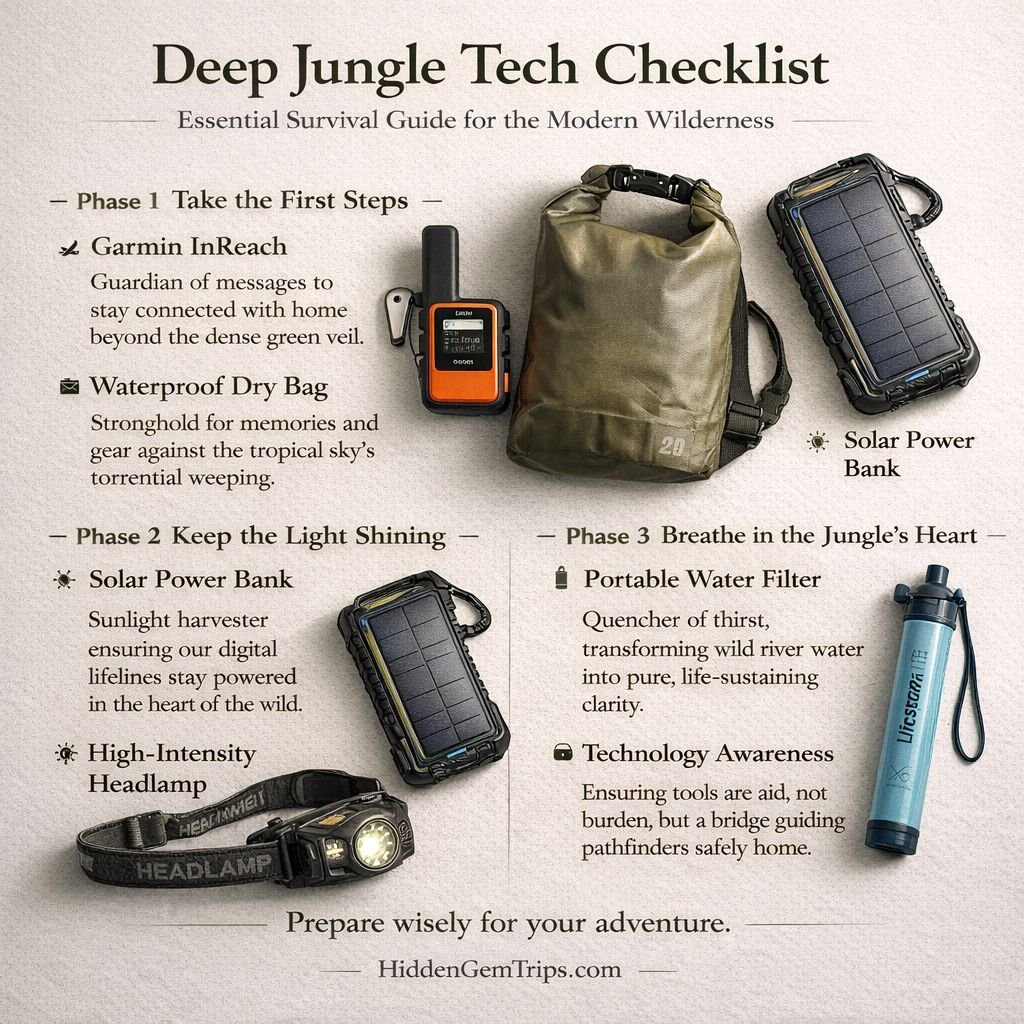
I never travel these waters without a satellite messenger. If your boat engine fails in the middle of the jungle, a Garmin InReach is your only lifeline. Additionally, ensure you have international travel insurance that covers remote medical evacuation.
7. Budgeting for the Mahakam: Real Talk
Traveling upriver is not cheap. Fuel is expensive in remote Kalimantan, and specialized boat charters can cost hundreds of dollars.
- The “Last Mile” Cost: While street food in Samarinda is cheap, hiring a private longboat for the rapids is a major investment.
- Slow Travel Savings: If you have time, using public houseboats will save you 80% of your budget.
8. The moral question: Should I share or protect?
We must protect these deep areas while we investigate them. The Dayak culture is strong, but widespread tourism can hurt it. We follow the IATA Traveler Guidance at Hidden Gem Trips to ensure our presence helps rather than hurts.
9. Conclusion: The River Never Ends
The Mahakam River reminds us that the world is still big, strange, and wild. This Mahakam Travel Guide is only the beginning. The real story starts when you step onto that wooden boat and lose sight of the city lights. Explore with courage, respect the river, and leave only footprints in the ancient mud of Borneo.
FAQ: Deep Insights for the Borneo Explorer
Is it safe to travel solo on the Mahakam?
Yes, but it is physically demanding. We recommend having a basic grasp of Indonesian or hiring a local fixer in Samarinda.
What about malaria?
Malaria and Dengue are present. Wear long sleeves, use high-DEET repellent, and consult a doctor about prophylaxis.
Can I see Orangutans here?
While Mahakam is more about dolphins and culture, you can see them in Kutai National Park near the river's mouth.
Disclaimer & Ethical Disclosure
This Mahakam Travel Guide is based on 2026 data. River conditions and boat availability can change due to weather. We may earn a commission from affiliate links (Agoda, World Nomads) at no extra cost to you. Always consult official IATA Traveler Guidance before your expedition.