
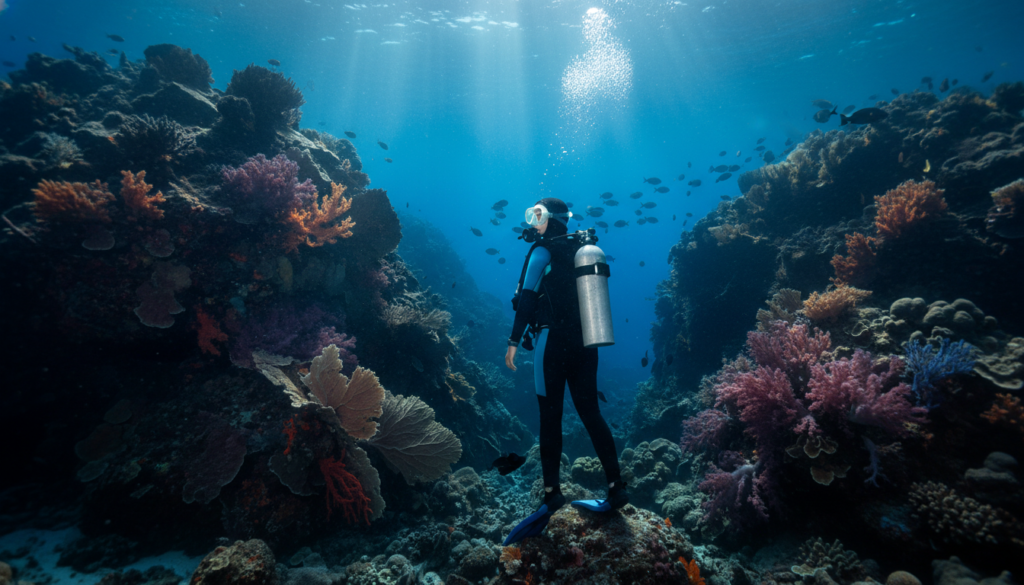
Pulau Weh travel guide is ideal for a vacation centered around the ocean, but choosing the most striking dive site isn’t the first choice. It’s about how much of your trip you really want to spend in the water, what kind of weather you can handle, and how you’ll get to and from the island without using a tight connection.
The city of Sabang is connected to Pulau Weh in Aceh, which is located off the northwest coast of Sumatra. When looking for lodging and seaside activities, tourists frequently combine the titles. Choosing a practical base, distinguishing snorkeling from other types of diving, and setting aside time for the actual trip are the main points of this advice.
Research-based is the type of guide. Sources reviewed: October 20, 2026. This is a desk-researched planning guide, not a personal trip report or dive-site assessment. The suggested itinerary serves as an editorial example. It does not confirm current departures, operator standards, wildlife observations, or conditions at a specific spot.
Pulau Weh travel guide, Start With the Holiday You Want
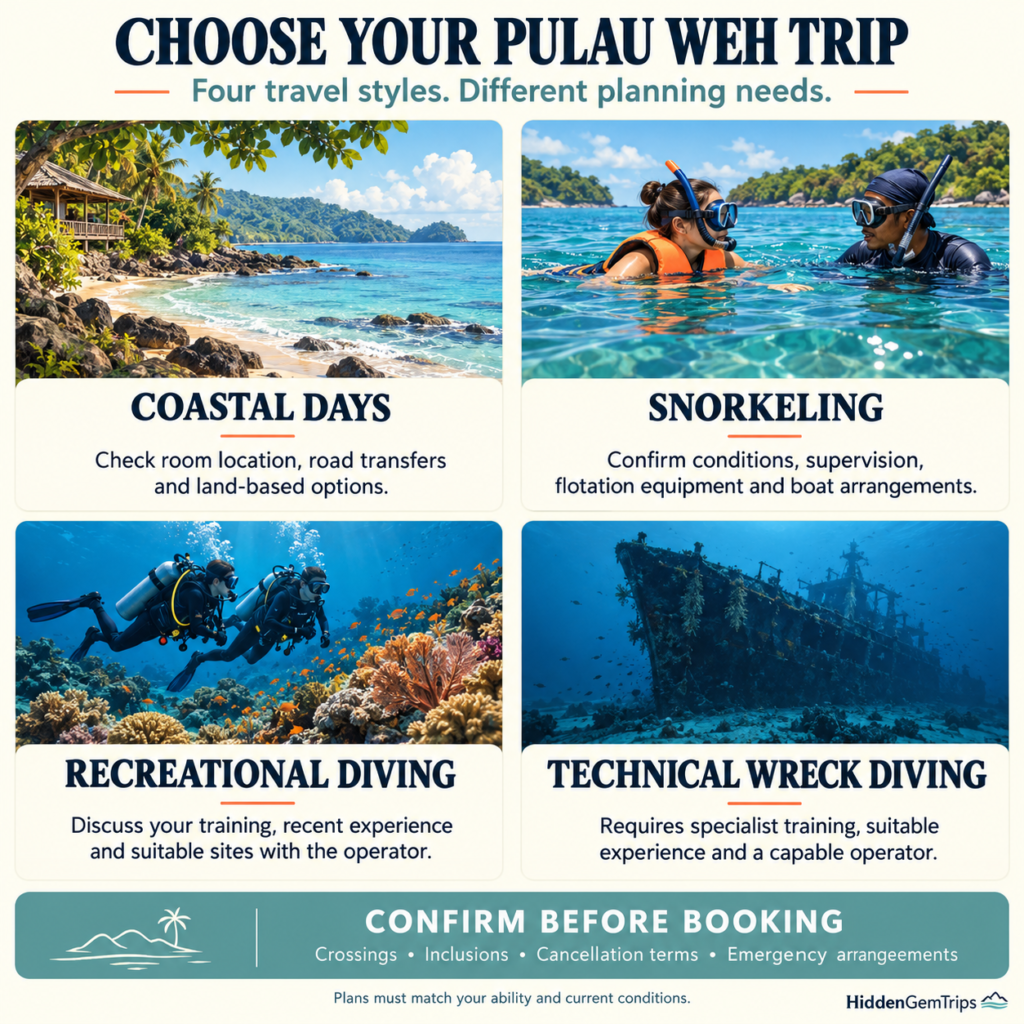
A non-diver and a technical wreck diver may both research Pulau Weh, but they need very different arrangements. Choose the type of visit before comparing packages.
| Your main interest | Start by researching | Confirm before payment |
| Coastal time and local meals | Accommodation location, road transfers and activities on land | Whether you will enjoy the stay if marine trips are cancelled |
| Snorkeling | Guided outings around Iboih and Rubiah | Conditions, supervision, flotation equipment and boat arrangements |
| Recreational diving | An operator able to assess your experience | Proposed sites, training requirements, recent activity and changing conditions |
| Technical wreck diving | A specialist operator and suitable qualifications | The exact profile, equipment, operational capability and emergency arrangements |
These are planning categories, not promises that an activity will be available or appropriate. If your group has mixed interests, choose accommodation that works for the person who stays on land as well as the person who goes diving.
Understand Iboih Rubiah and the Arrival Journey
Iboih is described by Indonesia Travel as a coastal destination on Pulau Weh, with access via Banda Aceh and a sea crossing. For geographic orientation, its destination page is helpful. The Indonesia Travel Guide to Iboih advises against using outdated airline listings and schedule information as a live booking system.
Sabang’s tourism department identifies Rubiah as a marine attraction reached by boat from Iboih. That relationship helps you understand why accommodation near Iboih may interest someone planning guided snorkeling. It does not mean that every departure point, shore entry, or boat crossing is suitable in all conditions: Sabang tourism information about Rubiah.
Find out the precise location of the resort and the anticipated transfer from your arrival port before making a reservation. Verify the arrangements for an arrival after the customary check-in time, road access, steps, luggage handling, and food availability. To determine your daily transportation needs, a room’s description of being in Sabang is insufficient.
One base might be more convenient for a brief stay than switching rooms just to see a variety of views. If a longer visit improves the experience sufficiently to outweigh packing, checking in, and another transfer, then a second destination may be justified. Find out if the suggested relocation offers something you will truly utilize.
Plan the Crossing Before the Excursions
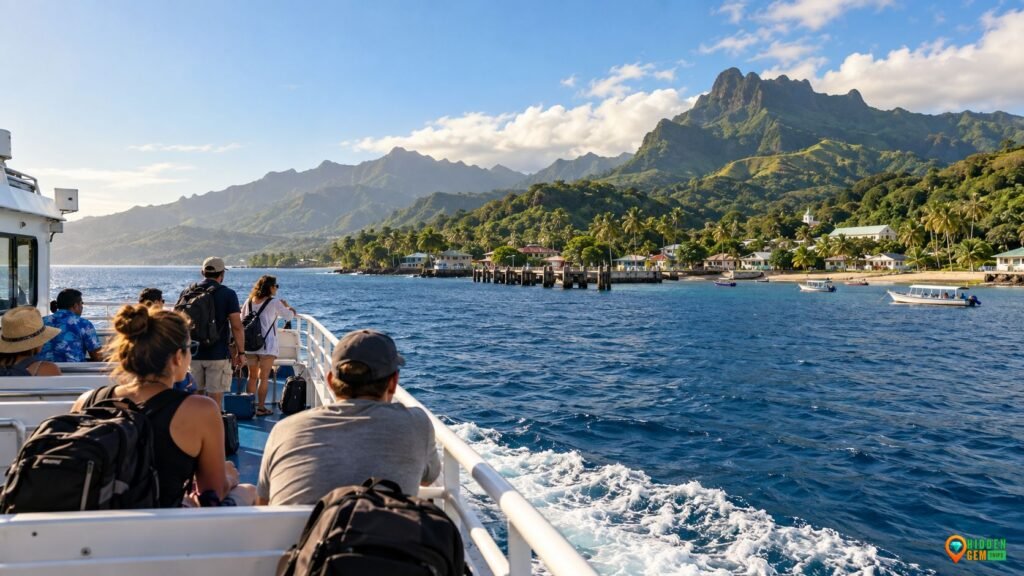
The flight or additional transportation to Banda Aceh, the transfer to the departure port, the sea crossing, and the car trip to your lodging should all be booked separately. Verify each section with your real dates. A voyage, seat, or connection are not guarantyd by a published description of ferry access.
Inquire about the departure port, check-in deadline, baggage regulations, ticket restrictions, and the cancelation or delay procedure from the present operator. Verify the port of arrival with your driver or lodging. The name of the island alone does not guaranty that a driver knows which service you have reserved.
The Sabang–Banda Aceh marine forecast from BMKG offers time-limited data for the nearby waters. When you’re about to leave, check its validity period and any cautions. A regional forecast provides helpful context; a swimming or diving decision requires site-specific evaluation; the decision to sail belongs to the appropriate authorities and operator.
Select a return policy that is resilient to interruptions. Compare the expense of spending an additional nite close to your next departure with the repercussions of a lost connection if missing the crossing would also result in a missed international trip. There isn’t a set amount of buffer hours that suits all itineraries.
Choose Snorkeling by Conditions and Support
Instead of choosing a snorkeling vacation solely on a photo, the participant should be considered. Describe your swimming ability, comfort level in open water, experience with snorkeling equipment, and any relevant limitations before accepting a package.
Inquire about the group’s supervisor, the location of entry and exit, whether a boat stays close by, and how the expedition will be modified in the event that conditions worsen. Find out if flotation equipment is available and suitable for your requirements. Instead of depending on the destination’s reputation, talk about an alternative activity if someone is uncomfortable in the suggested conditions or cannot swim with confidence.
Even with clear water, there may be currents, boat traffic, or a challenging way out. These questions cannot be addressed by a portrait that appears to be shielded. Furthermore, a shallow reef does not guaranty that a trip is appropriate for all novices.
Both availability and fit are important. If at all feasible, try the mask and other gear before leaving. Keep your hands and fins away from living coral, respect the guide’s boundaries, and don’t disrupt marine life. Having a land-based backup plan is helpful if the water excursion isn’t appropriate that day.
Separate Recreational Diving From Technical Wreck Diving
The island’s diving reputation should not turn into pressure to attempt its most demanding sites. A certification card is one part of the discussion. Recent experience, comfort with the conditions, equipment familiarity, and the proposed profile also matter.
Divers Alert Network guidance on diving beyond your training explains that training and environment need to match. A guide accompanying a dive does not replace the training needed for that activity. Entering a wreck introduces challenges beyond viewing it from the outside.
The Sophie Rickmers wreck is a particularly important distinction. PADI’s site listing, contributed by a local PADI member, describes a special decompression dive for experienced deep and technical divers. Treat that as a reason for specialist assessment. An advanced recreational qualification alone should not be presented as automatic eligibility for the wreck.
This article does not provide a descent plan, gas selection, decompression schedule, or wreck-entry instructions. Those decisions require appropriate training and a qualified team working with the actual conditions. Visitors planning ordinary reef dives don’t need to add a technical wreck dive to make their holiday worthwhile.
Ask the Operator Questions That Change the Booking
A useful operator reply explains what happens in practice. A short answer saying that everything is safe is not enough to compare services.
| Question | What a useful answer explains |
| How do you assess suitability? | Required experience, recent diving, check procedures and reasons to change a plan |
| What exactly is included? | Equipment, boat arrangements, supervision, transfers and additional charges |
| How are conditions assessed? | Who makes the decision and what alternatives are offered |
| What happens in an emergency? | Communication, oxygen provision, trained staff and a realistic transfer process |
| What happens if the activity is cancelled? | Refund, rescheduling and the treatment of unused bookings |
DAN’s discussion of diving in remote destinations uses another destination as its example. Its questions about briefings, emergency oxygen, and access to treatment are useful planning prompts here, but the article is not evidence of facilities or emergency response times in Sabang. Ask your chosen operator for current local arrangements.
Read insurance terms against the activity you are considering. Check depth and training conditions, exclusions, evacuation provisions, and the process for obtaining assistance. A product described as travel insurance or dive insurance should not be assumed to cover every planned activity.
Build a Stay That Still Works Without a Boat Day
When a holiday is dependent on the same weather window every day, it becomes brittle. Make space on land for meals, relaxation, and activities that have been verified locally. Find out how transportation is provided, what is accessible from your lodging, and whether the adventure is impacted by visitor policies or opening hours.
For example, a four-night stay could use arrival day for the transfer and settling in. The next day could hold a suitable marine activity after a briefing. A third day could remain flexible, and the final full day could be used for a land outing or a rescheduled activity if conditions and your onward plans allow.
That is an example of pacing, not a validated itinerary. The right sequence depends on your transport, interests and activity-specific requirements. If you dive, discuss your onward travel and any altitude exposure with the operator and follow applicable guidance. Do not use a generic island itinerary to calculate when you may fly after diving.
Plans for non-divers should be just as comprehensive. Verify whether transportation is necessary for meals, whether the lodging offers a cozy spot to spend an afternoon, and whether stairs or uneven walking are necessary for a suggested viewpoint or beach stop. Whether a slower stay feels comfortable or uncomfortable is often determined by ordinary factors.
Budget for Your Bookings Rather Than a Universal Daily Rate
A single daily figure hides the biggest differences between trips. A diver bringing equipment, a non-diver taking one boat outing, and a family using private transfers will not buy the same holiday.
Collect quotes for the crossings, port transfers, accommodation, meals, chosen activities and equipment. Note whether a boat price is per person or for the group. Ask which fees apply and whether cancellation changes the amount payable. Record the date and inclusions beside each quote.
Build a contingency from identifiable problems. What would another night cost? What would a replacement transfer cost? Would a canceled activity be refunded? Those questions produce a more useful reserve than applying an unexplained percentage to the whole holiday. Our Indonesia budget travel guide explains how to compare the full cost of a day or stay.
Pay for arrangements that solve an actual need. A more convenient base may reduce transfers, while an apparently inexpensive room may create daily travel costs. Compare confirmed inclusions before deciding which option represents better value for your group.
Respect the Community and the Marine Environment
Pulau Weh is not a vacant setting for a diving excursion; it is an inhabited island. Find out what the locals expect in terms of attire, photography, religious observances, activity times, and community space access. The presence of other people or an open walkway should not be interpreted as approval.
When not near bathing places, dress appropriately and abide with local regulations. Before taking pictures of people, get their permission. Before approaching a private property or a working waterfront, ask. Use our considerate travel checklist for more extensive planning.
Don’t touch, chase, or feed wildlife when in the water. When on land, make plans for your belongings, drinking water, and garbage. Instead of presuming that everything can be recycled locally, find out what your hotel can truly manage. While it is beneficial to support local businesses, this does not negate the necessity to take their operations into account.
Questions Before You Book
1. Can I enjoy Pulau Weh without diving
Indeed. Coastal time, lunches, locally organized excursions, and appropriate snorkeling when the weather permits might be the main focus of a stay. Instead of purchasing a dive-focused package you won’t utilize, pick lodging and transportation that complement those hobbies.
2. Is Rubiah automatically suitable for beginners?
No location is automatically suitable for every participant. Explain your ability and comfort level, ask about conditions and supervision, and accept an alternative if the proposed outing does not suit you.
3. Does an advanced recreational certification qualify me for Sophie Rickmers?
Do not assume so. The listing describes a demanding decompression dive. Discuss the exact proposed activity with a specialist operator and remain within your training, experience, and equipment capability.
4. Which month guarantees clear water?
No month guarantees visibility or a crossing. Compare seasonal information, current forecasts and local assessments. Book conditions and alternatives matter as much as the calendar.
5. Should I keep the last island night before my flight?
Assess the whole return journey. An uncertain crossing followed by a flight connection leaves little room for disruption. Compare options that allow you to finish closer to the onward departure and check activity-specific requirements if you have been diving.
Sources and Planning Notes
On October 17, 2026, Indonesia Travel’s Iboih destination site, Sabang tourism data regarding Rubiah, BMKG’s Sabang–Banda Aceh marine forecast, DAN guidelines on training and remote dive operations, and PADI’s Sophie Rickmers listing were among the sources examined. The pertinent topic is accompanied by links. Destination descriptions provide background information; they do not verify current schedules, costs, operator quality, or conditions for a certain day.
HiddenGemTrips editorial preparation tools include the suggested pacing and comparison questions. For this post, no dive was done, no accommodation was examined, and no operator was tested. It is necessary to confirm current transportation, local regulations, and activity plans with the relevant authorities and providers.
Travel Disclaimer
General travel planning information is provided in this guide. It is not an emergency plan, medical advise, dive training, or a guaranty of safety or access. Regulations, services, transportation, and conditions are subject to change. Making judgments that are suitable for the participant and the real environment is necessary when diving and snorkeling. Prior to payment and departure, confirm necessary plans, observe local instructions, and seek the advice of certified professionals for questions about activities and health.