
Introduction: The Myth of the Expensive European Dream
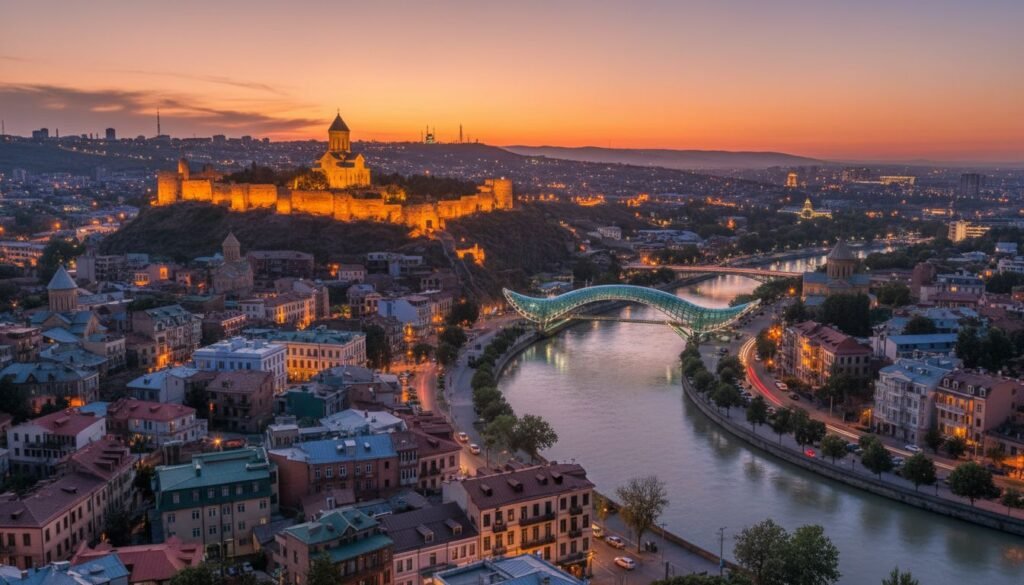
The Ultimate Tbilisi Guide: I remember standing on the Pont Neuf in Paris, clutching a €7 espresso that tasted like burnt disappointment, surrounded by tourists vying for the same selfie. Last autumn, I stood on the Metekhi Bridge in Tbilisi, Georgia. I held a glass of Saperavi wine that cost less than that Parisian coffee and watched the sun dip behind the Narikala Fortress. The air was cool, the history palpable, and best of all, I didn't have to elbow anyone to see the view.
Tbilisi is often called the “Paris of the Caucasus,” but I find that title slightly insulting. While Paris feels like a museum where you aren't allowed to touch anything, Tbilisi is a living, breathing, and delightfully chaotic masterpiece. If you are tired of over-tourism and predatory pricing, this Ultimate Tbilisi Guide is your roadmap to a city that offers European grandeur without the “Grand Expense.” This guide isn't just a list of sights; it's a manifesto for the traveler who seeks affordable opulence.
The “Paris of the Caucasus”: Why Tbilisi is the Smart Alternative for 2026
In 2026, the travel landscape is shifting toward authenticity. People are realizing that “luxury” is not a price tag; it is an experience. Tbilisi delivers this in abundance. From neoclassical opera houses to brutalist Soviet monuments and winding cobblestone streets, the city is a visual feast that rivals any Western European capital.
The Economics of Elegance
The most striking difference is your bank balance. According to 2026 cost-of-living indices, Tbilisi remains one of the most undervalued capitals in the world. Simply put, you can enjoy a luxurious lifestyle in Georgia for the cost of a hostel bed in France.
Table 1: The Budget Battle—Tbilisi vs. Paris (Estimates in USD)
| 5-Star Boutique Hotel | $550+ | $120+ | 78% Lower |
| Mid-Range 3-Course Dinner | $90+ | $25+ | 72% Lower |
| Glass of Premium Wine | $14+ | $4+ | 71% Lower |
| Metro/Public Transport Pass | $12+ | $1+ | 91% Lower |
| Cappuccino in Old Town | $6.50+ | $2.50+ | 61% Lower |

Navigating the Silk Road City: Logistics and Reality
Reaching the edge of Europe and Asia takes more effort than a budget flight to London, but that is exactly why it remains a “Hidden Gem”. As we discussed in our Slow Travel Manifesto, the reward for a longer journey is a destination that hasn't been homogenized by mass tourism.
Getting There and Beyond
Most international travelers fly into Tbilisi International Airport (TBS). If you are coming from Europe, look for hubs like Istanbul, Warsaw, or Munich. If you are already in the region, the night train from Yerevan or Baku offers a romantic, slow-travel entry into the heart of the Caucasus.
Expert Tip: If direct flights to TBS are overpriced, check for low-cost carriers landing in Kutaisi (KUT). It is a four-hour bus ride from Tbilisi, but the drive through the Georgian countryside gives a stunning first glimpse of the nation’s rugged beauty.
Safety and Entry Requirements
Georgia is famously welcoming, often cited as a top choice for safe under-the-radar cities. Most Western nationalities enjoy a one-year visa-free stay, making it a premier destination for those mastering slow-mading peaks.
The Sulfur Baths: The Soul of Tbilisi
You cannot write an Ultimate Tbilisi Guide without mentioning the sulfur baths of Abanotubani. Legend has it that King Vakhtang Gorgasali founded the city because of these warm springs. The brick domes rising from the ground are an architectural signature of the city.
For about $20, you can rent a private stone room. For an extra $5, you can get a kisi (scrub) that will leave your skin feeling like silk. It is a ritual that feels ancient, grounded, and detached from the frantic pace of modern life.
Hidden Gem Insight: Look for the Orbeliani Bathhouse (the one with the stunning blue mosaic facade). While more “tourist-facing,” its private rooms offer an aesthetic experience that aligns perfectly with our search for underrated destinations.
8,000 Years of Wine: Why the French are Jealous
While the French make excellent wine, the Georgians invented it. Archeological evidence from the National Museum of Georgia confirms that wine has been made here for eight millennia using the Qvevri method—large clay jars buried underground.
In Tbilisi, wine isn't just a drink; it's a religion. Every street corner has a “Vinotheque” where you can taste Amber wine (skin-contact white wine). The complexity of a 2021 Saperavi will make you rethink what you thought you knew about viticulture.
How to Drink Like a Georgian:
- Don't Sip During Toasts: Wait for the Tamada (toastmaster) to finish; Georgian wine is about storytelling as much as it is about taste.
- Look for ‘Natural' Labels: Most small-scale Georgian producers use zero additives, resulting in a cleaner, more robust flavor profile.
The Ultimate Tbilisi Guide to Eating Like a Local
Georgian food is the ultimate comfort food. If Paris is about delicate sauces and tiny portions, Tbilisi is about overflowing plates and community.
Signature Dishes You Must Try
- Khachapuri Adjaruli: A boat-shaped bread filled with melted cheese, butter, and a raw egg. It is the culinary equivalent of a warm hug.
- Khinkali: Large dumplings filled with spiced meat and broth. There is a specific technique to eating them: grab the handle, bite a hole, suck the broth, eat the rest. Locals will be happy to teach you.
Where to Find Authenticity
For the best experience, head to the Sololaki district. Here, you will find the same raw authenticity we advocate for when we advise readers to find hidden gems like a local.
Where to Stay: Affordable Opulence in the Heart of the City
Tbilisi offers a range of accommodations that would cost triple in Paris. For a high-end feel, look for boutique hotels in converted Soviet-era factories or 19th century mansions.
- Sololaki & Vera: These districts offer the best mix of “Old World” charm and modern amenities.
- Fabrika: A former sewing factory turned into a multifunctional space with a hostel, boutique hotel, and vibrant courtyard. It is the heart of Tbilisi’s creative scene.
FAQ: Your Tbilisi Travel Briefing
Is Tbilisi expensive?
No. Compared to Western Europe, it is affordable. You can live comfortably on $50 USD a day, including meals and sights.
Do people speak English?
The younger generation speaks excellent English, while older generations may speak Georgian and Russian.
What is the best time to visit?
May, June, September, and October are ideal.
How do I get around?
The Metro is efficient and costs pennies. For taxis, use the Bolt app to avoid being overcharged.
Disclaimer
This Ultimate Tbilisi Guide is based on current 2026 travel data and personal expertise. While Georgia is generally very safe, visitors should stay informed about regional geopolitics via official government travel advisories (such as travel.state.gov). Prices mentioned are subject to inflation and seasonal changes. Hidden Gem Trips is not responsible for any travel disruptions or changes in local regulations.
