
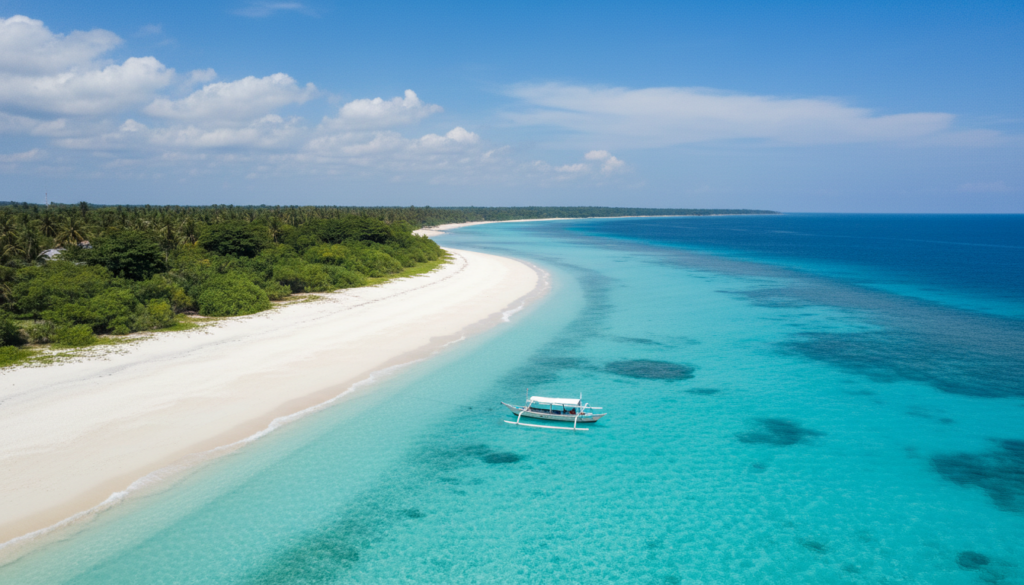
Introduction: The Whisper of Untouched Shores
I still remember the first time my feet touched the sand at Ngurbloat Beach. Having traveled across the Indonesian archipelago for a decade—from the crowded shores of Bali to the high-end resorts of Sorong—I thought I had seen it all. But the Kei Islands in Southeast Maluku are different. It’s the kind of place that makes you want to keep your mouth shut, so that it stays “undiscovered.”
Raja Ampat has been a source of interest for divers and dreamers for years, including me. But let's be honest: it can be stressful when costs go up, and things get complicated. What if I told you there is a paradise that is just as lovely but easier to get to and more real? This isn't just another travel blog post; it's the Kei Islands Secret Guide, which I produced from my own muddy feet and salty experiences. This 1,500-word post will educate you about the travel recommendations, costs, cultural differences, and natural beauty that most travel sites don't write about. You have to adjust your vacation plans to Indonesia.
Why the Kei Islands are the “Smart” Alternative to Raja Ampat
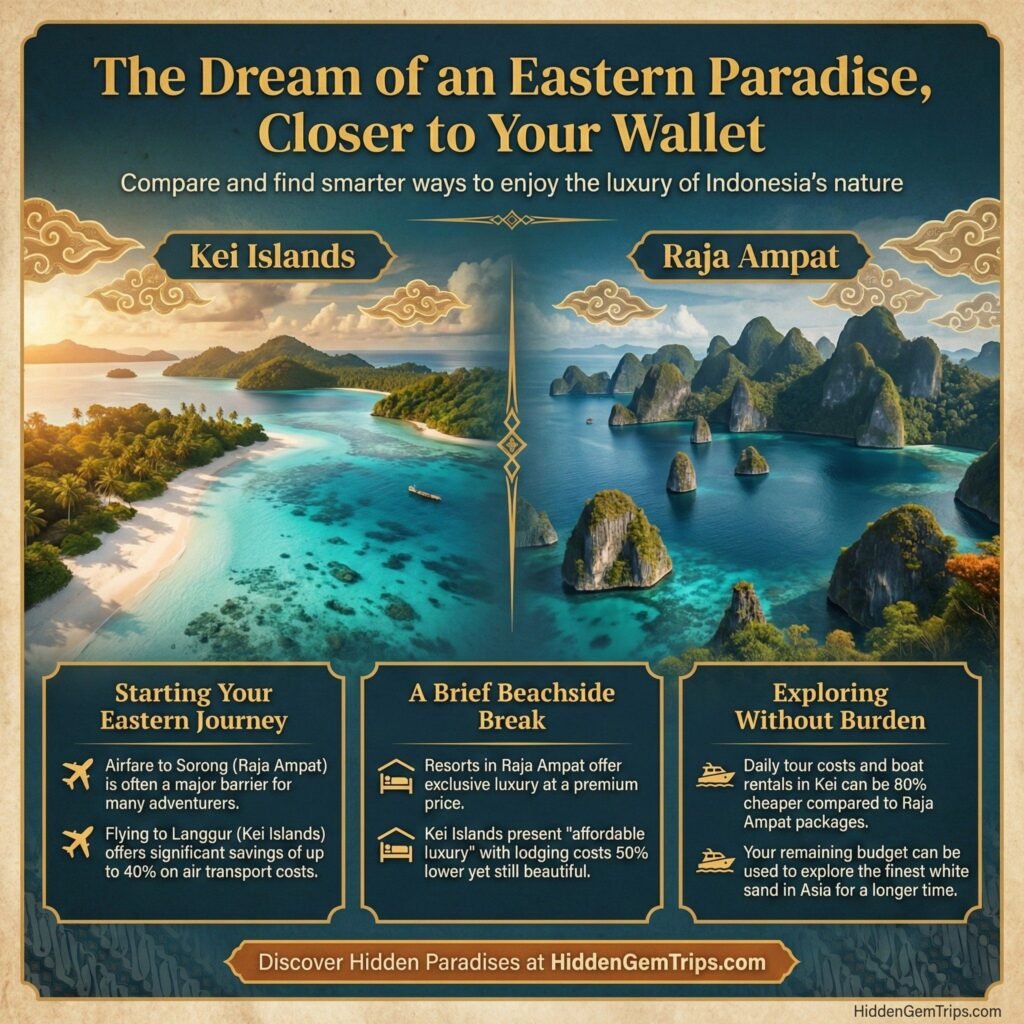
Let’s talk numbers and reality. Raja Ampat is undeniably stunning, but its exclusivity comes at a price. A basic 7-day trip can cost between $2,100 and $5,300 USD. For many, this is a dream deferred.
The Kei Islands have the same beautiful beaches and vibrant marine life, but they cost much less. It's not about giving up quality; it's about learning how to be a traveler, not simply a tourist. Our guide, Travel Indonesia Like a Local: 10 Genius Budget Hacks for Finding Hidden Gems, provides additional information about this way of thinking.
Table 1: A Comparison of Estimated 7-Day Budgets (Per Person)
| Domestic Flights | $500 – $1,000 | $200 – $400 | ~60% Lower |
| Accommodation | $500 – $1,500 | $150 – $350 | ~70% Lower |
| Island Tours & Diving | $800 – $2,000 | $150 – $400 | ~80% Lower |
| Meals & Transport | $300 – $800 | $150 – $300 | ~50% Lower |
| Total Estimate | $2,100 – $5,300 | **$650 – $1,450** | Significant Savings |
Note: These numbers are based on estimations for 2026 and may change depending on the season and your own choices.
It's not just about saving money; it's also about seeing Indonesia before it becomes a tourist trap. Kei is a better alternative for those who care about being real and saving money.
The Science of Sand: Why Ngurbloat is Legally the Softest in the World
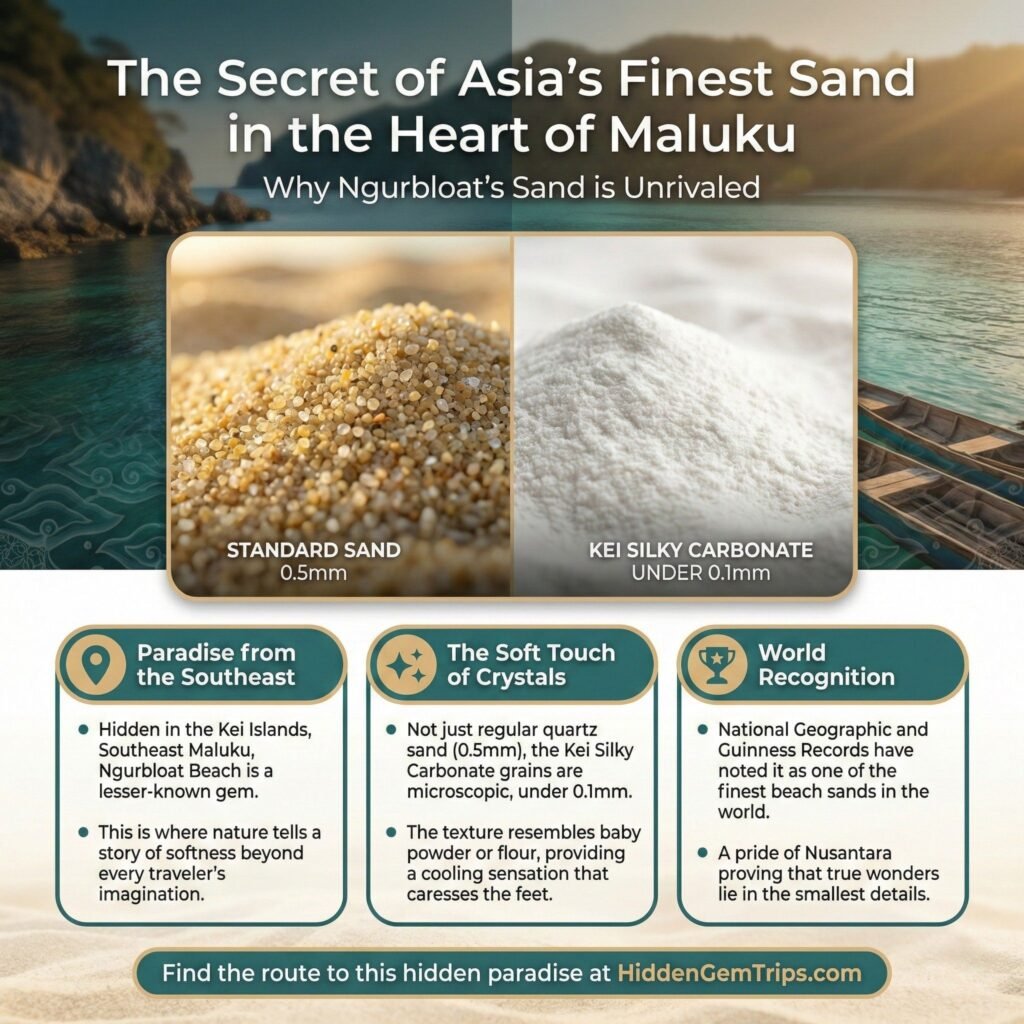
Forget what you thought you knew about soft sand. Ngurbloat Beach (Pantai Pasir Panjang) isn't just soft; it's a geological marvel. Locals proudly claim it has the “softest sand in the world,” and it feels like talcum powder. This is one of Indonesia’s Best-Kept Secrets: Underrated Destinations Worth Visiting. The trick is that coral fragments erode in a way that makes ultra-fine grains that can't be found anywhere else in Asia.
I couldn't help but touch it while I was there. It doesn't feel like sand; it feels like talcum powder. The explanation lies in the composition and erosion of coral fragments and the marine organisms in their vicinity. Most beach sand is coarse, but Ngurbloat's grains are incredibly fine and round. This is result of thousands of years of gentle tidal action and certain deposits of calcium. This very fine texture makes it feel like you're walking on a cloud as you walk on Ngurbloat. It's just as good as any beautiful beach in the world, and it's right here, waiting to be explored.
Navigating the Remote: Logistical Realities of Southeast Maluku
Reaching Southeast Maluku requires a bit of “Slow Travel” soul. As I mentioned in our Stop Rushing: The 2026 Slow Travel Manifesto, the journey is part of the destination. The main gateways are the towns of Tual (on Kei Kecil) and Langgur (on Kei Besar), connected by a bridge.
- Flights:
- Most of the Time, you'll fly from Jakarta (CGK) or Denpasar (DPS) to Ambon (AMQ), the capital of Maluku.
- Connecting Flight: From Ambon, fly domestically to Karel Sadsuitubun Airport (LUV) in Langgur, Kei Kecil. Wings Air (Lion Air Group) and Citilink operate these routes.
- Insider Tip: Book your domestic flights well in advance, especially during busy periods, when fewer mayflights not be available. Always give yourself ample time to stop at Ambon, because delays happen a lot.
- For the Brave, Sea Travel:
- If you want to really experience the culture and save money, you could want to take a PELNI ship from Ambon to Tual. These big boats that carry passengers are very important to the people who live there and give you a taste of Indonesian maritime culture. It can take 20 to 24 hours to get there.
- Check the timetables: PELNI schedules are known to change all the time. For the latest information, visit their official website (PELNI.co.id) or ask a travel agent in Ambon.
- Getting about in Kei:
- Ojek (Motorbike Taxi) is the most prevalent and flexible way to move around. Before you travel, talk about rates. Short rides are usually very cheap, costing between $1 and $3 USD.
- Bemo (Minibus) is apublic minibus service that follows set routes, mostly between Langgur, Tual, and important settlements. Very cheap, but not very flexible.
- Car and motorcycle rentals: Many guesthouses lend out motorcycles for about $5 to $10 USD per day. This lets you go at your own pace while you explore. You can hire a driver for longer trips for $30 to $50 per day.
Beyond Ngurbloat: Unveiling Kei's Hidden Treasures
While Ngurbloat is the star, the Kei Islands offer so much more. This is where your personal exploration truly begins.
Goa Hawang: The Crystal Cave Pool
Imagine yourself swimming in a cave pool underground that is fed by a natural spring that is so transparent you can see every rock formation below. This purity is what we look for in our search for Affordable Opulence: How to Experience World-Class Hidden Gems on a Mid-Range Budget in 2026. That's exactly what Goa Hawang is, near Langgur. The water is pleasantly chilly, and the light that comes in from the cave entrance makes the place feel mystical. It's a holy place for the people who live there, so always be polite.
The Clear Water of Ohoidertawun Beach
Ohoidertawun is another beautiful place that's only a short drive from Langgur. Its shallow, clean waters spread for hundreds of meters during low tide. It's wonderful for children and has lots of chances to beachcomb and see how locals live as fishermen bring in their daily catch.
The Shifting Sandbar, also known as Pasir Timbul Ngurtafur
This is something that doesn't happen very often. Ngurtafur is a long, thin sandbar that only shows up at low tide. It goes for many kilometers into the ocean. It’s an ideal spot for snorkeling, picnicking, and feeling like you’re walking on water. It is a fragile ecosystem that deserves the same protection we advocate for in Socotra 2.0: Is Our Wanderlust Destroying Earth’s Last Alien Landscape?. To get here, you'll need to hire a boat from a nearby community like Ohoi Debut. The boat journey itself, which goes across calm turquoise waters, is something you'll never forget.
Indigenous Culture: The “Adat” and Friendly Individuals
The Kei Islands have a lot of culture. The people in the area, who are mostly Catholic and Muslim, get along well, and their “Adat” (old practices) are still strong. You shouldn't be startled if people meet you with warm grins and real interest. It will help a lot if you learn a few simple phrases in Bahasa Indonesia or the local Kei language, like “selamat pagi” (good morning)
A Heartfelt Plea for Responsible Travel in the Kei Islands
I beg you to travel carefully because I have witnessed how the beauty of undeveloped regions progressively fades away because of bad tourism. The Kei Islands are not very strong.
- Support Local: Stay in guesthouses owned by locals, eat at warungs (local restaurants), and use local guides and boat owners. Your money directly benefits the community.
- Leave No Trace: Pack out everything you pack in. Avoid single-use plastics. The waste management infrastructure here is minimal.
- Respect Culture: Dress modestly, especially when you go to villages or places of worship. Before snapping pictures of people, ask them first.
- Marine Conservation: Don't touch corals, don't feed fish, and be aware of how your sunscreen affects marine life.
- Be fair when you bargain, but be generous. Bargaining is normal, but keep in mind that a small difference for you can mean a lot to a local family.
FAQ: Your Burning Questions About the Kei Islands Answered
When is the best time to visit the Kei Islands?
The dry season, from April to November, offers the best weather with calm seas and plenty of sunshine. Avoid December to March due to the rainy season and stronger winds.
Is it safe for solo female travelers?
Yes, the local culture is incredibly welcoming. For more safe-haven ideas, refer to The 2026 Solo Female Travel Map: 10 Safest “Under-the-Radar” Cities.
What is the internet/phone signal like?
Mobile signal (Telkomsel is best) is available in Langgur and Tual, but can be spotty in more remote villages. Wi-Fi is rare outside of a few guesthouses. Embrace the digital detox!
What currency is used? Are there ATMs?
Indonesian Rupiah (IDR). ATMs are available in Langgur and Tual, but it's always wise to carry enough cash, especially for smaller transactions in remote areas.
Do I need a visa for Indonesia?
Most nationalities receive a visa on arrival (VOA) or are visa-exempt for short stays. Check the latest Indonesian immigration policies before your trip.
What should I pack?
Lightweight, breathable clothing, swimwear, reef-safe sunscreen, insect repellent, a hat, sunglasses, a reusable water bottle, a basic first-aid kit, and a good waterproof dry bag for boat trips.
Disclaimer: The Nature of Exploration
This article is based on personal travel experiences, extensive research, and local insights. While we strive for accuracy, travel conditions, prices, and regulations can change rapidly. Always verify information with local authorities, accommodations, and service providers before and during your trip. The Kei Islands are a remote destination; travel here involves inherent risks and a spirit of adventure. Hidden Gem Trips and its authors are not responsible for any incidents or inconveniences that may arise from your travel decisions.
